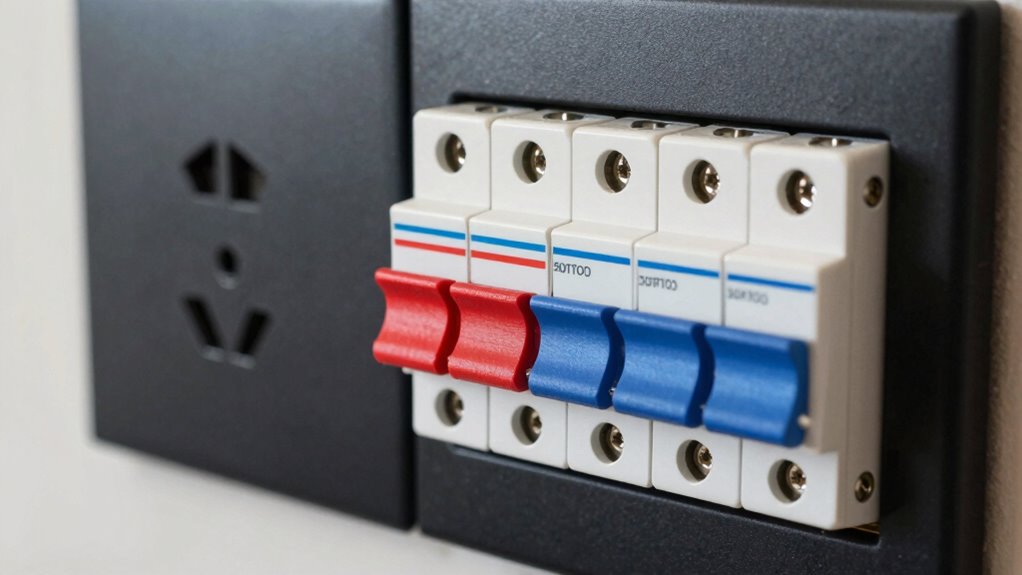
The real logic behind outlet and breaker matching is to guarantee your electrical system handles the load safely and prevents hazards. You need to match the breaker’s amperage rating with the wire gauge to avoid overheating or fires. Proper pairing also protects appliances from power surges and outages. By understanding these principles, you keep your system reliable. If you want to know more about how these components work together, there’s more to learn below.
Key Takeaways
- Matching outlets and breakers ensures they can handle the electrical load safely without tripping or overheating.
- Proper gauge wiring and breaker ratings prevent electrical fires and damage to connected devices.
- Surge protection and circuit pairing minimize risks from voltage spikes and overloads.
- Considering the outlet’s purpose influences the appropriate breaker size and wiring specifications.
- Regular system inspections maintain safety, ensuring outlet and breaker compatibility over time.
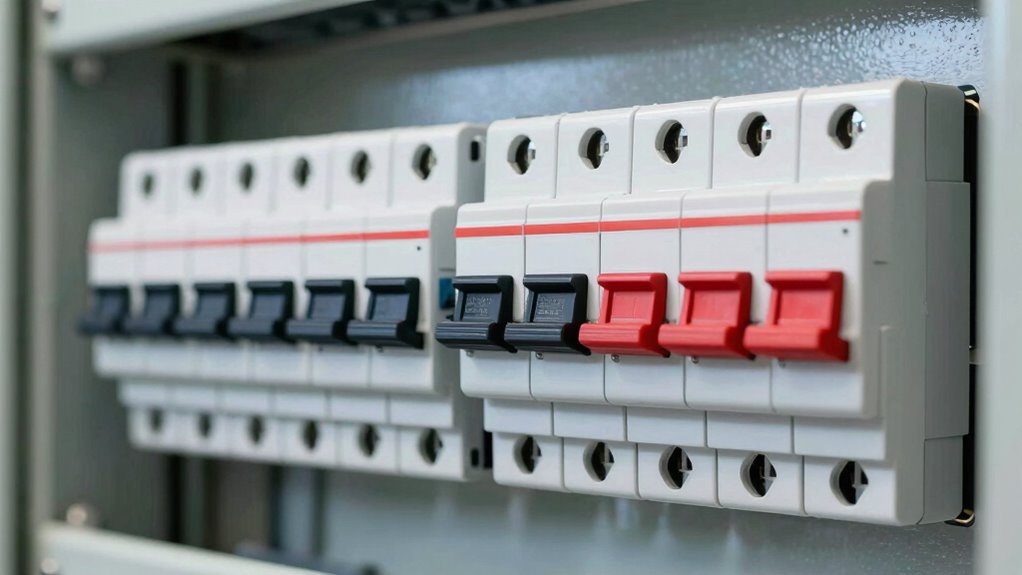
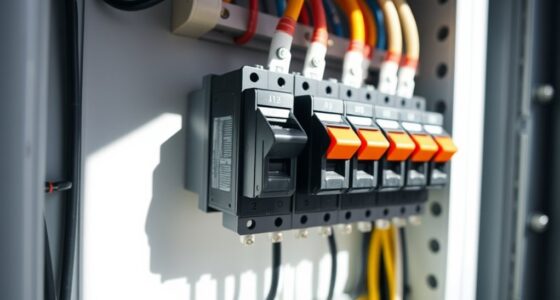
Ever wonder how electricians guarantee that outlets and breakers are properly matched? It’s a process rooted in understanding wiring compatibility and assuring surge protection. When an electrician installs or inspects a circuit, they don’t just guess which breaker should control which outlet. Instead, they analyze the wiring’s capacity, the devices’ power demands, and safety standards. Wiring compatibility is essential here because not all wires can handle the same current load. Thicker wires, like those with a larger gauge, can carry more current safely, while thinner wires are limited. Electricians verify that the breaker’s amp rating matches the wire gauge to prevent overheating or fire hazards. This matching safeguards both the wiring and the electrical appliances connected to the outlet. Additionally, understanding projector technology helps ensure that the electrical system can support specialized equipment safely. A comprehensive understanding of electrical codes and standards further ensures that the entire system is compliant and safe. Recognizing the importance of wire gauge compatibility helps prevent potential hazards before they occur. Considering electrical load calculations is also vital to ensure that the system is balanced and that circuits are not overloaded.
Surge protection plays an equally indispensable role in this process. When an outlet and breaker are correctly matched, it guarantees that power surges—caused by lightning strikes, power outages, or faulty appliances—are effectively managed. Breakers act as safety guards, tripping when they sense excess current, but they need to be paired with outlets and wiring designed for such protection. Proper matching prevents nuisance trips that could disrupt your power supply, while also providing a layer of defense against voltage spikes that could damage sensitive electronics. Electricians often recommend installing surge protectors or using breakers with built-in surge protection features for added security. Ensuring that the entire electrical system is designed with safety standards in mind is critical for preventing accidents and maintaining reliable power. Regular inspections and maintenance are essential to uphold these standards and address any emerging issues proactively.
The logic behind matching outlets and breakers isn’t just about selecting the right size or rating; it’s also about understanding the entire electrical system. Electricians consider the intended use of the outlet—whether it’s for high-powered appliances or simple lighting—to determine the appropriate breaker size. They also check that the wiring materials and insulation are suitable for the load. This extensive approach ensures that everything works harmoniously and safely. When done correctly, it minimizes risks like electrical fires, equipment damage, or outages. So, the next time you see an outlet or breaker, remember that behind its placement and rating lies a careful, deliberate process that balances wiring compatibility with surge protection to keep your home safe and functional.
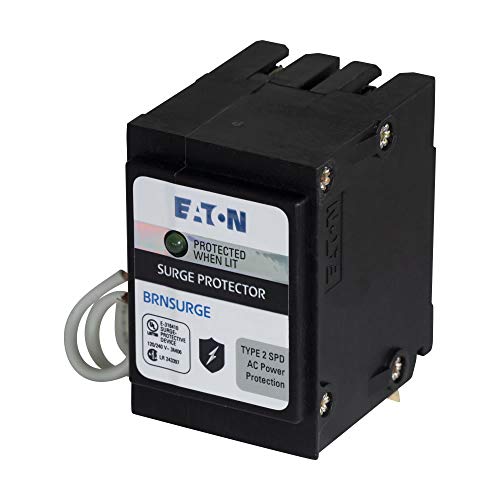
Eaton BRNSURGE Type BR Whole-Panel Circuit Breaker Surge Protective Device
Uses 2 Branch Circuit Spaces
As an affiliate, we earn on qualifying purchases.
As an affiliate, we earn on qualifying purchases.
Frequently Asked Questions
How Often Should Outlet and Breaker Compatibility Be Checked?
You should check outlet and breaker compatibility at least once every few years, especially if you notice any electrical issues. Make sure to verify that outlet types match the breaker classifications to prevent overloads or hazards. Regular inspections are essential after any electrical work or renovations. If you experience frequent trips or appliances malfunctioning, it’s a sign to re-evaluate your outlet types and breaker classifications immediately.
Can Mismatched Outlets and Breakers Cause Electrical Fires?
Mismatched outlets and breakers can indeed cause electrical fires, especially if surge protection isn’t adequate or grounding techniques are faulty. When a breaker isn’t rated correctly, it may not trip during a short circuit or overload, leading to overheating. Proper grounding ensures safety, and using matching outlets and breakers minimizes fire risks. Always check compatibility and maintain your electrical system to prevent potential hazards and protect your home.
Are There Different Matching Rules for Residential vs. Commercial Buildings?
Yes, matching rules differ between residential and commercial buildings. In residential settings, you primarily focus on outlet types and breaker ratings suited for household appliances and lighting. Commercial buildings require specialized outlets designed for heavy-duty equipment, with breaker ratings that handle higher loads. You need to guarantee that outlet types are compatible with the appliances and that breaker ratings match the outlet’s capacity, preventing overloads and ensuring safety.
What Tools Are Necessary for Testing Outlet and Breaker Compatibility?
To test outlet and breaker compatibility, you need a multimeter to check voltage compatibility and verify proper wiring. An ampere clamp meter helps measure current draw to guarantee it matches the breaker’s ratings. You should also review the outlet and breaker labels for correct voltage and amperage ratings. These tools ensure the outlet and breaker are compatible, preventing overloads and electrical hazards, maintaining safe and efficient electrical systems.
How Does Environmental Exposure Affect Outlet and Breaker Matching?
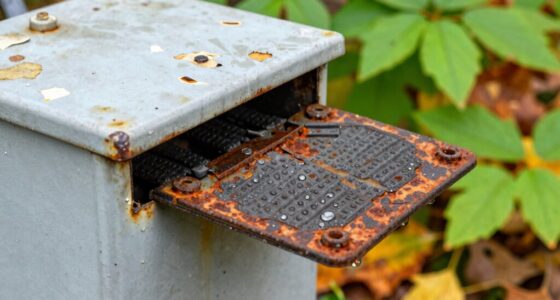
Environmental factors like moisture, dust, and temperature fluctuations can compromise outlet and breaker matching by causing corrosion or wear over time. You should focus on corrosion prevention by choosing weather-resistant components and installing protective enclosures in harsh conditions. Regular inspections help identify early signs of damage, ensuring safety and functionality. Properly addressing environmental exposure keeps your electrical system reliable, extending the lifespan of outlets and breakers, and maintaining safe operation.

FOCEMTA Circuit Breaker Finder Kit with GFCI Outlet Tester for 90-135V AC Circuits,includes Light Socket Adapter, 3-2 Prong Grounding Adapter & Clip adapter,Portable Electrical Tool with Carrying Case
All-in-One Circuit Diagnosis: Combines Circuit Breaker Finder, Outlet Tester & GFCI Tester – Quickly locate breakers, test outlets…
As an affiliate, we earn on qualifying purchases.
As an affiliate, we earn on qualifying purchases.
Conclusion
By understanding the matching logic between outlets and breakers, you guarantee safety and efficiency in your electrical system. Think of it like pairing a key with the right lock—each component has a specific role to play. When you match them correctly, you prevent overloads and potential hazards. Visualize it as a perfect puzzle fit, where every piece works seamlessly together. This approach keeps your home safe and your system running smoothly, confirming the importance of proper matching.

EM415Pro Automotive Circuit Breaker Finder Electrical Tester, 6-42V Wire Tracer Short Circuit Finder, Cable Tracker & Voltage Detector with 7 Inch Flexible Probe for Car and Home Diagnostics
Locate circuits fast – Identify open wires, shorts, and circuit breakers quickly with transmitter signal and audible receiver…
As an affiliate, we earn on qualifying purchases.
As an affiliate, we earn on qualifying purchases.

Calculated Industries 5070 ElectriCalc Pro Electrical Code Calculator
Ideal for electrical contractors, designers, engineers, electricians, builders, and inspectors
As an affiliate, we earn on qualifying purchases.
As an affiliate, we earn on qualifying purchases.