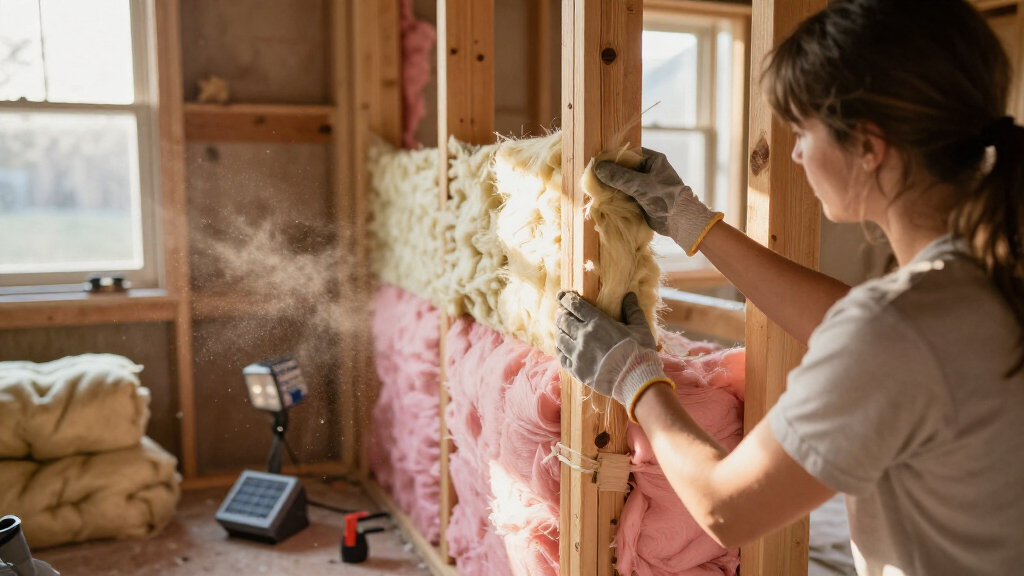
For a true 2×8 wall cavity, the key choice is not simply which batt has the highest R-value: it is which thickness fits the available depth without compression and suits your cavity width and moisture-control plan. My leading fit is the R-30 high-density, 8.25-inch batt in the 15-inch width, while the 9.5-inch R-30 batt offers a different fit for deeper cavities. The 5.5-inch R-21 batt is the lighter, easier-to-handle option, but it leaves more of a nominal 2×8 cavity unfilled.

Get backup power and energy gear delivered free — and shop member deals
- Fast, free delivery on millions of items
- Access to Prime Big Deal Days deals on October 6–7
- Prime Video, Amazon Music and more included
These products are all fiberglass batts, yet they are not interchangeable. The first R-30 package is described for 15-inch framing and covers the largest area; the second R-30 package is sized for 16-inch framing and is thicker. Both R-30 products have kraft facing, while the thinner R-21 batt is unfaced. I rank them by how plausibly their stated dimensions suit 2×8 walls, then by useful coverage and the installation decisions buyers need to make. Check the actual cavity dimensions and local code requirements before ordering: lumber dimensions, stud spacing, and vapor-control rules all affect the right pick.
Key Takeaways
- Best match for many 2×8 cavities: The 8.25-inch R-30 batt leaves a little room in a nominal 7.25-inch-deep 2×8 cavity only if the stated thickness or framing description is verified; do not assume it can be compressed without affecting performance.
- Check cavity width before choosing: The 15-inch R-30 package is intended for 15-inch spaces, while the 16-inch R-30 package is intended for wider 16-inch spaces.
- R-30 is not an automatic win: Both R-30 options are thicker than the nominal depth of standard 2×8 framing, so verify the product’s fit and installation instructions before purchase.
- Choose R-21 for a shallower, more forgiving batt: At 5.5 inches, it is easier to accommodate in shallower framing, but it does not use the full nominal depth of a 2×8 wall.
- Facing changes moisture planning: The two R-30 products have kraft facing that acts as a vapor retarder; the unfaced R-21 does not supply that layer.
- Package coverage is not the same as wall-fit suitability: One R-30 package covers 568.3 square feet and the other 469.36 square feet, but stud spacing and the actual wall area determine what a buyer needs.
| Owens Corning R-30 Kraft-Faced High-Density Fiberglass Insulation, 15 in. x 48 in., 10 Bags | 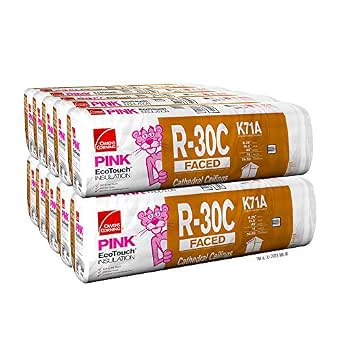 | Best Overall — closest listed R-30 match for a 2×8 wall, with fit checks required | Material: Fiberglass | R-value: R-30 | Batt thickness: 8.25 inches | VIEW LATEST PRICE | See Our Full Breakdown |
| Owens Corning R-30 Kraft-Faced Fiberglass Insulation, 469.36 sq. ft., 8 Bags |  | Best for 16-inch bays — R-30 coverage for buyers whose cavity width matches | Material: Fiberglass | R-value: R-30 | Batt thickness: 9.5 inches | VIEW LATEST PRICE | See Our Full Breakdown |
| Owens Corning R-21 Unfaced Fiberglass Insulation Batts, 5.5 in x 16 in x 96 in, 77.5 sq ft |  | Best for shallower framing — the easiest listed thickness to accommodate, but not a full-depth 2×8 fill | Material: Fiberglass | R-value: R-21 | Thickness: 5.5 inches | VIEW LATEST PRICE | See Our Full Breakdown |
| insulation for 2×8 wall | Material | R-value | Facing | Package quantity |
|---|---|---|---|---|
| Owens Corning R-30 Kraft-Faced | Fiberglass | R-30 | Kraft; acts as a vapor retarder | 10 bags; 11 batts per bag |
| Owens Corning R-30 Kraft-Faced | Fiberglass | R-30 | Kraft; acts as a vapor retarder | 8 bags; 10 batts per bag |
| Owens Corning R-21 Unfaced Fib | Fiberglass | R-21 | Unfaced; no vapor barrier | 8 batts |
More Details on Our Top Picks
Owens Corning R-30 Kraft-Faced High-Density Fiberglass Insulation, 15 in. x 48 in., 10 Bags
This is my first pick for a buyer seeking R-30 fiberglass in a 2×8-wall project, because its supplied description specifically identifies 2×8 framing and lists an 8.25-inch thickness. That is closer to standard 2×8 framing depth than the 9.5-inch alternative below. Still, the fit is not a free pass: a nominal 2×8 cavity is generally about 7.25 inches deep, so I would confirm the manufacturer’s wall-installation guidance and avoid compressing the batt just to force it into place. The stated thickness and framing claim deserve a direct check before ordering.
The 15-inch width is the deciding dimension for layout. It suits cavities framed at 16 inches on center, where the clear space is commonly near 14.5 inches, but it is not the right choice for every wall. Compared with the 16-inch-wide R-30 pack, this product is intended for narrower stud bays and offers more total listed coverage, at 568.3 square feet. That larger coverage can simplify purchasing for a broad project, though it does not make the insulation a better fit if your framing width differs.
Kraft facing adds a vapor-retarder layer that the R-21 unfaced batt lacks. That may suit some assemblies, but facing direction and vapor-control needs depend on location and wall design. The kraft paper must be covered and protected from flame or heat, and the product description’s attic emphasis means I would verify wall-use directions rather than treat the package as a universal wall specification. Delivery coordination is another practical drawback. Choose it when the cavity width, approved wall application, and facing plan line up; skip it if you need a thinner batt or cannot verify its fit.
Pros:- R-30 rating provides more listed thermal resistance than the R-21 alternative.
- 15-inch batt width suits framing with approximately 16-inch on-center spacing.
- 568.3 square feet of stated coverage makes it the largest package by area in this group.
- Kraft facing acts as a vapor retarder when used in an assembly that calls for one.
Cons:- The listed 8.25-inch thickness exceeds the typical 7.25-inch depth of nominal 2×8 framing, so fit and compression guidance need confirmation.
- Kraft facing must be covered and protected from open flame or heat, and its placement depends on the wall assembly.
- Delivery requires coordination and a reachable phone number.
Best for: Buyers with 15-inch-wide cavity layouts who want an R-30 product described for 2×8 framing and can verify that its 8.25-inch thickness is permitted for their wall assembly.
Not ideal for: Anyone who needs a guaranteed drop-in fit for a standard 7.25-inch-deep cavity, has 16-inch-wide stud bays, or wants unfaced insulation without a kraft vapor retarder.
- Material:Fiberglass
- R-value:R-30
- Batt thickness:8.25 inches
- Batt dimensions:15 x 48 inches
- Facing:Kraft; acts as a vapor retarder
- Package coverage:568.3 square feet
- Package quantity:10 bags; 11 batts per bag
- Framing description:15-inch-wide, 2×8 framing
Our verdict“I rank this first for its stated 2×8 framing fit and 15-inch width, but I would confirm the 8.25-inch batt depth before buying for a standard wall cavity.”
Owens Corning R-30 Kraft-Faced Fiberglass Insulation, 469.36 sq. ft., 8 Bags
I place this R-30 option second because its 16-by-48-inch batt dimensions make it the more natural width match for 16-inch on-center framing, a common wall layout. That does not mean each batt fills a 16-inch clear opening; the product dimensions should be checked against the actual cavity and installation guidance. The key limitation for 2×8 walls is its stated 9.5-inch thickness, which is deeper than standard nominal 2×8 framing. That makes it a less direct fit than the 8.25-inch R-30 pick above, even though both carry the same R-value.
Where this package may work well is a framed space with enough depth for the batt and a 16-inch-wide layout. Its eight bags cover 469.36 square feet, less than the 568.3-square-foot package from the first-ranked option. The difference is useful for planning: a smaller coverage package may be easier to allocate to a defined section, but buyers insulating a large project may need to calculate the number of packages more carefully. Coverage totals do not resolve the more important question of whether the batt thickness suits the wall.
The kraft facing supplies a vapor retarder, unlike the unfaced R-21 product. That can reduce the need to add a separate retarding layer in some assemblies, but it is not a universal moisture solution. Local climate, interior finish, and code requirements matter, and the paper facing must be covered and kept away from flame or heat. The listing describes this product for attic and other framed applications, so I would confirm that the intended wall assembly is supported. Pick it over the 15-inch R-30 option when 16-inch framing and a suitable deeper cavity are the deciding factors; choose neither R-30 batt without checking thickness.
Pros:- R-30 rating matches the higher-rated option in this roundup.
- 16-by-48-inch dimensions are suited to layouts specified for 16-inch framing spaces.
- Kraft facing acts as a vapor retarder when used as directed.
- The eight-bag package provides 469.36 square feet of stated coverage.
Cons:- At 9.5 inches thick, it is substantially deeper than a typical nominal 2×8 cavity.
- The listing emphasizes attic and other framed applications, so wall-use suitability should be confirmed.
- Kraft paper needs protection from flame or heat and correct placement for the wall assembly.
Best for: Buyers with 16-inch-wide framing bays who need R-30 fiberglass for a deeper framed space and have verified that a 9.5-inch batt is suitable for the assembly.
Not ideal for: Owners of standard 2×8 walls who need insulation no deeper than the framing cavity, or anyone with 15-inch-wide cavity requirements.
- Material:Fiberglass
- R-value:R-30
- Batt thickness:9.5 inches
- Batt dimensions:16 x 48 inches
- Facing:Kraft; acts as a vapor retarder
- Package coverage:469.36 square feet
- Package quantity:8 bags; 10 batts per bag
- Recommended application:Attic and other framed applications
Our verdict“I recommend this R-30 package for matching 16-inch bays and deeper framed applications, not as a default fit for standard 2×8 walls.”
Owens Corning R-21 Unfaced Fiberglass Insulation Batts, 5.5 in x 16 in x 96 in, 77.5 sq ft
Best for shallower framing — the easiest listed thickness to accommodate, but not a full-depth 2×8 fill
View Latest PriceThis is the most straightforward option to handle by thickness, but it is the weakest match for a buyer who wants to fill a 2×8 cavity. At 5.5 inches thick, the R-21 batt is specified for 2×6 framing and leaves part of a standard 2×8 wall cavity unfilled. Compared with either R-30 batt, it avoids the concern of forcing an over-thick product into a shallow cavity, yet that convenience comes with lower listed thermal resistance and unused cavity depth. I would choose it only when the wall design calls for this thickness or when a separate plan addresses the remaining depth.
The 16-inch width is intended for a common wider stud layout, and the batts are precut for friction-fit installation. That can make the pack more manageable for smaller wall areas than the two bulkier R-30 offerings. It covers 77.5 square feet, far less than either R-30 package, so a larger job could require more packages and more handling. For a small repair or a section of shallower framing, that smaller quantity may be easier to use; for a whole-house project, it is a less convenient coverage format.
Unlike both kraft-faced R-30 choices, this batt is unfaced and has no vapor barrier. That avoids a facing layer that needs placement and protection, but it also means the wall assembly’s moisture-control strategy must be handled separately where required. The product is described for walls, floors, and attics, giving it a wider stated application range than the attic-focused R-30 listings. Still, broader use does not make its 5.5-inch thickness a strong default for 2×8 construction. My ranking puts it third because the title question is specifically about 2×8 walls, not the easiest batt to install in shallower framing.
Pros:- At 5.5 inches thick, it is easier to fit into shallower framing than either R-30 batt.
- Precut batts are designed for friction-fit installation.
- The 16-inch width suits specified wider framing layouts.
- Unfaced construction avoids a kraft facing that needs placement and protection from heat or flame.
Cons:- R-21 is below the R-30 rating of both other products.
- Its 5.5-inch thickness is specified for 2×6 framing and leaves space in a standard 2×8 cavity.
- It has no vapor barrier, so moisture control may need to be addressed separately.
- The 77.5-square-foot package covers much less area than either R-30 package.
Best for: Buyers insulating a 2×6-depth wall, a shallower section, or a small project where a 5.5-inch unfaced batt and modest package coverage suit the plan.
Not ideal for: Anyone seeking a full-depth insulation solution for standard 2×8 walls, an R-30 rating, or a product with an included kraft vapor retarder.
- Material:Fiberglass
- R-value:R-21
- Thickness:5.5 inches
- Dimensions:96 inches long x 16 inches wide
- Facing:Unfaced; no vapor barrier
- Coverage:77.5 square feet
- Package quantity:8 batts
- Recommended framing:2×6
Our verdict“I would choose this only for a shallower cavity or a project designed around R-21, not as my first choice for insulating a full 2×8 wall.”
How We Picked
I ranked these three products around the question a 2×8-wall buyer is actually asking: will the batt fit the cavity correctly, and what compromise comes with that fit? Product names and R-values alone do not settle that. A batt that is too thick for a cavity may require compression or may be unsuitable for the assembly; a batt that is too narrow can leave gaps, and an unfaced batt does not provide a vapor retarder. The listed descriptions also identify some products mainly for attic use, so I treat wall suitability as something to verify rather than assume.
My first comparison is thickness against framing depth. Standard nominal 2×8 lumber is about 7.25 inches deep, while the listed R-30 batts are 8.25 and 9.5 inches thick. Those numbers raise a practical fit question, not a reason to stuff a batt into the cavity. I give the 8.25-inch R-30 first place because it is the closer of the two R-30 choices to that wall depth and is explicitly described as sized for 2×8 framing, but buyers still need to confirm the manufacturer’s wall-use details. The 9.5-inch product ranks next because its 16-inch width suits a common cavity spacing but its listed thickness makes it a less straightforward 2×8-wall choice. The 5.5-inch R-21 ranks third for this specific use because it is clearly specified for 2×6 framing and leaves more cavity depth unused.
I also compare width, facing, coverage, and handling implications. A 15-inch batt and a 16-inch batt address different stud spacing, so neither should be selected by coverage totals alone. Kraft facing can function as a vapor retarder, but its correct placement depends on climate, wall assembly, and code; it must be covered as directed and kept away from exposed flame or heat. Unfaced fiberglass avoids that facing-placement question but requires a separate moisture-control plan where one is called for. Finally, I count package coverage as a purchasing convenience, not as proof of value or performance. I do not rely on customer ratings, and I do not imply hands-on testing. Each ranking reflects the supplied product specifications and the limits they leave a buyer to verify.
| insulation for 2×8 wall | R-value | Facing |
|---|---|---|
| Owens Corning R-30 Kraft-Faced | R-30 | Kraft; acts as a vapor retarder |
| Owens Corning R-30 Kraft-Faced | R-30 | Kraft; acts as a vapor retarder |
| Owens Corning R-21 Unfaced Fib | R-21 | Unfaced; no vapor barrier |
Factors to Consider When Choosing Best Insulation For 2×8 Walls
Before choosing among these batts, I would match the product to the real cavity depth and clear width, then check the wall assembly’s R-value and vapor-control requirements. The product with the highest printed R-value is not automatically the right one if it is too thick or too wide for the cavity.
Measure the cavity, not just the nominal lumber
A nominal 2×8 stud is generally about 7.25 inches deep, although existing walls can differ because of materials, furring, unusual framing, or measurement errors. The listed R-30 choices are 8.25 and 9.5 inches thick, both greater than that typical depth; the R-21 option is 5.5 inches. I would measure several bays and check the manufacturer’s instructions before buying. Do not assume that compressing a thicker batt into a shallower space preserves its stated performance or produces a sound installation. If a product description and measured cavity appear inconsistent, ask the manufacturer or a qualified installer to resolve the fit question.
Also check whether the wall is actually framed with 2×8 lumber. A nominal dimension on a plan does not always match a completed assembly, and an interior retrofit might have additional layers. The right thickness is the one approved for the actual cavity and installed without voids, bulges, or unintended compression.
Match batt width to stud spacing
The two R-30 options differ not only in thickness but also in width: one is listed as 15 inches wide, while the other measures 16 inches wide. These are intended for different framing layouts. Many walls framed 16 inches on center have clear openings narrower than 16 inches, while framing at 24 inches on center has a different cavity width. Measure the open space between studs and follow the batt maker’s fit guidance; do not select by the nominal on-center spacing alone.
A batt that is too narrow can leave air gaps around its edges, while one that is too wide may bunch or fold instead of sitting evenly. Neither outcome is a reliable substitute for a correctly sized product. The R-21 option is also listed at 16 inches wide, so it shares the wider format of the second R-30 batt but not its thermal rating or thickness.
Treat R-value and cavity fit as a pair
In this lineup, R-30 is the highest listed rating, while the R-21 option has a lower rating and a thinner profile. That comparison matters, but R-value alone cannot tell you whether a batt belongs in your wall. The R-30 products are both thicker than the usual depth of 2×8 framing, which creates a fit question that should be answered before purchase. The R-21 product fits shallower framing by its listed dimensions, but it does not occupy the full nominal depth of a 2×8 wall.
For a new build or major renovation, check local energy-code requirements and the wall assembly design. For an existing wall, the available cavity may limit the insulation type or thickness. I would select an insulation system that matches both the required thermal performance and approved installation conditions instead of trying to make one of these products serve a different cavity by force.
Decide whether kraft facing belongs in your assembly
The two R-30 products have kraft facing that acts as a vapor retarder; the R-21 product is unfaced. Facing is one part of moisture management, not a universal fix for water intrusion or condensation. Climate zone, interior and exterior layers, ventilation, and local code can affect whether a vapor retarder is appropriate and where it belongs. Confirm the specified facing direction for your assembly rather than relying on a general rule.
Kraft paper must be covered and protected from open flame or heat as directed by the product instructions. With unfaced fiberglass, there is no built-in facing, so a separate vapor-control layer may be required by the wall design. If you are unsure which approach fits your location, consult local building guidance or a building professional before closing the wall.
Use package coverage for planning, not as a fit shortcut
The listed package areas vary sharply: 568.3 square feet for the 15-inch R-30 package, 469.36 square feet for the 16-inch R-30 package, and 77.5 square feet for the R-21 pack. These figures help estimate how many packages may be needed after measuring the project, but wall openings, cutoffs, bay dimensions, and package-specific quantities affect the final amount. I would calculate coverage from the actual insulated surface and leave room for fitting around framing and obstructions.
Large packages may suit extensive work but require more storage and delivery planning. The smaller R-21 package can be easier to manage for a limited area, though it is not a direct substitute for an R-30 product or a full-depth 2×8 solution. Check delivery details in advance, especially when a shipment requires phone coordination.
Look beyond the label when comparing applications
The R-21 product is described for walls, floors, and attics, while the two R-30 listings emphasize attics and other framed spaces. That description does not by itself rule out a wall use, but it does mean I would check the product documentation for the intended installation, especially given the R-30 thicknesses. Confirm that the selected batt is approved for the orientation and enclosure you plan to insulate.
Fiberglass batts depend on complete contact with the cavity and careful fitting around wiring, pipes, and boxes. Avoid leaving voids or crushing the material around obstructions. If the wall has irregular dimensions or complicated services, a different insulation method or a professional installation may be more suitable than adapting a pre-cut batt.
Frequently Asked Questions
Which of these products is the best fit for a standard 2×8 wall?
The 8.25-inch R-30 product ranks first here because it is described for 2×8 framing and is thinner than the 9.5-inch R-30 alternative. Yet standard nominal 2×8 framing is generally about 7.25 inches deep, so the listed thickness still needs verification against the manufacturer’s instructions. I would not treat any of these as a guaranteed drop-in fit without confirming actual cavity depth and approved installation details.
Can I compress an R-30 batt to fit a 2×8 cavity?
I would not assume that compressing a batt is acceptable or that its labeled R-value remains unchanged after compression. The two R-30 products listed here are thicker than a typical 2×8 cavity, making manufacturer guidance especially important. Confirm the permitted cavity dimensions and installation method before purchase; if the product cannot fit as directed, select an insulation system designed for that space.
What is the difference between the two R-30 products?
The first R-30 package is listed as 8.25 inches thick and 15 inches wide, with 568.3 square feet of coverage. The second is 9.5 inches thick and 16 inches wide, with 469.36 square feet of coverage. Both have kraft facing, but their width, thickness, and package area differ. The first is the closer thickness match for a 2×8 wall, while the second better matches 16-inch-wide framing layouts and deeper cavities.
Does kraft facing replace every other vapor-control measure?
No. Kraft facing acts as a vapor retarder, but it does not prevent all moisture problems or replace proper water management, air sealing, or assembly design. Whether it belongs in a wall and which way it should face depend on climate, local code, and the other materials in the wall. I would follow the product instructions and local requirements, and seek project-specific advice if the assembly is uncertain.
When does the R-21 unfaced batt make sense for a 2×8-wall project?
The R-21 batt may make sense where the design calls for a 5.5-inch layer, in shallower framing, or for a limited repair where its listed thickness and 16-inch width match the cavity. It is specified for 2×6 framing, so it does not fill the full depth of a standard 2×8 wall by itself. It is also unfaced, which means buyers need to check whether a separate vapor-control layer is required for their wall assembly.
Conclusion
My recommendation depends on the cavity, not just the R-value. For a buyer with 15-inch-wide bays seeking an R-30 batt, the 8.25-inch product is my first choice because it is described for 2×8 framing and is the less thick of the two R-30 options; verify that its depth is approved for the actual wall before ordering. If your layout uses 16-inch-wide spaces and the assembly has enough depth for a 9.5-inch batt, the second R-30 product is the better width match, though I would not use it as a default for standard 2×8 cavities.
Choose the R-21 unfaced batt when your project is shallower or specifically calls for 5.5-inch insulation, and when you have a separate plan for moisture control if needed. For a full-depth 2×8 wall where these listed thicknesses do not match the cavity, I would pause before buying and check the manufacturer’s specifications, local code, or a qualified installer. Getting a batt that fits the framing and wall assembly correctly matters more than choosing the biggest number on the label.
Fall Picks
fall essentials
As an affiliate, we earn on qualifying purchases.