TL;DR

Get backup power and energy gear delivered free with Prime
- Fast, free delivery on millions of items
- Prime Video, Amazon Music and more included
- Member-only deals all year
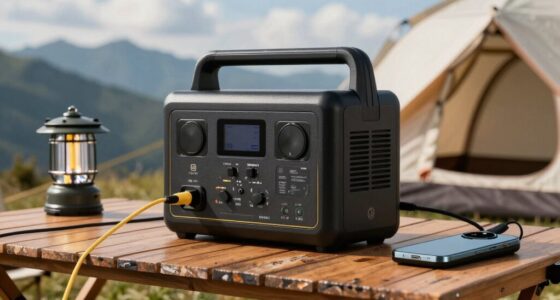
Portable power stations are rechargeable batteries with outlets that can run selected home essentials during an outage. Choose capacity in watt-hours for the runtime you need, and output in watts for the appliances you want to run at once, including motor startup surges. They offer quiet, exhaust-free operation while running, but stored energy is finite and whole-home connections require compatible equipment and qualified installation.
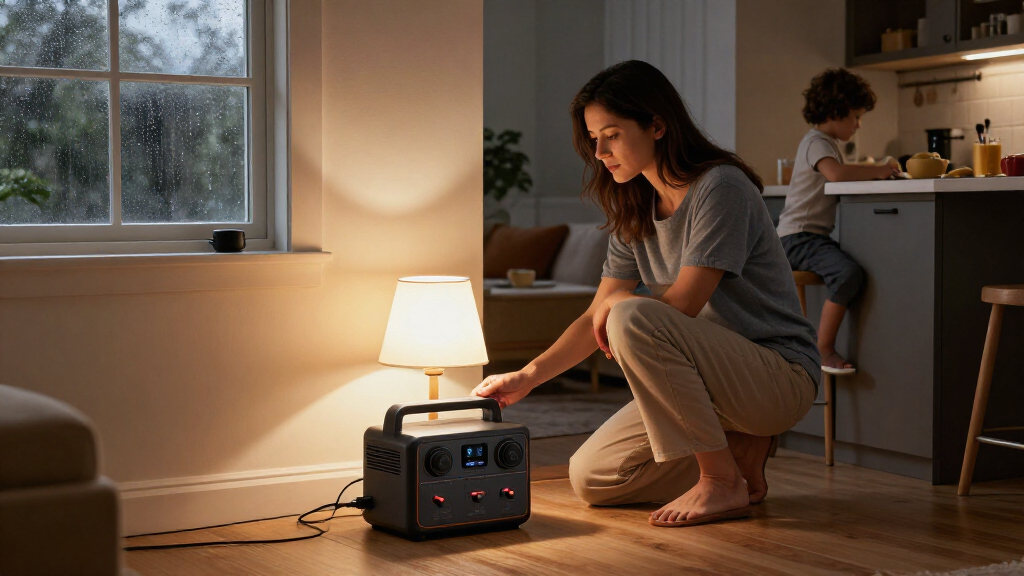
When the power cuts out, a charged battery can keep your router blinking, your phone alive, and a lamp glowing in the kitchen. Portable power stations make that possible without the engine noise and exhaust of a fuel generator while they operate.
This guide explains what they are, how to estimate runtime, and which specifications matter when you compare models. You’ll also see where a battery station can help for home backup and where its limits call for another plan.
Think of one as a packed lunch for your appliances: useful and ready when you need it, but only as large as what you brought. A little planning before an outage can help you spend that stored energy on what matters most.
Capacity in Wh estimates stored energy; output in W determines whether a station can run your devices, including startup surges.
A 1,000 Wh station running a steady 100 W load has a theoretical runtime of about 10 hours, but actual runtime is shorter.
Refrigerator runtime depends on average energy use and compressor startup needs, not just the wattage shown while it is running.
Solar panels can extend use when conditions are suitable, but cloudy weather and nighttime limit charging.
Use a qualified electrician for connections to household wiring, and follow local rules and the station maker’s instructions.
What a Portable Power Station Can Run During an Outage
A portable power station is a rechargeable battery system with built-in outlets and charging inputs; it stores electricity for later use instead of making power with fuel. That makes it a practical backup for selected devices such as phones, laptops, lights, and, if its ratings allow, a refrigerator or sump pump. It does not provide unlimited power simply because it has household-style outlets.
Most models use lithium-ion batteries, with lithium iron phosphate (LFP) becoming more common in larger units. Battery chemistry can affect cycle life and thermal behavior, but the full product design, temperature, charging habits, and warranty matter too. A family might use a station to keep a modem, two phones, and an LED lamp alive through an evening outage, then recharge it when power returns.
The useful distinction is stored energy versus produced energy. A fuel generator can keep running while it has fuel and is operated safely outdoors; a battery station runs until its stored energy runs down, then needs recharging. Solar panels may help extend its use in suitable sunlight, but clouds, panel placement, and night all affect charging.
Plan for essential loads and a specific backup window. A battery station can buy you useful hours; it cannot promise endless electricity.
Products Worth Considering

Bose SoundLink Plus Portable Bluetooth Speaker, Black

Ring Alarm 8-Piece Kit (2nd Gen) Home Security System

Dyson Airwrap i.d. Multi-Styler for Straight and Wavy Hair
As an affiliate, we earn on qualifying purchases.
Check These Two Ratings Before You Buy
For portable power stations, capacity in watt-hours (Wh) estimates how much energy a battery stores, while output in watts (W) tells you how much power it can supply at once. You need both numbers: capacity helps answer “how long?” and output helps answer “can it run this device?” A high Wh rating cannot compensate for an output rating too low for an appliance.
Motors and compressors complicate the picture. A refrigerator may draw more power when its compressor starts than while it runs steadily, so check both the station’s continuous and surge ratings against the appliance’s requirements. Imagine choosing a station for a basement sump pump: its normal draw may look manageable, but a startup surge or simultaneous router load can push the total past the limit.
Use this table as a first pass, then check the manuals for the specific model and appliance. Appliance draw changes, and a listed maximum does not tell you exactly how much energy a device uses over a full day.
| Rating | What it tells you | What to check |
|---|---|---|
| Capacity (Wh) | Stored energy and a rough guide to runtime | Usable energy, reserve, and conversion losses |
| Continuous output (W) | Power the station can provide steadily | Combined draw of devices running together |
| Surge output (W) | Short-term power available for startup loads | Motor or compressor startup needs |
For example, a station marked 1,000 Wh does not guarantee that every 1,000 W appliance will run for one hour. The station must also support that output, and the actual runtime depends on losses and changing draw.
Estimate How Long Your Essentials Will Stay On
Estimate runtime by dividing usable battery capacity in Wh by the appliance’s average draw in watts; treat the result as a rough upper guide. A 1,000 Wh station divided by a steady 100 W load gives about 10 hours on paper. Real runtime will be lower because energy conversion uses some power, manufacturers may reserve some battery capacity, and devices do not always draw a constant amount.
Refrigerators are a good example. The compressor switches on and off, so its average energy use matters more than the wattage printed on the compressor alone. If you can find the refrigerator’s published daily energy use, or measure its consumption with a suitable meter, you’ll get a more useful estimate than multiplying a momentary running draw by 24 hours.
Make a small load list before shopping. Write down which items matter, how many hours each needs to run, and whether they’ll run at the same time. For a winter outage, you might prioritize a medical device and phone charging over an electric kettle; for a damp basement, the sump pump may be first.
- List essential devices and their typical running watts or energy use.
- Check startup requirements for motors and compressors.
- Choose a backup window, such as six hours overnight.
- Compare the combined load with output, and the energy needed with usable capacity.
This simple exercise turns “What size do I need?” into a concrete household question instead of a guess based on the biggest number on a box.
Know Which Household Loads Drain a Battery Fast
Portable power stations usually suit low- or moderate-draw essentials better than appliances that create heat, cool a room, or run powerful motors for long periods. Phones, laptops, LED lights, and routers are often sensible candidates; electric heaters, ovens, air conditioners, and some well pumps can use substantial power or exceed a station’s output rating. Check the actual device and station specifications before connecting them.
Picture a summer blackout: the router and a couple of lamps may give your household useful communications and light, while a portable air conditioner could drain stored energy quickly. The difference comes down to energy use over time, not just whether a plug fits. A station may support an appliance briefly yet still fall short of the hours you need.
Medical devices deserve careful planning. A model may be suitable if its output, outlets, runtime, and power quality meet the device requirements, but a critical medical device needs a dependable backup plan. Check with the device maker or clinician about power needs and outage procedures; don’t base a safety decision on an online estimate alone.
Choose the loads you can’t comfortably lose, then decide how much runtime you need for each. If you expect frequent or prolonged outages, a battery station may be one part of a wider backup plan rather than the only source of power.
Compare Charging, Battery Life, and Placement
A station is useful only if you can keep it charged and use it within its limits. Compare wall, vehicle, and solar charging, along with solar input limits, connector compatibility, and whether the unit supports charging while powering devices. A camping panel might look like a match, but its voltage and current must fit the station’s input specifications.
Solar charging can extend use on a bright day, but it does not guarantee continuous power through cloudy weather or at night. For example, a household could recharge a station from panels during a clear afternoon outage, then use the stored energy for lights after sunset. The amount recovered depends on sunlight, panel angle and placement, weather, and the station’s own limits.
Many home-backup models now offer LFP batteries, expandable capacity, faster AC charging, or accessories for selected circuits. These are product trends, not promises about every model. Compare the maker’s cycle-life conditions, warranty, relevant safety certifications, outlet types, and instructions; a cycle-life headline does not tell you how long every battery will last in your home.
Battery stations make no combustion exhaust while operating, and they are generally quieter than fuel generators, though fans can run during charging or heavy use. Follow the manual for placement, temperature, clearance, and charging. Keep the unit away from heat and moisture, and don’t block its airflow. For the quietest practical setup, a homeowner might store a charged unit in a dry, accessible spot rather than burying it under boxes in a hot garage.
Connect Home Circuits Safely and Get Help When Needed
A portable station can power devices plugged directly into its outlets, but connecting it to household wiring requires a compatible, properly installed method that prevents unsafe backfeeding. Never use an improvised connection to feed power into a wall outlet or home circuit. The right arrangement depends on the equipment, the station, and local electrical rules.
Some manufacturers sell home panels or transfer-switch accessories for selected circuits. If you want to use one, check the product documentation and local requirements, then have a qualified electrician assess and install the connection. For example, powering a few selected circuits for a refrigerator and lights is a different setup from trying to energize an entire house.
Battery stations avoid engine exhaust while operating, but that does not mean you can ignore product safety instructions. Use the correct charging equipment, follow temperature and airflow guidance, and keep the unit dry. Fuel generators pose a separate serious hazard: never run one indoors, in a garage, or near openings where exhaust could enter the home; follow its instructions for outdoor placement and safe fuel handling.
For electrical work, use a licensed professional and follow local code and permit requirements. An improvised connection can create a shock or fire hazard and put utility workers at risk.
Getting professional advice before an outage also gives you time to check compatibility and prepare a simple plan, rather than improvising in a dark hallway during a storm.
Frequently Asked Questions
How long will a portable power station run my refrigerator?
It depends on the station’s usable capacity, the refrigerator’s average energy use, and its compressor’s startup needs. Use published daily consumption or a suitable measurement when available; a single running-watt figure can mislead because the compressor cycles.
Can a portable power station run my whole house?
Most portable models are intended for selected loads, not an entire home indefinitely. Whole-home or multi-circuit backup generally needs a compatible system and suitable electrical equipment, installed to local requirements by a qualified electrician.
Can I recharge a power station with solar panels?
Often, yes, if the panel’s voltage, current, and connector fit the station’s solar input limits. Charging speed changes with sunlight, panel placement, and weather, so solar does not guarantee power through cloudy conditions or overnight.
Is it safe to keep a portable power station indoors?
A battery station does not produce combustion exhaust while operating, but you still need to follow its instructions for temperature, clearance, airflow, and charging. Keep it away from heat and moisture, and never block vents.
Can I connect a power station to my home electrical panel?
Only with a compatible connection method that prevents unsafe backfeeding and meets local electrical rules. Ask the manufacturer and a qualified electrician about the equipment and installation; never improvise a connection through a wall outlet.
Conclusion
Start with your essential devices, their running and startup power, and the number of hours you want covered. Then choose a station whose usable capacity, output, and charging options fit that list. That small bit of homework can turn an outage from a scramble into a plan.
Remember the image: a battery station is a lantern for selected corners of your home, not a miniature power grid. Decide which corners matter most before the lights go out.