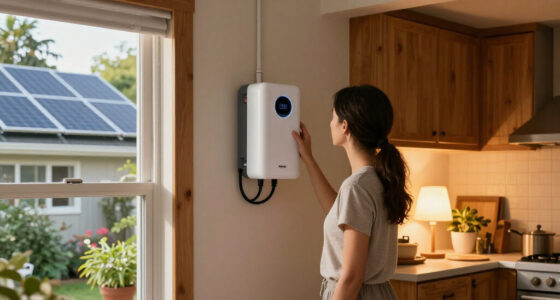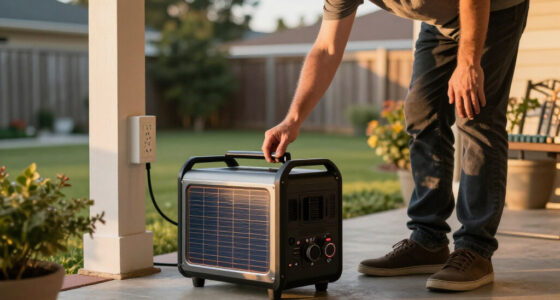
When integrating solar generators into a home backup system, the transfer switch acts as the critical safety gatekeeper, preventing backfeed into the utility grid while allowing clean power to flow to essential circuits. My analysis of the current market highlights the 100A Automatic/Manual Dual Power Transfer Switch as the best overall choice for most homeowners due to its seamless hybrid operation and robust build. For those prioritizing budget-friendly manual control, the DSGSANO 50A Manual Generator Transfer Switch offers exceptional value with its clear circuit labeling. The primary tradeoff you face is between the convenience of automatic switching, which requires complex installation and higher upfront costs, and the affordability of manual switches, which demand physical intervention during outages. Continue reading to explore how these fifteen models stack up against specific household needs and installation constraints.

Get backup power and energy gear delivered free with Prime
- Fast, free delivery on millions of items
- Prime Video, Amazon Music and more included
- Member-only deals all year
Complete the kit


Key Takeaways
- Automatic transfer switches (ATS) dominate the high-end market for whole-home solar integration but require professional installation to meet NEC codes.
- Manual transfer switches remain the most popular choice for partial-home backup, offering simpler wiring and lower costs for circuits under 50 amps.
- NEMA 3R outdoor-rated enclosures are becoming a standard expectation for durability, especially for units installed on exterior walls.
- Circuit capacity mismatch is the most common buyer error; pairing a 100-amp switch with a 2000-watt solar generator wastes potential and space.
- Compact, single-circuit switches serve niche needs like RVs or small cabins but lack the flexibility for future home expansion.
| 100A 110V Automatic/Manual Dual Power Transfer Switch, 2-Pole |  | Best for Fast Automatic 110V Switching | Operating voltage: 110 V AC | Frequency: 50/60 Hz | Poles: 2 | VIEW LATEST PRICE | See Our Full Breakdown |
| DSGSANO 50A 240V 10-Circuit Manual Generator Transfer Switch |  | Best for Compact Selected-Circuit Backup | Model: A5 | Voltage: 240 V | Circuit support: Up to 10 circuits | VIEW LATEST PRICE | See Our Full Breakdown |
| Nature’s Generator 50A Manual Transfer Switch, 12-Circuit, 120/240V |  | Best Complete Kit for Selected Circuits | Operation: Manual | Operating voltage: 120/240 V | Circuit capacity: Up to 12 circuits | VIEW LATEST PRICE | See Our Full Breakdown |
| Tzechkii 200A Manual Generator Transfer Switch, 48,000W |  | Best for High-Capacity Outdoor Service | Maximum current: 200 A | Power capacity: 48,000 W | Voltage: 120/240 V | VIEW LATEST PRICE | See Our Full Breakdown |
| 100A 220V Automatic/Manual Dual Power Transfer Switch |  | Best for Automatic 220V Source Switching | Operating voltage: 220 V AC | Frequency: 50/60 Hz | Poles: 2 | VIEW LATEST PRICE | See Our Full Breakdown |
| Briidea 15A 120V 4-Circuit Generator Transfer Switch Kit |  | Best for Outdoor Four-Circuit Backup | Operation: Manual | Operating voltage: 120 V | Circuit capacity: 4 circuits | VIEW LATEST PRICE | See Our Full Breakdown |
| Journeyman-Pro 15A Single-Circuit Generator Transfer Switch, NEMA 3R |  | Best for One Essential Circuit | Circuit count: 1 | Operating voltage: 120 V | Maximum wattage: 1,875 W | VIEW LATEST PRICE | See Our Full Breakdown |
| 63A 120/240V Manual Generator Transfer Switch, Prewired, 15,000W Maximum |  | Best for Higher-Capacity 120/240V Backup | Operating voltage: 120/240 V | Maximum wattage: 15,000 W | Circuit breakers: 3 x 63 A | VIEW LATEST PRICE | See Our Full Breakdown |
| Nature’s Generator 30A Manual Transfer Switch, 6-Circuit, 120V |  | Best for Multi-Circuit 120V Backup | Operating voltage: 120 V | Maximum wattage: 3,600 W | Circuit capacity: 6 circuits | VIEW LATEST PRICE | See Our Full Breakdown |
| MUJURUR 100 Amp Manual Transfer Switch, 24000W, 120/240V, NEMA 3R Outdoor Enclosure |  | Best for High-Capacity Outdoor Backup | Model: DTTS-100A | Voltage: 120/240 V | Maximum wattage: 24,000 W | VIEW LATEST PRICE | See Our Full Breakdown |
| CXCESNS 100A 110V 4-Pole Automatic Transfer Switch |  | Best for Fast Automatic Switchover | Switching Time: <0.05 seconds | Poles: 4P | Operating Voltage: 110 V AC | VIEW LATEST PRICE | See Our Full Breakdown |
| 100A 110V Automatic/Manual Dual-Power Transfer Switch, 2-Pole |  | Best for Versatile Control Modes | Poles: 2 | Operation Modes: Automatic and Manual | Insulation Voltage: 690 V AC | VIEW LATEST PRICE | See Our Full Breakdown |
| 20A 125V Manual Generator Transfer Switch |  | Best for Small Essential Loads | Wattage: 1800 watts | Operation Mode: ON-OFF-ON | Protection Features: Interlock; resettable overload | VIEW LATEST PRICE | See Our Full Breakdown |
| Renogy 30A Automatic Transfer Switch for Pure Sine Wave Inverters |  | Best for Solar Inverter Integration | Output Power: 3600 W | Switching Delay: 20–30 seconds | Certification: ETL | VIEW LATEST PRICE | See Our Full Breakdown |
| 100 A Manual Generator Transfer Switch, 120/240/450 V |  | Best for High-Capacity Outdoor Use | Maximum Output Power: 45 kW | Voltage: 120/240/450 V | Switch Type: Manual double-throw | VIEW LATEST PRICE | See Our Full Breakdown |
| solar generator transfer switch | Operating voltage | Mounting |
|---|---|---|
| 100A 110V Automatic/Manual Dua | 110 V AC | DIN rail |
| DSGSANO 50A 240V 10-Circuit Ma | — | Surface mount |
| Nature’s Generator 50A Manual | 120/240 V | Wall mount |
| Tzechkii 200A Manual Generator | — | — |
| 100A 220V Automatic/Manual Dua | 220 V AC | Track installation in a PZ30 distribution box |
| Briidea 15A 120V 4-Circuit Gen | 120 V | Wall mount |
| Journeyman-Pro 15A Single-Circ | 120 V | Surface mount |
| 63A 120/240V Manual Generator | 120/240 V | Wall mount |
| Nature’s Generator 30A Manual | 120 V | Wall mount |
| MUJURUR 100 Amp Manual Transfe | — | Wall mount |
| CXCESNS 100A 110V 4-Pole Autom | 110 V AC | — |
| 100A 110V Automatic/Manual Dua | — | — |
| 20A 125V Manual Generator Tran | 120 volts | — |
| Renogy 30A Automatic Transfer | — | — |
| 100 A Manual Generator Transfe | — | — |
More Details on Our Top Picks
100A 110V Automatic/Manual Dual Power Transfer Switch, 2-Pole
For a solar-generator setup that needs automatic backup switching on a 110V system, this two-pole unit stands apart from the manual circuit panels in this lineup. Its stated 0.05-second switching time and automatic/manual modes aim to reduce the need to change sources by hand, while voltage protection can respond when supply falls below 85V or rises above 145V. Compared with the DSGSANO 50A 240V 10-Circuit Manual Generator Transfer Switch, this is about automatic source transfer rather than selecting several household circuits. The tradeoff is a narrower fit: it is specified for 110V AC, and the listing describes it as intended for infrequent switching. I would not treat the 100A label alone as proof that it suits a whole-home or solar-inverter installation; compatibility and safe wiring need confirmation.
Pros:- Automatic and manual operation provides a choice between unattended switching and direct control.
- Specified 0.05-second switching time may limit interruption when a compatible source fails.
- Overvoltage and undervoltage thresholds add a layer of supply monitoring.
- DIN rail mounting and screw terminals suit compatible distribution-panel installations.
Cons:- 110V AC specification limits compatibility with many 120/240V residential systems.
- Described as an infrequent-switching device, so it may not suit frequent source changes.
- A two-pole switch does not provide the multi-circuit selection of the DSGSANO or Nature’s Generator panels.
Best for: Owners of compatible 110V solar-generator or generator systems who want automatic source switching with a manual override.
Not ideal for: Buyers seeking a 120/240V multi-circuit household panel, or anyone whose system voltage and switching requirements have not been confirmed.
- Operating voltage:110 V AC
- Frequency:50/60 Hz
- Poles:2
- Operation:Automatic/manual
- Switching time:0.05 seconds
- Undervoltage thresholds:85 V trip; 95 V recovery
- Overvoltage thresholds:145 V trip; 130 V ± 5 V recovery
- Mounting:DIN rail
Our verdict“Choose this for a verified 110V system needing automatic transfer, not for a multi-circuit 120/240V home backup panel.”
DSGSANO 50A 240V 10-Circuit Manual Generator Transfer Switch
The DSGSANO A5 is a manual, 10-circuit panel for buyers who want to choose which loads receive backup rather than switch an entire supply automatically. Its marked wires and tags can make circuit identification easier during installation and later maintenance, while its 11.75 × 4.5 × 11-inch footprint gives it a more compact profile than the Nature’s Generator 12-circuit kit. The Nature’s option, though, includes a 50A inlet, cord, and other connection components; this listing names only the transfer switch, so buyers may need to source compatible parts separately. The DSGSANO supports 240V and selected-circuit, RV, or off-grid use, but it requires electrical knowledge and is not a plug-and-play solar-generator accessory. I would choose it when circuit capacity and a smaller enclosure matter more than automatic operation or an all-in-one kit.
Pros:- Supports up to 10 circuits for prioritizing selected loads.
- Marked wires and tags help identify connections during installation and maintenance.
- Compact surface-mount dimensions suit installations with limited wall space.
- 240V specification covers compatible backup, RV, and off-grid applications.
Cons:- Manual operation requires someone to change sources when utility power fails or returns.
- The listed package includes the transfer switch only, unlike the Nature’s Generator kit with inlet and cord.
- Installation requires circuit knowledge, with professional help recommended for inexperienced users.
Best for: Experienced DIYers or electricians building a 240V selected-circuit backup setup who can verify and provide the required inlet and wiring components.
Not ideal for: First-time installers seeking a ready-to-connect kit, or households that want automatic switching without manual source selection.
- Model:A5
- Voltage:240 V
- Circuit support:Up to 10 circuits
- Contact type:Normally open
- Operation:Manual
- Mounting:Surface mount
- Dimensions:11.75 × 4.5 × 11 in
- Included component:Transfer switch
Our verdict“Pick the DSGSANO when you need a compact 10-circuit manual panel and already have the skills or help to complete the installation.”
Nature’s Generator 50A Manual Transfer Switch, 12-Circuit, 120/240V
This Nature’s Generator switch is the strongest fit here for buyers who want a 12-circuit manual panel with key connection parts included. It can be configured for twelve 120V circuits or six 240V circuits, giving it more stated circuit capacity than the DSGSANO 10-circuit switch. Its 50A CS6375 inlet, inlet box, power cord, and pre-wired components also make the listed package more complete than the DSGSANO, whose product data names the switch alone. That convenience does not remove the need to check generator and solar-inverter compatibility, circuit loading, and installation requirements. This model is manual, so it will not change sources on its own like the 100A automatic 110V switch. It is also rated for indoor use, making the weather-ready Tzechkii a better match for an outdoor main-service application.
Pros:- Supports up to 12 circuits with options for twelve 120V or six 240V circuits.
- Includes a 50A CS6375 inlet, inlet box, power cord, and pre-wired components.
- Steel wall-mount construction provides a defined indoor installation format.
- Offers more circuit capacity and included connection hardware than the DSGSANO 10-circuit switch.
Cons:- Manual source selection means a person must operate the switch during an outage.
- Indoor rating makes it a poor fit for exposed outdoor installation.
- The 50A inlet and 120/240V design may not match smaller solar generators or their output connections.
Best for: Homeowners with a compatible 120/240V generator who want a manual, selected-circuit setup and an included inlet-and-cord package.
Not ideal for: Buyers who need automatic transfer, an outdoor-rated enclosure, or a switch for a solar generator without a compatible 50A output.
- Operation:Manual
- Operating voltage:120/240 V
- Circuit capacity:Up to 12 circuits
- Power capacity:Up to 12,000 W
- Inlet:CS6375, 50 A
- Mounting:Wall mount
- Material:Steel
- Dimensions:13 × 9 × 4 in
- Included components:Inlet box, power cord, conduit, cable clamps, and pre-wired components
Our verdict“Choose this kit for compatible 120/240V backup across selected circuits when included connection hardware matters more than automatic operation.”
Tzechkii 200A Manual Generator Transfer Switch, 48,000W
The Tzechkii is the high-capacity, service-level choice in this group: it is rated for 200A and up to 48,000W at 120/240V, with a galvanized steel NEMA 3R enclosure for indoor or outdoor use. That makes it a different proposition from the Nature’s Generator 12-circuit switch, which is a 50A selected-circuit kit with an inlet and cord. The Tzechkii instead uses a manual double-throw mechanism to select between utility and generator power, with a lock hole, grounding position, and wiring lugs included. This capacity does not mean it is automatically suitable for a solar generator; the generator’s output, connection method, service configuration, and local requirements must all match. Its installation is aimed at experienced users or professionals, and manual operation is less convenient than the automatic 220V dual-power switch in this roundup.
Pros:- 200A rating and stated 48,000W capacity suit substantially larger systems than the 50A circuit-panel options.
- NEMA 3R galvanized steel enclosure is designed for indoor or outdoor use.
- Manual double-throw operation includes a lock hole and grounding position.
- Wiring lugs are included, unlike switch-only packages such as the DSGSANO listing.
Cons:- Manual lever operation requires someone to change sources.
- Its high service rating may be mismatched to the output of many portable solar generators.
- Installation is intended for experienced users or professionals and requires system-level compatibility checks.
Best for: Property owners or electricians planning a compatible high-capacity 120/240V utility-generator transfer point with an outdoor-rated enclosure.
Not ideal for: Solar-generator owners with limited output capacity, buyers wanting a compact selected-circuit kit, or inexperienced installers.
- Maximum current:200 A
- Power capacity:48,000 W
- Voltage:120/240 V
- Number of circuits:12
- Phase type:Single-phase or three-phase
- Operation:Manual double-throw
- Enclosure material:Galvanized alloy steel; NEMA 3R
- Dimensions:7.4 × 5.1 × 14.5 in
- Included components:Transfer switch and wiring lugs
Our verdict“Consider the Tzechkii for a professionally planned, high-capacity 120/240V transfer point, not as a universal accessory for portable solar generators.”
100A 220V Automatic/Manual Dual Power Transfer Switch
For a compatible 220V AC system, this two-pole switch combines automatic transfer with a manual mode and specified voltage protection. Its stated 0.05-second transfer time and automatic return to the primary source after power stabilizes favor hands-off operation, unlike the DSGSANO and Nature’s Generator panels, which require manual source changes. The voltage thresholds are also set for 220V service: undervoltage at 175V and overvoltage at 260V, with separate recovery points. That specificity is also its main limitation. It is not a general substitute for a 120/240V selected-circuit panel, and the product data calls for track installation in a PZ30 distribution box. I would shortlist it only after confirming the solar generator or inverter’s output, neutral arrangement, and installation compatibility; the stated 100A and 22,000W figures alone do not establish a safe match.
Pros:- Automatic and manual operating modes let users choose between hands-off transfer and direct control.
- Specified 0.05-second transfer time and automatic return support unattended source changes.
- Overvoltage and undervoltage thresholds are specified for 220V operation.
- Three-year warranty is listed in the product data.
Cons:- 220V specification limits use with other system voltages.
- PZ30 distribution-box track installation narrows enclosure compatibility.
- Does not provide the selected-circuit panel and included inlet hardware found in the Nature’s Generator kit.
Best for: Owners of a verified 220V system seeking automatic source transfer with manual control and voltage monitoring in a compatible PZ30 distribution box.
Not ideal for: Buyers with 110V or standard 120/240V equipment, or those seeking a complete inlet-and-cord transfer-switch kit.
- Operating voltage:220 V AC
- Frequency:50/60 Hz
- Poles:2
- Transfer time:0.05 seconds
- Operation:Automatic/manual
- Undervoltage thresholds:175 V trip; 195 V recovery
- Overvoltage thresholds:260 V trip; 240 V ± 5 V recovery
- Wattage:22,000 W
- Mounting:Track installation in a PZ30 distribution box
Our verdict“Choose this for a confirmed 220V installation needing automatic switching, and skip it if your solar generator uses a different output system.”
Briidea 15A 120V 4-Circuit Generator Transfer Switch Kit
The Briidea makes sense for buyers who want to assign backup power to four selected 120V circuits without moving up to a larger, higher-current switch. Its IP67 metal enclosure is the clearest distinction from Nature’s Generator 30A Manual Transfer Switch, which supports six circuits but is specified for indoor installation. Briidea instead trades circuit count and amperage for a more weather-protected enclosure and a compact, prewired kit with labeled wiring and a 10-foot cord. The limit is firm: it is designed for a compatible 15A, 120V generator, so it is not the right match for a higher-output 30A or 240V backup setup. Installation also involves home wiring, and buyers uncertain about that work should plan on a qualified electrician.
Pros:- Supports four selected circuits from a compatible 15A, 120V generator.
- IP67-rated metal enclosure is specified for indoor or outdoor use.
- Prewired kit includes labeled wiring and a 10-foot, 14 AWG power cord.
- Compact 5 x 4 x 3-inch listed dimensions.
Cons:- 15A, 120V compatibility rules out many larger generator setups.
- Manual source switching requires someone to operate it during an outage.
- Installation may call for a professional electrician.
Best for: Homeowners with a compatible 15A, 120V source who want a few chosen circuits and an enclosure suitable for indoor or outdoor mounting.
Not ideal for: Buyers powering more than four circuits or using a 30A or 120/240V generator; its input rating limits those systems.
- Operation:Manual
- Operating voltage:120 V
- Circuit capacity:4 circuits
- Mounting:Wall mount
- Enclosure material:Metal
- Ingress protection:IP67
- Power cord:10 ft, 14 AWG
- Dimensions:5 x 4 x 3 in
Our verdict“Choose Briidea if outdoor-rated protection and four selected circuits matter more than the higher circuit count and amperage of Nature’s Generator’s 30A switch.”
Journeyman-Pro 15A Single-Circuit Generator Transfer Switch, NEMA 3R
When the backup plan centers on one appliance or branch circuit, the Journeyman-Pro keeps the setup narrower than multi-circuit options. It supports a single 120V circuit up to 15A and 1,875W, with an ON-OFF-ON switch for choosing between sources or disconnecting the load. Its stated compatibility includes generators, inverter battery backups, and solar power systems with a standard 15A NEMA 5-15 outlet, making it a more focused solar-backup fit than Briidea’s four-circuit kit for buyers who only need one load. The tradeoff is equally clear: it cannot distribute backup power across several selected circuits. A powder-coated steel enclosure and watertight plug cover suit indoor or outdoor mounting, but the 24-inch prewired lead still requires a suitable installation location and correct wiring.
Pros:- Supports one 120V circuit up to 15A and 1,875W.
- Listed compatibility includes generators, inverter battery backups, and solar power systems with a 15A NEMA 5-15 outlet.
- Prewired 24-inch, 12 AWG lead and included installation hardware simplify preparation.
- Powder-coated steel enclosure and watertight plug cover support indoor or outdoor installation.
Cons:- Single-circuit capacity limits how many household loads can receive backup power.
- Requires a compatible 120V source with a standard 15A NEMA 5-15 outlet.
- Manual ON-OFF-ON operation does not switch sources automatically.
Best for: Owners of a compatible 120V, 15A solar generator or inverter who want to back up one priority circuit, such as a freezer, furnace, or sump pump.
Not ideal for: Households seeking backup for multiple circuits or loads above 1,875W; Nature’s Generator’s six-circuit model serves a broader set of loads.
- Circuit count:1
- Operating voltage:120 V
- Maximum wattage:1,875 W
- Operation mode:ON-OFF-ON
- Connector:Plug-in
- Prewired lead:24 in, 12 AWG
- Mounting:Surface mount
- Certification:ETL listed
Our verdict“Pick the Journeyman-Pro for one carefully chosen 15A circuit, but choose a multi-circuit switch if your solar backup plan covers several loads.”
63A 120/240V Manual Generator Transfer Switch, Prewired, 15,000W Maximum
This switch targets buyers whose solar or generator backup system uses 120/240V service and needs more capacity than the small 120V switches in this lineup. Its stated maximum is 15,000W, with three 63A breakers and interlocking breakers designed to prevent both power sources from being connected at once. That makes it a different class of option from the Journeyman-Pro, which is limited to one 120V, 15A circuit, and from Nature’s Generator’s 120V six-circuit switch. The broader voltage range and included grounding terminal suit a larger installation, but the listed data do not spell out a specific household circuit count or detailed solar-generator connector compatibility. Its manual ON-OFF operation also means someone must change sources, and professional installation is recommended.
Pros:- Supports 120/240V operation with a listed maximum of 15,000W.
- Interlocking breakers are designed to prevent simultaneous connection to both sources.
- Includes three 63A circuit breakers and a grounding terminal.
- Prewired construction and IP44 rating support wall mounting indoors or outdoors.
Cons:- Manual operation requires a person to switch sources.
- Professional electrician installation is recommended.
- Product data do not specify a circuit count or a particular solar-generator connector.
Best for: Homeowners with a compatible 120/240V generator or solar backup system who need a higher-capacity, manually switched installation.
Not ideal for: Buyers seeking a simple plug-in connection or a clearly specified circuit-by-circuit 120V setup; Journeyman-Pro provides a more focused single-circuit option.
- Operating voltage:120/240 V
- Maximum wattage:15,000 W
- Circuit breakers:3 x 63 A
- Operation:Manual, ON-OFF
- Circuit type:2-way
- Mounting:Wall mount
- Ingress protection:IP44
- Dimensions:10 x 9.5 x 3.9 in
Our verdict“Choose this model for a compatible higher-capacity 120/240V backup installation, not for a plug-in, single-circuit solar-generator setup.”
Nature’s Generator 30A Manual Transfer Switch, 6-Circuit, 120V
Nature’s Generator gives 120V-focused buyers room to select up to six circuits, making it a stronger fit for several essential loads than Briidea’s four-circuit, 15A kit. Its 30A rating and 3,600W maximum also allow a larger compatible source, while individual illuminated rocker switches let the user manage circuits rather than treating the backed-up group as one undifferentiated load. The package includes an L5-30P inlet, a 30A cord, and prewired components, reducing the number of separate connection parts to source. Those advantages come with a clear boundary: this is an indoor, 120V switch, not a 120/240V solution like the 63A transfer switch. Buyers also need a compatible generator outlet, and circuit selection remains manual during an outage.
Pros:- Supports up to six 120V circuits and a listed maximum of 3,600W.
- Individual illuminated rocker switches make circuit selection easier to see.
- Includes an L5-30P power inlet, 30A cord, and prewired components.
- Steel enclosure and wall-mounted design provide a fixed indoor installation.
Cons:- Specified for indoor installation rather than outdoor exposure.
- Limited to 120V, so it is not a 120/240V backup option.
- Manual controls require the user to select circuits and switch sources.
Best for: Households with a compatible 30A, 120V source that want manual control over several essential circuits, such as lights, refrigeration, and selected equipment.
Not ideal for: Buyers needing 120/240V backup or outdoor installation; the 63A 120/240V model is the better match for those requirements.
- Operating voltage:120 V
- Maximum wattage:3,600 W
- Circuit capacity:6 circuits
- Operation mode:OFF-NONE-ON
- Mounting:Wall mount
- Power inlet:L5-30P, 30 A
- Enclosure:Steel
- Dimensions:13 x 9 x 4 in
Our verdict“Choose Nature’s Generator when a compatible 30A source and six manually managed 120V circuits matter more than outdoor use or 240V support.”
MUJURUR 100 Amp Manual Transfer Switch, 24000W, 120/240V, NEMA 3R Outdoor Enclosure
MUJURUR is the highest-capacity choice in this batch, with a listed 100A, 120/240V rating and a 24,000W maximum. That places it well beyond the 15,000W 63A switch and far above the 120V circuit-focused options, so it suits a larger backup installation rather than a portable power station serving a few selected loads. Its NEMA 3R galvanized-steel enclosure is designed for outdoor mounting, and the lockable handle and grounding point address practical installation and access needs. The tradeoff is scale: buyers need a compatible source and professionally planned electrical installation, not just a matching plug and cord. Operation is manual, too, so it will not change sources on its own during an outage.
Pros:- 100A rating and 24,000W maximum suit higher-capacity 120/240V installations.
- NEMA 3R galvanized-steel enclosure is specified for outdoor use.
- Lockable handle and dedicated grounding point are included.
- Mechanical manual operation avoids dependence on electronic switching components.
Cons:- Manual source changes require someone to operate the switch.
- Professional installation is recommended for safe integration with the electrical system.
- Its high capacity may be unnecessary for portable solar generators serving only selected household circuits.
Best for: Owners planning a professionally installed, high-capacity 120/240V backup system who need an outdoor-rated manual switch.
Not ideal for: Portable solar-generator owners seeking a simple connection for a few circuits; Nature’s Generator’s 30A six-circuit switch is a more targeted 120V option.
- Model:DTTS-100A
- Voltage:120/240 V
- Maximum wattage:24,000 W
- Operation mode:ON-OFF-ON
- Enclosure:NEMA 3R galvanized steel
- Mounting:Wall mount
- Temperature range:40°F to 200°F
Our verdict“Choose MUJURUR for a professionally installed, outdoor 100A backup system; skip it if your solar generator only needs to support a few 120V circuits.”
CXCESNS 100A 110V 4-Pole Automatic Transfer Switch
This unit stands out for its sub-0.05-second switching time, which is significantly faster than the Renogy 30A ATS’s 20–30 second delay. That speed makes it ideal for setups where even a brief flicker could disrupt sensitive electronics or continuous operations. The 4-pole design offers more comprehensive circuit management than the 2-pole alternatives in this roundup. However, the IP00 rating means it has zero protection against dust or moisture, restricting it strictly to clean, dry indoor panels. It also lacks the robust mechanical locking features found in manual switches like the 100A Manual Transfer Switch, relying instead on electronic logic that requires reliable control power. If you need seamless continuity without manual intervention, this is a strong candidate, provided your environment is pristine.Pros:- Extremely fast switching time (<0.05s) minimizes downtime
- 4-pole configuration allows for more complex circuit control
- DIN rail mounting integrates easily into standard PZ30 panels
- Copper contacts provide high conductivity and durability
Cons:- IP00 rating offers no protection against dust or water
- Limited to 110V systems, excluding 220V/240V applications
- Requires specific DIN rail setup, not compatible with all panels
Best for: Users with sensitive equipment requiring near-instant power restoration in controlled indoor environments.
Not ideal for: Outdoor installations or dusty workshops due to the lack of ingress protection (IP00).
- Switching Time:<0.05 seconds
- Poles:4P
- Operating Voltage:110 V AC
- Mounting Type:35mm DIN Rail
- Max Wattage:11000 W
- Certification:CE
Our verdict“Choose this if you prioritize speed and have a clean, dry indoor panel setup.”
100A 110V Automatic/Manual Dual-Power Transfer Switch, 2-Pole
This switch offers a practical balance by including both automatic and manual modes, unlike the purely automatic CXCESNS model. The LED status indicators are a notable usability feature, allowing users to verify the active power source at a glance without opening the panel. Its flame-retardant PC housing adds a layer of safety that some budget metal alternatives lack. However, the 2-pole design is less versatile than 4-pole units for complex wiring scenarios. It also shares the 110V limitation of the CXCESNS, making it unsuitable for standard US residential 240V main feeds unless used for specific 120V sub-circuits. It is a solid choice for small-scale solar or generator backups where manual override capability is valued.Pros:- Dual operation modes (auto/manual) provide flexibility
- LED indicators clearly show active power source
- Flame-retardant PC housing enhances safety
- Includes comprehensive electrical protections (overload, short-circuit)
Cons:- 2-pole configuration limits circuit management options
- Restricted to 110V systems only
- Narrower operating temperature range compared to industrial units
Best for: Homeowners or small business owners who want the option to manually override automatic switching.
Not ideal for: High-voltage residential mains (240V) or users needing multi-circuit selection capabilities.
- Poles:2
- Operation Modes:Automatic and Manual
- Insulation Voltage:690 V AC
- Mechanical Life:≥8000 cycles
- Housing Material:Flame-retardant PC
- Standard:IEC/EN 60947-6-1
Our verdict“A flexible option for 110V setups where manual control and visual feedback are priorities.”
20A 125V Manual Generator Transfer Switch
This compact switch is designed for essential household loads rather than whole-home coverage, capping out at 1800W. This is a stark contrast to the 100A Manual Transfer Switch, which supports up to 45kW. The ON-OFF-ON interlock is a critical safety feature that prevents backfeeding the grid, a risk absent in some DIY setups. Its plug-in mount design makes it easier to install for beginners compared to the DIN rail or hardwired options in this list. However, the low amperage means you can only power a few lights and a fridge, not HVAC systems. It is best viewed as a lightweight solution for specific critical circuits, not a comprehensive backup system.Pros:- ON-OFF-ON interlock prevents dangerous backfeeding
- Resettable overload protection adds safety
- Pre-wired with copper lugs simplifies installation
- Compact size fits tight spaces
Cons:- Low 1800W limit restricts usable appliances
- Plug-in design may lack the rigidity of hardwired units
- Compatibility depends heavily on specific generator/solar setup
Best for: Users needing to power a limited number of critical appliances (lights, fridge) via portable generators or small solar setups.
Not ideal for: Anyone needing to power HVAC, water heaters, or multiple high-draw appliances simultaneously.
- Wattage:1800 watts
- Operation Mode:ON-OFF-ON
- Protection Features:Interlock; resettable overload
- Mounting Type:Plug-In Mount
- Operating Voltage:120 volts
- Circuit Type:2-way
Our verdict“Ideal for powering a few critical circuits without the complexity of a large transfer switch.”
Renogy 30A Automatic Transfer Switch for Pure Sine Wave Inverters
Designed specifically for Renogy pure sine wave inverters, this switch automates the switch between shore power/generator and inverter output. The 20–30 second delay when switching to generator power is a smart feature that prevents voltage spikes, something the CXCESNS’s instant switch does not account for. It is ETL certified, offering peace of mind for residential use. However, it is strictly limited to 120V AC systems and cannot handle 240V loads. Unlike the 100A Manual Transfer Switch, it lacks a rugged outdoor-rated enclosure, requiring a separate waterproof box for external installations. This makes it a niche product for users already invested in the Renogy ecosystem who need seamless inverter management.Pros:- Optimized for Renogy pure sine wave inverters
- Built-in generator switching delay stabilizes voltage
- ETL certification ensures safety compliance
- Lightweight and easy to wall-mount
Cons:- Requires separate waterproof enclosure for outdoor use
- Limited to 120V systems only
- Brand-specific compatibility limits flexibility
Best for: Owners of Renogy 1000W–3000W inverters needing automatic source switching in dry locations.
Not ideal for: Users with mixed-brand inverters or those needing 240V capability and outdoor durability.
- Output Power:3600 W
- Switching Delay:20–30 seconds
- Certification:ETL
- Input Voltage:120 V AC
- Material:Heat-resistant ABS
- Weight:2.4 lb
Our verdict“The go-to automatic switch for Renogy inverter owners seeking seamless, delayed power switching.”
100 A Manual Generator Transfer Switch, 120/240/450 V
This heavy-duty unit supports up to 45kW, dwarfing the Renogy ATS’s 3.6kW capacity and the 20A manual switch’s 1.8kW limit. The NEMA 3R enclosure is a major advantage, allowing safe outdoor installation without additional housing, unlike the IP00-rated CXCESNS. Its arc-extinguishing cover and lockable handle provide robust safety for high-amperage manual switching. However, it requires manual operation, meaning no automatic switchover during outages. The listed voltage range (120/240/450V) is broad, so users must carefully verify compatibility with their specific grid and generator. This is the choice for those who need raw power and weather resistance over convenience.Pros:- NEMA 3R enclosure allows safe outdoor installation
- High 45kW capacity supports whole-home loads
- Arc-extinguishing cover improves switching safety
- Supports 120/240/450V configurations
Cons:- Manual operation only; no automatic switching
- Broad voltage specs require careful compatibility verification
- Heavy and bulky compared to DIN rail alternatives
Best for: Users needing high-capacity (up to 45kW) backup power with outdoor installation requirements.
Not ideal for: Those requiring automatic switchover or users with limited electrical knowledge due to high-voltage complexity.
- Maximum Output Power:45 kW
- Voltage:120/240/450 V
- Switch Type:Manual double-throw
- Conductor Material:T2 electrolytic copper
- Safety Feature:Arc-extinguishing cover
Our verdict“A robust, outdoor-capable solution for high-amperage manual backup power needs.”
How We Picked
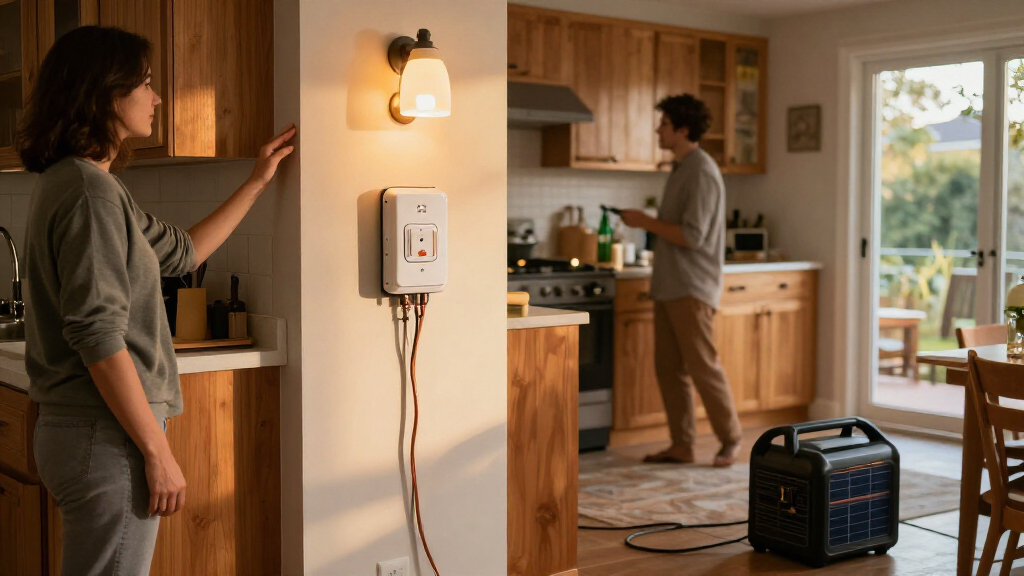
To rank these transfer switches, I evaluated each model based on three core pillars: electrical compatibility, build durability, and installation flexibility. Electrical compatibility was assessed by matching amperage ratings and voltage inputs against common residential solar generator outputs (typically 120V/240V split-phase). I prioritized units with clear labeling and standardized breaker sizes, as these reduce installation errors and future maintenance headaches. Build durability focused on enclosure ratings, specifically favoring NEMA 3R or higher for outdoor resilience against weather and dust. Installation flexibility considered whether the unit supports DIN rail mounting, pre-wired configurations, or universal breaker compatibility, which significantly impacts labor costs and complexity.
The ranking logic places automatic models higher for users seeking hands-off reliability, provided they have the budget for professional installation. Manual switches are ranked by circuit count and amperage capacity, with larger, well-labeled panels scoring higher for usability. I also penalized models with ambiguous voltage ranges or lacking clear safety certifications, as these pose risks in critical backup scenarios. This approach ensures the recommendations align with real-world usage patterns rather than just spec-sheet numbers.
| solar generator transfer switch | Mounting |
|---|---|
| 100A 110V Automatic/Manual Dua | DIN rail |
| DSGSANO 50A 240V 10-Circuit Ma | Surface mount |
| Nature’s Generator 50A Manual | Wall mount |
| Tzechkii 200A Manual Generator | — |
| 100A 220V Automatic/Manual Dua | Track installation in a PZ30 distribution box |
| Briidea 15A 120V 4-Circuit Gen | Wall mount |
| Journeyman-Pro 15A Single-Circ | Surface mount |
| 63A 120/240V Manual Generator | Wall mount |
| Nature’s Generator 30A Manual | Wall mount |
| MUJURUR 100 Amp Manual Transfe | Wall mount |
| CXCESNS 100A 110V 4-Pole Autom | — |
| 100A 110V Automatic/Manual Dua | — |
| 20A 125V Manual Generator Tran | — |
| Renogy 30A Automatic Transfer | — |
| 100 A Manual Generator Transfe | — |
Factors to Consider When Choosing Solar Generator Transfer Switches
Choosing the right transfer switch involves more than just matching amperage. You must consider the type of backup system, local code requirements, and your willingness to perform manual operations during an outage.Automatic vs. Manual Operation
The decision between automatic and manual switching defines your user experience during a power outage. Automatic transfer switches (ATS) detect grid failure and switch to battery or generator power within seconds, requiring no physical action from you. This is ideal for remote properties or users who cannot easily access the breaker panel. However, ATS units are more expensive and require a more complex installation, often needing a dedicated neutral connection and professional electrician labor. Manual transfer switches require you to physically move a lever or handle to isolate the grid and connect the backup source. While this adds a step to the emergency process, it is far more affordable and simpler to install. If you are physically able to access your panel within minutes of an outage, a manual switch offers better long-term value and fewer electronic failure points.
Amperage and Circuit Capacity Matching
A common mistake is oversizing the transfer switch relative to the solar generator’s output. A 100-amp switch is designed for whole-home backup or heavy loads like electric vehicles and central air conditioning. If your solar generator maxes out at 2,000 to 3,000 watts, a 100-amp switch is overkill and wastes money on unnecessary capacity. Conversely, undersizing leads to constant breaker trips. For partial-home backup, a 30-amp or 50-amp switch with 6 to 12 circuits is usually sufficient for lights, refrigerators, and small electronics. Always check the maximum continuous load rating of your generator and ensure the transfer switch’s circuit breakers can handle that load without nuisance tripping. This alignment ensures you are paying for capacity you can actually use.
NEMA Rating and Installation Environment
Where you install the switch dictates the necessary protection level. Units rated NEMA 3R are designed for outdoor use, protecting internal components from rain, sleet, and snow. If you plan to mount the switch on the exterior wall of your home, this rating is non-negotiable for safety and longevity. Indoor-rated units (NEMA 1 or 12) must be installed in protected areas like garages or basements. Ignoring this distinction can lead to corrosion, short circuits, and voided warranties. Additionally, consider the physical footprint; some outdoor units are bulky and may obstruct walkways or violate local setback regulations. Verify the dimensions and mounting requirements before purchasing to avoid costly relocation projects later.
Circuit Accessibility and Labeling
During a blackout, frustration rises quickly if you cannot identify which circuits to power. High-quality manual switches feature clearly labeled circuit breakers and accessible handles that are easy to operate, even in low light. Cheaper models often have cramped spacing or vague labeling, making it difficult to isolate specific appliances like well pumps or HVAC units. Look for switches with individual breaker indicators that show the status (ON/OFF) distinctly. For automatic switches, ensure the control panel provides clear visual or audible feedback regarding the power source. Ease of operation is a critical usability feature that is often overlooked in spec comparisons but significantly impacts daily satisfaction during emergencies.
Compliance and Local Code Requirements
Electrical codes vary by municipality, and transfer switch installations are heavily regulated to prevent backfeeding into the utility grid. Most jurisdictions require the switch to be UL-listed and installed by a licensed electrician. Some areas mandate specific disconnect means or lockout capabilities to ensure utility workers’ safety. Before purchasing, verify that the model meets UL 1008 standards for transfer equipment. Non-compliant switches may fail inspection, leading to fines or the inability to connect your solar system to the grid. Always consult with a local electrician or permit office to confirm which models are approved in your area, as this can narrow down your viable options significantly.
Frequently Asked Questions
Can I install a solar generator transfer switch myself?
While DIY installation is technically possible for those with advanced electrical skills, it is strongly discouraged for most homeowners. Transfer switches connect directly to your main breaker panel, requiring precise wiring to prevent dangerous backfeed situations that can electrocute utility workers. Many local jurisdictions also require a permit and inspection by a licensed professional. Furthermore, improper installation can void the warranty of both the switch and your solar generator. If you lack experience with high-voltage residential wiring, hiring a certified electrician is the safest and most legally compliant route.
Do I need an automatic transfer switch for a solar generator?
You do not strictly need an automatic transfer switch (ATS) unless you require hands-off operation for remote monitoring or critical loads that must stay online without interruption. For most residential users, a manual transfer switch is sufficient and more cost-effective. It requires you to physically go to the panel and flip a lever when power goes out. An ATS adds complexity and cost but provides convenience if you travel frequently or have mobility issues. Evaluate whether the convenience of automatic switching justifies the higher installation and equipment costs for your specific lifestyle.
Will a transfer switch work with any solar generator?
Most transfer switches are compatible with standard inverter generators and solar generators that output 120/240V split-phase power. However, you must verify that your generator has a generator inlet cord or compatible output terminal that matches the switch’s input. Some portable solar generators lack the high-amperage outlets required to connect directly to a 50-amp or 100-amp switch. You may need an adapter or a specific connection kit. Always check the manufacturer’s compatibility list for your specific generator model to ensure a secure and code-compliant connection before purchasing the switch.
How many circuits do I need for a manual transfer switch?
The number of circuits depends entirely on your backup load requirements. A 6-circuit switch is typically adequate for powering a refrigerator, a few lights, a router, and a small microwave. If you need to run a well pump, a space heater, or multiple rooms of lighting, a 10 to 12-circuit switch provides more flexibility. It is better to slightly oversize the circuit count than to run out of capacity during an extended outage. Consider which appliances are essential for your daily life and map them to specific circuits to determine the appropriate panel size.
What is the difference between a transfer switch and a subpanel?
A transfer switch is the device that toggles between utility power and generator power, ensuring they are never connected simultaneously. A subpanel is a secondary breaker panel that houses the individual circuit breakers for the backup circuits. Many modern units combine these functions, where the transfer switch feeds a subpanel containing the individual circuits. Some older or simpler designs use the transfer switch to feed directly into a small box with a few breakers. When buying, ensure the unit includes the necessary breaker slots for your desired circuits, or budget for a separate subpanel if the switch only provides a main feed.
Conclusion
Selecting the right solar generator transfer switch depends on your specific backup goals and budget. For the best balance of convenience and reliability, the 100A Automatic/Manual Dual Power Transfer Switch stands out as the best overall choice for homeowners seeking whole-home capability. If you are on a tighter budget and comfortable with manual operation, the DSGSANO 50A Manual Generator Transfer Switch offers the best value with its straightforward design. Beginners or those with limited space should consider the Briidea 15A Kit for its simplicity and low entry cost, though it lacks scalability. For premium, heavy-duty needs involving high-wattage loads, the Tzechkii 200A Manual Transfer Switch provides the robust capacity required. By matching your generator’s output to the right switch type and amperage, you create a safe, efficient, and reliable backup power system.