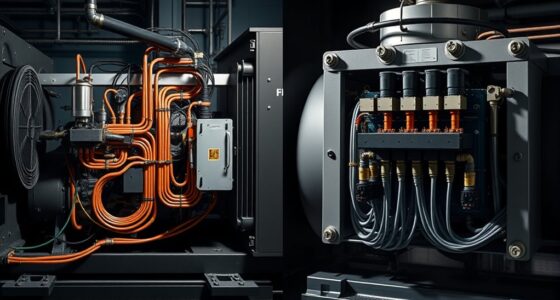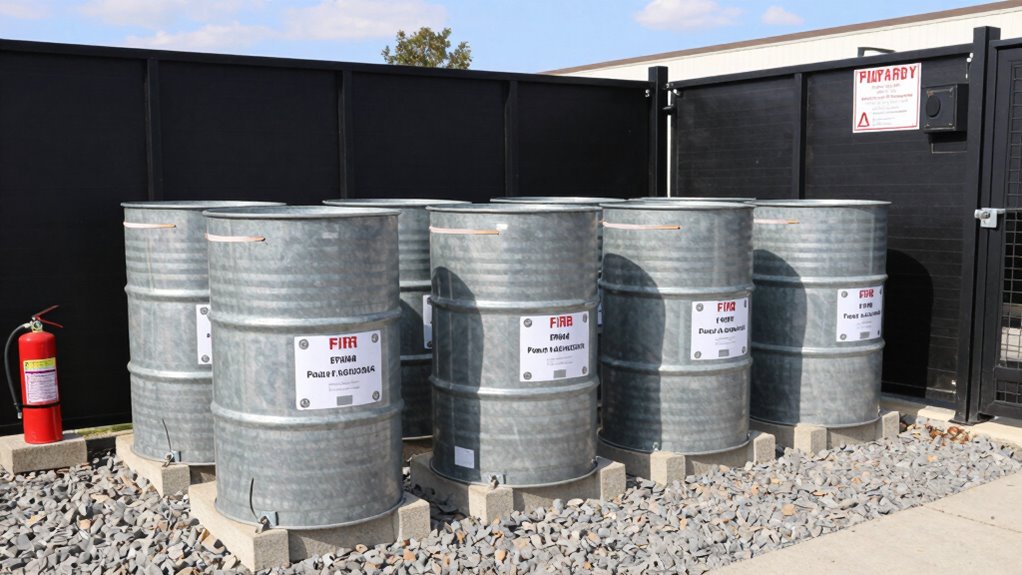

To build a safer fuel storage plan for backup power, store fuel in approved, sealed containers away from heat, flames, or sparks. Use a designated, well-ventilated area with fire-resistant materials and secondary containment systems to catch leaks. Follow all local regulations and secure permits if needed. Inspect containers regularly and keep fire extinguishers nearby. Understanding essential safety and compliance details helps prevent accidents—continue exploring to make sure your setup stays safe and effective.

Get backup power and energy gear delivered free — and shop member deals
- Fast, free delivery on millions of items
- Access to Prime Big Deal Days deals on October 6–7
- Prime Video, Amazon Music and more included
Key Takeaways
- Choose approved, sealed containers and store them in a well-ventilated, secondary containment area away from heat and ignition sources.
- Comply with local, state, and federal regulations, including permits, storage distances, and safety standards.
- Design a secure storage area with fire-resistant materials, clear labeling, and organized layout for easy access and safety.
- Install appropriate fire extinguishers, develop emergency response plans, and conduct regular safety training and drills.
- Regularly inspect, maintain, and replace damaged containers, ensuring compliance with safety protocols and environmental protections.
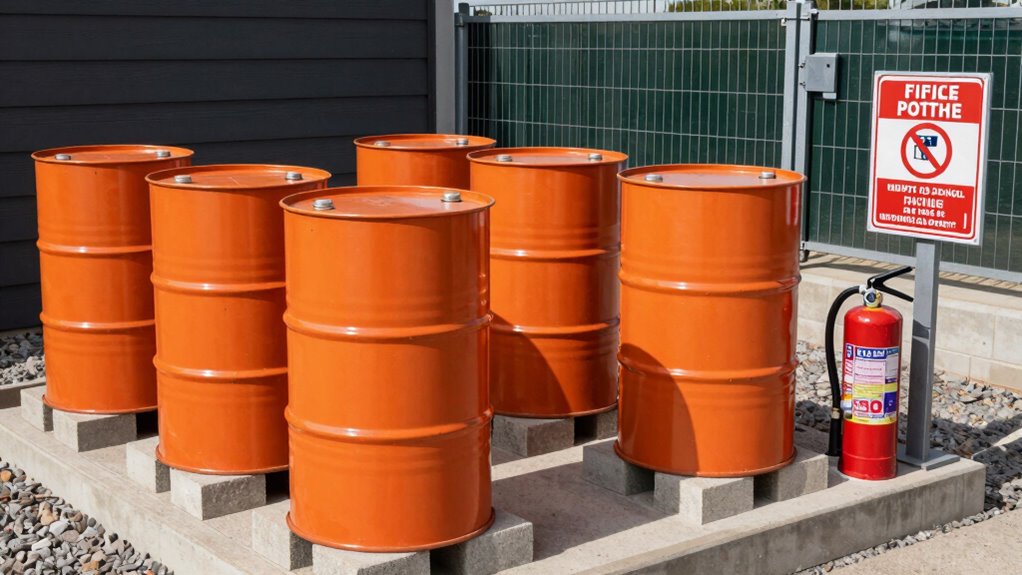
Having a reliable backup power source is essential, but it’s equally important to store fuel safely to prevent accidents or hazards. Proper storage is not just about convenience; it’s about safeguarding yourself, your property, and those around you. One of the most critical aspects of safe fuel storage is understanding fire safety. You must keep fuel away from heat sources, open flames, or electrical sparks. Use approved containers designed for fuel storage, and make certain they are tightly sealed to prevent leaks. Store these containers in well-ventilated areas outside your home or business to minimize the risk of vapors accumulating, which could ignite unexpectedly. Regularly inspect storage tanks and containers for signs of corrosion, leaks, or damage, and replace them immediately if you find any issues. Additionally, maintaining regulatory compliance ensures your storage practices meet safety standards and reduces the risk of hazards. Staying informed about fire safety protocols can further enhance your safety measures and preparedness. Proper ventilation also plays a crucial role in dispersing vapors and reducing the likelihood of ignition. Implementing best safety practices can help prevent preventable accidents and increase overall safety.
Store fuel safely in approved, sealed containers away from heat and flames, and inspect regularly for leaks or damage.
Regulatory compliance plays a significant role in creating a safe fuel storage plan. Local, state, and federal regulations set clear guidelines for how much fuel you can store, where you can store it, and how it must be contained. Familiarize yourself with these rules to avoid penalties and guarantee your storage methods meet safety standards. Many jurisdictions require that fuel tanks be stored at a specific distance from buildings, property lines, or sources of ignition. You might also need permits or inspections to keep everything up to code. Staying compliant isn’t just about legal adherence; it’s about implementing best practices that reduce the risk of fire, spills, and other hazards. Being aware of safety regulations can help you identify potential vulnerabilities in your storage setup and address them proactively.
To build a safer fuel storage plan, consider implementing a designated, secure area specifically for fuel storage. This space should be away from living spaces, vents, or windows to prevent vapors from entering indoor environments. Use secondary containment systems, such as spill pallets or bunds, to catch leaks or spills and prevent environmental contamination. Label all containers clearly with their contents and date of storage to keep track of fuel age and ensure proper disposal when necessary. Educate anyone who might come into contact with the storage area about fire safety, proper handling, and emergency procedures. Proper signage and safety instructions can also help reinforce awareness and prevent accidents. Employing fire-resistant materials in the construction of storage areas can further enhance safety by reducing flammability risks. Regular training and drills for those involved in handling fuel are also vital components of a comprehensive safety plan.
Finally, develop an emergency plan that includes fire safety measures, such as having fire extinguishers suitable for flammable liquids nearby and ensuring everyone knows how to respond in case of a spill or fire. Regularly review and update your storage plan to adapt to any new regulations or changes in your setup. By prioritizing fire safety and regulatory compliance, you create a fuel storage system that protects your property and everyone around you, ensuring your backup power remains a reliable and safe resource.
As an affiliate, we earn on qualifying purchases.
Frequently Asked Questions
What Types of Fuel Are Safest for Storage?
You should opt for fuels with high stability, like propane or kerosene, as they’re safer to store. These fuels are less prone to degrade or ignite unexpectedly, reducing risks. Always use approved, airtight storage containers designed for each fuel type, which help prevent leaks and spills. Keeping fuels in cool, well-ventilated areas also enhances safety, minimizing the chance of accidents and ensuring your backup power remains reliable and safe.
How Long Can Fuel Be Stored Without Degradation?
Imagine you store gasoline in proper storage containers with fuel stabilizers; it can last up to 12 months without significant degradation. Using high-quality containers and adding fuel stabilizers slows the breakdown process, ensuring your fuel remains usable longer. Without these precautions, fuel deteriorates in just a few months, risking engine damage. Regularly checking and rotating stored fuel extends usability, keeping your backup power ready when you need it most.
Are There Legal Restrictions on Fuel Storage?
Yes, there are legal restrictions on fuel storage. You must guarantee regulatory compliance by following local, state, and federal regulations, which often include obtaining necessary storage permits. These rules aim to prevent hazards and environmental damage. Before storing fuel, check with your local authorities to understand specific requirements, permit procedures, and storage limits. Staying compliant helps protect you legally and ensures safe, responsible fuel storage.
How Often Should Stored Fuel Be Rotated?
Like a steady heartbeat, you should rotate stored fuel every 6 to 12 months to keep it fresh. Check your fuel container materials to guarantee they’re compatible, and maintain proper ventilation requirements to prevent dangerous fumes from building up. Regularly inspecting and replacing old fuel reduces risks and keeps your backup power system reliable. Staying proactive helps you avoid hazardous situations and ensures your fuel remains effective when you need it most.
What Are the Best Safety Devices for Fuel Storage?
You should invest in safety devices like sturdy fuel containers with secure caps and spill containment systems. These containers prevent leaks and reduce fire risks, ensuring safe storage. Spill containment trays or berms catch any accidental drips or spills, protecting your environment. Always choose containers made from high-quality materials and keep them in well-ventilated, cool areas away from ignition sources for maximum safety.
As an affiliate, we earn on qualifying purchases.
Conclusion
So, while you carefully plan your fuel storage for backup power, remember that safety isn’t just about avoiding spills or fires—it’s about respecting the power you’re harnessing. Ironically, the very fuel meant to keep you safe during outages can become your greatest hazard if mishandled. Stay vigilant, follow safety protocols, and never let complacency take over. After all, it’s the quietest risks that often turn into the loudest emergencies.
fire-resistant fuel storage cabinet
As an affiliate, we earn on qualifying purchases.
As an affiliate, we earn on qualifying purchases.
fuel spill secondary containment
As an affiliate, we earn on qualifying purchases.
As an affiliate, we earn on qualifying purchases.
Fall Picks
fall essentials
As an affiliate, we earn on qualifying purchases.