
To prevent backfeed during manual transfer lockout, you must identify all power sources and fully disconnect them before applying lockout devices like padlocks and tags. Always verify the circuits are de-energized with testing tools, ensuring no residual voltage remains. Follow proper disconnection procedures and document each step to maintain safety standards. Knowing the correct sequence and verification methods helps protect personnel and equipment—if you continue, you’ll discover more essential safety practices.

Get backup power and energy gear delivered free — and shop member deals
- Fast, free delivery on millions of items
- Access to Prime Big Deal Days deals on October 6–7
- Prime Video, Amazon Music and more included
Key Takeaways
- Properly identify and disconnect all power sources before applying lockout devices.
- Use physical barriers and lockout/tagout devices to prevent accidental re-energization.
- Verify de-energization with testing tools to confirm no residual voltage remains.
- Follow the correct sequence of switching to prevent backfeed into sources.
- Document each step and ensure personnel are trained on lockout procedures to maintain safety.
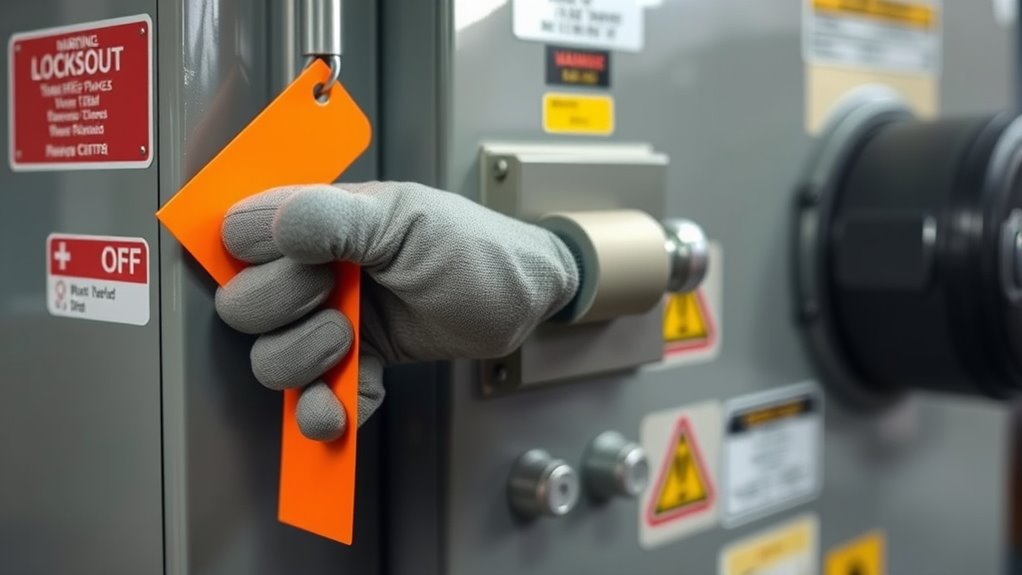
A manual transfer lockout is a essential safety procedure that prevents unintended transfer between power sources during maintenance or repair work. When you’re working on a facility’s electrical system, it’s imperative to ensure that power cannot switch unexpectedly from one source to another. This process is fundamental to energy safety, as it protects technicians from electrical shocks, equipment damage, or even serious injuries. Proper lockout procedures eliminate the risk of backfeed — where electricity flows back into a source — which can occur if transfer switches are not secured correctly. By following strict switch protocols, you can confidently isolate power sources and maintain a safe working environment.
A manual transfer lockout ensures energy safety by preventing accidental transfer and backfeed during electrical system maintenance.
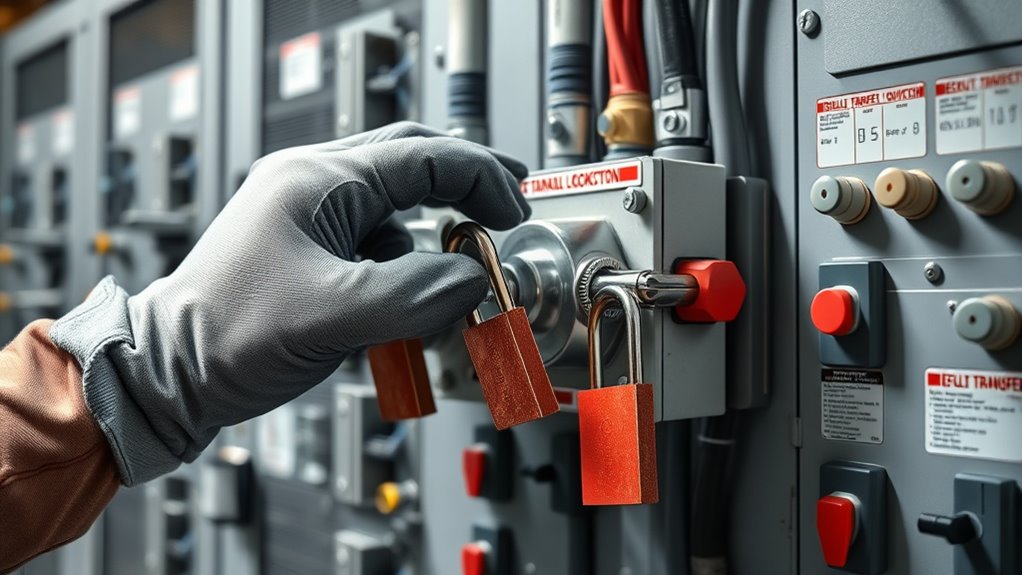
Implementing a manual transfer lockout involves more than just flipping a switch. It requires a systematic approach that includes physically securing the transfer mechanism and verifying that all power sources are disconnected. You start by identifying all power sources connected to the equipment and informing everyone involved of the maintenance activity. Next, you turn off the primary power source and then the backup, ensuring both are fully de-energized. Once the sources are disconnected, you apply lockout devices— padlocks or lockout tags— to the transfer switch or disconnect points. These lockout devices serve as a visible, physical barrier that prevents anyone from accidentally restoring power during your work.
Switch protocols come into play here, as they guide you on the proper sequence of operations and the importance of verifying de-energization at each step. These protocols emphasize testing after disconnection to confirm there’s no residual voltage. You might use a tester or meter to verify that the circuits are truly dead before proceeding. This step is essential to maintain energy safety because it ensures no hidden or residual currents remain that could energize the system unexpectedly. Following strict switch protocols also involves documenting each step, which helps ensure compliance and provides a record in case of audits or safety reviews. Additionally, understanding the importance of Vetted safety measures** can significantly reduce the risk of accidents related to backfeed and electrical hazards**.
Backfeeding is a common hazard in systems without proper lockout procedures. If a transfer switch isn’t locked out correctly, power can backfeed into the source, creating dangerous conditions for anyone working on the system. Lockout prevents this by maintaining a physical barrier between sources, effectively isolating the equipment from all electrical inputs. It’s also important to train all personnel on these procedures so everyone understands the importance of lockout, the correct switch protocols, and the hazards of backfeed. Proper training ensures that safety measures are consistently followed, reducing the risk of accidents.
As an affiliate, we earn on qualifying purchases.
Frequently Asked Questions
How Often Should Manual Transfer Lockout Procedures Be Reviewed?
You should review your manual transfer lockout procedures at least annually to guarantee safety and compliance. Regular review helps identify any procedural updates needed due to equipment changes or new safety standards. It is vital to keep training current, so you stay prepared for emergencies and prevent backfeed risks. Consistent review and updates maintain a safe work environment and minimize potential hazards during manual transfer operations.
Can Lockout Devices Be Reused After Maintenance?
Can lockout device reuse after maintenance jeopardize safety? Yes, it can if you don’t follow proper maintenance procedures. Always inspect lockout devices thoroughly before reuse, ensuring they’re in good working condition. Reusing lockout devices without proper checks can lead to malfunction or failure, risking backfeed or accidental energization. Follow your maintenance procedures diligently, and replace any damaged or worn components to guarantee ongoing safety and compliance.
What Are Common Mistakes During Manual Transfer Lockout?
During manual transfer lockout, you often make mistakes like skipping lockout procedures or not verifying equipment properly. You might forget to isolate energy sources or fail to confirm that equipment is de-energized through proper verification. Always follow lockout procedures step-by-step and double-check with equipment verification to prevent backfeed risks. Staying attentive and thorough helps guarantee safety and avoids common errors that could lead to accidents.
Are There Industry Standards for Lockout Tagout Documentation?
You’re right on the mark asking about industry standards for lockout tagout documentation. Typically, OSHA and ANSI set clear guidelines to ensure lockout compliance and documentation accuracy. These standards require detailed records of lockout procedures, tags, and inspections. Following them keeps everyone safe and helps avoid misunderstandings. Think of it as covering all your bases—proper documentation isn’t just paperwork; it’s your safety net during manual transfer lockouts.
How Does Lockout Improve Overall Electrical Safety?
Lockout improves your electrical safety by ensuring equipment is completely de-energized before maintenance. Following proper lockout procedures and safety protocols prevents accidental energization, reducing the risk of electrical shock or arc flash. You gain peace of mind knowing that locks and tags clearly communicate the equipment’s status. This disciplined approach minimizes hazards, keeps everyone safe, and maintains compliance with industry standards.
As an affiliate, we earn on qualifying purchases.
Conclusion
Implementing manual transfer lockout procedures is essential for safety, preventing dangerous backfeeds during power transfers. By following proper lockout methods, you reduce the risk of electrical accidents and equipment damage. Notably, studies show that proper lockout/tagout practices decrease workplace injuries by up to 50%. Stay vigilant and make certain these safety measures are consistently applied, so you keep yourself and others protected from potentially life-threatening electrical hazards.
voltage tester for electrical safety
As an affiliate, we earn on qualifying purchases.
As an affiliate, we earn on qualifying purchases.
As an affiliate, we earn on qualifying purchases.
Fall Picks
fall essentials
As an affiliate, we earn on qualifying purchases.