
A bonded neutral generator connects the neutral to the frame and ground, creating a single return point and simplifying fault detection. A floating neutral, on the other hand, maintains the neutral isolated from the frame and ground, requiring separate grounding methods. Understanding which setup you have impacts safety, troubleshooting, and overall performance. If you’re unsure about your generator’s neutral type, exploring the details further will help you confirm proper, safe operation.

Get backup power and energy gear delivered free — and shop member deals
- Fast, free delivery on millions of items
- Access to Prime Big Deal Days deals on October 6–7
- Prime Video, Amazon Music and more included
Key Takeaways
- Bonded neutral generators connect the neutral to ground, ensuring a single return point and minimizing electrical noise.
- Floating neutral generators keep the neutral isolated from ground, requiring separate grounding methods for safety.
- Bonded neutrals simplify fault detection and troubleshooting due to direct grounding pathways.
- Floating neutrals prevent ground loops but demand proper grounding to avoid shock hazards.
- Choosing between bonded and floating depends on system setup, safety codes, and specific application requirements.

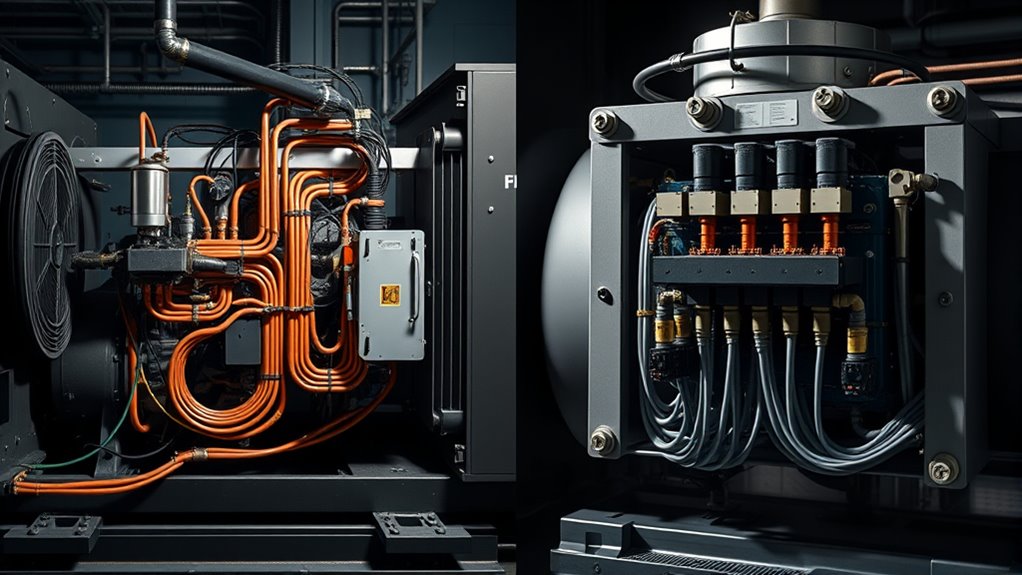
When choosing a generator, understanding the difference between bonded and floating neutral configurations is crucial, as it impacts safety, performance, and troubleshooting. The neutral connection determines how the generator’s electrical system interacts with your home’s grounding system. In a bonded neutral setup, the neutral is directly connected to the generator’s frame and grounded at the factory. This creates a single point where current returns to the source, simplifying wiring and providing a clear path for fault currents. Conversely, a floating neutral means the neutral is isolated from the generator’s frame and not bonded to ground at the generator. Instead, grounding is handled separately, often through a grounding rod or other grounding system.
This distinction influences grounding techniques, which are critical for safety precautions. When working with bonded neutrals, you’re fundamentally establishing a direct connection that helps minimize electrical noise and ensures proper fault current paths. However, it’s essential to ensure that the grounding is correctly installed and maintained to prevent electric shocks or fire hazards. With floating neutrals, you need to implement proper grounding separately, which might involve connecting the neutral to a grounding rod or ground wire. This setup can reduce stray currents and interference but requires careful attention to grounding techniques to prevent potential shock hazards.
Safety precautions become paramount regardless of the configuration. If you’re using a bonded neutral generator, avoid connecting it to a system that’s already grounded elsewhere, as this could cause ground loops or backfeed electricity into utility lines, risking electric shock or damage. When working with floating neutrals, always verify that your grounding system is solid and compliant with electrical codes. Proper grounding techniques, such as using appropriate grounding rods and ensuring secure connections, are essential to prevent accidental shocks and ensure the generator operates safely and efficiently. Additionally, understanding electrical noise and how it relates to grounding can improve your setup’s overall reliability.
Troubleshooting also depends on understanding these configurations. For bonded neutrals, issues like ground faults or short circuits are often easier to identify because the system is grounded at the generator. For floating neutrals, faults might be harder to detect and require separate testing of the grounding system. Knowing whether your generator has a bonded or floating neutral helps you follow correct grounding procedures, implement safety precautions, and troubleshoot problems more effectively. Ultimately, understanding these differences ensures you operate your generator safely, maintain reliable power, and avoid costly mistakes.
As an affiliate, we earn on qualifying purchases.
Frequently Asked Questions
Can I Switch Between Bonded and Floating Neutral Generators?
You can switch between bonded and floating neutral generators, but you need to prioritize neutral safety and ground continuity. Make certain your setup maintains proper grounding to prevent electrical shocks or equipment damage. Always disconnect power and follow manufacturer instructions. If unsure, consult a qualified electrician, as improper switching can cause safety hazards. Proper grounding and bonding are vital for safe operation and to meet electrical codes.
How Does Neutral Bonding Affect Generator Lifespan?
Worried about neutral degradation affecting your generator’s lifespan? You’ll find that bonding your neutral improves electrical stability, reducing wear on internal components. Proper bonding helps prevent voltage fluctuations and electrical faults that can accelerate neutral degradation, ultimately extending your generator’s life. While bonding isn’t a cure-all, it promotes healthier operation, ensuring your generator runs efficiently longer, saving you maintenance costs and unexpected failures down the line.
Is a Floating Neutral Safer for Residential Use?
A floating neutral is generally safer for residential use because it enhances grounding safety and reduces electrical interference. You won’t experience unwanted current flows that can cause shocks or equipment malfunctions. By avoiding a bonded neutral, you minimize the risk of ground loops and electrical noise, making your home’s electrical system safer and more stable. Always verify your setup complies with local codes and consult a professional for proper installation.
What Are Code Requirements for Neutral Bonding?
Guiding the electrical landscape is like steering through a storm—precise grounding procedures are your compass. You must follow specific code requirements for neutral bonding, ensuring your generator is compliant. Typically, this means bonding the neutral to the frame or grounding system when mandated by local codes. Always consult the National Electrical Code (NEC) and local regulations to keep your setup safe, reliable, and in harmony with safety standards.
Does Bonding Influence Generator Noise Levels?
Bonding can influence generator noise levels by affecting grounding techniques and electrical safety. When the neutral is bonded, it creates a stable ground connection, reducing electrical interference that can cause noise. Proper bonding ensures safe operation and minimizes electromagnetic interference, leading to quieter performance. If you’re concerned about noise, check your bonding setup and grounding methods to enhance overall electrical safety and reduce unwanted sounds.
floating neutral generator grounding
As an affiliate, we earn on qualifying purchases.
As an affiliate, we earn on qualifying purchases.
Conclusion
Understanding whether your generator has a bonded or floating neutral isn’t just technical—it’s about your safety and reliability. The choice could mean the difference between peace of mind and unexpected issues. So, next time you’re selecting or maintaining your generator, remember this detail. It’s more than just a connection; it’s a decision that could hold the key to your system’s true potential—or unforeseen surprises. Are you ready to uncover what lies beneath?
As an affiliate, we earn on qualifying purchases.
generator safety grounding accessories
As an affiliate, we earn on qualifying purchases.
As an affiliate, we earn on qualifying purchases.
Evergreen bestsellers Picks
bestsellers
As an affiliate, we earn on qualifying purchases.