To keep emergency gas from going bad, you should add a fuel stabilizer whenever you fill your tank for storage. Stabilizers contain antioxidants that prevent fuel from gum and varnish buildup, extending its freshness and shelf life. Be sure to follow the manufacturer’s instructions and run your engine briefly after adding stabilizer to circulate it through the system. Proper storage and maintenance practices can help guarantee your fuel stays reliable when you need it most—learn more about how to do it right.

Get backup power and energy gear delivered free with Prime
- Fast, free delivery on millions of items
- Prime Video, Amazon Music and more included
- Member-only deals all year
Key Takeaways
- Add a fuel stabilizer to emergency gas before storage to prevent gum and varnish buildup.
- Fill the tank completely to minimize air and oxidation, extending fuel freshness.
- Run the engine briefly after adding stabilizer to circulate it through the fuel system.
- Store equipment in a cool, dry place to maintain fuel stability over time.
- Use the correct stabilizer amount and follow manufacturer instructions for effective preservation.
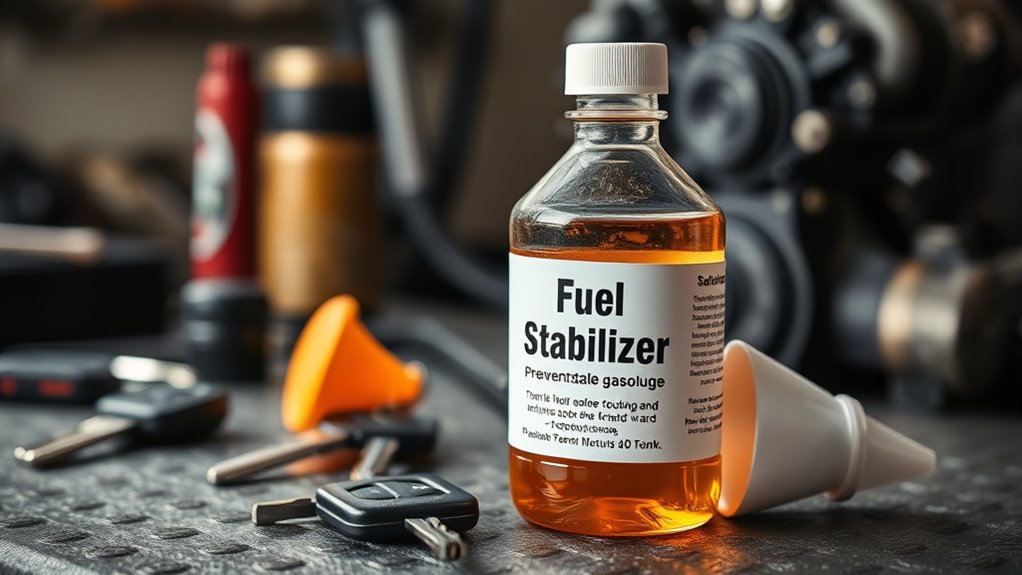
Have you ever struggled with stale or gummed-up fuel in your lawnmower or generator? It’s a common problem, especially when you store equipment for the off-season. Old fuel loses its combustibility over time, leading to engine issues like hard starts, rough running, or even damage. That’s where fuel stabilizers come into play. They’re designed to keep your emergency gas fresh and ready to use when you need it most. Using a fuel stabilizer is a simple yet effective way to prevent fuel degradation and avoid costly repairs.
When it comes to engine storage, adding a fuel stabilizer before long-term storage is vital. If you plan to let your equipment sit unused for weeks or months, don’t just fill the tank and forget about it. Instead, fill the tank to capacity to minimize air space, which slows oxidation. Then, add a fuel stabilizer according to the manufacturer’s instructions. This additive composition works by preventing the formation of gums and varnishes that can clog carburetors and fuel lines. It fundamentally keeps the fuel chemically stable, maintaining its quality over extended periods. When stored properly, your engine remains in a better state, ready to start without fuss when you need it again.
The key to effective engine storage is understanding how the additive composition in your fuel stabilizer interacts with the fuel itself. Many stabilizers contain antioxidants and other chemicals that combat the natural breakdown process. These chemicals inhibit the oxidation and evaporation of volatile compounds in gasoline, which cause the fuel to deteriorate. Using a stabilizer that’s suited for your specific fuel type ensures your stored fuel maintains its combustibility and doesn’t turn into a sticky, harmful mess. It’s also important to run the engine for a few minutes after adding the stabilizer, so it circulates through the fuel system, protecting all engine components.
In addition to preventing gumming and varnishing, a good fuel stabilizer can extend the shelf life of your emergency gas from a few weeks to a year or more. This means you’ll have reliable fuel on hand during power outages, camping trips, or other emergencies. Just remember, the effectiveness of the stabilizer depends on proper application—use the right amount, store your equipment in a cool, dry place, and run the engine periodically if possible. By understanding the role of additive composition and following best storage practices, you guarantee your equipment stays ready and reliable, no matter how long it sits unused.
As an affiliate, we earn on qualifying purchases.
Frequently Asked Questions
How Long Does Fuel Stabilizer Effectively Preserve Gasoline?
Fuel stabilizer effectively preserves gasoline for up to 12 months, depending on storage conditions. You should use it to extend the storage duration and maintain chemical effectiveness, especially if you’re storing fuel for emergencies or seasonal use. Keep your gasoline fresh by adding stabilizer, and guarantee the container is sealed tightly. This way, your fuel stays reliable and safe to use when you need it most.
Can Fuel Stabilizers Be Used in Diesel Engines?
Fuel stabilizers aren’t typically compatible with diesel engines, as most are designed specifically for gasoline. Using a stabilizer meant for gasoline in a diesel engine can cause issues with engine performance and potentially damage components. Always check the label for diesel compatibility before adding any stabilizer. For diesel engines, consider products formulated for diesel fuel to guarantee ideal engine performance and fuel stability.
Are Fuel Stabilizers Safe for Small Engines and Lawn Equipment?
Yes, fuel stabilizers are safe for small engines and lawn equipment when used correctly. You should check the engine compatibility on the stabilizer label, ensuring it’s suitable for your equipment. Many stabilizers are designed with chemical safety in mind, preventing damage to small engines. Always follow the manufacturer’s instructions to avoid any issues, and you’ll keep your lawn tools running smoothly and efficiently.
How Often Should I Add Fuel Stabilizer During Storage?
Think of your stored fuel as a delicate garden that needs regular care. You should add fuel stabilizer every 1 to 3 months during storage, depending on the stabilizer type. Follow storage tips like keeping the fuel in a cool, dry place and sealing containers tightly. This way, you prevent the gas from degrading, ensuring your equipment runs smoothly when you need it most.
Does Fuel Stabilizer Improve Fuel Efficiency?
Fuel stabilizer doesn’t directly improve fuel efficiency, but it helps maintain engine performance by preventing fuel degradation. When your fuel stays fresh, your engine runs smoother, which can lead to better fuel economy over time. Using stabilizer during storage ensures your engine starts reliably and performs well, avoiding issues caused by old, degraded fuel. So, while it doesn’t boost efficiency, it supports ideal engine performance and consistent fuel economy.
As an affiliate, we earn on qualifying purchases.
Conclusion
Using a fuel stabilizer is like giving your emergency gas a protective shield, ensuring it stays fresh when you need it most. I once stored extra fuel for a winter storm, only to find it had gone bad months later. That experience taught me that just as a sturdy umbrella shields you from rain, a good stabilizer safeguards your fuel’s quality. Keep your emergency gas reliable—stabilize it today, so it’s ready when you need it most.
engine fuel stabilizer for generators
As an affiliate, we earn on qualifying purchases.
As an affiliate, we earn on qualifying purchases.
As an affiliate, we earn on qualifying purchases.
Fall Picks
fall essentials
As an affiliate, we earn on qualifying purchases.