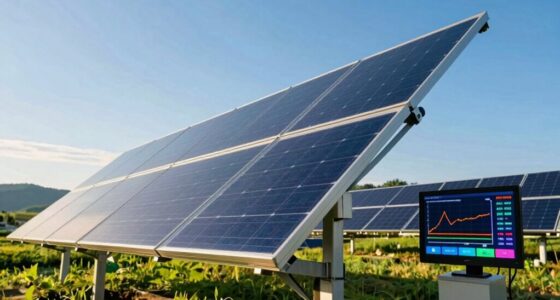
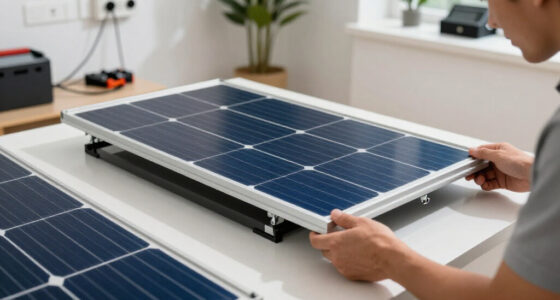
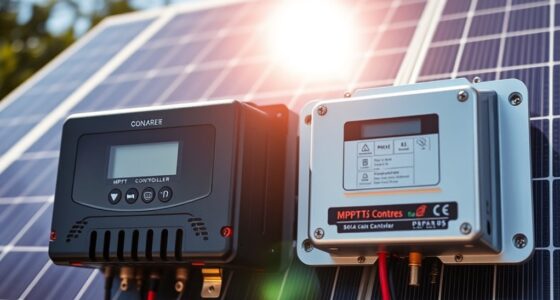
The numbers on a PV module nameplate reveal key details like maximum power output (Pmax), voltage, current, and efficiency, helping you understand how well the panel performs and if it fits your system’s needs. They also include certifications, certifications, temperature coefficients, and physical dimensions that guarantee safety and durability. Knowing what these figures mean helps you select the right panel and plan your installation confidently—more essential details are just a look away.

Get backup power and energy gear delivered free — and shop member deals
- Fast, free delivery on millions of items
- Access to Prime Big Deal Days deals on October 6–7
- Prime Video, Amazon Music and more included
Key Takeaways
- The nameplate displays critical electrical specs like maximum power (Pmax), voltage, and current for system design.
- It indicates efficiency and performance metrics, helping compare modules’ real-world energy output.
- Certifications listed on the nameplate ensure the panel meets safety, durability, and environmental standards.
- Additional details like temperature coefficients and physical dimensions assist in optimizing installation and operation.
- The information aids in verifying product compliance, ensuring reliability, and guiding proper system integration.

Have you ever wondered what the information on a PV module nameplate tells you? When you look at a solar panel, that nameplate isn’t just a random sticker; it’s packed with essential details about the module’s performance and quality. Understanding these numbers helps you make smarter choices, whether you’re installing a new system or evaluating your existing setup. One of the most important aspects you’ll find on the nameplate is the solar panel efficiency. This figure indicates how well the panel converts sunlight into electricity. For example, a panel with a higher efficiency rating can produce more power in the same amount of space, which is especially valuable if you have limited roof area. It’s an indispensable factor when comparing different modules, giving you a realistic idea of what to expect in real-world conditions. Along with efficiency, the nameplate also details the manufacturing standards that the module adheres to. These standards guarantee the product meets specific safety, durability, and performance benchmarks. Certifications like IEC or UL indicate that the panel has undergone rigorous testing and complies with international safety and performance criteria. When a panel aligns with these standards, it means you can trust its ability to withstand environmental elements like wind, snow, and UV exposure, which directly impacts your system’s longevity and reliability. The nameplate also provides electrical specifications such as maximum power output (often labeled as Pmax), voltage, and current ratings. These numbers are essential for designing and wiring your system correctly, ensuring components work harmoniously and safely. If the power output is lower than expected, it might signal manufacturing inconsistencies or potential issues with the module’s performance. Conversely, knowing the voltage and current helps you optimize your inverter selection, maximizing your system’s overall efficiency. Additionally, the nameplate will specify the temperature coefficient, revealing how much the panel’s performance drops as temperatures rise—a key consideration if you live in a hot climate. It also states the module’s physical dimensions and weight, which are important for installation planning. Understanding the manufacturing standards that the module meets can help you gauge its durability and safety. Ultimately, the PV module nameplate offers an in-depth snapshot of the product’s capabilities, quality, and compliance. By understanding what these numbers mean, you can better assess the integrity of your solar investment and ensure it meets your energy needs. It’s a simple yet indispensable step toward making informed decisions, ensuring you get a reliable, efficient, and durable solar power system that adheres to high manufacturing standards.
solar panel nameplate reading tool
As an affiliate, we earn on qualifying purchases.
As an affiliate, we earn on qualifying purchases.
Frequently Asked Questions
How Do Temperature Effects Influence Module Performance?
Temperature effects substantially impact your module’s performance. Higher temperatures reduce efficiency because of the temperature coefficients, causing a drop in power output. Environmental factors like heatwaves or shading can amplify this effect. You should monitor temperature fluctuations and understand your module’s temperature coefficients to optimize performance. Keeping modules cool with proper ventilation or cooling methods helps maintain better efficiency, ensuring your system performs reliably regardless of environmental conditions.
What Is the Significance of the Module’s Maximum System Voltage?
You should pay close attention to the module’s maximum system voltage because it guarantees your system operates safely and efficiently. This voltage rating indicates the highest voltage the module can handle without damage. It’s essential to include safety margins when designing your system to prevent overvoltage conditions. By respecting these ratings, you protect your equipment, optimize performance, and maintain compliance with electrical standards, avoiding costly repairs or hazards.
How Does Age Impact the Module’s Efficiency?
Aging and exposure to environmental elements cause declines in your module’s efficiency. As modules age, aging degradation diminishes energy output, while temperature coefficients influence performance under heat. You might notice a slight slowdown in electricity generation over time, but proper maintenance and monitoring can help mitigate these effects. Keep an eye on temperature impacts and aging signs to guarantee your system stays productive and maximizes your solar investment.
Are There Variations in Nameplate Data Across Different Brands?
Yes, there are variations in nameplate data across different brands due to manufacturing variations and differences in quality control. You’ll notice that brand consistency can vary, meaning some manufacturers might have slightly different ratings even for similar modules. It’s important to compare these details carefully, considering the manufacturer’s reputation and quality standards, to guarantee you’re selecting modules that meet your efficiency and performance expectations.
Can Environmental Conditions Affect the Rated Power Output?
Ever notice how your panels sometimes seem less powerful on cloudy days? Environmental conditions like temperature, shading, and sunlight intensity definitely affect their rated power output. Even with high panel durability and strict manufacturing tolerances, real-world factors can cause fluctuations. You might find your system underperforms during certain times, but understanding these influences helps you optimize energy production and plan for seasonal variations.
As an affiliate, we earn on qualifying purchases.
Conclusion
Understanding your PV module nameplate is like reading a map—you’ll know exactly where you stand and where you’re headed. Those numbers are your guide, revealing the true potential of your solar investment. By decoding the data, you’re steering your energy journey with confidence, avoiding dead ends and dead weight. So, take this knowledge and navigate your solar system wisely—because, in the end, a well-understood nameplate is the compass that leads to brighter, smarter energy choices.
solar panel certification labels
As an affiliate, we earn on qualifying purchases.
As an affiliate, we earn on qualifying purchases.
solar panel wiring and system design kit
As an affiliate, we earn on qualifying purchases.
As an affiliate, we earn on qualifying purchases.
Fall Picks
fall essentials
As an affiliate, we earn on qualifying purchases.