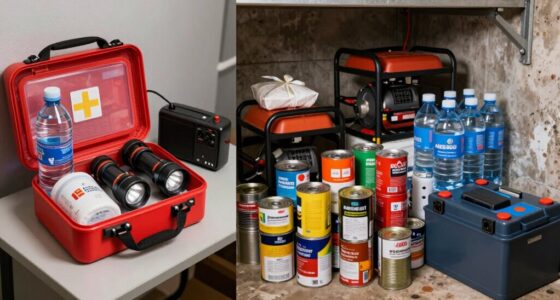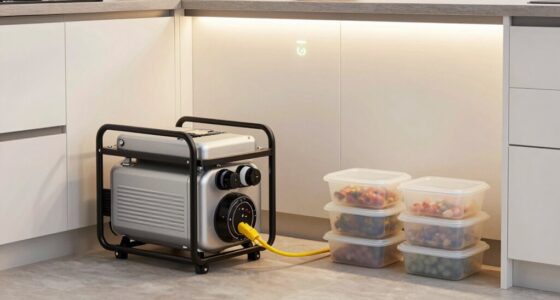

TL;DR

Get backup power and energy gear delivered free with Prime
- Fast, free delivery on millions of items
- Prime Video, Amazon Music and more included
- Member-only deals all year
Large generators rated at 7,000 watts and up can support a substantial share of a home during an outage, demanding jobsite equipment, or RV and event needs. Compare continuous running watts, startup demands, voltage, outlets, fuel runtime, noise, and safe connection requirements; a big peak watt number alone does not promise whole-home power.
A generator with 7,000 watts on the label may still fall short when your well pump starts, the refrigerator is running, and you switch on a window air conditioner. That gap between a bold peak number and the power a machine can keep supplying is where many buying decisions go wrong.
This guide shows you how to size large generators 7000 watts and up for home backup, work, RVs, and events. You’ll learn what the ratings mean, how to compare fuel and noise, and which connection and operating details deserve careful attention before an outage or jobsite deadline puts the decision to the test.
The category is broad: it includes portable gasoline models, dual-fuel units, inverter generators, and permanent standby systems. A 7,000-watt rating is a starting point for comparison, not a promise that a generator can run every appliance in your house at once.
Use the generator’s continuous running watts to plan sustained loads; peak watts describe brief surge capacity.
Add the running demands of loads you expect to use together, then account for motor startup while those loads are operating.
A supplied example lists 7,000 peak watts and 5,500 running watts, so the headline number can overstate continuous capacity by 1,500 watts.
Compare fuel runtime figures at similar loads and for the same fuel; propane output may differ from gasoline output.
Run portable generators outdoors with working CO alarms at home, and use a qualified electrician for a code-compliant household connection.
See what a 7,000-watt rating can actually power
Large generators 7000 watts and up can power a substantial share of a home or support demanding equipment, but the usable capacity depends on the continuous running rating and the loads that operate together. A model’s name or peak figure alone does not tell you how much power it can supply hour after hour.
Think of peak watts as a short sprint and running watts as the pace a generator can maintain. Motors in refrigerators, sump pumps, air conditioners, and saws often need a surge of electricity at startup. That surge is brief, but it matters because the generator must supply it at the same moment as the loads already running. If it cannot, a motor may fail to start, a breaker may trip, or the generator may overload.
For a concrete example, one supplied specification describes an Efurden inverter generator with 7,000 peak watts and 5,500 running watts. That 1,500-watt difference matters: the peak may help start a motor, but it does not mean you can draw 7,000 watts continuously. For example, a plan that adds up to 6,000 watts of sustained demand exceeds the listed running capacity even if its brief startup demand stays below 7,000 watts. Check the manufacturer’s current documentation for the exact model and fuel being considered.
Build a list of the devices you want to run at the same time. A refrigerator, several lights, a router, and a sump pump may form a practical outage plan, while adding a large electric range or central air conditioner could exceed the generator’s sustained output. The tradeoff is often between powering a few essential loads reliably and trying to run more appliances with little reserve for startup. Appliance nameplates and manuals are better guides than guesses based on product names.
The distinction matters even more for a 240-volt appliance. A generator’s total wattage does not guarantee it can supply the right amount on each output leg. A load may need power balanced across both legs, and the available current on each can limit what the appliance receives even when the generator’s total wattage sounds sufficient. Check the voltage, current, receptacles, and rated output for the specific connection you intend to use; a compatible outlet is only one part of a safe electrical setup.
Use the running-watt rating to plan the load you’ll sustain. Use the starting-watt figure to check whether the generator can handle a brief motor surge while other loads are already running. Leave enough capacity for that overlap rather than treating every watt as freely available.
Products Worth Considering

Sonos Play Portable Wi-Fi and Bluetooth Speaker, White

Bose SoundLink Plus Portable Bluetooth Speaker, Black

Ring Alarm 14-Piece Wireless Security System
As an affiliate, we earn on qualifying purchases.
Choose a generator by making a real load list
To size a generator, add the running watts for the appliances you expect to use together, then account for the largest motor startup that could happen while those appliances are running. This gives you a more useful comparison than starting with the biggest number in a product listing, because it tests the generator against the actual moment when demands overlap.
- Choose your essential loads. Write down what must stay on, such as a refrigerator, freezer, well pump, medical equipment, or selected lights. Separate must-haves from conveniences. This ranking helps you decide which loads to shed if the generator cannot support everything at once.
- Find each appliance’s electrical demand. Use its nameplate or manual. For motors, look for startup or locked-rotor information, since starting demand can be higher than normal running demand. Startup can be several times the normal draw for some equipment, so a running-watts-only total can make a plan look adequate when it is not.
- Plan what runs at the same time. Add the continuous demands for that group of loads, then check whether a motor may start while the others are operating. If several motors cycle unpredictably, consider whether you can stagger use or need more capacity; the answer affects both generator size and how much you must manage during an outage.
- Check the generator’s ratings and outlets. Confirm its running watts, surge watts, voltage, current, and receptacle types for the loads and connection method you plan to use. A high total rating is not useful for an appliance if the generator lacks its required voltage or suitable outlet.
- Ask for help with household circuits. A qualified electrician can assess the intended circuits and connection equipment, particularly for 240-volt appliances or complex loads. This connects the load calculation to the home’s wiring and helps avoid assuming that a generator outlet can safely supply any circuit.
Imagine a summer outage in a home with a refrigerator, a small window unit, lights, and a well pump. The pump’s startup may arrive at the least convenient moment—just as the compressor cycles on. A written load plan helps you decide whether to stagger appliance use, select a larger generator, or leave one load off. Staggering can let a smaller unit cover essentials, but it requires attention; extra capacity costs more and may use more fuel, but gives you more room for overlapping starts.
Central air conditioning and heat pumps call for special care. Their startup demands and voltage needs vary by equipment, so don’t assume a generator can handle them because its headline rating sounds large. Check the unit’s nameplate and consult the equipment manufacturer or an electrician. If the required startup capacity is too high, equipment designed to reduce starting demand may be an option, but compatibility and installation need professional review.
For a jobsite, apply the same method to saws, compressors, chargers, and other tools. If a crew wants to run a compressor while a saw cuts thick material, compare their combined demand and startup behavior. A generator that supports one tool comfortably may struggle when a second motor kicks on. A load list also helps the crew coordinate tool use and choose whether the added cost of a larger generator is worthwhile compared with sequencing work.
Compare replacement options by the specs that match
Compare generators by matching specifications, not by assuming that two models with similar names or wattage labels will behave alike. Voltage, continuous output, tank size, and noise give you useful starting points, but they answer different questions: output indicates what loads may run, tank size affects how often you refuel, and noise measurements affect where operation may be practical. You still need to verify the complete specifications for the exact model.
| Example listed in the source brief | Fuel tank | Noise listing | Voltage or power detail | What to check next |
|---|---|---|---|---|
| Honda EM6500SX | 6.2 gallons | 64–66 dB(A) | 120/240V; 6,500 watts listed | Confirm the current model status and manufacturer specifications before using it as a reference. |
| Honda EB6500 | 6.2 gallons | 64–67 dB(A) | 120/240V; output not specified in the supplied table | Check rated running and starting watts for the exact version. |
| EFURDEN 7000W gasoline inverter examples | 3.5 gallons | 69 dB at 23 feet | One listed version is 120V; details vary | Verify voltage, outlets, fuel-specific ratings, and running watts. |
| Efurden 7000 Watt inverter example | 3.5 gallons | 69 dB at 23 feet | 7,000 peak watts; 5,500 running watts | Use the continuous rating for sustained loads and verify model details. |
The Honda EM6500SX appears in the supplied brief as a product for which you may need a replacement, but that does not establish its current availability or status. A Honda EB6500 is listed as sharing some reference specifications, including tank capacity, voltage, and a similar noise range. Similarity on three details does not establish identical output, outlets, or intended use; those differences can decide whether the replacement supports the same circuits or tools.
The EFURDEN examples list a 3.5-gallon tank and a noise figure of 69 dB at 23 feet; the Honda examples list 6.2 gallons and figures in the 64–67 dB(A) range. Those noise numbers are meaningful only when measurement conditions match, and tank capacity alone cannot tell you runtime. A larger tank may mean fewer refueling stops, but fuel consumption at your intended load determines how long it lasts. A listed noise difference also may not predict what you hear at a property boundary if the distances or test conditions differ. Treat the table as a shortlisting aid, then read the manufacturer’s current specification sheet and manual.
If a product listing leaves out running watts or voltage, pause before comparing it with a better-documented model. Missing details make it harder to judge whether the generator can sustain your loads or connect to them safely. You want enough information to match your appliances and connection plan—not simply a familiar brand name or a promising peak figure.
Pick fuel and runtime that fit your outage plan
Your fuel choice affects runtime, storage, and output. Gasoline is widely available, while propane can be convenient to store for some owners; dual-fuel models let you choose between them. Each option shifts the planning burden: gasoline availability can be uncertain during a widespread outage, while propane requires compatible cylinders and connections. The practical choice depends on how you expect to refuel and maintain the generator, and on the ratings for each fuel.
A larger tank does not automatically mean a longer workday. Runtime changes with electrical load, fuel, conditions, and the generator’s design. Compare manufacturer figures only when they describe the same fuel and a similar percentage of load. A runtime claim at a light load is not a promise that the generator will run that many hours while powering a pump and air conditioner. That distinction matters when planning overnight power: a unit that needs frequent refueling may require someone to wake up and manage it, while a lighter load or larger supply can reduce interruptions.
Take a household preparing for a winter storm. The owner keeps approved fuel on hand, checks the generator’s storage guidance, and plans to run selected loads rather than every appliance at once. A smaller load may stretch a tank, but the owner still needs to inspect fuel condition and operate the unit as its manual directs. Prioritizing essential circuits can therefore reduce both fuel use and the need to refuel in poor weather.
Propane stores well for many households and avoids keeping gasoline in a tank for long periods, but some generators produce less output on propane than on gasoline. Read the fuel-specific running and starting ratings before deciding that propane will cover a particular motor or 240-volt load. The storage convenience is useful only if the reduced output still meets the loads you intend to run.
Dual-fuel flexibility can be valuable when a storm disrupts one supply or when your jobsite already uses propane cylinders. It also gives you more details to manage: correct regulators, approved containers, fuel-specific output, and a clear runtime plan. Switching fuels can provide options, but does not make the two fuels interchangeable in output or connection requirements. Follow the manufacturer’s instructions for storage, connection, refueling, and service.
Maintenance belongs in the fuel plan. Oil, air filters, spark plugs, and electric-start batteries may need scheduled attention, while fuel systems need care during storage. Stale fuel or a neglected battery can make a generator unreliable precisely when supply and service are difficult to find. A generator that sits untouched between storms can still need inspection and operation according to its manual before you rely on it.
Balance portability, noise, and inverter features
Portability and noise change how practical a large generator feels once you take it out of the product listing. Units in this range can be heavy, and wheels or handles help with movement without making every model easy to lift, steer, or place. The machine’s weight and size matter because a generator that cannot be moved to a safe operating spot may be inconvenient or unsafe to use when conditions are already difficult.
Picture a contractor unloading a generator from a truck on a gravel lot. Wheels may roll well across a paved driveway but catch on stones, mud, or a raised doorway. Check the machine’s weight, dimensions, handle design, and lifting guidance; plan how many people and what equipment you need to move it safely. A larger wheel kit or ramp may solve a transport problem, but it adds cost and still needs to suit the route and storage space.
Noise figures need context. An open-frame generator may sound much louder than an enclosed inverter model, while a number measured at one distance cannot be compared fairly with a number measured closer to the engine. The supplied examples include figures from 64 to 69 dB, but measurement distance and conditions differ, so those figures alone do not settle which machine will sound quieter at your house. Placement and nearby walls also change what neighbors hear, making location a practical part of the choice alongside the published number.
Inverter technology electronically regulates power and is increasingly available in higher-output models. Some inverter units can reduce engine speed under lighter loads, which may lower noise and fuel use in those conditions. That benefit depends on the model and operating load; at high demand, engine speed may rise and the advantage can shrink. Compare its stated noise and fuel figures instead of assuming every inverter generator behaves the same way.
For an RV trip, an inverter model may appeal if its outlets, continuous rating, and noise suit your needs. For a jobsite running several tools, ruggedness, receptacles, and sustained output may matter more. The tradeoff is that a quieter or more compact design may cost more or provide fewer outlets; confirm the actual model details rather than assuming a category guarantees a feature. Either way, confirm the electrical requirements of sensitive devices and follow the generator and device manufacturers’ instructions.
Extra features such as electric start, remote start, digital displays, or app monitoring can make operation more convenient. A CO-sensing shutoff system can add protection, but it does not make indoor operation safe or replace placement, alarms, ventilation outdoors, and regular maintenance. Convenience features may reduce effort, but they do not change the generator’s capacity or safe operating requirements.
Connect home backup power without backfeeding
A portable generator must never feed home wiring through a wall outlet. That unsafe practice can send power back onto utility lines, endangering line workers and damaging equipment. A properly installed transfer switch or another code-compliant connection method lets a qualified electrician manage the connection safely. It also separates the home from utility power as required, reducing the chance that two sources energize the same wiring at once.
Suppose you want to keep selected circuits running during an outage: a refrigerator, a few lights, and a sump pump. The generator’s voltage and output must match the connection equipment, and the electrician needs to assess the circuits and loads. A 240-volt receptacle on the generator does not, by itself, make it suitable to connect to your house. Matching the connection to the load plan helps avoid overloading a circuit or discovering that an essential appliance is on a circuit the setup cannot supply.
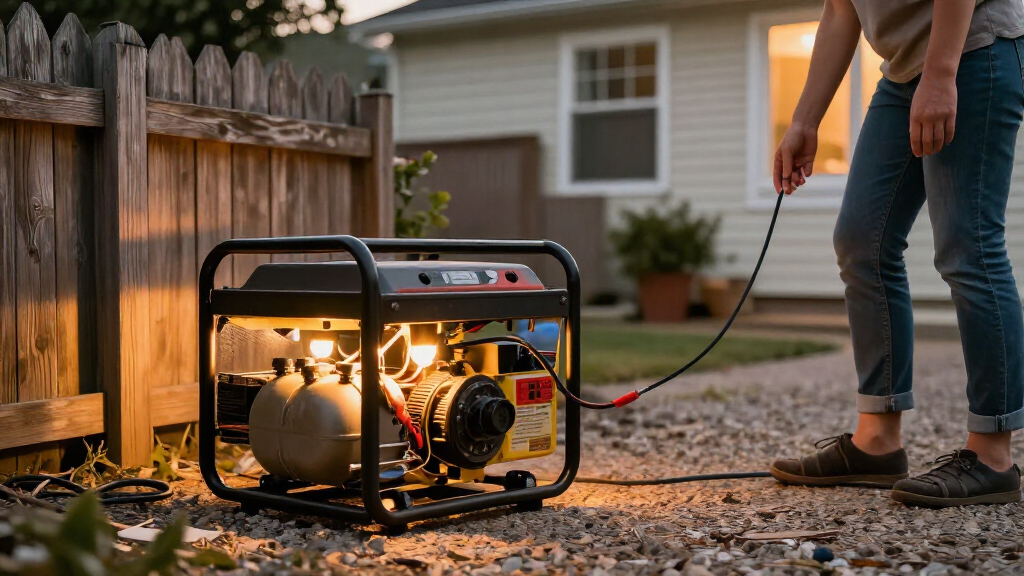
Portable units produce carbon monoxide, a poisonous gas that can be fatal. Run one outdoors, far from doors, windows, and vents, following the manufacturer’s distance guidance and local recommendations. Never run it in a house, garage, basement, or partly enclosed area, and keep working carbon monoxide alarms inside your home. Exhaust can enter through openings even when the generator is outside, so placement matters as much as the indoor alarm.
Rain and damp ground create another practical challenge. Follow the manual and use only an appropriate, ventilated weather shelter if the manufacturer permits it. Keep the generator dry as directed, but never wrap it in a tarp or put it inside an enclosure that traps exhaust or heat. The shelter must protect the equipment without turning the operating location into a partly enclosed space.
Before refueling, shut the machine down and let it cool as instructed. Keep fuel handling and storage within the manufacturer’s guidance and local requirements. If you use the generator on a jobsite, tell everyone where it will sit and keep exhaust away from worker areas, building openings, and neighboring occupied spaces. These steps reduce the chance that routine refueling or changing site conditions creates a new ignition or exposure hazard.
Outdoor operation and a safe household connection solve different hazards. Distance and ventilation address exhaust exposure; proper transfer equipment addresses the danger of connecting generator power to house wiring. Both need to be part of the plan before an outage.
Choose portable or standby power for the way you live
Portable generators suit selected loads and flexible uses, while permanently installed standby systems can serve broader home backup needs with professional installation. Which arrangement fits you depends on the loads, electrical setup, budget, and how much hands-on operation you can manage during an outage. Portable equipment usually costs less to install but requires repeated setup and refueling; standby equipment shifts more of that work into the installation and maintenance plan.
A portable model can move between a home, jobsite, RV, or outdoor event, depending on its ratings and outlets. During a storm, you may place it outdoors and connect the selected appliances or circuits through an approved method. You also handle setup, fuel, load management, and the repeated checks required by its manual. That flexibility is useful if you need power in different places, but it means the generator must be safely moved, placed, and watched each time.
A standby generator stays installed and may start automatically when utility power fails, depending on the equipment. It can be designed around a home’s electrical needs, but that work requires professional sizing, installation, and compatible transfer equipment. Whole-home coverage depends on the system and its configuration; the word “standby” does not remove limits on the loads it can serve. An automatic start reduces hands-on setup, while a fixed installation costs more and serves the location it was designed for.
Home electrification can make sizing more complicated. Heat pumps, well pumps, and EV chargers may have substantial or specialized power needs. A portable generator might support selected essential circuits while leaving other large loads off, whereas a whole-home plan may call for a professionally sized standby system and careful decisions about which appliances operate together. An EV charger, for example, may consume capacity that could otherwise serve heating or cooking, so including it in a backup plan requires a deliberate priority decision.
Consider a household with a heat pump, electric range, and well pump. A portable generator rated at 7,000 watts could still be unsuitable for running all three at once, even if it powers several smaller loads well. Listing priority circuits and having an electrician assess the connection can help you avoid buying on a broad wattage label alone. The household could choose to back up essential circuits and leave the range off, or pay for a system sized around broader coverage; the right choice depends on outage needs and budget.
Whether you choose portable or standby equipment, treat permits, electrical codes, and installation requirements as part of the decision. For electrical connections or permanent work, use a qualified, licensed professional where required. The right system is the one that covers your intended loads through a safe, documented setup.
Frequently Asked Questions
What can a 7,000-watt generator run?
It depends on the generator’s continuous running watts and the appliances you operate together. Make a load list, check nameplates or manuals, and account for motor startup; a model with 7,000 peak watts may have a lower running rating.
Can a 7,000-watt generator power an entire house?
It may support many household loads, but it does not guarantee whole-home backup. The generator’s continuous output, appliance startup demands, household connection, transfer equipment, and load management all affect what can run safely at once.
Can I run central air conditioning, a well pump, or a heat pump?
Possibly, but startup current, voltage, and the generator’s available output can decide whether it works. Check the equipment nameplate and ask the manufacturer or a qualified electrician to assess the load and household connection.
Is a dual-fuel generator better than a gasoline model?
A dual-fuel model gives you a choice of gasoline or propane, and propane can be convenient to store. Output and runtime can vary by fuel, so compare the manufacturer’s fuel-specific ratings and plan how you will store and handle each fuel.
How long will a large generator run on one tank?
There is no single runtime for every load or operating condition. Compare manufacturer estimates for the same fuel and similar load, and remember that a 3.5-gallon tank and a 6.2-gallon tank do not establish runtime by themselves.
Can I connect a portable generator to my house with an extension cord through a wall outlet?
No. Never connect a generator to household wiring by plugging it into a wall outlet, because backfeeding can endanger utility workers and damage equipment. Ask a qualified electrician about a properly installed transfer switch or another code-compliant connection.
Conclusion
Choose by the loads you can name, not the wattage printed largest on the listing. Confirm continuous output, startup capacity, voltage, outlets, fuel-specific ratings, and the connection plan before settling on a generator.
Then place it outdoors, follow its manual, and keep the home connection safe. In the dark after a storm, a clear load plan is worth more than a number you never checked.