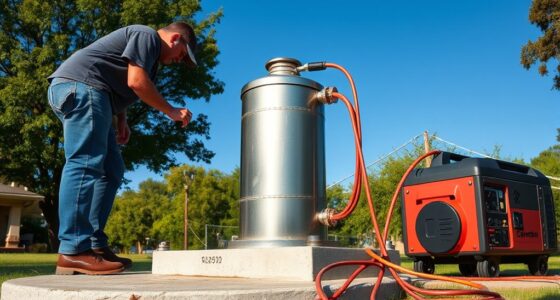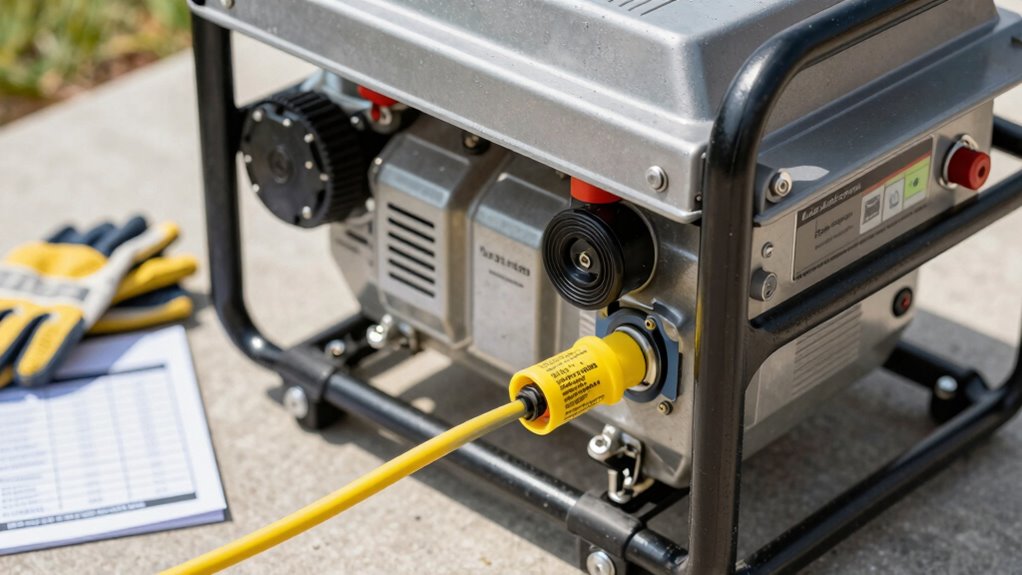
The most important safety habit for your portable generator is proper fuel storage and handling. Always store fuel in approved containers outside your home in well-ventilated areas, away from windows, doors, and ignition sources. Never refuel a hot or running generator, as this can cause spills or fires. Allow the engine to cool before refueling to prevent accidents. Mastering these fuel safety practices helps protect you, your loved ones, and your property, and there’s more to learn on how to keep safe during outages.
Key Takeaways
- Store fuel in approved, well-ventilated containers away from ignition sources.
- Never refuel a running or hot generator to prevent spills and fires.
- Operate the generator outdoors in open, ventilated areas to reduce carbon monoxide risk.
- Use sound barriers and proper placement to minimize noise and environmental disturbance.
- Be aware of surroundings to ensure safe placement and quick hazard response.
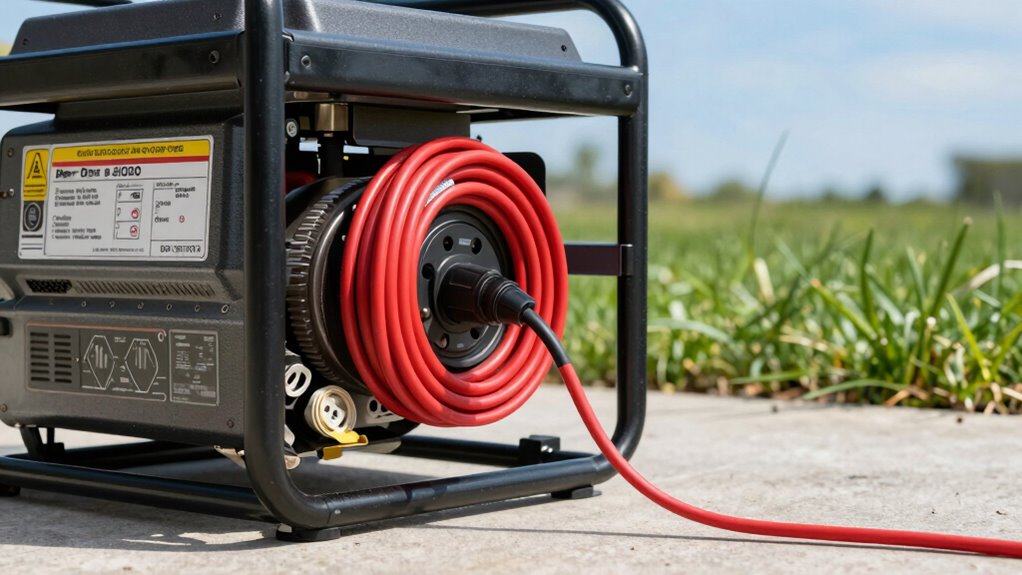
Portable generators are a convenient way to keep your power running during outages or outdoor activities, but they can pose serious safety risks if not used properly. One of the most critical safety habits you can develop involves managing fuel storage effectively. Fuel is highly flammable, so storing it correctly is crucial to prevent dangerous leaks or fires. Always keep fuel in approved containers, and store them outside your home in well-ventilated areas, away from windows, doors, and any ignition sources. Never refuel your generator while it’s running or hot, as this can cause spills or fires. After refueling, make sure the engine cools down before you start the generator again. Proper fuel management minimizes the risk of accidental fires and ensures your generator operates smoothly when you need it most. Ensuring proper fuel storage is essential for safe generator operation.
Another essential aspect of safe generator use is noise management. Portable generators can be loud, and excessive noise can disturb neighbors or even cause hearing damage if you’re close enough. To protect your hearing and be considerate of others, always operate your generator in a well-ventilated area away from windows, doors, and vents that could allow noise into your home. Using sound barriers or placing your generator on a pad can also help reduce noise levels. Keeping noise in check isn’t just about comfort; it’s about safety too. Loud environments can mask other important sounds, like emergency sirens or approaching vehicles, which could be critical during power outages or outdoor events. Additionally, proper placement can help mitigate noise and improve safety during operation. Being aware of your surroundings further enhances safety by allowing you to respond quickly to any potential hazards. Moreover, understanding the contrast ratio of your surroundings can help you better assess risks and ensure a safer environment while operating your generator.
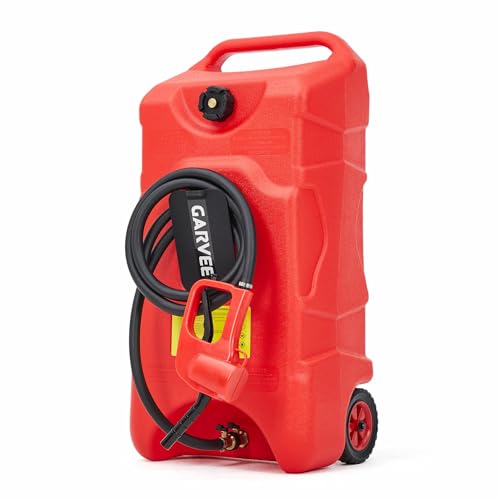
Garvee 16 Gallon Gas Can, Fuel Tank Container with LE Fluid Transfer Manual 10 FT Siphon Pump, Portable Diesel Gas Storage Caddy w/Wheels for Car, ATV, Weeder, Boat, Tractor, Snow Blower,Generator
Heavy-Duty Gas Can Construction: Built from industrial-grade HDPE, this gas can and gas tank resists corrosion, dents, and…
As an affiliate, we earn on qualifying purchases.
As an affiliate, we earn on qualifying purchases.
Frequently Asked Questions
How Often Should I Inspect My Portable Generator for Safety?
You should inspect your portable generator before each use to guarantee safety. Check fuel stability to prevent leaks or spills, and listen for unusual noise levels that could indicate mechanical issues. Regular inspections help identify problems early, reducing risks like fire hazards or carbon monoxide poisoning. By staying vigilant and performing these checks consistently, you keep yourself and others safe while enjoying your generator’s benefits.
What Are Common Signs of a Generator Malfunction?
You’ll notice signs of a generator malfunction through fuel leaks and unusual noises. Fuel leaks can indicate cracks or loose fittings, which pose safety hazards. Unusual noises, like knocking or sputtering, often signal mechanical issues or worn parts. If you see leaks or hear odd sounds, stop the generator immediately, inspect the problem, and address it before using the unit again to prevent further damage or safety risks.
Can I Use Extension Cords With My Portable Generator Safely?
Like a knight with a trusty sword, you can use extension cords with your portable generator, but only if you prioritize extension cord safety and guarantee generator compatibility. Check that cords are heavy-duty, rated for outdoor use, and have sufficient capacity to handle your appliances’ power needs. Avoid daisy-chaining multiple cords, and always keep cords away from water and foot traffic. Proper precautions keep you safe and your equipment running smoothly.
What Is the Recommended Storage Procedure for a Portable Generator?
You should store your portable generator in a cool, dry, well-ventilated area away from flammable materials. Before storing, guarantee the fuel stability by either draining the fuel tank or adding a fuel stabilizer. Keep it covered to protect it from dust and moisture, and check the storage location for safety. Regularly inspect the generator during long-term storage to maintain its condition and readiness for use.
How Do I Properly Dispose of Old or Damaged Generators?
You might think tossing old generators in the trash is fine, but it’s not. Proper disposal involves chemical disposal for any hazardous parts and battery recycling for batteries. Take your damaged generator to a certified disposal facility or contact local waste authorities. Don’t just throw it out—think of it as recycling with a purpose. Old generators contain chemicals and batteries that need careful handling to protect the environment.

TroyStudio Portable Sound Proof Box, 16" x 12" x 16.2" Noise Reduction Enclosure, Light Blocking Quiet Cover, Soundproof Barrier for Ultrasonic Cleaner, Air Pump, Rock Tumbler & Generator
【DIMENSIONS & COMPONENTS】: Exterior dimensions: 16"L x 12"W x 16.2"H; Interior space: 12"L x 8"W x 14.2"H; Foldable…
As an affiliate, we earn on qualifying purchases.
As an affiliate, we earn on qualifying purchases.
Conclusion
Remember, always prioritize proper ventilation when using your portable generator. Did you know that carbon monoxide poisoning from generators causes over 50 deaths annually in the U.S.? Staying vigilant and following safety habits can prevent tragedy. Keep your family safe by never running your generator indoors or in enclosed spaces. Making this one habit part of your routine is the most important step you can take to guarantee safety during power outages.

Generator Interlock Kit Compatible with Eaton Cutler Hammer BR SERIES 150 and 200 amp Panels, Generator Horizontal Electrical Interlock Kit, 1 1/4-1 7/16 inches Spacing Between Main and Branch Breaker
Safe and Reliable: Generator interlock kit for Eaton Cutler Hammer provide a safe and cost-effective way to backfeeding…
As an affiliate, we earn on qualifying purchases.
As an affiliate, we earn on qualifying purchases.

DIAL 3437 Mastercool Cooler Pad, 40" x 23" x 8"
The product is easy to use
As an affiliate, we earn on qualifying purchases.
As an affiliate, we earn on qualifying purchases.