

If a battery fire occurs in your home, stay calm and act quickly. Use a fire extinguisher rated for electrical or chemical fires, or smother small flames with a non-flammable cloth. Evacuate everyone if needed, call emergency services, and guarantee proper ventilation to avoid toxic fumes. Remember, battery fires can reignite, so wait for authorities’ clearance before re-entering. Stay prepared—learn more about safe handling and prevention measures to protect your home and loved ones.
Key Takeaways
- Stay calm, evaluate the fire, and use a suitable fire extinguisher or smother flames if safe.
- Call emergency services immediately if the fire worsens or cannot be controlled.
- Evacuate everyone from the area and ensure proper ventilation to avoid toxic fumes.
- Prevent reignition by keeping the area ventilated and avoiding re-entering until authorities declare safety.
- Regularly inspect batteries for damage, avoid overcharging, and store batteries away from heat sources.
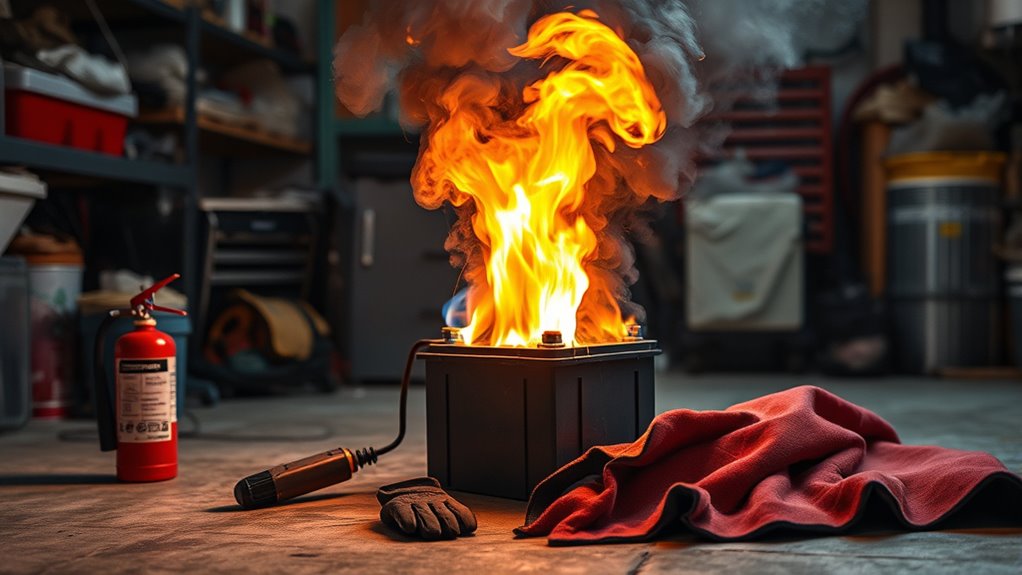
Have you ever wondered what to do if a battery catches fire? It’s a situation that can happen unexpectedly, especially with the increasing use of batteries in our homes. Knowing how to respond quickly and correctly can make a huge difference in protecting yourself, your family, and your property. First, focus on fire safety by staying calm and evaluating the situation. Lithium-ion batteries, common in smartphones, laptops,, and even electric vehicles, can ignite suddenly and release hazardous smoke and fumes. Your immediate goal is to contain the fire and prevent it from spreading. Remember, never try to put out a battery fire with water, as it can intensify the flames or cause dangerous chemical reactions. Instead, use a fire extinguisher rated for electrical or chemical fires, such as a Class C or ABC extinguisher. If you don’t have one nearby, smother the flames with a non-flammable object like a thick blanket or fire-resistant cloth, but only if it’s safe to do so and the fire is small.
Your emergency protocols should include calling the fire department right away if the fire is out of control or if you’re unsure of how to handle it. Alert everyone in the house and evacuate if necessary, prioritizing your safety above all else. As you wait for professional help, keep a safe distance and ensure proper ventilation to avoid inhaling toxic fumes. Do not attempt to move the burning battery or any burning objects unless you have appropriate training and protective gear. It’s indispensable to recognize that battery fires can reignite even after they appear to be out, so monitor the area after extinguishing the flames and avoid re-entering until authorities declare it safe. Additionally, understanding fire safety protocols can help you respond more effectively during such emergencies.
Preventative measures are also essential for fire safety at home. Store batteries properly, away from heat sources and direct sunlight, and avoid overcharging or puncturing batteries. Regularly inspect devices and batteries for signs of damage, swelling, or corrosion, and replace any that show abnormalities. Have a fire extinguisher accessible and ensure everyone in your household knows how to use it. Educate yourself and family members about emergency protocols specific to battery fires, so you’re prepared to act swiftly and effectively if a crisis occurs. Being proactive and knowledgeable about fire safety measures can greatly reduce risks and ensure a quicker, safer response during an unexpected battery fire.
Frequently Asked Questions
How Can I Prevent Battery Fires in My Home?
To prevent battery fires at home, you should regularly perform battery maintenance by checking for damage or corrosion. Also, make certain proper device placement, avoiding areas with excessive heat or humidity, and keep batteries away from flammable materials. Use the correct chargers and avoid overcharging. By staying vigilant with maintenance and placing batteries correctly, you reduce the risk of fires and keep your home safe.
Are There Specific Fire Extinguishers for Battery Fires?
Yes, you should use battery fire extinguishers designed for lithium-ion or electrical fires. These specialized fire suppression tools contain agents like Class D or CO2 extinguishers, which effectively suppress battery fires without spreading flames or causing explosions. Regular water or foam extinguishers won’t work and can make the fire worse. Keep these battery fire extinguishers accessible, especially near areas with batteries or electronics, so you’re prepared in an emergency.
How Do I Safely Disconnect a Burning Battery?
When faced with a burning battery, don’t beat around the bush—safety comes first. Put on fire-resistant gloves and eye protection, then carefully disconnect the battery if it’s safe to do so, following emergency procedures. Use a fire extinguisher rated for electrical fires, and keep a safe distance. Remember, staying calm and prioritizing battery safety helps prevent the situation from spiraling out of control.
What Are the Health Risks From Battery Fire Smoke?
You face inhalation health risks from battery fire smoke, which contains toxic fumes that can irritate your lungs and eyes. Breathing in these battery toxic fumes may cause coughing, dizziness, or headaches, and prolonged exposure could lead to more serious health issues. To stay safe, guarantee proper ventilation, avoid inhaling smoke directly, and seek medical attention if you experience symptoms from inhalation health risks.
When Should I Call Emergency Services for a Battery Fire?
Think of a battery fire as a wildfire threatening your home. As soon as your fire alarm activates, you should call emergency services immediately. Follow your evacuation procedures promptly, ensuring everyone leaves the house safely. Don’t try to extinguish the fire yourself, especially if it’s large or spreading. Quick action and professional help are vital to protect your family and property from the destructive flames of a battery fire.
Conclusion
Being prepared for a battery fire means you’re gently guiding your home through a quiet storm. With careful awareness and calm action, you help guarantee safety without stirring unnecessary worry. Think of it as tending a delicate flame—attentive, cautious, and ready to respond if needed. By staying informed and vigilant, you create a peaceful environment where surprises are managed softly, giving your loved ones the comfort of knowing you’re always a step ahead in safeguarding your haven.