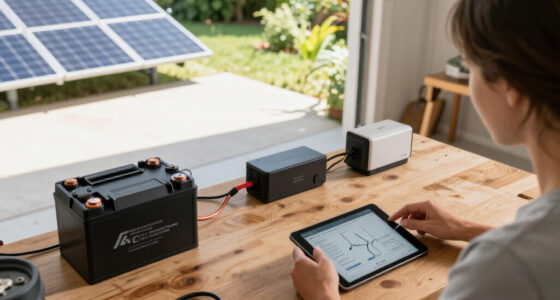
A Battery Management System (BMS) includes protections like OVP, UVP, OCP, and OTP that keep your battery safe and functioning well. Overvoltage Protection (OVP) stops charging if voltage gets too high, while Under Voltage Protection (UVP) prevents excessive discharge. Overcurrent Protection (OCP) cuts off power during overloads, and Overtemperature Protection (OTP) reduces risk by managing heat. Understanding how these safeguards work can help you make better use of your battery’s safety features.

Get backup power and energy gear delivered free — and shop member deals
- Fast, free delivery on millions of items
- Access to Prime Big Deal Days deals on October 6–7
- Prime Video, Amazon Music and more included
Key Takeaways
- OVP prevents battery overvoltage during charging, protecting internal cells from damage.
- UVP disconnects the load to avoid over-discharging and preserve battery lifespan.
- OCP monitors current flow, preventing overheating or thermal runaway during high power demands.
- OTP detects high temperatures, reducing current or shutting down to prevent thermal and chemical failures.
- Battery management systems (BMS) use these protections to ensure safety, longevity, and reliable performance.

Have you ever wondered how lithium-ion batteries stay safe and perform reliably? The answer lies in the sophisticated protection circuitry integrated within Battery Management Systems (BMS). This circuitry acts as a safeguard, preventing the battery from operating outside its safe limits. It’s essential for maintaining battery safety, which in turn ensures longevity and reliable performance. Without proper protection circuitry, the risk of overheating, overcharging, or discharging too much increases dramatically, potentially leading to battery failure or even hazardous situations.
One of the crucial protections provided by BMS is Overvoltage Protection (OVP). When a battery charges, its voltage rises. If it surpasses a safe threshold, the protection circuitry kicks in to stop the charging process. This prevents overvoltage conditions, which can damage the internal structure of the cells and degrade their capacity over time. OVP is vital because it ensures the battery isn’t pushed beyond its design limits, safeguarding the internal components and maintaining overall battery health. Without this safeguard, continuous overvoltage could cause irreversible damage, reducing the lifespan of your battery and risking safety hazards.
Similarly, Under Voltage Protection (UVP) works to prevent the battery from discharging too deeply. When a battery discharges below a certain voltage level, it can cause irreversible chemical changes inside the cells, diminishing capacity and increasing the risk of failure. The protection circuitry detects these low-voltage conditions and disconnects the load to prevent further discharging. This not only preserves the battery’s health but also ensures that the device you’re powering doesn’t suddenly shut down or get damaged due to insufficient power. UVP acts as a vital safety feature, especially important in applications where reliable power is critical. Proper battery protection is essential for avoiding damage and ensuring safe operation over the lifespan of the battery.
Overcurrent Protection (OCP) is another essential component of the protection circuitry. If a device draws too much current, it can cause excessive heat and stress on the battery cells, potentially leading to thermal runaway or damage. The BMS monitors current flow and intervenes if it exceeds safe limits, disconnecting the load or charging circuit as needed. This prevents overheating and reduces the risk of fires or explosions. OCP is particularly crucial during high-power demands, ensuring your battery operates within safe parameters and maintains its integrity over time.
Lastly, Overtemperature Protection (OTP) keeps the battery from overheating during use or charging. Elevated temperatures accelerate chemical breakdown and can lead to dangerous situations. When sensors detect high temperatures, the protection circuitry responds by reducing current or shutting down the system altogether. OTP safeguards both the battery and the user, preventing catastrophic failures caused by thermal issues. Together, these protections form a comprehensive shield that underpins battery safety and performance, giving you peace of mind that your device operates reliably and safely across various conditions.
Frequently Asked Questions
How Do BMS Protections Affect Battery Lifespan?
You can extend your battery’s lifespan by relying on BMS protection mechanisms like OVP, UVP, OCP, and OTP. These protections prevent overvoltage, undervoltage, overcurrent, and overheating, which can damage your battery. By avoiding these extreme conditions, you reduce stress on the cells, maintaining their health and performance. Properly functioning protections guarantee your battery stays healthy longer, ultimately improving its longevity and reliability over time.
Can BMS Protections Be Manually Overridden?
You can manually override BMS protections, but it’s risky and generally not recommended. Manual override involves protection disablement, which bypasses safety features like OVP, UVP, OCP, and OTP. Doing so may expose your battery to damage or hazards, reducing lifespan and safety. Always consider the potential consequences and consult your BMS documentation or a professional before attempting any manual override, as it can void warranties or cause safety issues.
What Are the Signs of BMS Protection Activation?
When your BMS protection activates, you’ll notice protection indicators flashing or turning on, signaling a safety shutdown. Activation symptoms include reduced power, inability to accelerate, or the vehicle refusing to charge. You might also hear warning beeps or see alert messages on your display. These signs make sure you’re aware of safety measures working properly to protect your battery and system from potential damage, prompting you to investigate or reset the system.
How Does Temperature Influence BMS Safety Features?
Imagine your battery like a delicate garden; heat acts as harsh weather threatening its health. Temperature influences your BMS safety features by triggering thermal management to prevent overheating. When temperature thresholds are surpassed, protections activate, cooling the system or shutting it down to avoid damage. Keeping a close eye on temperature guarantees your battery stays safe, efficient, and long-lasting, just like tending to a thriving, well-maintained garden.
Are BMS Protections Standard Across All Battery Types?
You’ll find that BMS protections are not universal across all battery chemistries, as protection standards vary depending on the specific type. For example, lithium-ion batteries often have extensive safety features, while other chemistries might lack some protections. It’s vital to understand the battery chemistry you’re working with and make certain it meets the appropriate protection standards to guarantee safety and peak performance.
Conclusion
Understanding BMS protections like OVP, UVP, OCP, and OTP is your shield against battery damage. Think of these safeguards as your battery’s loyal guardians, standing firm to keep it safe and efficient. When you grasp how they work, you’re better equipped to care for your battery, ensuring it serves you longer and stronger. Remember, respecting these protections is like tending a delicate flower—nurturing it guarantees a vibrant, lasting life.
Fall Picks
fall essentials
As an affiliate, we earn on qualifying purchases.