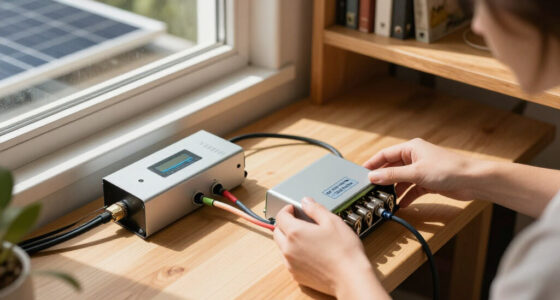

When you connect batteries in series, their voltages add up, giving you higher voltage output, but the capacity (amp-hours) stays the same. With parallel connections, the voltage remains constant, but the capacity increases, providing longer runtime. Choosing between them depends on whether you need more voltage or longer capacity for your project. Want to understand how each setup impacts your system’s performance? Keep exploring for more insights.

Get backup power and energy gear delivered free — and shop member deals
- Fast, free delivery on millions of items
- Access to Prime Big Deal Days deals on October 6–7
- Prime Video, Amazon Music and more included
Key Takeaways
- Series connections increase overall voltage by summing individual battery voltages, while capacity remains unchanged.
- Parallel connections maintain voltage but significantly increase total capacity (amp-hours).
- Series setups are suitable for high-voltage applications, whereas parallel setups extend runtime with higher capacity.
- Mismatched batteries in parallel can cause uneven charging, while series connections require matching voltages for safety.
- Proper circuit protection is essential in both configurations to prevent damage from overcurrent or voltage issues.
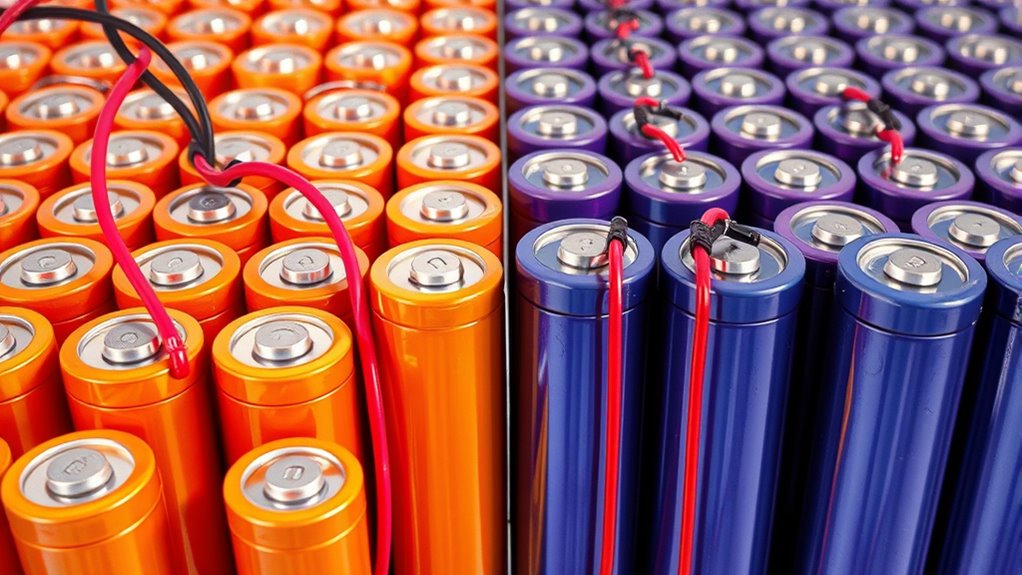
When choosing batteries for your project, understanding the difference between series and parallel configurations is vital. These setups directly impact the voltage and capacity of your power source, so knowing which to use can make all the difference. In a series connection, you connect the positive terminal of one battery to the negative terminal of the next. This arrangement adds up the voltages of each cell, resulting in a higher overall voltage, while the capacity (measured in amp-hours) remains the same as a single battery. Conversely, in a parallel connection, you connect all the positive terminals together and all the negative terminals together. This configuration keeps the voltage constant but increases the capacity, allowing your batteries to provide power for longer durations. Understanding battery chemistry is vital when deciding between these configurations. Different chemistries, such as lithium-ion, lead-acid, or NiMH, have unique characteristics affecting how they behave in series or parallel. For example, lithium-ion batteries tend to have a more stable voltage profile, making them suitable for series connections where voltage consistency is critical. Lead-acid batteries, however, are more forgiving and often used in parallel to extend run time without substantially increasing complexity. But no matter the chemistry, safety considerations are paramount. Connecting batteries in series can lead to higher voltages that may exceed the ratings of your electronic components, risking damage or failure. Overcharging or mismatched batteries in series can cause thermal runaway, especially with lithium-based chemistries, which are highly sensitive to improper handling. Additionally, understanding the battery capacity is essential to ensure the power needs of your project are met without risking damage or inefficiency. Parallel configurations can increase capacity safely, but only if the batteries are identical in voltage, chemistry, and age. Mismatched batteries in parallel can lead to uneven charge and discharge cycles, causing stress and potential failure. Always ensure batteries are properly balanced and monitored, particularly when stacking multiple units. Safety considerations also include proper fusing and protection circuitry to prevent overcurrent or short circuits, which could result in fires or damage. When working with high voltages or capacities, it’s wise to implement appropriate safety measures, such as insulated terminals, secure enclosures, and protective devices.
Frequently Asked Questions
How Do Temperature Changes Affect Series and Parallel Battery Performance?
Temperature changes cause thermal effects that impact both series and parallel batteries. As temperatures rise, you might see increased capacity temporarily, but efficiency variations can lead to faster degradation over time. Cold temperatures reduce chemical reactions, lowering performance and voltage output. In both configurations, maintaining ideal temperature helps guarantee consistent performance, while extreme heat or cold can shorten battery life and cause instability. Always consider thermal management for reliable operation.
Can Mixed Series and Parallel Configurations Improve Overall Battery System Efficiency?
Think of your battery setup like a finely tuned orchestra; mixing series and parallel configurations can lead to harmony, boosting efficiency. Hybrid configurations allow you to optimize capacity and voltage simultaneously, much like a conductor balancing instruments. This approach enhances overall system efficiency by tailoring power delivery to your specific needs. You leverage the strengths of both arrangements, ensuring your batteries perform at their best with smarter efficiency optimization.
What Are the Safety Concerns With Series Versus Parallel Battery Setups?
You should be aware that series setups pose higher fire hazards due to increased voltage, which can lead to severe short circuits if not properly managed. Parallel configurations reduce the risk by limiting voltage but still pose safety concerns like uneven charging and potential short circuits. Always guarantee proper wiring, use safety devices, and regularly inspect your battery system to prevent dangerous situations and minimize safety risks.
How Does Aging Impact Voltage and Capacity in Series and Parallel Batteries?
Aging causes both voltage and capacity to decline in series and parallel batteries. Over time, your battery’s lifespan shortens, and capacity retention drops, meaning it can’t hold as much charge. In series setups, voltage drops more noticeably because the weakest cell limits the whole pack. In parallel, capacity decreases as individual cells degrade, but voltage remains relatively stable. Regular maintenance helps prolong both voltage and capacity during aging.
Are There Specific Applications Better Suited for Series or Parallel Batteries?
You should use series batteries when you need higher voltage for applications like inverters or electric vehicles, ensuring proper battery maintenance and regular charging strategies to prevent voltage imbalance. Parallel batteries suit situations requiring increased capacity, such as backup power systems, where maintaining consistent charging and monitoring capacity are key. Choosing the right configuration depends on your specific power needs and following recommended maintenance routines to maximize battery lifespan and performance.
Conclusion
In the end, choosing between series and parallel batteries depends on what you need. Series batteries boost voltage, while parallel ones increase capacity. Remember, “a chain is only as strong as its weakest link,” so pick the setup that best suits your power demands. By understanding their differences, you can make smarter choices for your projects. Keep your goals in mind, and you’ll power your devices efficiently and reliably.
Halloween Picks
halloween
As an affiliate, we earn on qualifying purchases.