
Your battery charges and stores energy best within a specific temperature range. Cold temperatures slow chemical reactions, making charging harder and less efficient, while high temperatures can cause overheating, damage, and faster capacity loss. Extremes in temperature increase internal resistance and risk safety hazards like thermal runaway. Managing your device’s environment and using built-in sensors helps optimize performance and extend battery life. If you want to understand how to keep your battery healthy across different conditions, keep exploring the details below.

Get backup power and energy gear delivered free — and shop member deals
- Fast, free delivery on millions of items
- Access to Prime Big Deal Days deals on October 6–7
- Prime Video, Amazon Music and more included
Key Takeaways
- Cold temperatures slow chemical reactions, reducing charging efficiency and increasing charging times.
- High temperatures accelerate chemical reactions, risking overheating, capacity loss, and battery degradation.
- Maintaining optimal temperature prevents thermal runaway and enhances battery safety during charging and storage.
- Extreme temperatures cause internal resistance changes, impacting battery performance and lifespan.
- Proper thermal management ensures stable chemical processes, prolonging battery life and maintaining storage integrity.
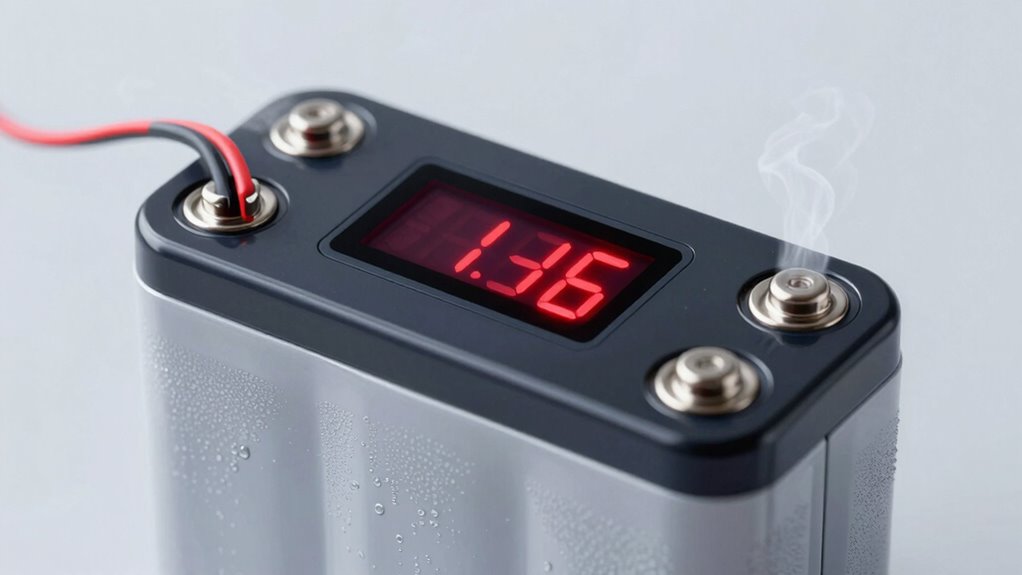
Battery temperature plays a critical role in the charging process, as it directly affects battery performance and longevity. When your battery operates within an ideal temperature range, it charges more efficiently, and its lifespan extends. Conversely, if it gets too hot or too cold, the efficiency of charging drops, and the risk of damage increases. That’s why thermal management becomes essential. Proper thermal management involves controlling and maintaining the battery’s temperature to prevent extreme fluctuations that could hinder performance. Many modern devices and electric vehicles incorporate cooling systems or heat sinks to keep batteries within a safe temperature zone, ensuring that charging remains smooth and reliable.
Proper thermal management ensures efficient charging and extends battery lifespan by preventing damaging temperature fluctuations.
Temperature impacts charging efficiency markedly. When temperatures are too low, the chemical reactions inside the battery slow down, making it harder for the battery to accept a charge. This means it takes longer to fully charge and can even cause incomplete or uneven charging. Cold temperatures can also cause the battery’s internal resistance to increase, which leads to higher heat generation during charging, further complicating thermal management. On the other hand, high temperatures accelerate chemical reactions, which might seem beneficial at first, but this rapid activity can lead to overheating. Excessive heat not only reduces overall charging efficiency but also damages the internal components of the battery, leading to capacity loss over time. Thermal management is crucial for maintaining safe and optimal conditions during charging. Additionally, understanding the battery chemistry can help in designing better thermal control systems to enhance overall performance.
You can improve charging efficiency by paying attention to your battery’s temperature. If you notice your device or vehicle is unusually warm during charging, consider moving it to a cooler environment. If it’s cold, warming it slightly before charging can help. Many devices now have built-in temperature sensors and safety protocols that pause charging if temperatures fall outside safe limits, protecting the battery from damage. Proper thermal management isn’t just about preventing overheating; it’s also about avoiding cold-related issues that hinder charging. When you maintain a balanced temperature, the chemical processes inside the battery proceed smoothly, ensuring faster, more efficient charging cycles. Maintaining an optimal temperature range also helps prevent thermal runaway, which can cause serious safety hazards. Keeping an eye on ambient conditions can make a significant difference in maintaining battery health over time. Additionally, emerging nanotech fabrication techniques are being explored to develop advanced thermal management solutions for future high-performance batteries.
battery thermal management system
As an affiliate, we earn on qualifying purchases.
As an affiliate, we earn on qualifying purchases.
Frequently Asked Questions
How Does Temperature Impact Battery Lifespan Over Time?
You’ll find that high or low temperatures can substantially reduce your battery’s lifespan over time. Extreme heat accelerates battery chemistry breakdown, causing capacity loss, while cold temperatures slow chemical reactions but can also cause damage. Proper thermal management helps maintain ideal temperatures, protecting your battery from these issues. Staying within recommended temperature ranges ensures your battery remains healthy longer, preserving its capacity and performance over its lifespan.
What Is the Optimal Temperature Range for Storing Batteries Long-Term?
You should store batteries in a cool, dry place with stable temperatures, ideally between 32°F and 68°F (0°C to 20°C). Proper temperature regulation helps prevent capacity loss and extends lifespan. Make certain your storage conditions avoid extreme heat or cold, which can accelerate degradation. Maintaining consistent, moderate temperatures during storage preserves battery health, making sure they perform well when you need them later.
Can Extreme Cold Damage a Battery’s Internal Components?
Extreme cold can indeed damage your battery’s internal components, leading to cold-induced capacity loss and thermal degradation effects. When temperatures drop too low, chemical reactions slow down, causing reduced performance and potential internal stress. You might notice decreased runtime and efficiency. To protect your battery, avoid exposing it to severe cold for extended periods, and store it in a warmer environment to prevent damage caused by these cold-induced and thermal degradation effects.
How Quickly Does Battery Performance Decline in High Temperatures?
Your battery’s performance drops like a hot potato when exposed to high temperatures. In just a few hours, elevated heat can cause rapid capacity loss and potential damage. Proper thermal management and battery cooling are essential to slow this decline. Without these measures, your battery’s efficiency diminishes quickly, and its lifespan shortens. Keeping temperatures in check helps maintain ideal performance and extends the overall life of your device.
Are There Specific Battery Types More Sensitive to Temperature Changes?
Some battery types, like lithium-ion, are more sensitive to temperature changes due to their specific battery chemistry. They perform best within a narrow temperature range and can degrade faster when exposed to extreme heat or cold. On the other hand, batteries with higher temperature resilience, such as nickel-based or certain solid-state batteries, handle temperature fluctuations better. Knowing these sensitivities helps you optimize charging and storage for longevity.
As an affiliate, we earn on qualifying purchases.
Conclusion
By now, you know that keeping your battery within the ideal temperature range can boost its lifespan and efficiency. Did you know that charging a battery at temperatures above 113°F can reduce its capacity by up to 50%? So, next time you plug in, make sure your device isn’t overheating. Proper temperature management isn’t just about safety—it’s about getting the most out of your batteries and saving money in the long run.
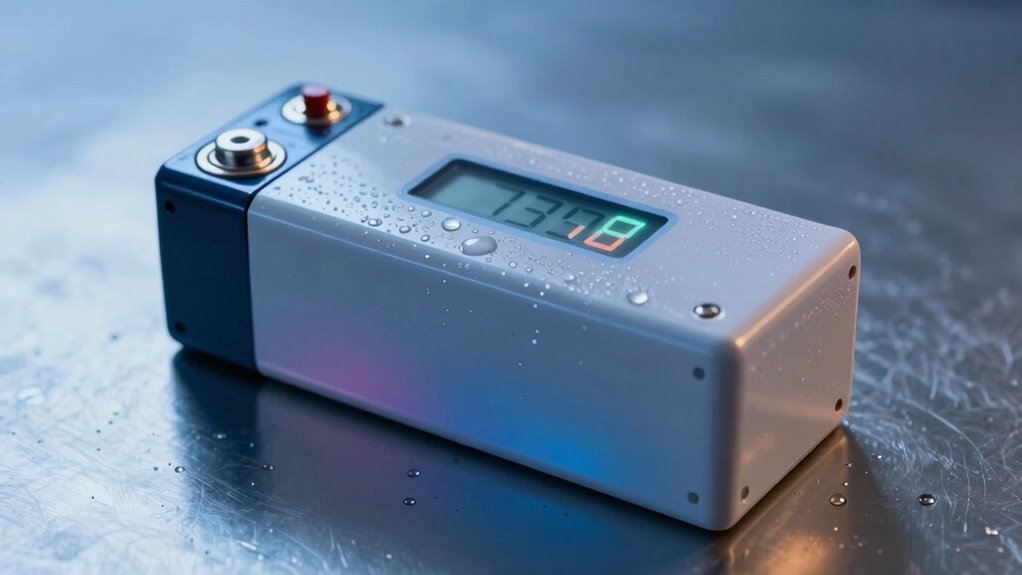
portable battery temperature monitor
As an affiliate, we earn on qualifying purchases.
As an affiliate, we earn on qualifying purchases.
smart battery temperature sensor
As an affiliate, we earn on qualifying purchases.
As an affiliate, we earn on qualifying purchases.
Fall Picks
fall essentials
As an affiliate, we earn on qualifying purchases.