
TL;DR

Get backup power and energy gear delivered free with Prime
- Fast, free delivery on millions of items
- Prime Video, Amazon Music and more included
- Member-only deals all year
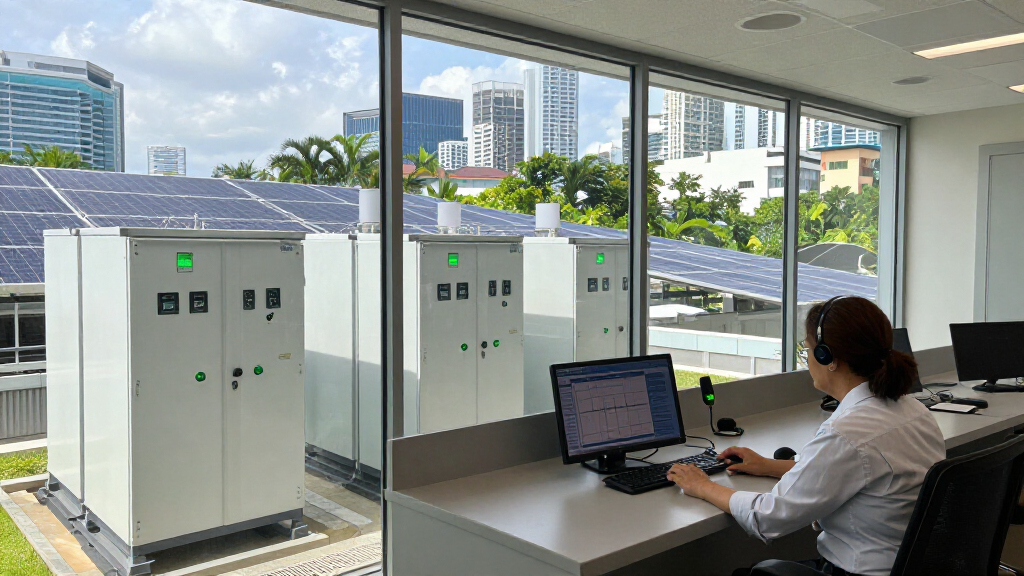
Singapore’s Energy Market Authority says the country will pursue just over 1GWh of energy storage by 2030, up from about 350MWh operating now. The agency is also seeking industry feedback on how to reach the target as Singapore plans for rising electricity demand and more variable renewable power.
Singapore’s Energy Market Authority (EMA) said the country will pursue just over 1GWh of energy storage by 2030, as the city-state prepares for rising electricity demand and more variable renewable generation. The agency also published a consultation paper seeking industry proposals on technologies, business models and rules that could support the target.
Singapore has about 350MWh of operational energy storage capacity, according to the source report. The EMA’s earlier goal of 200MWh by 2025 was met in 2023, two years ahead of schedule, when a 200MW/285MWh lithium iron phosphate battery system entered commercial operation on Jurong Island. The new goal is more than three times the current operational capacity, although the EMA’s wording is “just over 1GWh.”
The consultation, titled the Energy Storage Systems Vision and Industry Consultation Paper, asks companies and other stakeholders for input on how storage can contribute to the power system. The EMA said it will look at storage technologies, potential projects and commercial models, and review existing frameworks. It also plans to improve access to energy-market information. The consultation is open until January 27, 2027, and responses can be submitted through the EMA website.
EMA chief executive Puah Kok Keong said the system’s need for flexibility is increasing. “We would like to partner companies to turn promising ideas into commercially viable energy storage solutions that can be deployed at scale,” he said. Puah said that work could help maintain reliability while making better use of storage.
Storage Supports a More Flexible Grid
Storage can help balance electricity supply and demand when solar output varies, by charging when power is available and releasing it when needed. Singapore’s existing system is described by the EMA as highly reliable, but the agency says rising demand and the integration of variable renewable energy create a growing need for flexibility. The 1GWh goal is a planning target; it does not, by itself, specify how much capacity will be installed each year or which technologies will supply it.
The development is part of a wider infrastructure response rather than a stand-alone battery programme. Singapore plans to expand solar deployment, add and upgrade transmission and distribution infrastructure, and assess electricity imports. These measures address different parts of the same challenge: supplying more power while accommodating new sources and maintaining dependable delivery to homes and businesses.
Storage investment could also depend on whether projects can earn revenue under market rules and secure customers. A DLA Piper survey cited in the source report found that almost two-thirds of Singapore respondents considered merchant battery storage attractive and viewed the predictability of EMA-set market rules favourably. That is a survey finding, not a guarantee of project returns or evidence that all investors share the view.
Products Worth Considering

Bose SoundLink Flex Bluetooth Speaker (2nd Gen), Portable Waterproof Speaker, Black

Ring Alarm 14-Piece Wireless Security System Kit

Samsung 85 M80H Series Mini LED 4K Smart TV (2026)
As an affiliate, we earn on qualifying purchases.
Plans for Power Supply and Networks
The storage target sits within Singapore’s Energy Infrastructure Plan, which addresses expected demand through multiple supply and network measures. Solar panels are planned for underused sites, including reservoirs, vacant land and rooftops. Singapore has a 2030 solar target of 3GWp and, according to the report, had installed about 2.3GWp cumulatively. The EMA has expanded its ambition to 4GWp by 2035.
Natural gas remains central to electricity supply. The source report says gas meets about 95% of Singapore’s electricity demand and that the operating gas generation fleet stands at 12GW. The EMA plans for generation capacity to expand by about 26%, and is evaluating responses to a request for proposals for additional gas plants expected to come online by 2032. The government also plans to raise LNG regasification capacity from 10 million tonnes a year to 15 million by 2030; a new terminal is another possibility.
Network investment is also planned. Singapore expects to spend SG$5.3 billion from 2025 to 2029 on transmission and distribution infrastructure. The plans include seven transmission substations by 2031, a 2,000km extension to the transmission system and distribution upgrades to accommodate more distributed resources such as solar and electric vehicles. The EMA is also studying a second electricity interconnector with Peninsular Malaysia, which could support up to 2GW by the end of the decade. Separately, the government announced initiatives to develop nuclear-energy expertise, while saying it has not decided whether to pursue nuclear power domestically.
“Singapore’s need for flexibility in the power system is growing. We would like to partner companies to turn promising ideas into commercially viable energy storage solutions that can be deployed at scale.”
— Puah Kok Keong, chief executive of Singapore’s Energy Market Authority
How the 1GWh Goal Will Be Reached
The consultation is intended to gather input, so the specific mix of technologies, projects and business models has not yet been set out in the source material. It is also unclear how the capacity will be divided among project owners, what deployment milestones will apply before 2030, and how storage projects will be compensated under any revised market arrangements.
The target is stated as just over 1GWh; the announcement details provided do not define whether that figure refers solely to installed energy capacity or give a separate breakdown by power rating, location or duration. The proposed gas expansion, new LNG terminal and second Malaysia interconnector are also plans or options at different stages, not all completed projects. Singapore has not made a decision on whether to develop nuclear power.
Industry Feedback Runs to January 2027
Companies and other stakeholders can respond to the EMA’s energy-storage consultation through January 27, 2027. The agency is seeking views on possible technologies, commercial approaches, projects and changes to existing market rules. The supplied information does not give a date for a final response or a detailed implementation schedule for the 1GWh target.
In parallel, the EMA is evaluating proposals for additional gas plants, while further requests for proposals may follow depending on demand. Singapore also plans studies and infrastructure work relating to electricity imports and grid upgrades. These decisions will shape how the country combines storage with generation, network capacity and cross-border supply as electricity needs grow.
Key Questions
What is Singapore’s energy-storage target?
The EMA says Singapore will pursue just over 1GWh of energy storage by 2030. The announcement does not provide a detailed annual buildout schedule.
How much storage capacity is operating now?
The source report puts operational capacity at about 350MWh. That includes a 200MW/285MWh battery system on Jurong Island, which entered commercial operation in 2023.
Why is Singapore seeking more energy storage?
The EMA says rising electricity demand and the need to integrate variable renewable sources, including solar, are increasing the need for flexibility in balancing electricity supply and demand.
How can companies contribute to the plan?
Stakeholders can respond to the EMA’s consultation with proposals on technologies, projects, business models and market rules. The consultation is open until January 27, 2027.
Is Singapore planning to rely only on batteries?
No. The infrastructure plan also includes expanded solar, gas generation and LNG capacity, transmission and distribution upgrades, and studies of electricity imports. The announcement does not specify the final role or technology mix for storage.
Source: energy-storage.news