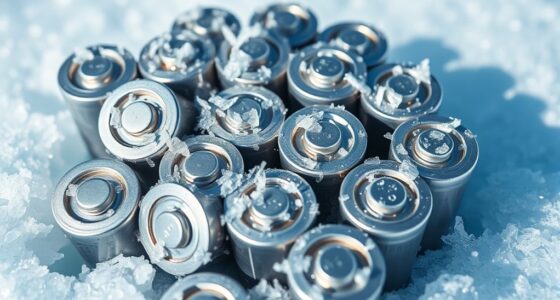

Calendar aging happens over time, even if you don’t use your device, as chemical changes gradually reduce battery capacity. Cycle aging results from charging and discharging cycles, especially with deep or fast charges, wearing out electrode materials. Both types of aging work together to weaken your battery’s performance. By understanding these processes, you can better manage your device’s lifespan. Keep going to discover more ways to slow down battery wear and stay powered longer.

Get backup power and energy gear delivered free — and shop member deals
- Fast, free delivery on millions of items
- Access to Prime Big Deal Days deals on October 6–7
- Prime Video, Amazon Music and more included
Key Takeaways
- Calendar aging causes capacity loss over time, regardless of battery use, due to chemical changes during inactivity.
- Cycle aging results from charge/discharge cycles, with factors like depth of discharge and charging rate accelerating wear.
- Both types reduce overall battery capacity but are driven by different mechanisms—time vs. usage.
- Proper storage, temperature control, and mindful charging habits can slow calendar and cycle aging.
- Manufacturing quality and electrode materials influence the battery’s resistance to both calendar and cycle degradation.

Understanding how batteries degrade is essential for optimizing their lifespan, and two main factors influence this process: calendar aging and cycle aging. When it comes to calendar aging, the primary concern is how time affects your battery, regardless of use. This form of degradation is closely tied to the battery chemistry and manufacturing processes. Different chemistries, like lithium-ion, lithium-polymer, or nickel-metal hydride, age at varying rates. For example, lithium-ion batteries, common in smartphones and EVs, gradually lose capacity over time even if they sit unused. Manufacturing processes play a role here because quality control, material purity, and assembly techniques impact how well a battery resists chemical changes caused by aging. Better manufacturing can minimize impurities that accelerate capacity loss, helping your battery retain charge longer during periods of inactivity. Proper storage conditions can also significantly slow down chemical stability and extend battery life. Cycle aging, on the other hand, occurs as a result of charging and discharging cycles. Every time you use your device or EV, the battery undergoes a cycle, which gradually wears down its cells. The extent of this wear depends profoundly on how you handle the charging process. Fast charging and deep discharges, where the battery is drained to very low levels, tend to accelerate cycle aging. The chemistry of your battery determines its tolerance to these stresses; some chemistries handle cycles better than others. Manufacturing processes influence cycle aging through the quality of electrode materials and assembly precision. For instance, batteries produced with advanced separator materials or optimized electrode coatings tend to resist degradation longer, allowing more charge-discharge cycles before capacity drops noticeably.
Both types of aging are interconnected because they stem from different mechanisms but ultimately lead to a decrease in your battery’s ability to hold a charge. Calendar aging is more about chemical stability over time, while cycle aging relates directly to how often and how deeply you drain and recharge the battery. To maximize lifespan, you should consider both factors. Proper storage, avoiding extreme temperatures, and using appropriate charging habits can slow calendar aging. Meanwhile, minimizing deep discharges and avoiding rapid charging can reduce cycle aging. The quality of the battery, influenced by its chemistry and manufacturing, also plays a vital role. Better manufacturing processes lead to batteries with more stable chemistries and robust construction, which resist both forms of aging more effectively. By understanding these factors, you can make smarter choices to extend your battery’s life and get the most out of your devices.
lithium-ion battery capacity extender
As an affiliate, we earn on qualifying purchases.
As an affiliate, we earn on qualifying purchases.
Frequently Asked Questions
How Do Environmental Factors Influence Calendar and Cycle Aging?
Environmental factors like temperature fluctuations and humidity effects considerably impact both calendar and cycle aging. When temperatures vary, your cells experience stress that accelerates wear, especially if they’re exposed to extreme heat or cold. Humidity can cause corrosion or dehydration, weakening cell components over time. You should store batteries in stable environments, avoiding rapid temperature changes and high humidity, to slow down aging and prolong their lifespan effectively.
Can Cycling Patterns Be Optimized to Reduce Battery Aging?
Yes, you can optimize cycling patterns to reduce battery aging by adjusting your charging habits and storage conditions. Avoid frequent full charges or discharges, as these accelerate wear. Keep your device in cool, dry environments and avoid high temperatures. Try to keep your battery between 20-80% charge when possible. Properly managing these factors minimizes stress on the cells, extending your battery’s lifespan effectively.
What Are the Early Indicators of Calendar Versus Cycle Aging?
You’ll notice early signs of calendar aging through a gradual decline in your battery’s state of health, often showing a capacity fade of around 2-3% over a year, even if unused. For cycle aging, repeated charge-discharge cycles cause capacity fade, with the rate increasing after about 500 cycles. Monitoring capacity fade and state of health helps you identify which aging process is starting, so you can take action early.
How Do Different Battery Chemistries Affect Aging Mechanisms?
You’ll notice that different battery chemistries impact aging mechanisms through electrochemical stability and material degradation. For example, lithium-ion batteries with cobalt cathodes may degrade faster due to electrolyte breakdown, while lithium iron phosphate chemistries offer better stability, resisting material degradation longer. These differences influence how quickly batteries lose capacity over time, affecting overall lifespan and performance. Understanding these effects helps you choose the right chemistry for your specific energy storage needs.
Are There Specific Maintenance Practices to Slow Down Aging Processes?
Think of your battery as a garden; regular maintenance keeps it thriving. To slow down the aging process, follow maintenance strategies like avoiding deep discharges, keeping the charge level between 20-80%, and storing it in cool, dry places. These practices extend your battery’s lifespan by reducing stress on cells. Consistent care prevents premature wear, ensuring your battery stays healthy longer and performs reliably over time.
As an affiliate, we earn on qualifying purchases.
Conclusion
Understanding the difference between calendar aging and cycle aging helps you protect your batteries better. While calendar aging quietly wears down cells over time, cycle aging speeds up deterioration through repeated use. Just like time and activity influence your health, both factors impact your battery’s lifespan. By managing storage and usage habits, you can extend your battery’s life. Remember, time may pass, but how you use your battery makes all the difference—so stay mindful of both aging types.
smartphone battery health monitor
As an affiliate, we earn on qualifying purchases.
As an affiliate, we earn on qualifying purchases.
As an affiliate, we earn on qualifying purchases.
Fall Picks
fall essentials
As an affiliate, we earn on qualifying purchases.