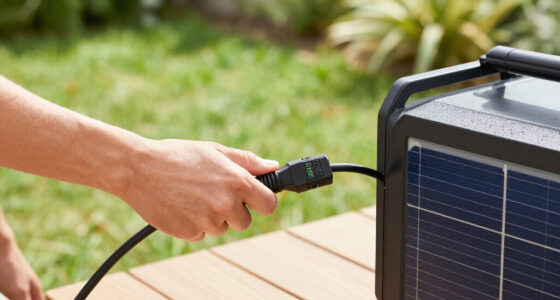

The best home energy storage systems depend on whether you need whole-home backup, a solar-plus-battery setup, or a smaller source of portable power. My best overall pick is the Anker SOLIX E10 Home Backup Power System with Power Dock, which pairs a 6 kWh battery with 7.6 kW output for a practical balance of storage and backup capacity. For a larger off-grid setup, the ECO-WORTHY 10 kW kit with 32.2 kWh of storage stands out, while the ABOK Ark3600 is a simpler portable option. The main tradeoffs are capacity, output, installation complexity, and whether components arrive as a coordinated system or need careful integration. Read on for the full breakdown and guidance on matching a system to your home.

Get backup power and energy gear delivered free with Prime
- Fast, free delivery on millions of items
- Prime Video, Amazon Music and more included
- Member-only deals all year
Key Takeaways
- The Anker SOLIX E10 with Power Dock leads for balanced home backup: its 6 kWh capacity and 7.6 kW output make it a more integrated choice than standalone rack batteries, though its listed capacity is smaller than the large ECO-WORTHY kits.
- Battery capacity changes the job a system can do: ECO-WORTHY’s 32.2 kWh kit is aimed at longer off-grid operation, while its 16.1 kWh version suits buyers who need less stored energy and a smaller system.
- Solar input and stored energy are different measures: the Anker E10 with 9 kW solar input emphasizes charging potential, while battery capacity determines how much energy is available after sunlight fades.
- Rack batteries can offer flexibility but ask more of the buyer: ECO-WORTHY’s Cubix100 and WattCycle’s 48V battery-and-inverter package call for closer attention to compatibility, system design, and installation.
- Not every listed product is a complete home battery system: the Refoss monitor helps track circuit-level energy use, and the ABOK portable station serves smaller backup needs rather than whole-home storage.
| Anker SOLIX E10 Home Backup Power System with Power Dock, 6 kWh, 7.6 kW Output |  | Best for Whole-Home Backup | Battery capacity: 6 kWh, expandable to 90 kWh | Continuous output: 7.6 kW | Solar input: Up to 9 kW per unit | VIEW LATEST PRICE | See Our Full Breakdown |
| Refoss Smart Home Energy Monitor with 16 Circuit Sensors and Local Control |  | Best for Tracking Energy Use | Model: EM16P | Main sensors: 2, up to 200A | Branch sensors: 16, up to 60A each | VIEW LATEST PRICE | See Our Full Breakdown |
| ECO-WORTHY Cubix100 48V 100Ah LiFePO4 Server Rack Battery |  | Best Expandable Rack Battery | Battery chemistry: LiFePO₄ | Voltage: 51.2V | Capacity: 100Ah | VIEW LATEST PRICE | See Our Full Breakdown |
| ECO-WORTHY 10kW Off-Grid Solar Panel Kit with 32.2kWh Battery Storage |  | Best for High-Capacity Off-Grid Living | Solar panels: 18 monocrystalline panels | Total solar capacity: 10,620W | Battery storage: 32.2 kWh | VIEW LATEST PRICE | See Our Full Breakdown |
| ECO-WORTHY 10 kW Off-Grid Solar Panel Kit with 16.1 kWh Battery |  | Best Smaller Bundled Off-Grid Kit | Solar panels: 5 × 590W monocrystalline panels | Maximum solar power: 2,950W | Battery: 48V, 314Ah LiFePO₄ | VIEW LATEST PRICE | See Our Full Breakdown |
| ECO-WORTHY Home Backup Solar Energy Storage System with 10 kW Hybrid Inverter |  | Best for High-Capacity Off-Grid Backup | Solar panels: 6 × 590 W N-type monocrystalline panels | Battery capacity: 2 × 48 V, 314 Ah LiFePO4 batteries | Usable energy: More than 30 kWh | VIEW LATEST PRICE | See Our Full Breakdown |
| Anker SOLIX E10 Home Backup Power System with 6 kWh Battery and 9 kW Solar Input |  | Best for Expandable Whole-Home Backup | Continuous output: 7.68 kW | Battery capacity: 6 kWh, expandable to 30 kWh | Solar input: Up to 9 kW per unit | VIEW LATEST PRICE | See Our Full Breakdown |
| ABOK Ark3600 Portable Power Station with Three 200W Solar Panels |  | Best Portable Backup and Solar Kit | Battery capacity: 3,840 Wh, expandable to 11,520 Wh | Battery type: LiFePO4 | Peak output: 7,200 W | VIEW LATEST PRICE | See Our Full Breakdown |
| WattCycle 48V 100Ah Server Rack Batteries with 12kW Split-Phase Inverter |  | Best for Scalable Solar Integration | Battery capacity: 10.24 kWh total | Battery configuration: Two 48 V, 100 Ah server rack batteries | Battery chemistry: LiFePO4 | VIEW LATEST PRICE | See Our Full Breakdown |
| home energy storage system | Battery capacity |
|---|---|
| Anker SOLIX E10 Home Backup Po | 6 kWh, expandable to 90 kWh |
| Refoss Smart Home Energy Monit | — |
| ECO-WORTHY Cubix100 48V 100Ah | — |
| ECO-WORTHY 10kW Off-Grid Solar | — |
| ECO-WORTHY 10 kW Off-Grid Sola | — |
| ECO-WORTHY Home Backup Solar E | 2 × 48 V, 314 Ah LiFePO4 batteries |
| Anker SOLIX E10 Home Backup Po | 6 kWh, expandable to 30 kWh |
| ABOK Ark3600 Portable Power St | 3,840 Wh, expandable to 11,520 Wh |
| WattCycle 48V 100Ah Server Rac | 10.24 kWh total |
More Details on Our Top Picks
Anker SOLIX E10 Home Backup Power System with Power Dock, 6 kWh, 7.6 kW Output
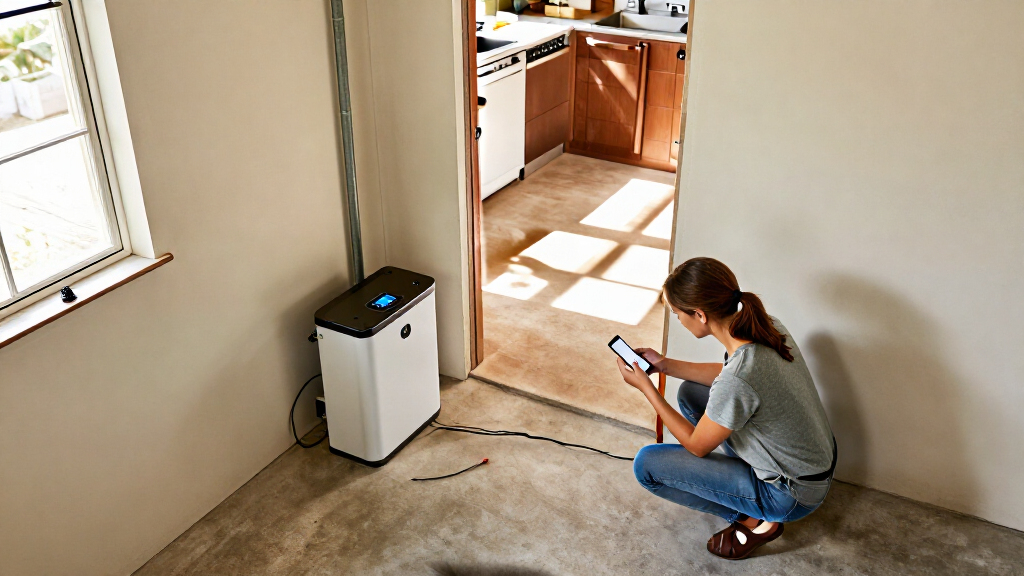
The Anker SOLIX E10 is the strongest fit here for homeowners who want a battery system connected to the home’s main panel, rather than a standalone off-grid kit. Its 200A Power Dock and automatic switchover in 20 ms or less can keep supported circuits running with little interruption, while the 6 kWh battery expands to 90 kWh as backup needs grow. Compared with ECO-WORTHY’s 10 kW off-grid kits, the E10 starts with less stored energy and solar input, but its panel integration and compatibility with existing solar make it a more natural backup choice for an already equipped home. The tradeoff is that installation may require a professional, and the E10 battery warranty is five years, shorter than the Power Dock’s ten-year term.
Pros:- Expandable storage supports growth from 6 kWh up to 90 kWh.
- Power Dock supports 200A panel coverage and automatic switchover in 20 ms or less.
- Accepts up to 9 kW of solar input per unit and works with existing solar.
- Outdoor-rated design supports wall or floor mounting.
Cons:- Professional installation may be needed for connection to a home panel.
- The E10 battery has a five-year warranty, shorter than the Power Dock’s ten-year warranty.
- Starting storage is smaller than the 16.1 kWh and 32.2 kWh ECO-WORTHY kits.
Best for: Homeowners with existing solar who want automatic, main-panel backup and the option to expand storage over time.
Not ideal for: Buyers seeking a large, ready-to-run off-grid solar package; the E10 has 6 kWh of starting capacity and may require professional installation.
- Battery capacity:6 kWh, expandable to 90 kWh
- Continuous output:7.6 kW
- Solar input:Up to 9 kW per unit
- Panel coverage:200A
- Automatic switchover:20 ms or less
- Battery chemistry:LFP
- Operating temperature:-4°F to 131°F
- Warranty:5 years for E10; 10 years for Power Dock
Our verdict“Choose the E10 if you want expandable, main-panel backup for a solar-equipped home and accept installation requirements and a shorter battery warranty.”
Refoss Smart Home Energy Monitor with 16 Circuit Sensors and Local Control
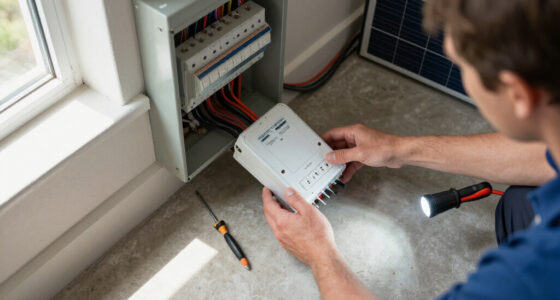
The Refoss monitor earns a place in a storage-system roundup as a planning and oversight tool, not as a battery or backup source. It measures up to 18 circuits with ±1% stated precision, giving owners a clearer view of which loads drive consumption and how solar or stored energy is being used. Unlike the Anker SOLIX E10, it cannot power circuits during an outage; its value is helping buyers understand their electrical use and manage a separate system. Local web access, Open API, MQTT, WebSocket, and Home Assistant support also suit people who want data without relying on a cloud account. The main compromise is installation: its sensors go inside the breaker box, so this is not a plug-in monitor. Energy savings depend on how owners act on the data, not on the device alone.
Pros:- Monitors up to 18 circuits with ±1% stated measurement precision.
- Local web interface and integrations include Open API, MQTT, WebSocket, and Home Assistant.
- Stores daily data for five years and supports exports and alerts.
- Supports solar monitoring and several electrical system types.
Cons:- Installation requires fitting sensors inside the breaker box.
- It monitors energy use but does not provide backup power or battery storage.
- Potential utility savings depend on user actions and are not guaranteed.
Best for: Solar and battery owners who want circuit-level usage data, local integrations, and exportable records to guide energy decisions.
Not ideal for: Buyers looking for outage power or a simple plug-in setup; this monitor supplies no electricity and requires sensors inside the breaker box.
- Model:EM16P
- Main sensors:2, up to 200A
- Branch sensors:16, up to 60A each
- Measurement precision:±1%
- Supported electrical systems:Single-phase, split-phase, and 3-phase 4-wire Wye
- Local integrations:Web UI, Open API, MQTT, WebSocket, Home Assistant
- Data retention:Daily data stored for 5 years
- Certification and warranty:ETL certified; 2-year warranty
Our verdict“Pick the Refoss if you already have or are planning storage and want detailed local energy data, not another source of backup power.”
ECO-WORTHY Cubix100 48V 100Ah LiFePO4 Server Rack Battery
The Cubix100 is a battery building block for buyers assembling a compatible home storage system, rather than a complete solar-and-inverter package. Its 5.12 kWh LiFePO₄ capacity, rack format, and support for up to 32 units in parallel make it a modular alternative to the bundled ECO-WORTHY 10 kW kits, which include panels and an inverter but provide less flexibility in component choice. CAN and RS485 communication can support integration with compatible equipment, while Bluetooth and Wi-Fi make battery monitoring more accessible. The UL9540, UL1973, and CEC certifications add useful system-planning credentials, though compatibility still needs checking rather than assuming. At 103 pounds, each unit is heavy to handle, and this battery alone cannot deliver usable home backup without an appropriate inverter and installation.
Pros:- 5.12 kWh LiFePO₄ battery capacity in a format designed for rack or vertical mounting.
- Supports parallel connection of up to 32 units for capacity expansion.
- CAN, RS485, Bluetooth, and Wi-Fi support communication and monitoring options.
- Listed with UL9540, UL1973, and CEC certifications and a 10-year limited warranty.
Cons:- Weighs 103 pounds, making handling and placement challenging.
- Requires a compatible inverter and communications setup for integrated operation.
- Battery-only purchase does not include the panels and inverter supplied with ECO-WORTHY’s bundled kits.
Best for: DIY solar and off-grid system planners who already have, or can select, a compatible inverter and want storage that can scale in parallel.
Not ideal for: Homeowners seeking a complete, ready-to-connect backup kit or anyone unable to manage a 103-pound battery and verify inverter communications.
- Battery chemistry:LiFePO₄
- Voltage:51.2V
- Capacity:100Ah
- Energy:5,120Wh
- Communications:CAN, RS485, Bluetooth, Wi-Fi
- Maximum parallel units:32
- Certifications:UL9540, UL1973, CEC
- Weight:103 lb
- Warranty:10-year limited warranty
Our verdict“Choose the Cubix100 if you want modular LiFePO₄ storage and already know which compatible inverter will run your system.”
ECO-WORTHY 10kW Off-Grid Solar Panel Kit with 32.2kWh Battery Storage
For buyers who want a substantial off-grid package rather than a grid-connected backup battery, this ECO-WORTHY kit combines 10,620W of solar panels with 32.2 kWh of LiFePO₄ storage and a 10,000W split-phase inverter. That gives it far more included generation and storage than the five-panel ECO-WORTHY 10 kW kit, making it a better match for homes with higher energy demand or longer periods away from the grid. Its 120V and 240V output supports a broader range of household loads, while the 20,000W peak output can accommodate brief startup demands. The size of the package is also its limitation: professional installation is recommended, and pallet delivery requires a location that can handle truck shipping. Compared with the Anker SOLIX E10, this is a larger off-grid build, not a streamlined main-panel backup system.
Pros:- Includes 18 panels with 10,620W total solar capacity.
- Provides 32.2 kWh of LiFePO₄ storage from two batteries.
- 10,000W continuous inverter output supports 120V or 120V/240V split-phase loads.
- 20,000W peak output provides headroom for brief startup demands.
Cons:- Professional installation is recommended for this large system.
- Pallet delivery requires an address that can accommodate truck shipping.
- Its off-grid kit format is less suited to buyers seeking Anker-style automatic main-panel backup.
Best for: Owners of off-grid homes or remote properties who need substantial included solar generation, battery storage, and 120V/240V output.
Not ideal for: Buyers who need a compact, grid-connected backup system or cannot arrange professional installation and truck-accessible pallet delivery.
- Solar panels:18 monocrystalline panels
- Total solar capacity:10,620W
- Battery storage:32.2 kWh
- Battery configuration:2 × 48V, 314Ah LiFePO₄ batteries
- Continuous inverter output:10,000W
- Peak inverter output:20,000W
- Output voltage:120V or 120V/240V split phase
- Installation:Professional installation recommended
Our verdict“Choose this kit for a professionally installed off-grid home that needs substantially more included solar and storage than the smaller ECO-WORTHY kit.”
ECO-WORTHY 10 kW Off-Grid Solar Panel Kit with 16.1 kWh Battery
This ECO-WORTHY kit keeps the same 10,000W continuous, split-phase inverter concept as the larger 32.2 kWh package, but pairs it with five 590W panels and about 16.1 kWh of storage. That makes it a more restrained bundled option for buyers who want an off-grid-capable system without stepping up to the other kit’s 18 panels and 32.2 kWh battery bank. The inverter’s 120V or 120/240V output gives it flexibility for household loads, while dual MPPT controllers and Wi-Fi monitoring help with solar management. Its 2,950W panel array, however, is much smaller than the larger ECO-WORTHY kit’s 10,620W array; inverter capacity alone does not mean the included panels can generate at that level. Professional installation and palletized delivery also make this a serious system purchase, not a quick setup.
Pros:- Includes five 590W panels, inverter, battery, and necessary cables.
- About 16.1 kWh of LiFePO₄ storage with support for parallel expansion.
- 10,000W continuous inverter supports 120V or 120V/240V split-phase output.
- Dual MPPT controllers and Wi-Fi monitoring support solar management.
Cons:- The 2,950W included solar array is much smaller than the 10,620W array in the larger ECO-WORTHY kit.
- Professional installation is recommended.
- Large components require palletized truck delivery.
Best for: Off-grid buyers who want a bundled battery, inverter, and solar array with less included storage and panel capacity than ECO-WORTHY’s larger kit.
Not ideal for: High-demand households that need faster solar replenishment or more stored energy; the included array is 2,950W and storage is about 16.1 kWh.
- Solar panels:5 × 590W monocrystalline panels
- Maximum solar power:2,950W
- Battery:48V, 314Ah LiFePO₄
- Battery energy capacity:16.076 kWh
- Inverter output:10,000W continuous; up to 20,000W peak
- Output voltage:120V or 120V/240V split phase
- Daily solar generation:Up to 11.8 kWh under optimal conditions
- Battery management:PACE 200A BMS
Our verdict“Pick this kit if you want a bundled off-grid system with meaningful battery storage but do not need the larger ECO-WORTHY package’s panel array and 32.2 kWh capacity.”
ECO-WORTHY Home Backup Solar Energy Storage System with 10 kW Hybrid Inverter
For buyers who want a substantial solar-and-battery package in one purchase, this ECO-WORTHY system pairs more than 30 kWh of usable storage with a 10 kW hybrid inverter and six 590 W panels. That combination is a stronger fit for extended backup or off-grid operation than the Anker SOLIX E10’s 6 kWh starting battery, though the E10 offers a more compact, weatherproof format and expansion flexibility. The ECO-WORTHY batteries support app monitoring and several communication protocols, which can help when integrating components, while 120 V and 240 V output accommodates a wider range of household loads. The tradeoff is scale: this system ships on a pallet and needs space for large panels and batteries. I’d also check the inverter version before planning around its exterior, since the version shipped is random.
Pros:- More than 30 kWh of usable energy supports longer backup periods than the Anker SOLIX E10’s included 6 kWh battery.
- Includes six 590 W solar panels, batteries, inverter, and cables as a coordinated system.
- 10 kW hybrid inverter provides both 120 V and 240 V output.
- App monitoring and RS485, CAN, RS232, Bluetooth, and WiFi communication support system monitoring and integration.
Cons:- Large, heavy components ship by pallet truck and require considerable installation space.
- The inverter exterior version is shipped at random, limiting buyer control over that detail.
- A system of this scale calls for more planning and installation work than a compact portable power station.
Best for: Homeowners building an off-grid setup or seeking long-duration backup with substantial included battery storage and solar generation.
Not ideal for: Apartment residents or buyers seeking a compact, straightforward backup unit; its pallet-sized shipment, large panels, and system scale call for space and installation planning.
- Solar panels:6 × 590 W N-type monocrystalline panels
- Battery capacity:2 × 48 V, 314 Ah LiFePO4 batteries
- Usable energy:More than 30 kWh
- Inverter:10 kW hybrid inverter
- Inverter output:120 V and 240 V
- Battery cycle life:9,000+ cycles at 80% depth of discharge
- MPPT tracking efficiency:99.9%
- Battery communication:RS485, CAN, RS232, Bluetooth, and WiFi
Our verdict“Choose this ECO-WORTHY package if extended off-grid use and over 30 kWh of included storage matter more than compact size and simple setup.”
Anker SOLIX E10 Home Backup Power System with 6 kWh Battery and 9 kW Solar Input
The Anker SOLIX E10 is the more adaptable choice for buyers who want a whole-home backup system that can start modestly and grow. Its 6 kWh battery expands to 30 kWh, while 7.68 kW continuous output and up to 9 kW of solar input per unit give it room to support a broader backup plan. The Smart Inlet Box adds whole-home control and grid charging during off-peak hours, features that set it apart from the ABOK Ark3600, which is a portable station better suited to selected appliances and devices. The E10 is also designed for outdoor mounting, but installation may call for a professional. Its included battery capacity is much smaller than the ECO-WORTHY system’s 30 kWh-plus package, and the E10’s five-year warranty is shorter than the Smart Inlet Box’s ten-year term.
Pros:- Battery capacity can expand from 6 kWh to 30 kWh.
- Supports up to 9 kW of solar input per unit.
- Smart Inlet Box enables whole-home backup control and off-peak grid charging.
- Weather protection supports outdoor placement, with wall or floor mounting options.
Cons:- The included 6 kWh battery offers much less storage initially than the ECO-WORTHY system’s 30 kWh-plus usable capacity.
- Professional installation may be needed for whole-home integration.
- The E10 has a five-year warranty, shorter than the Smart Inlet Box’s ten-year warranty.
Best for: Homeowners who want controlled whole-home backup, outdoor mounting, and the option to add battery capacity as their needs grow.
Not ideal for: Buyers who need more than 6 kWh of storage immediately without adding modules, or who want a system that avoids professional installation.
- Continuous output:7.68 kW
- Battery capacity:6 kWh, expandable to 30 kWh
- Solar input:Up to 9 kW per unit
- Battery chemistry:LFP
- Weight:60.6 lb
- Dimensions:26.4 × 11.8 × 10.2 in
- Weather protection:NEMA 4 for E10; NEMA 3R for Smart Inlet Box
- Warranty:5 years for E10; 10 years for Smart Inlet Box
Our verdict“Pick the E10 if you want a weatherproof, expandable whole-home system and are comfortable planning for installation and possible future battery additions.”
ABOK Ark3600 Portable Power Station with Three 200W Solar Panels
The ABOK Ark3600 stands apart from the fixed home systems here by putting portability and device-level backup first. Its 3,600 W rated output, 15 ports, and app-based monitoring make it useful for powering several devices, RV trips, or backup in a room without wiring a whole home. The included three 200 W panels give it a solar-charging option, and its 3,840 Wh LiFePO4 battery can expand to 11,520 Wh. That is far less storage than the ECO-WORTHY system’s 30 kWh-plus, but the ABOK avoids the same pallet-scale commitment. The tradeoff is that this is still a 92 lb portable unit, not an easy carry for frequent repositioning. Recharge speed also depends on available input and conditions, so it is less suited to buyers who need predictable whole-home energy replenishment.
Pros:- 3,600 W rated output and 15 ports support multiple devices at once.
- LiFePO4 storage expands from 3,840 Wh to 11,520 Wh.
- Includes three 200 W solar panels and supports combined AC and solar charging up to 3,500 W.
- App offers remote monitoring and charging schedules.
Cons:- At 92 lb, it is heavy to move frequently despite its portable format.
- Its maximum expandable capacity is well below the ECO-WORTHY system’s more than 30 kWh of usable storage.
- Full recharge time varies with the input source and conditions.
Best for: RV owners and households seeking a movable backup source for selected appliances, electronics, and outdoor power needs.
Not ideal for: Homeowners seeking hardwired whole-home backup or long-duration storage comparable to the ECO-WORTHY system; its capacity and portable format are better suited to targeted loads.
- Battery capacity:3,840 Wh, expandable to 11,520 Wh
- Battery type:LiFePO4
- Peak output:7,200 W
- Starting wattage:4,500 W
- Charging input:Up to 3,500 W combined AC and solar
- Output ports:15
- Weight:92 lb
- Solar panels:Three 200 W panels
Our verdict“Choose the Ark3600 for flexible, movable backup and RV use, not as a substitute for a high-capacity whole-home storage installation.”
WattCycle 48V 100Ah Server Rack Batteries with 12kW Split-Phase Inverter
WattCycle is the strongest fit in this group for a buyer planning a modular, solar-heavy installation rather than seeking a ready-to-place portable station. The package combines 10.24 kWh of LiFePO4 storage with a 12 kW split-phase inverter, dual MPPT controllers, and support for up to 24,000 W of solar input. Its under-10 ms UPS transfer is aimed at keeping connected loads supplied quickly when utility power fails. Compared with the Anker SOLIX E10, WattCycle offers higher stated solar input and fast transfer, while the Anker provides a more clearly described whole-home control package through its Smart Inlet Box. WattCycle can expand to six inverters and 20 batteries, but that growth requires additional compatible equipment. The description also leaves installation details unspecified, so buyers should plan to confirm system design and setup requirements.
Pros:- 12 kW split-phase inverter provides 120 V and 240 V output.
- Supports up to 24,000 W of solar input through dual MPPT controllers.
- Under-10 ms UPS transfer supports rapid backup switching.
- Expandable to six inverters and 20 batteries.
Cons:- Reaching the listed expansion capacity requires buying additional compatible batteries and inverters.
- The product description does not provide installation details.
- Its 10.24 kWh included capacity is below the ECO-WORTHY system’s more than 30 kWh of usable storage.
Best for: Solar-savvy homeowners or installers designing a scalable 120 V/240 V backup system with high solar input and server-rack batteries.
Not ideal for: Buyers seeking a fully described, simple-to-install package or a compact portable backup unit; expansion depends on compatible equipment and installation planning.
- Battery capacity:10.24 kWh total
- Battery configuration:Two 48 V, 100 Ah server rack batteries
- Battery chemistry:LiFePO4
- Inverter output:12 kW, 120 V/240 V split phase
- Maximum solar input:24,000 W
- MPPT controllers:Dual
- UPS transfer time:Under 10 ms
- Expansion capacity:Up to 6 inverters and 20 batteries
Our verdict“Choose WattCycle if high solar input, split-phase output, and future system expansion matter more than a fully detailed, ready-to-install setup.”

How We Picked
I ranked these options by how directly they serve a home energy storage need, then weighed usable storage capacity, output, solar integration, system completeness, and likely setup demands. A battery paired with an inverter or home backup components can be a more straightforward fit than a standalone battery, but a modular system may suit buyers who want to shape a larger installation. I also separated products that store and supply energy from tools that monitor it, so readers do not mistake energy management for backup capacity.
The order reflects the breadth of use each product appears to support, not a claim that one system fits every home. Integrated backup systems rank ahead for buyers seeking a direct home-power solution; larger solar kits rank well for off-grid scale, while rack batteries and the portable station serve narrower needs. Since listed specifications alone cannot confirm compatibility with a particular home, solar array, or electrical panel, I treat installation requirements and component matching as meaningful tradeoffs rather than assuming plug-and-play use.
Factors to Consider When Choosing Best Home Energy Storage Systems
Before choosing a system, I would start with the loads you need to keep running and the way you plan to recharge the battery. These broader checks can prevent a common mismatch: buying a large storage figure that cannot power the intended equipment, or a high-output system that does not hold enough energy for an outage.
Separate Battery Capacity From Output
Capacity describes stored energy, while output describes how much power a system can supply at a given time. A large battery may run essential appliances for longer but still fall short if simultaneous loads exceed its output limit. Conversely, high output can handle stronger or multiple loads, but a smaller battery may run down quickly. Make a list of the devices you need during an outage and note both their running demand and any startup surge. Compare those needs with the system’s stated output and capacity rather than relying on either number alone. This distinction is especially useful when comparing a 6 kWh home backup unit with a much larger off-grid battery kit.
Check What the Solar Input Actually Covers
Solar input is a charging limit, not a promise of daily production. The Anker E10 listing with 9 kW solar input signals a higher potential input rating than the E10 configuration listed with Power Dock, but actual charging depends on panel capacity, sunlight, orientation, and system compatibility. Ask whether panels are included, what panel configurations the system accepts, and whether additional charge-control equipment is needed. Avoid treating a solar input rating as equivalent to battery capacity or guaranteed recharge time. A home with limited roof area may benefit more from efficient load planning than from a large theoretical input figure. Off-grid buyers should also plan for cloudy periods and seasonal changes.
Decide Between an Integrated System and Modular Components
Integrated packages can simplify system planning, while separate batteries and inverters leave more room to tailor a setup. That flexibility can be useful for expanding storage or fitting an existing solar installation, but only if the voltage, inverter, communications, and charging requirements match. Before buying a rack battery, confirm which inverter models support it and whether the battery management system can communicate with the rest of the equipment. Check whether the package includes required cables, breakers, and mounting hardware instead of assuming a listing covers every installation part. A lower component count can make an integrated system easier to specify, while a modular setup may better suit technically confident buyers working with a qualified installer.
Size Storage Around Essential Loads and Outage Length
Start with the loads you intend to protect, not the largest battery available. Refrigeration, lighting, communications, and selected medical or work equipment create a different storage requirement from heating, cooling, cooking, or whole-home backup. Estimate how many hours or days you want those loads supported, then allow for conversion losses and the fact that some appliances cycle rather than draw power constantly. A 32.2 kWh kit may make sense for extended off-grid use, but it can be excessive if the goal is brief backup for a few essentials. A smaller system may also be easier to site and integrate. When the estimate is uncertain, ask an electrician or system designer to review the load list before choosing capacity.
Include Installation, Safety, and Service in the Plan
Battery specifications do not tell the whole ownership story. A home-connected system may need professional electrical work, permitting, a transfer or backup arrangement, and a suitable location with appropriate clearances. Confirm the installation requirements, warranty terms, service process, and any limits on expansion before ordering. For lithium iron phosphate batteries, check the manufacturer’s operating and charging temperature guidance, especially if the equipment will be placed in a garage or outbuilding. Portable units can reduce installation demands but usually serve fewer circuits and loads than a fixed home system. Budget time and space for the complete installation, not only the battery enclosure.
Choose Monitoring for the Problem You Need to Solve
Energy monitoring and energy storage solve different problems. A circuit-level monitor such as the Refoss can help identify where household electricity goes, but it does not provide stored power during an outage. That information may help you choose a smaller battery by revealing which circuits matter most, or find energy use that can be shifted away from peak periods. Check whether monitoring works locally if internet independence matters, and verify that the sensor count fits the circuits in your panel. Buyers should not treat a monitor as a substitute for an inverter or battery. It can be a useful companion purchase, particularly before sizing a larger system.
Frequently Asked Questions
Can I use a home energy storage system without solar panels?
Yes, a battery can often be charged from the grid or another supported source, but the available charging methods vary by system. Without solar, stored energy can still provide backup, though it will not replenish from sunlight during a prolonged outage. Check the product’s charging inputs, charging rate, and any restrictions on grid charging before choosing. If outage resilience is the main goal, consider how you will recharge the battery when grid power is unavailable. Solar compatibility matters most when you want a renewable charging source or longer backup through repeated outages.
Is a 6 kWh battery enough to back up a house?
It can support selected essential loads, but it is not automatically enough for whole-home backup. How long it lasts depends on the appliances connected, their power draw, inverter losses, and whether high-demand equipment such as heating or air conditioning is included. The Anker E10’s 6 kWh capacity is paired with substantial listed output, but output does not increase the amount of energy stored. Make a load list and estimate runtime before deciding. Homes seeking longer coverage may need a larger battery or a plan to recharge during the outage.
Should I choose a complete solar kit or buy a battery and inverter separately?
A complete kit can reduce the amount of component matching you must do, which is helpful if you are planning a new off-grid installation. Separate batteries and inverters can offer more flexibility, particularly when you already own compatible equipment or want to expand gradually. That flexibility brings added responsibility: voltage, power ratings, communications, charging controls, and protection components must work together. Check exactly what each package includes and have a qualified installer confirm the design. The right choice depends less on the product label than on your existing equipment, installation plan, and comfort with system design.
What is the difference between a home energy monitor and a home battery?
A home energy monitor measures electricity use, often by circuit, while a battery stores energy and supplies power when needed. The Refoss monitor can help identify which circuits consume the most, but it cannot run those circuits during an outage. Monitoring can still inform a storage purchase by showing which loads deserve backup and how much capacity may be needed. Check whether the monitor supports local control if you prefer data and operation that do not rely on cloud access. Buyers who need backup power should treat monitoring as an add-on, not a battery alternative.
Can a portable power station replace a fixed home backup system?
A portable station can be useful for charging devices and supporting a limited set of smaller loads, but it may not connect to a home’s electrical panel or supply the output needed for larger appliances. The ABOK Ark3600 is the portable option in this lineup, while the Anker home systems and larger ECO-WORTHY packages are aimed at broader home or off-grid use. Check the station’s output, battery capacity, charging options, and supported loads against your plan. If you need selected household circuits backed up automatically, ask whether the unit supports that installation method. Portability favors flexible, smaller-scale use; fixed systems are usually better suited to planned home backup.
Conclusion
For the broadest balance of home backup capacity and system integration, I recommend the Anker SOLIX E10 with Power Dock as the best overall pick. Buyers seeking an off-grid setup with more stored energy should look first at the ECO-WORTHY 10 kW kit with 32.2 kWh storage; its 16.1 kWh counterpart is the more restrained choice when the larger capacity is unnecessary. For a premium solar-input-focused option, the Anker E10 configuration with 9 kW solar input is the standout to compare, while the ABOK Ark3600 is the most approachable pick for portable, smaller-scale backup. I would choose the ECO-WORTHY Home Backup system with 10 kW hybrid inverter for buyers seeking a home-oriented hybrid setup, and reserve the Refoss monitor for people who want usage insight rather than stored power. If you prefer modular storage, compare the ECO-WORTHY Cubix100 and WattCycle battery package only after confirming inverter compatibility and installation needs. Match the system to your essential loads, charging plan, and installation scope before committing.
Halloween Picks
halloween
As an affiliate, we earn on qualifying purchases.