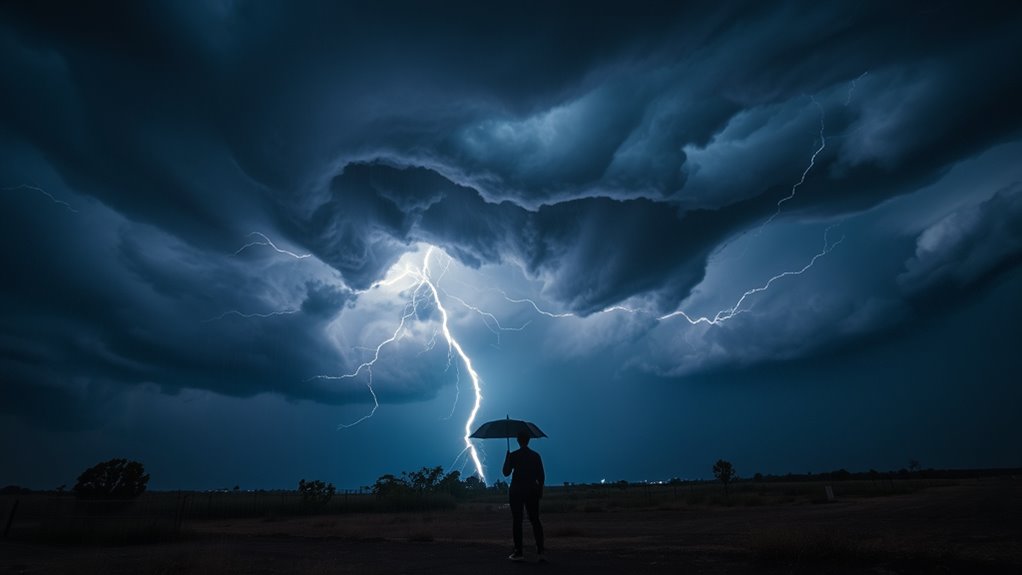

During thunderstorms, you should avoid charging your electronic devices, especially with cords connected to outdoor outlets or windows. Lightning can cause power surges or damage your devices, and there’s a risk of shock if lightning strikes nearby. Always unplug chargers and avoid using wired electronics during severe storms. Staying safe means being cautious and proactive. If you want to learn more about specific precautions to take while charging during storms, keep exploring vital safety tips.
Key Takeaways
- Avoid charging electronic devices during thunderstorms to prevent electrical damage or electrocution.
- Unplug devices and avoid using wired electronics to minimize lightning conduction risks.
- Stay indoors or inside a vehicle while charging devices to stay safe from lightning strikes.
- Use a weather alert app or radio to monitor storm developments before charging devices.
- If caught outside during a storm, do not attempt to charge devices; wait until it is safe and storm has passed.

Thunderstorms are powerful natural phenomena that occur when electrical charges build up within a cloud, leading to lightning and thunder. When you’re caught outdoors during a storm, understanding lightning safety can be a matter of life and death. Lightning strikes can cause serious injuries, fires, and even fatalities, so it’s essential to recognize the risks and act quickly. Your best approach is to prioritize emergency preparedness by knowing what to do the moment a storm develops. Staying informed through weather alerts and planning ahead can help you avoid dangerous situations altogether.
Understanding lightning safety and emergency preparedness is crucial during thunderstorms to protect yourself and loved ones.
If you see darkening skies, hear distant thunder, or notice lightning flashes, it’s time to seek shelter immediately. Never underestimate the power of a thunderstorm—lightning can strike several miles away from the rain, so even if the storm seems distant, danger could still be near. The key to lightning safety is to get indoors as quickly as possible. If you’re caught outside with no shelter available, avoid open fields, hilltops, and tall, isolated trees, which are prime targets for lightning strikes. Instead, find a low-lying area, crouch down with your feet together, and minimize your contact with the ground. Remember, you are safest indoors or inside a vehicle during a storm.
Once inside, avoid using wired electronics, plumbing, or anything connected to the outside, as lightning can travel through these pathways. Keep away from windows and doors, and refrain from taking showers or baths, since plumbing can conduct electricity. Proper emergency preparedness means having a plan in place, including a weather radio or alert app that keeps you updated on storm developments. It’s wise to have an emergency kit ready, with essentials like water, non-perishable food, a flashlight, batteries, and a first aid kit, so you’re prepared for any situation. Additionally, understanding lightning safety rules helps prevent injuries and saves lives.
Educating yourself about lightning safety rules and practicing emergency preparedness can make all the difference. Knowing where to go, what to do, and how to communicate with others during a storm ensures your safety and that of your loved ones. Remember that lightning is unpredictable and powerful, so never take unnecessary risks during thunderstorms. By staying informed, acting swiftly to find shelter, and preparing in advance, you reduce your chances of injury and help ensure your safety when nature’s electrical displays light up the sky.
Frequently Asked Questions
Can Electronic Devices Attract Lightning During a Storm?
Electronic devices don’t attract lightning directly, but they can increase your lightning risk if they’re plugged in or connected to a power source. When lightning strikes a nearby object or power line, it can travel through electrical wiring, posing a shock hazard. So, during thunderstorms, you should unplug your devices and avoid using wired electronics outdoors. This reduces the electronic attraction and keeps you safer from lightning strikes.
Is It Safe to Charge a Car Battery Outdoors in a Thunderstorm?
No, it’s not safe to charge a car battery outdoors during a thunderstorm. Lightning can strike the vehicle, especially if it’s not grounded properly. Use grounding techniques like connecting the car to a lightning rod or ensuring proper grounding to reduce risks. However, the safest option is to wait until the storm passes before charging your battery outdoors, as lightning can strike unpredictably and cause serious damage or injury.
What Are Signs of a Lightning Strike Hazard Near Power Lines?
Ever wonder if you’re at risk from lightning strikes near power lines? Look out for signs like lightning detection alerts, sparks, or visible damage to the power lines. You might also notice unusual humming sounds or power outages. These indicate potential hazards, increasing the risk of power line damage from lightning. Stay alert and keep a safe distance—lightning strikes can cause serious injuries and equipment damage.
Are There Safe Ways to Charge Solar Panels During Thunderstorms?
You shouldn’t attempt to charge solar panels during thunderstorms. To stay safe, use proper grounding techniques to prevent electrical hazards and monitor the weather constantly. If you notice storms approaching, disconnect and store your panels in a safe, dry place. Always prioritize safety over convenience, and wait for clear weather before reconnecting your solar system. Your safety depends on proactive measures and vigilance during stormy conditions.
How Does Lightning Affect Nearby Electrical Systems and Appliances?
Lightning can cause power surges that damage your electrical systems and appliances. To protect yourself, you should use proper grounding techniques and install surge protection devices. These measures help divert excess voltage safely into the ground and prevent it from reaching your electronics. During thunderstorms, avoid using connected devices and ensure your surge protectors are in good condition, reducing the risk of damage from nearby lightning strikes.
Conclusion
Stay safe and steer clear of stormy skies. By avoiding open areas, unplugging appliances, and understanding the dangers, you prevent potential peril. Remember, thunderstorms threaten with towering clouds and thunderous crashes, so stay sheltered and vigilant. Don’t let lightning lure you into danger; instead, prioritize preparedness and prudence. Protect yourself from the powerful pulses and piercing strikes, and you’ll weather the storm safely, secure in your smart steps and steadfast stance.