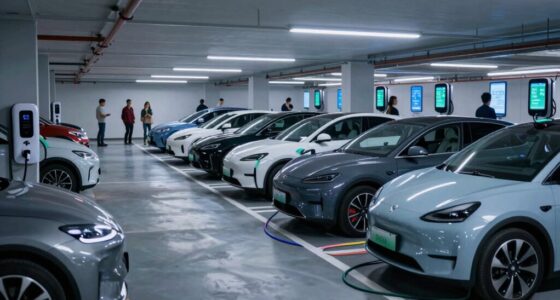
An EVSE safety box continuously monitors electrical currents and ground conditions during charging to protect you from shocks, fires, and equipment damage. It detects ground faults and unwanted current flows, instantly cutting power if it spots a problem. Additional safety features like overcurrent and temperature protection further guarantee safe operation. This smart safety system acts as a vigilant gatekeeper, giving you peace of mind. Keep exploring to understand exactly how these safety measures work to keep you safe.

Get backup power and energy gear delivered free — and shop member deals
- Fast, free delivery on millions of items
- Access to Prime Big Deal Days deals on October 6–7
- Prime Video, Amazon Music and more included
Key Takeaways
- Detects ground faults to prevent electric shocks and fires during charging.
- Continuously monitors current flow for safety, disconnecting power when anomalies are found.
- Incorporates circuit protection like overcurrent and overheating safeguards.
- Uses multiple safety features to ensure safe operation and prevent damage.
- Is a certified safety device designed to protect users, vehicles, and property.
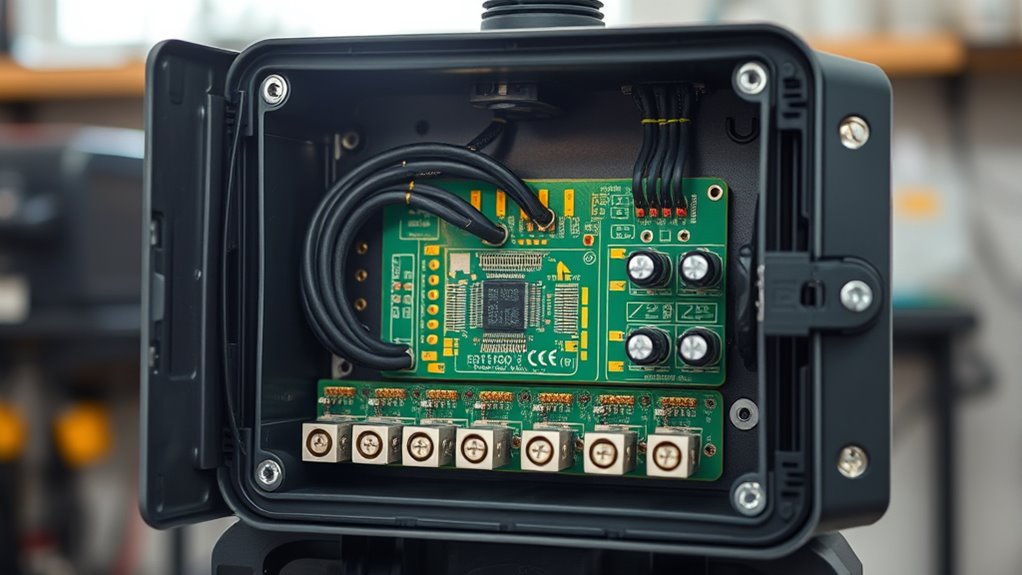
Ever wondered how to guarantee your electric vehicle supply equipment (EVSE) is safe to use? The key lies in understanding what the box actually does to protect you and your vehicle. At its core, the EVSE is designed to prevent electrical hazards, and one of its primary functions is to detect ground faults. A ground fault occurs when electricity unintentionally flows from the circuit to the ground, which can be dangerous. If left unchecked, it could cause electric shocks or even fires. That’s why your EVSE incorporates sensitive ground fault detection systems that constantly monitor the flow of current. When a ground fault is detected, the device immediately cuts off power, preventing harm.
EVSE detects ground faults and instantly cuts power to prevent shocks and fires.
This automatic shutoff is a critical part of circuit protection. Without it, any tiny leakage of current could escalate into a serious safety issue, especially in wet or conductive environments. The circuit protection built into your EVSE acts like a vigilant gatekeeper, ensuring that electricity only flows when everything is in proper order. It’s designed to trip or disconnect when faults are detected, stopping any unsafe conditions before they can cause damage. This safety feature is especially important because EV charging involves high currents, which can be hazardous if not properly managed. Additionally, the system’s reliance on ground fault detection highlights the importance of precise electrical monitoring for safety.
In addition to ground fault detection, your EVSE typically includes other protective measures, like overcurrent protection and temperature sensors. Overcurrent protection prevents excessive current flow that could damage the wiring or the vehicle’s charging port. Meanwhile, temperature sensors monitor the device and cable for overheating, shutting everything down if the equipment gets too hot. These layers of circuit protection work together to create a *all-encompassing* safety net, giving you peace of mind during each charge.
Understanding what these safety features do helps you appreciate the importance of choosing a certified, reliable EVSE. It’s not just about charging your vehicle; it’s about doing so safely. When you plug in, you want to be confident that the system is actively protecting against ground faults and other electrical issues. Proper circuit protection can prevent dangerous shocks, electrical fires, or damage to your vehicle’s battery. That’s why manufacturers incorporate these safety systems directly into the EVSE, making sure that every charge session is as safe as it is efficient. In short, the box you plug into isn’t just a simple connector—it’s a *sophisticated* safety device that keeps you, your vehicle, and your home protected.
As an affiliate, we earn on qualifying purchases.
Frequently Asked Questions
How Do I Troubleshoot EVSE Connection Issues Safely?
To troubleshoot EVSE connection issues safely, start by checking for a ground fault or circuit protection trip. Unplug the charger and inspect the cord and connectors for damage. Reset any circuit breakers or GFCI outlets if needed, then reconnect everything securely. Always verify you’re working in a dry area and avoid touching live parts. If issues persist, contact a qualified electrician to prevent electrical hazards and ensure safety.
What Maintenance Does an EVSE Require Over Time?
Ever wondered how to keep your EVSE running smoothly? You should regularly check charging protocols and guarantee cable compatibility to prevent issues. Inspect the power cord for wear, clean connectors, and update firmware if needed. Testing the system periodically can catch problems early. By maintaining proper connections and staying current with safety updates, you ensure safe, efficient charging and extend your EVSE’s lifespan.
Can EVSE Be Used Outdoors in All Weather Conditions?
Yes, you can use your EVSE outdoors in all weather conditions. Look for units with strong outdoor durability and weatherproof features, like sealed enclosures and corrosion-resistant materials. These protections help prevent damage from rain, snow, and extreme temperatures. Always guarantee the EVSE is properly installed according to manufacturer guidelines. Regular inspections will also maintain its performance and safety, ensuring reliable charging regardless of the weather.
What Are the Signs of a Failing EVSE Safety System?
If your EVSE safety system starts acting up, you might notice issues like frequent trips or unusual error messages. Check for damaged evse insulation, which could lead to shorts, and verify circuit protection devices haven’t worn out. These signs warn you that the safety system might be failing, risking safety. Stay vigilant—ignoring these signals could lead to dangerous situations, so address them immediately before it’s too late.
Is Professional Installation Necessary for All EVSE Units?
You should definitely consider professional installation for your EVSE unit to make certain it meets EVSE safety standards and installation requirements. While some units may be simpler to install, a professional ensures proper wiring, grounding, and adherence to local codes. This not only guarantees safe operation but also helps prevent potential hazards or damage. Following proper installation requirements safeguards your investment and ensures your EVSE functions reliably and safely over time.
ground fault circuit interrupter for EV charging
As an affiliate, we earn on qualifying purchases.
As an affiliate, we earn on qualifying purchases.
Conclusion
Now that you understand what your EVSE box actually does, you might think you’re fully prepared. But there’s one essential safety feature many overlook—something that could make all the difference when it really counts. Are you ready to discover the hidden safeguard that keeps you safe during every charge? Stay tuned, because what’s inside your EVSE could surprise you—and could be the key to powering up with confidence when it matters most.
EVSE overcurrent protection device
As an affiliate, we earn on qualifying purchases.
As an affiliate, we earn on qualifying purchases.
electric vehicle charging safety system
As an affiliate, we earn on qualifying purchases.
As an affiliate, we earn on qualifying purchases.
Fall Picks
fall essentials
As an affiliate, we earn on qualifying purchases.