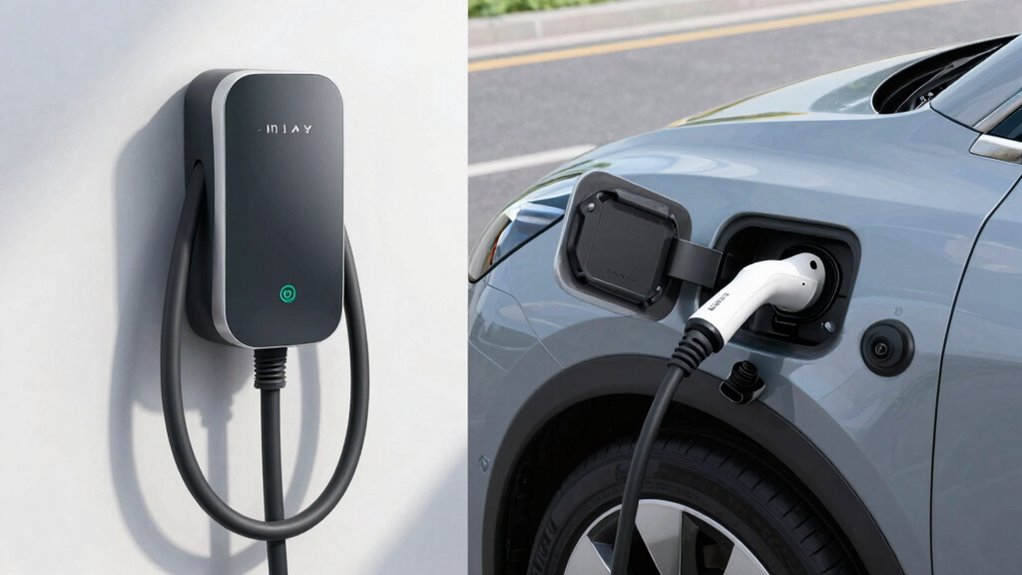

Hardwired EV chargers are fixed installations that connect directly to your electrical system, offering more durability, higher power output, and a secure connection. They’re ideal if you want a long-term, low-maintenance setup, especially in a permanent space. Plug-in chargers, on the other hand, are portable, easy to install, and perfect if you frequently move or need flexibility. To understand how these differences impact your needs, you’ll find useful details ahead.

Get backup power and energy gear delivered free — and shop member deals
- Fast, free delivery on millions of items
- Access to Prime Big Deal Days deals on October 6–7
- Prime Video, Amazon Music and more included
Key Takeaways
- Hardwired chargers are permanently installed and connected directly to electrical wiring, offering increased security and stability.
- Plug-in chargers are portable, connect to standard outlets, and are suitable for temporary or flexible charging needs.
- Hardwired units usually provide higher power output for faster charging, while plug-in chargers tend to have lower power levels.
- Installation of hardwired chargers involves more complex electrical work compared to the minimal setup of plug-in chargers.
- Hardwired chargers offer more durable, reliable connections, reducing safety risks associated with loose or degraded plugs.
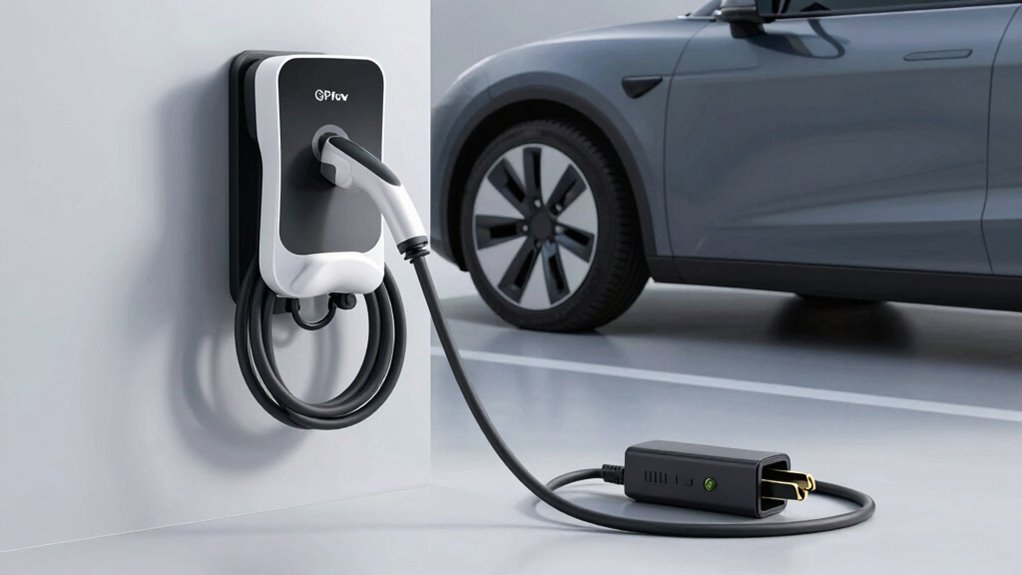
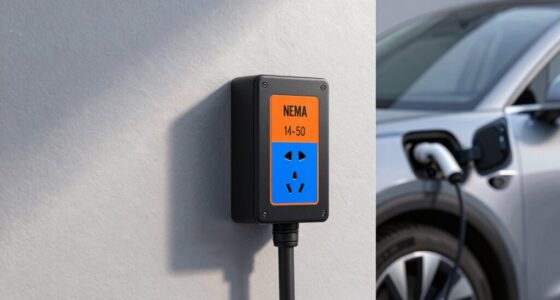
In contrast, plug-in chargers are portable and connect to a standard electrical outlet via a plug. This makes them more flexible, especially if you need to move the charger around or use it at different locations. The installation costs are generally lower because you don’t require extensive electrical work, and you can set up the charger yourself if you have basic electrical knowledge. However, because these chargers rely on regular outlets, they may not provide the same level of safety for your battery as hardwired units. The connection points can degrade over time or become loose, increasing the risk of electrical faults that could impact battery safety. Additionally, plug-in chargers often have lower power outputs, resulting in longer charging times, which might be inconvenient if you need quick turns around or have a busy schedule. Understanding charger safety and how it differs between these options can help you make a more informed decision. Furthermore, portability can be a significant advantage for users who frequently travel or move residences, but it also means you need to be mindful of the outlet’s condition and compatibility. The electrical connections in hardwired chargers tend to be more secure and durable, offering enhanced long-term safety. While both options serve the purpose of recharging your EV, your choice largely depends on your priorities. If you value a clean, permanent installation with minimal maintenance and maximum battery safety, a hardwired charger might be the better choice despite the higher initial costs. It’s more durable and less prone to connection issues. On the other hand, if flexibility, lower installation costs, and ease of use appeal to you—especially if you’re renting or frequently changing locations—a plug-in charger offers a practical solution, even if it might involve some trade-offs in safety or charging speed. Ultimately, understanding these differences helps you select the setup that best aligns with your driving habits, budget, and safety concerns.
As an affiliate, we earn on qualifying purchases.
Frequently Asked Questions
Can Hardwired Chargers Be Upgraded Easily?
Hardwired chargers aren’t easily upgraded because their compatibility depends on your home’s electrical capacity and existing wiring. If you want to upgrade, you’ll need to check if your electrical system can handle higher power levels and whether the charger is compatible with your vehicle. Often, upgrading involves professional electrical work to guarantee safety and efficiency, making it less straightforward than simply swapping out a plug-in charger.
What Are the Insurance Implications for Each Charging Type?
You should know that insurance coverage and liability considerations differ between hardwired and plug-in EV chargers. Hardwired chargers often require specialized installations, which can increase your insurance premiums and liability risks if not properly maintained. Conversely, plug-in chargers are typically easier to insure, with fewer liability concerns. Always check with your insurer to understand how each type impacts your coverage, ensuring you’re protected against potential damages or accidents.
Are There Specific Building Codes for Hardwired Chargers?
Yes, there are specific building codes and safety regulations for hardwired chargers. You need to comply with local electrical codes, such as the National Electrical Code (NEC), which specify wiring, grounding, and installation standards. These regulations ensure your installation is safe, reliable, and up to code. It’s crucial to work with licensed electricians familiar with these rules to prevent hazards and ensure your hardwired EV charger meets all safety requirements.
How Does Installation Time Compare Between the Two?
Coincidentally, installation time varies between hardwired and plug-in chargers, with hardwired setups typically taking longer due to electrical work and building code compliance. You might find that plug-in chargers are quicker to install, saving you time and effort. When considering charging speed and cost comparison, hardwired chargers often cost more upfront but can offer faster charging and better integration, which could be worth the extra time and expense for long-term benefits.
Can I Switch From Hardwired to Plug-In Later?
Yes, you can switch from a hardwired to a plug-in charging station later, but it requires careful planning. You’ll need to consult an electrician to guarantee electrical safety and proper wiring changes. Switching involves disconnecting the hardwired setup and installing a compatible outlet, which can be complex. Keep in mind, proper electrical safety measures are essential to avoid hazards during and after the changeover.
As an affiliate, we earn on qualifying purchases.
Conclusion
Choosing between hardwired and plug-in EV charging is like picking your favorite path through a forest—you’ll want what suits your journey best. Hardwired chargers offer a seamless, permanent connection, like a loyal friend always by your side, while plug-in chargers provide flexibility, like a traveler packing light. Consider your daily routine and space constraints, and you’ll find the perfect trail to keep your EV powered up and ready to go.
home EV charging installation kit
As an affiliate, we earn on qualifying purchases.
As an affiliate, we earn on qualifying purchases.
As an affiliate, we earn on qualifying purchases.
Fall Picks
fall essentials
As an affiliate, we earn on qualifying purchases.