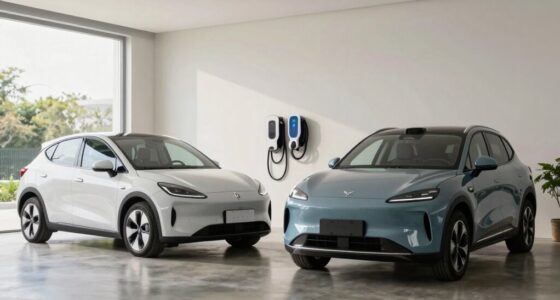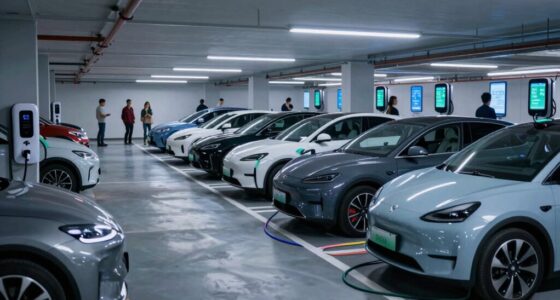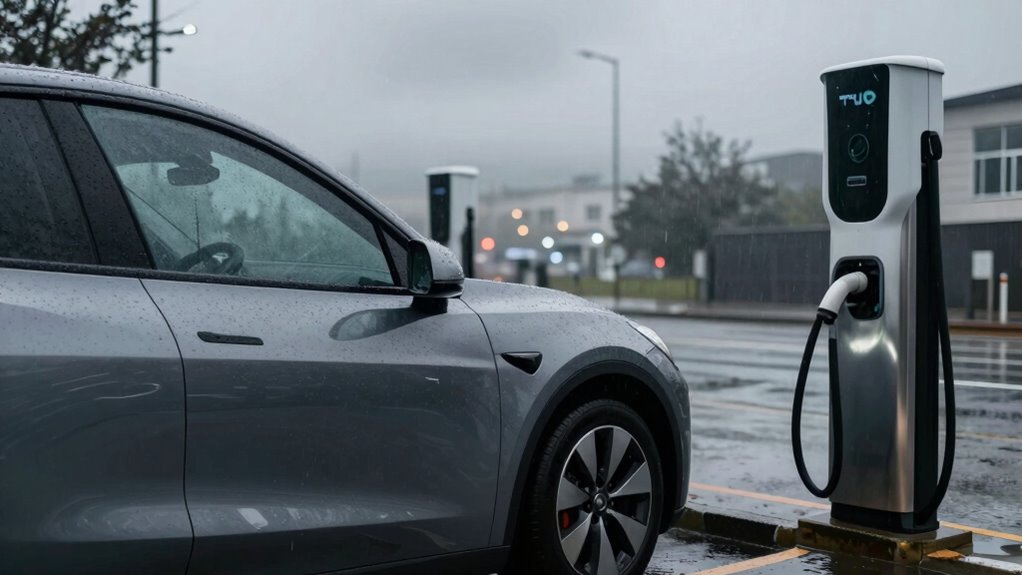

Weather plays a big role in outdoor EV charging. Cold temperatures increase charging times, decrease battery capacity, and make batteries less responsive, which slows down the process. Hot weather accelerates battery degradation, reducing overall lifespan. Extreme conditions like snow, ice, or water exposure can damage equipment or block access if stations aren’t properly protected. Knowing how weather affects charging helps you stay prepared—there’s more to take into account if you keep exploring these climate impacts.

Get backup power and energy gear delivered free — and shop member deals
- Fast, free delivery on millions of items
- Access to Prime Big Deal Days deals on October 6–7
- Prime Video, Amazon Music and more included
Key Takeaways
- Cold weather increases charging times and reduces battery responsiveness, impacting charging efficiency.
- Extreme heat accelerates battery degradation, affecting long-term battery health and performance.
- Weather exposure can damage outdoor charging infrastructure, leading to malfunctions or safety hazards.
- Ice and snow buildup can block access or interfere with vehicle connections during charging.
- Regular maintenance and weatherproofing are essential to ensure reliable outdoor EV charging in adverse conditions.
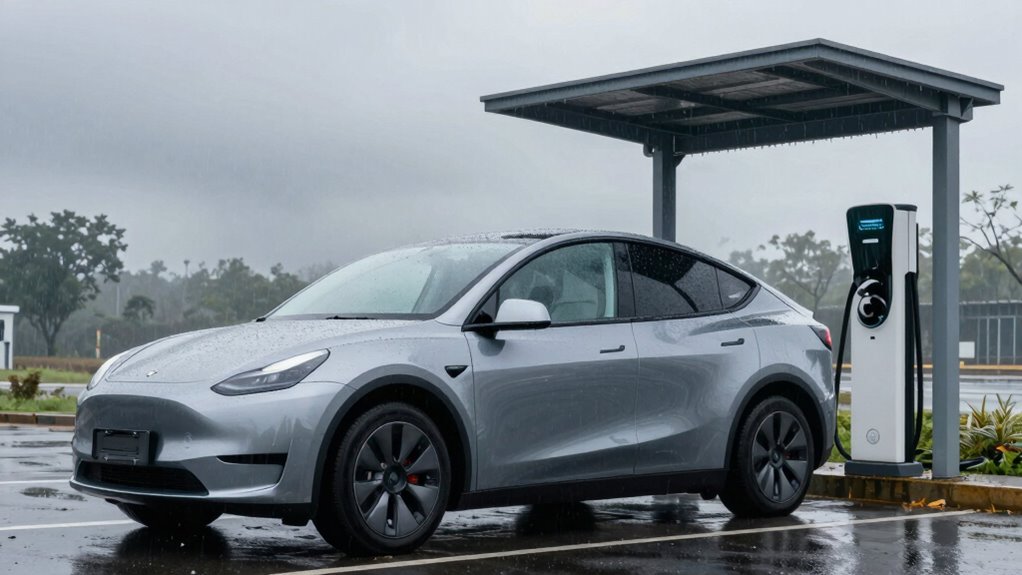
Outdoor EV charging stations are increasingly common, but weather conditions can profoundly impact their performance and reliability. You might notice that on cold mornings, charging takes longer than usual, and battery performance seems to decline. Extreme temperatures—whether scorching heat or freezing cold—can affect how efficiently the battery charges and discharges. Cold weather causes batteries to become less responsive, reducing their capacity and making it harder for the vehicle to reach full charge quickly. Conversely, high temperatures can accelerate battery degradation over time, which influences overall battery health and longevity. These factors highlight the importance of considering weather when planning your charging routine.
Extreme temperatures can slow charging and impact battery health; plan accordingly for reliable EV charging.
The charging infrastructure itself is also vulnerable to weather. Outdoor stations are exposed to the elements, and heavy rain, snow, or ice can interfere with their operation. Water intrusion can damage electrical components if stations aren’t properly sealed or maintained, leading to potential malfunctions. Snow accumulation around charging ports might block access or cause unsafe conditions. Freezing temperatures can cause the hardware to freeze, making it difficult or even dangerous to connect your vehicle. Ice buildup can interfere with the physical connection to the charging port, leading to delays or incomplete charges. Regular maintenance and weatherproofing are critical in ensuring that the infrastructure remains functional during adverse weather conditions. Additionally, weather-resistant infrastructure can mitigate some of these issues by providing enhanced protection against environmental elements. Recognizing the impact of environmental factors on both the vehicle and infrastructure can help in planning more reliable charging routines. Proper maintenance practices are essential for ensuring the longevity and reliability of outdoor charging stations in varying weather conditions. Being aware of climate-related challenges can also assist users in preparing for unexpected disruptions.
weatherproof outdoor EV charging station
As an affiliate, we earn on qualifying purchases.
As an affiliate, we earn on qualifying purchases.
Frequently Asked Questions
How Does Snow Impact Outdoor EV Charging Stations?
Snow impacts outdoor EV charging stations by causing snow accumulation and increasing the risk of ice formation around the equipment. You might find the stations partially or fully covered, making access difficult. Ice can create slippery surfaces, posing safety hazards and potentially damaging connectors or charging ports. To guarantee safe charging, clear snow and ice regularly, and be cautious of slippery conditions that could cause accidents or equipment malfunctions.
Are There Specific Weather Conditions That Damage Charging Equipment?
Certain weather conditions can damage outdoor EV charging equipment. High winds, for example, can cause wind-related damage by knocking over or loosening components. Solar interference from heavy snow or dense clouds can disrupt solar-powered chargers. Additionally, extreme cold can cause freezing, and moisture from rain or hail can corrode parts. Protecting equipment with proper enclosures and regular maintenance helps minimize these weather-related damages, ensuring reliable charging.
How Quickly Does Cold Weather Reduce EV Battery Efficiency?
Cold weather can substantially reduce your EV battery efficiency within minutes, especially when battery temperature drops. As the temperature decreases, your battery’s chemistry slows down, leading to decreased charging speed and range. You’ll notice that charging takes longer and driving distance shortens. To minimize this, pre-condition your battery before driving or charging, and park in a warmer place when possible, helping maintain ideal battery temperature and performance.
Can Rain Cause Electrical Hazards at Outdoor Charging Sites?
Rain is like a silent whisper of nature, but it can threaten rain safety at outdoor charging sites. You should know that rain can cause electrical hazards if the equipment isn’t properly sealed or grounded. To protect yourself, always make certain the charging station has safety features and is designed to resist moisture. Never ignore warnings or signs, because electrical hazards during rain aren’t just technical—they’re a matter of safety.
Do Humidity Levels Affect the Lifespan of Outdoor Chargers?
Yes, humidity levels do affect the lifespan of outdoor chargers. High humidity increases corrosion risks, which can damage electrical components and reduce durability over time. When moisture lingers, it accelerates wear and tear, making your charging station less reliable. To protect your investment, guarantee proper sealing and ventilation, and consider corrosion-resistant materials. Managing humidity effects helps extend your outdoor charger’s lifespan and maintains safe, efficient charging.
As an affiliate, we earn on qualifying purchases.
Conclusion
Understanding how weather impacts outdoor EV charging helps you prepare better for all conditions. Did you know that extreme cold can reduce your EV’s range by up to 41%, making charging more critical? By staying aware of these weather effects, you can plan your charging stops more effectively and avoid surprises. So, whether it’s rain, snow, or sunshine, being informed guarantees your EV stays ready to hit the road whenever you are.
portable snow and ice removal tools for EV chargers
As an affiliate, we earn on qualifying purchases.
As an affiliate, we earn on qualifying purchases.
outdoor EV charger weatherproof enclosure
As an affiliate, we earn on qualifying purchases.
As an affiliate, we earn on qualifying purchases.
Halloween Picks
halloween
As an affiliate, we earn on qualifying purchases.