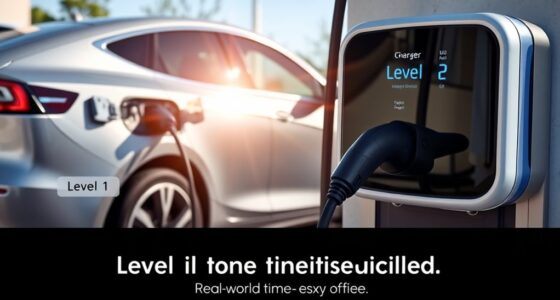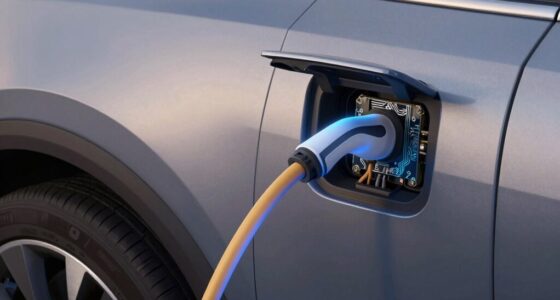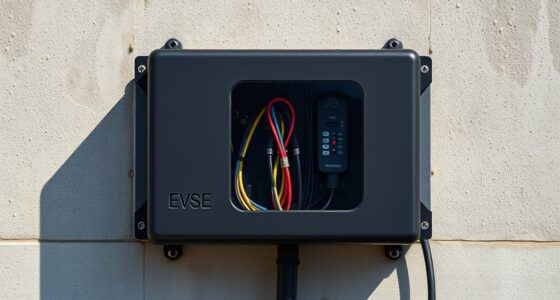
To plan for two EVs in your household, start by evaluating your current electrical system and household energy use. Make sure your main panel can handle the extra load, and consider upgrading it if needed. Install dedicated, smart chargers near parking spots, with options for simultaneous charging. Analyze your energy patterns, use renewable sources if possible, and consult licensed electricians for tailored guidance. Want details on making your setup safe and efficient? Keep exploring to find out more.

Get backup power and energy gear delivered free — and shop member deals
- Fast, free delivery on millions of items
- Access to Prime Big Deal Days deals on October 6–7
- Prime Video, Amazon Music and more included
Key Takeaways
- Assess current electrical capacity and upgrade the main panel if needed to handle two EV chargers safely.
- Choose appropriate dual charging stations and optimal locations near parking spots for convenience.
- Implement smart chargers and energy management systems to optimize charging times and prevent overloads.
- Consider integrating renewable energy sources like solar panels to offset increased household energy use.
- Consult licensed electricians for tailored infrastructure design and long-term, scalable EV charging solutions.

Owning two electric vehicles in one household requires careful planning to guarantee your home’s electrical system can handle the increased demand. The first step is to evaluate your current electrical setup and determine whether it can support the additional load. This involves assessing your main electrical panel’s capacity and understanding how much energy your household consumes daily. You might find that upgrading your electrical panel or installing a dedicated circuit for EV charging is necessary to prevent overloads. Proper planning here ensures you won’t face unexpected power outages or safety hazards down the line.
Evaluate your electrical system and consider upgrades to safely support two electric vehicles in your home.
Next, you need to focus on establishing an efficient charging infrastructure. This involves choosing the right chargers for your vehicles and figuring out the best locations for installation. Dual charging stations can be a good investment if you want simultaneous charging, especially during busy mornings. You should also consider the placement of chargers in relation to your vehicles’ parking spots to minimize cable clutter and facilitate easy access. Installing smart chargers can help you manage energy consumption more effectively, allowing you to schedule charging times during off-peak hours when electricity rates are lower. This not only saves you money but also reduces stress on your home’s electrical system during peak hours. Additionally, understanding the electrical capacity of your home can help you better plan for future energy needs and avoid potential overloads. Conducting a full audit trail of your electrical system can provide valuable insights into your household’s overall energy management and help identify areas for improvement. Incorporating advanced monitoring technologies can further enhance your ability to track energy use in real time and make adjustments accordingly.
Energy consumption patterns are vital when planning for two EVs. You’ll want to analyze your household’s typical energy use to avoid overloading your system. If both vehicles are charged overnight, for example, you may need to adjust your household’s energy schedule or upgrade your system further. Using smart energy management systems can balance power between your household appliances and EV chargers, preventing overloads and optimizing energy use. Additionally, consider integrating renewable energy sources, like solar panels, to offset your increased energy consumption. This can lower your electricity bills and reduce your carbon footprint, aligning your EV ownership with sustainable living goals. Understanding your household’s energy profile can help you make more informed decisions about your overall energy management and infrastructure.
Finally, understanding the full audit trails and security features available can help you monitor and protect your energy system as you scale up your EV charging capabilities. Don’t forget to communicate with professionals. A licensed electrician can help design a charging infrastructure tailored to your household’s needs, ensuring your electrical system is both safe and efficient. They can also advise you on the best upgrades or additional installations required for your specific situation. Planning ahead with expert guidance prevents costly mistakes and guarantees that your home’s electrical system will support two EVs comfortably. In the end, thoughtful planning of your charging infrastructure and managing your energy consumption will make owning two EVs manageable, convenient, and sustainable in the long run.
As an affiliate, we earn on qualifying purchases.
Frequently Asked Questions
What Is the Typical Cost Difference Between Installing One and Two Chargers?
The cost comparison between installing one and two chargers varies, but generally, adding a second charger costs about 50-75% more due to installation complexity. You’ll pay for additional equipment, wiring, and possibly an upgraded electrical panel. While installing one charger might cost around $1,000 to $2,500, adding a second could bring the total to $2,000 to $4,000, depending on your home’s electrical setup and local labor rates.
How Can I Prioritize Charging Needs for Two EVS?
To prioritize charging needs for two EVs, start with strategic charging station placement, placing chargers where both vehicles are parked most frequently. Consider battery capacity planning to guarantee the system can handle both vehicles’ charging demands simultaneously. Schedule charging during off-peak hours to balance usage and avoid overloads. Regularly assess each EV’s usage patterns to adjust charging priorities, ensuring both vehicles stay charged and ready without conflicts.
Are There Specific Electrical Codes for Dual EV Charger Installations?
Think of your electrical panel as a busy highway—adding dual EV chargers is like building new lanes, so you need to guarantee specific electrical codes to keep traffic flowing safely. These codes dictate your circuit capacity and wiring standards, ensuring your setup is safe and efficient. Always consult local electrical codes and a licensed electrician; they’ll ensure your dual charger installation meets all legal and safety requirements.
How Long Does It Take to Install Two EV Chargers Simultaneously?
Installing two EV chargers simultaneously typically takes around 4 to 8 hours, depending on your home’s existing electrical setup. Your charging speed and power capacity influence the process; higher capacity systems may require longer installation times due to additional wiring or upgrades. A professional electrician assesses your electrical panel and upgrades it if necessary, ensuring both chargers operate efficiently without overloading your system.
Can Existing Home Wiring Support Two EV Chargers Without Upgrades?
Your existing home wiring might support two EV chargers if it’s recent and adequately rated, but it often depends on your electrical panel’s capacity. Consider adding a home battery and integrating solar power to reduce strain on your system. These upgrades can help support two EV chargers efficiently, especially if your current setup is limited. Consulting a professional guarantees your wiring and power system meet safety standards and accommodate future expansion.
As an affiliate, we earn on qualifying purchases.
Conclusion
Planning for two EVs in one household might seem like juggling flaming torches, but with a little foresight, you can keep the flames under control. By upgrading your electrical system and installing dual chargers, you create a smooth highway for your EVs’ charging needs. Think of it as building a sturdy bridge that connects your home to a future where electric vehicles are just part of your everyday life—easy, efficient, and ready for the road ahead.
home electrical panel upgrade kit
As an affiliate, we earn on qualifying purchases.
As an affiliate, we earn on qualifying purchases.
As an affiliate, we earn on qualifying purchases.
Fall Picks
fall essentials
As an affiliate, we earn on qualifying purchases.