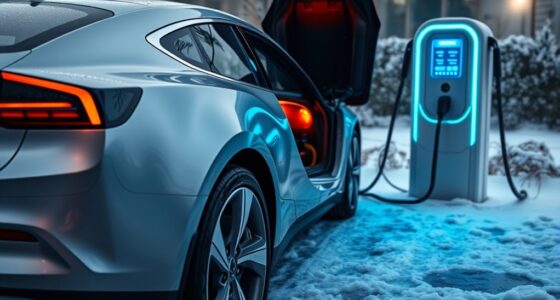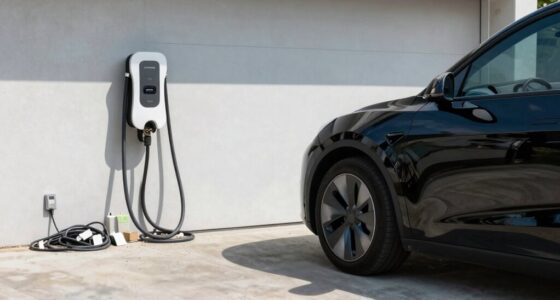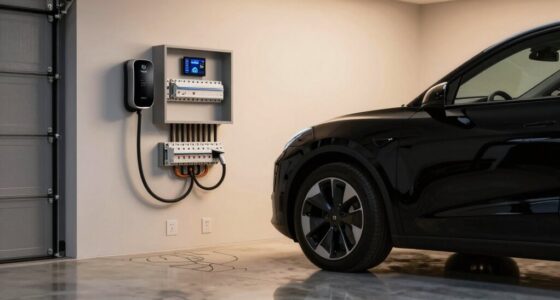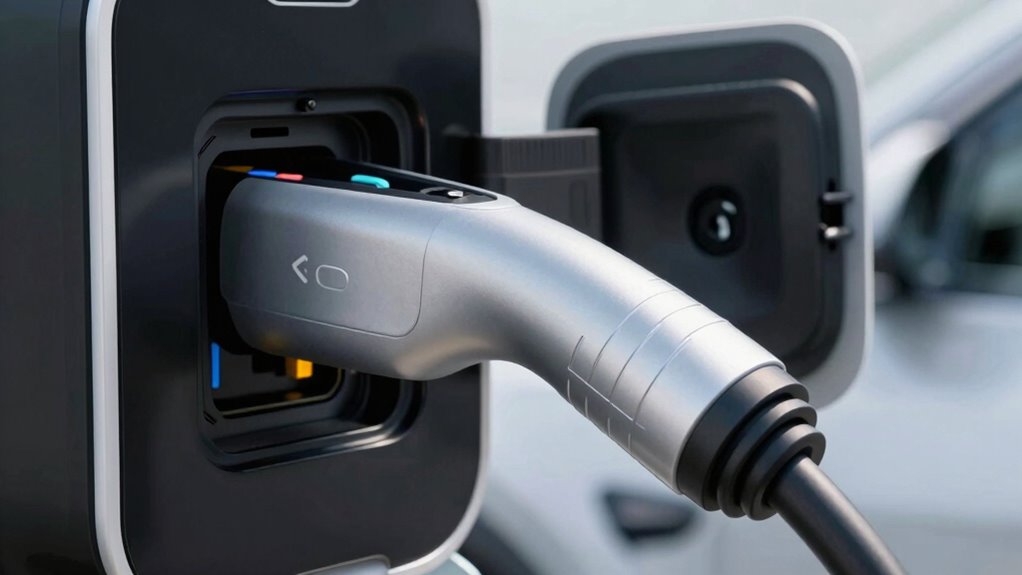

To understand EV charging connector basics, start by recognizing the main types: Type 1, Type 2, CHAdeMO, and CCS, each suited for different vehicle brands and charging speeds. Check your vehicle’s support for specific connectors, and pay attention to signage at stations, which clearly shows available standards. With this knowledge, you can choose compatible stations and avoid electrical issues. Keep exploring to get a clearer picture of how all these elements work together.

Get backup power and energy gear delivered free — and shop member deals
- Fast, free delivery on millions of items
- Access to Prime Big Deal Days deals on October 6–7
- Prime Video, Amazon Music and more included
Key Takeaways
- Familiarize yourself with common connector types: Type 1, Type 2, CHAdeMO, and CCS.
- Understand which connectors are compatible with your vehicle to ensure proper charging.
- Recognize signage at charging stations indicating available connector types and standards.
- Know the differences between quick chargers and slower charging stations for planning trips.
- Check station design and available connectors to select the most suitable charging option.

Understanding the basics of EV charging connectors is essential if you’re new to electric vehicles, as it helps you navigate the different types and guarantee you can charge your car efficiently. When you start exploring charging options, you’ll notice that charging station design varies widely, which can sometimes be confusing. Some stations are designed for quick charging, with high-power outputs, while others are meant for slower, overnight charges. Recognizing the layout and features of these stations can help you select the right one for your needs, ensuring you don’t waste time or energy. For example, some stations might have multiple connectors to accommodate different vehicle types, so understanding their design helps you plug in correctly and safely. Additionally, understanding charging station design can help you identify which stations are optimized for your specific vehicle and charging needs, making your experience more seamless. Connector compatibility standards are a critical aspect of understanding EV charging connectors. These standards ensure that the charging cable you use is compatible with your vehicle and the station itself. The most common standards include Type 1, Type 2, CHAdeMO, and CCS (Combined Charging System). Knowing which standard your car supports allows you to find suitable charging stations without hassle. For instance, if your vehicle uses a Type 2 connector, you’ll want to seek out stations equipped with Type 2 ports or adapters compatible with this standard. This compatibility not only guarantees smooth operation but also safeguards your vehicle from potential electrical issues. Recognizing standard compatibility is essential when planning long trips or routine charging to avoid unnecessary delays. The design of charging stations directly influences connector compatibility. Some stations feature a single port suited for specific standards, while others are multi-standard, offering various connectors for different vehicles. This flexibility can save you time, especially when traveling or living in areas with a mix of EV models. Understanding these standards is crucial for selecting the right station, as it ensures your vehicle can charge without complications. It’s also helpful to familiarize yourself with charging station signage**, which clearly indicates the available connectors and standards, helping you quickly identify compatible stations**.
As an affiliate, we earn on qualifying purchases.
Frequently Asked Questions
Are All EV Charging Connectors Compatible With EVery Electric Vehicle?
Not all EV charging connectors are compatible with every electric vehicle. Your vehicle’s charging port must match the connector standard of the charging station. For example, some cars use Type 1, Type 2, or CCS connectors, while others might require CHAdeMO. Always check your EV’s specifications and the station’s connector standards before charging. Using incompatible connectors can prevent your vehicle from charging or cause damage.
How Do I Identify the Correct Connector Type for My EV?
To identify the correct connector type for your EV, check your vehicle’s owner’s manual or look at your current charging port. Confirm the connector matches the charging station compatibility in your area. Regularly inspect and maintain your connector to prevent issues. If unsure, consult your vehicle manufacturer or a professional for guidance. Proper connector identification ensures safe, efficient charging and prolongs the life of your charging equipment.
Can I Use an Adapter to Connect Different Charging Connectors?
Using an adapter is like finding a universal key, but it’s not always the perfect fit. You can use an adapter at a charging station if it’s compatible with your EV’s connector, ensuring it fits securely and charges safely. Always check connector compatibility beforehand, and remember that some adapters might limit charging speed or not support fast charging. Double-check the station’s specifications to avoid surprises.
What Is the Difference Between AC and DC Charging Connectors?
AC charging connectors use alternating current, suitable for slow to moderate charging, following standards like Type 1 and Type 2. DC connectors deliver direct current, enabling faster charging, and include types like CCS and CHAdeMO. The main difference lies in speed and charging standards. AC connectors are common for home charging, while DC connectors are often found at fast-charging stations. Understanding connector types helps you choose the right charging option for your EV needs.
Are There Safety Concerns When Handling EV Charging Connectors?
Handling EV charging connectors is like tending a delicate but sturdy bridge—you want to guarantee safety at every step. You should be aware of grounding issues to prevent electric shocks and always inspect connector durability to avoid damage. Proper handling minimizes risks, so keep connectors dry, avoid forcing connections, and follow manufacturer instructions. Taking these precautions helps keep your charging experience safe and reliable, protecting both you and your vehicle.
As an affiliate, we earn on qualifying purchases.
Conclusion
Now that you know the basics of EV charging connectors, you’re ready to hit the road with confidence. Remember, just like any trusty sidekick, understanding your connector guarantees smooth and efficient charging. Don’t be daunted—think of it as your own personal flux capacitor, opening the future of driving. With a little knowledge, you’re all set to embrace the electric revolution—and maybe, just maybe, avoid the days of waiting around like a knight in shining armor.
As an affiliate, we earn on qualifying purchases.
As an affiliate, we earn on qualifying purchases.
Fall Picks
fall essentials
As an affiliate, we earn on qualifying purchases.