
Solar battery backup systems range from small portable stations that keep a fridge running during an outage to 30kWh whole-home kits that can take a house off the grid entirely — and picking the wrong size is the most expensive mistake in this category. The ECO-WORTHY 48V Home Backup Power System with 30,720Wh Battery and 10kW Inverter earns the top spot for its rare combination of massive capacity and high-output power at a price per watt-hour that undercuts most competitors. For buyers who want a middle path, the ECO-WORTHY 10240Wh system with 10kW inverter delivers near-identical output at a third of the capacity, while the Jackery HomePower 3600 Plus is the easiest entry point for anyone unwilling to wire a permanent installation. The core tradeoff you’ll face throughout this roundup is installed capacity versus portability versus total cost — and whether a kit includes solar panels or expects you to buy them separately changes the real price more than the sticker suggests. Keep reading for the full breakdown of all 14 systems.

Get backup power and energy gear delivered free with Prime
- Fast, free delivery on millions of items
- Prime Video, Amazon Music and more included
- Member-only deals all year
Key Takeaways
- ECO-WORTHY dominates this lineup with eight of the 14 entries, which means the real decision is usually between its own configurations — capacity tiers (5kWh, 10kWh, 30kWh) — rather than between brands.
- Price per usable watt-hour separated the winners from the losers: the 30,720Wh system and the Cubix100 6-pack delivered the lowest cost per kWh, while portable stations like the Anker SOLIX S2000 cost roughly three times more per watt-hour in exchange for plug-and-play convenience.
- Only three options (the SUNGOLDPOWER SGR-8K10E, the 10kW Off-Grid Kit with 314Ah battery, and the 10KW kit with 12 panels) bundle solar panels with the battery — every other pick assumes you already have panels or plan to buy them, which can add thousands to the true system cost.
- Inverter size proved to be the hidden spec that matters most for whole-home backup: 10kW units can start air conditioners and well pumps, while the 1500W units in the portable picks limit you to refrigeration, lighting, and small appliances.
- LiFePO4 chemistry appears across every serious contender here, and the server-rack battery options (Cubix100, Powermega) stand out forscalability — you can start with one module and stack capacity later instead of replacing the whole system.
| ECO-WORTHY 48V Home Backup Power System with 30,720 Wh Battery and 10KW Inverter |  | Best Overall for Whole-Home Backup | Output Power: 10,000W continuous | Surge Rating: 20,000W | Battery Capacity: 30,720Wh (6x 51.2V 100Ah LiFePO4) | VIEW LATEST PRICE | See Our Full Breakdown |
| ECO-Worthy Cubix100 48V 600Ah Server Rack Battery LiFePO4 6-Pack Solar Battery Kit |  | Best Premium Battery Bank | Voltage: 48V | Capacity: 600Ah (6-pack) | Energy: 30.72kWh | VIEW LATEST PRICE | See Our Full Breakdown |
| Anker SOLIX S2000 Portable Power Station, 2010Wh, 1500W |  | Best for Beginners and Emergency Use | Capacity: 2010Wh | Continuous Power: 1500W | Peak Power: 3000W | VIEW LATEST PRICE | See Our Full Breakdown |
| ECO-WORTHY 48V Home Backup Power Station with 5120Wh LiFePO4 Battery and 5000W Inverter |  | Best Value Starter System | Battery Capacity: 5120Wh LiFePO4 | Continuous Output: 5,000W pure sine wave | Voltage: 51.2V (48V nominal) | VIEW LATEST PRICE | See Our Full Breakdown |
| ECO-WORTHY 48V Home Backup Power Station with 10240Wh Battery and 10kW Inverter |  | Best Middle-Ground Whole-Home Kit | Battery Capacity: 10,240Wh (2x 51.2V 100Ah LiFePO4) | Continuous Output: 10,000W pure sine wave | Surge Rating: 20,000W | VIEW LATEST PRICE | See Our Full Breakdown |
| ECO WORTHY 10kW Off-Grid Solar Panel Kit for Home with 48V 314Ah Battery and 10kW Inverter |  | Best Complete Off-Grid System | System Power Output: 10kW (20,000W peak) | Inverter Voltage: 120V/240V split-phase | Solar Array: 2,950W (5 x 590W mono-crystalline panels) | VIEW LATEST PRICE | See Our Full Breakdown |
| Jackery Solar Generator 1000 V2 with 200W Solar Panel, 1070Wh, 1500W AC |  | Best Portable Emergency Pick | Capacity: 1070Wh | AC Output: 1500W (3000W surge) | Battery Type: LFP, 4000 cycles | VIEW LATEST PRICE | See Our Full Breakdown |
| Jackery HomePower 3600 Plus Portable Power Station with 2x200W Solar Panels |  | Best Bridge Between Portable and Home Backup | Capacity: 3584Wh (expandable to 43kWh) | Output: 3600W (7200W in parallel) | Voltage: 120V; 240V in parallel | VIEW LATEST PRICE | See Our Full Breakdown |
| ECO-WORTHY Powermega 48V 314Ah LiFePO4 Battery (2 Pack) |  | Best Premium Storage for System Builders | Voltage: 48V | Capacity: 314Ah per battery (2-pack) | Total Energy: 32.14 kWh (16.07 kWh each) | VIEW LATEST PRICE | See Our Full Breakdown |
| ECO-WORTHY Cubix100 48V 200Ah LiFePO4 Lithium Server Rack Battery |  | Best Rack-Mountable Storage Value | Voltage: 51.2V nominal | Capacity: 200Ah / 10.24 kWh | Battery Type: LiFePO4 lithium | VIEW LATEST PRICE | See Our Full Breakdown |
| SUNGOLDPOWER SGR-8K10E Off-Grid Solar Kit, 10.24kWh Battery, 8x 450W Solar Panels, 8000W Inverter |  | Best Balanced Whole-Home Kit | Solar Panels: 8x 450W bifacial (3,600W total) | Battery Capacity: 10.24kWh LiFePO4 | Inverter Power: 8,000W, 120/240V split phase | VIEW LATEST PRICE | See Our Full Breakdown |
| ECO-WORTHY 10KW Off Grid Solar System Kit with 12x 195W Solar Panels, 10KW Inverter, and Lithium Batteries |  | Best for High-Power Appliances on a Budget | Solar Panels: 12x 195W bifacial (2,340W total) | Inverter Power: 10KW, parallel up to 6 units | Battery Capacity: 2x 48V 100Ah lithium | VIEW LATEST PRICE | See Our Full Breakdown |
| ABOK Ark3600 Portable Power Station 3600W, 3840Wh LiFePO4 Battery |  | Best Portable Emergency Backup | Battery Capacity: 3,840Wh LiFePO4, expandable to 11,520Wh | Rated Output: 3,600W (7,200W surge) | Charge Time: 1.29 hrs (AC + PV), 3 hrs (AC) | VIEW LATEST PRICE | See Our Full Breakdown |
| ECO-WORTHY Solar Panel Kit with LiFePO4 Energy Storage System for Home Backup |  | Best Whole-Home Storage Champion | Solar Panels: 6x 590W monocrystalline (3,540W total) | Battery Capacity: 48V 314Ah (2 packs) | Total Usable Energy: 30kWh+ | VIEW LATEST PRICE | See Our Full Breakdown |
| solar battery backup system | Battery Capacity | Voltage |
|---|---|---|
| ECO-WORTHY 48V Home Backup Pow | 30,720Wh (6x 51.2V 100Ah LiFePO4) | 51.2V |
| ECO-Worthy Cubix100 48V 600Ah | — | 48V |
| Anker SOLIX S2000 Portable Pow | — | — |
| ECO-WORTHY 48V Home Backup Pow | 5120Wh LiFePO4 | 51.2V (48V nominal) |
| ECO-WORTHY 48V Home Backup Pow | 10,240Wh (2x 51.2V 100Ah LiFePO4) | 51.2V |
| ECO WORTHY 10kW Off-Grid Solar | 16.1 kWh (48V 314Ah LiFePO4) | — |
| Jackery Solar Generator 1000 V | — | — |
| Jackery HomePower 3600 Plus Po | — | 120V; 240V in parallel |
| ECO-WORTHY Powermega 48V 314Ah | — | 48V |
| ECO-WORTHY Cubix100 48V 200Ah | — | 51.2V nominal |
| SUNGOLDPOWER SGR-8K10E Off-Gri | 10.24kWh LiFePO4 | — |
| ECO-WORTHY 10KW Off Grid Solar | 2x 48V 100Ah lithium | — |
| ABOK Ark3600 Portable Power St | 3,840Wh LiFePO4, expandable to 11,520Wh | — |
| ECO-WORTHY Solar Panel Kit wit | 48V 314Ah (2 packs) | — |
More Details on Our Top Picks
ECO-WORTHY 48V Home Backup Power System with 30,720 Wh Battery and 10KW Inverter
This kit sits at the top of the list because it delivers true whole-home capability without forcing you to piece together components. With six 51.2V 100Ah LiFePO4 batteries paired to a 10,000W pure sine wave inverter, it can run well pumps, HVAC startups, and kitchen appliances simultaneously — something the smaller ECO-WORTHY 5120Wh station simply cannot do on its own. The 20,000W surge rating means motors and compressors won’t trip the system offline.
The tradeoff is scale. Compared with the plug-and-play Anker SOLIX S2000, this system demands real installation work: rack mounting, wiring, and ideally an electrician. Expansion up to 32 batteries and 60kW is a genuine advantage over fixed-capacity rivals, but only for buyers willing to manage that complexity.
Pros:- 30.72kWh of capacity genuinely covers whole-home loads, not just essentials
- 10kW inverter with 20kW surge handles high-draw appliances like well pumps and AC compressors
- Expandable up to 32 batteries and 60kW for future growth
- Bluetooth and WiFi app monitoring keeps system status visible without checking hardware
Cons:- Installation is a project — professional help is strongly advised for wiring and mounting
- Heavy, multi-component shipments arrive separately and require planning to receive
- Thin track record of detailed long-term user reviews
Best for: Homeowners going off-grid or wanting multi-day whole-home outage coverage with room to expand later
Not ideal for: Renters or apartment dwellers — the multi-battery rack footprint and hardwired setup make it impractical without permanent installation
- Output Power:10,000W continuous
- Surge Rating:20,000W
- Battery Capacity:30,720Wh (6x 51.2V 100Ah LiFePO4)
- Voltage:51.2V
- Output Voltage:120V AC
- Monitoring:Bluetooth and WiFi app
- Expandability:Up to 60kW with multiple inverters, 32 batteries
- Dimensions:25.59″L x 21.26″W x 9.45″H
Our verdict“If the goal is powering an entire house through extended outages or living fully off-grid, this is the system to buy — provided you’re ready for a professional installation.”
ECO-Worthy Cubix100 48V 600Ah Server Rack Battery LiFePO4 6-Pack Solar Battery Kit
This pick is for buyers who already own or plan to buy an inverter and want the battery side done right the first time. The six server-rack modules total 30.72kWh — matching the flagship ECO-WORTHY system above — but the distinction is UL9540, UL1973, and CEC listings plus a 10-year warranty, which most kits in this roundup can’t claim. For anyone securing permits or insurer approval, those certifications are the deciding factor.
What you give up is completeness: unlike the ECO-WORTHY 10kW system, no inverter is included, so this is a component purchase, not a turnkey solution. The modular rack format also makes expansion cleaner than monolithic units — scaling to 163.8kWh is a matter of adding modules rather than replacing hardware. Note the non-returnable Amazon policy before committing.
Pros:- UL9540, UL1973, and CEC listings satisfy code inspectors and insurance requirements
- 10-year warranty far exceeds typical coverage in this category
- Modular server-rack design expands cleanly up to 163.8kWh
- Built-in Bluetooth and WiFi monitoring across all modules
Cons:- Battery-only kit — inverter, wiring, and racking purchased separately adds cost and complexity
- Non-returnable, so sizing mistakes are expensive
- Professional installation expected for safe integration
Best for: Serious off-grid builders and permit-restricted installations where UL certifications and a long warranty are non-negotiable
Not ideal for: First-time buyers wanting an all-in-one kit — no inverter is included, so it requires pairing with separate equipment and professional installation
- Voltage:48V
- Capacity:600Ah (6-pack)
- Energy:30.72kWh
- Cell Chemistry:LiFePO4
- Certifications:UL9540, UL1973, CEC Listed
- Expandability:Up to 163.8kWh
- Warranty:10 years
- Monitoring:Bluetooth and WiFi
Our verdict“This is the battery bank for buyers building a certified, long-warranty off-grid system who already have an inverter plan — everyone else should start with a complete kit.”
Anker SOLIX S2000 Portable Power Station, 2010Wh, 1500W
Everything else in this roundup assumes installation; the Anker SOLIX S2000 assumes the opposite. It works out of the box — pull it out of the closet during an outage, plug in the fridge, done. At 35.7 lbs it’s the only option here one person can carry to a campsite or upstairs, and the 10,000-cycle LFP cells mean it will still be serviceable 15 years from now, outlasting cheaper NMC stations.
The gap versus the ECO-WORTHY systems is raw scale: 2010Wh and 1500W runs essentials, not a household. Where the 10kW ECO-WORTHY kit keeps an entire house alive, the S2000 covers a refrigerator, lights, phones, and a CPAP for roughly a day. The 35-hour fridge runtime is the headline number, and 400W solar input lets it recharge during extended grid failures.
Pros:- Zero installation — functional the moment an outage starts
- 10,000-cycle LiFePO4 cells rated for roughly 15 years of use
- Lightest and most portable option in this lineup at 35.7 lbs
- Recharges via solar, AC wall power, or car outlet
Cons:- No 12V DC port, limiting compatibility with some car accessories and devices
- Limited outlet count means choosing between devices during an outage
- Capacity is a fraction of rack-based systems at a similar price-per-watt disadvantage
Best for: Apartment dwellers, renters, and anyone wanting zero-installation emergency backup for essentials during outages
Not ideal for: Homeowners needing whole-house coverage — 1500W output can’t run HVAC, well pumps, or multiple major appliances at once
- Capacity:2010Wh
- Continuous Power:1500W
- Peak Power:3000W
- Battery Type:LiFePO4 (LFP)
- Cycle Life:10,000 cycles (~15 years)
- Solar Input:Up to 400W
- Weight:35.7 lbs
- Dimensions:8.2 x 11.1 x 12.7 inches
Our verdict“Buy this if you want reliable, no-installation backup for essentials; skip it if you expect to run a whole house.”
ECO-WORTHY 48V Home Backup Power Station with 5120Wh LiFePO4 Battery and 5000W Inverter
This is the entry point into ECO-WORTHY’s rack ecosystem, and its appeal is lower commitment with a clear upgrade path. At 5120Wh with a 5000W inverter, it covers essentials plus a bit more — furnace, fridge, internet, lights — for less than half the outlay of the 30,720Wh flagship. Unlike the Anker S2000, it’s a real fixed installation that can tie into your panel and recharge from solar.
But the ~2-hour runtime at full load is the number to sit with: push 5000W continuously and the battery empties fast, so realistic use means load management. Compared with the 10,240Wh version, you’re getting half the storage, which matters during multi-day outages. The expansion ceiling — up to 32 batteries and 6 inverters — means starting small here doesn’t strand your investment later. Just budget for the 130-lb rack handling.
Pros:- Most affordable path into an expandable 48V rack ecosystem
- 5000W pure sine inverter comfortably covers essential circuits
- Grows to 32 batteries and 6 inverters without replacing the core hardware
- Bluetooth and WiFi monitoring included at the entry price point
Cons:- Only about 2 hours of runtime at full 5000W load
- 130-lb rack unit is a two-person install job
- Multi-component setup is harder than portable stations and still benefits from an electrician
Best for: Budget-conscious homeowners who want essential-circuit backup now and plan to expand the system over time
Not ideal for: Households expecting full-load whole-home runtime — 2 hours at max draw won’t carry extended outages without adding batteries
- Battery Capacity:5120Wh LiFePO4
- Continuous Output:5,000W pure sine wave
- Voltage:51.2V (48V nominal)
- Runtime:~2 hours at full load
- Expandability:Up to 6 inverters, 32 batteries
- Form Factor:Rack mount
- Weight:130 lbs
- Monitoring:Bluetooth and WiFi
Our verdict“The smart pick if you want to start with essential-circuit backup today and expand capacity later without starting over.”
ECO-WORTHY 48V Home Backup Power Station with 10240Wh Battery and 10kW Inverter
This system occupies the sweet spot between the 5120Wh starter kit and the 30,720Wh flagship: full 10kW inverter power at half the battery capacity, meaning you can start every appliance a big house has — you just can’t run them all for days. For typical outage behavior of a day or two with moderate load management, 10.24kWh is enough, and the price reflects that realistic middle ground.
Compared with the Anker SOLIX S2000, this is a different animal entirely — hardwired, rack-mounted, solar-tied, and capable of 20kW surge for motor starts. Compared with the flagship ECO-WORTHY 30kWh kit, the difference is endurance rather than capability. Parallel connection support means adding capacity later is straightforward. Expect multiple separate shipments since batteries and the inverter arrive independently for safety compliance.
Pros:- 10kW inverter with 20kW surge matches the flagship’s appliance capability
- 10.24kWh covers a full day-plus of typical household use with load management
- Parallel expansion path to more capacity without replacing components
- Smart Bluetooth/WiFi monitoring and certified safety systems
Cons:- Half the storage of the 30kWh flagship limits multi-day endurance
- Batteries and inverter ship separately, complicating delivery and setup
- Multi-component installation is challenging for beginners
Best for: Homeowners who need full-house appliance capability for short-to-moderate outages without paying for flagship-level storage
Not ideal for: Off-grid living or multi-day outages without sun — 10.24kWh depletes quickly under sustained whole-home loads
- Battery Capacity:10,240Wh (2x 51.2V 100Ah LiFePO4)
- Continuous Output:10,000W pure sine wave
- Surge Rating:20,000W
- Voltage:51.2V
- Output Voltage:120V AC
- Expandability:Parallel connection for increased power
- Power Source:Solar and battery
- Dimensions:20.55″L x 17.13″W x 5.63″H
Our verdict“The right size for buyers who want flagship-level power delivery at a mid-tier price, as long as outages in their area rarely exceed a day or two.”
ECO WORTHY 10kW Off-Grid Solar Panel Kit for Home with 48V 314Ah Battery and 10kW Inverter
This kit stands out because it’s one of the few options in this roundup that arrives as a genuinely complete off-grid solution — panels, inverter, and battery all in one purchase. The 16.1 kWh battery paired with a 10kW split-phase inverter means it can run well pumps, HVAC startup loads, and 240V appliances that smaller kits simply can’t touch. Compared with the ECO-WORTHY Powermega battery alone, you’re paying more here but eliminating the guesswork of matching components. Scalability to 15 parallel batteries makes it viable for growing households. The tradeoff is real: this is a permanent, professional-install system, not a weekend DIY project, and the upfront cost reflects that.
Pros:- Complete matched system with 2950W of panels included
- 10kW split-phase output handles 240V whole-house loads
- Battery scales to 15 parallel units for future expansion
- Monitors via Bluetooth, Wi-Fi, PC, and a 7-inch display
Cons:- Professional installation is strongly recommended, adding cost
- High upfront price compared with buying components separately
- Only 2,950W of panel for a 10kW inverter — you’ll likely want more panels later
Best for: Homeowners going fully off-grid who want panels, inverter, and storage sourced as one matched system
Not ideal for: Renters or casual backup seekers — the size, weight, and installation requirements demand a permanent setup and an electrician
- System Power Output:10kW (20,000W peak)
- Inverter Voltage:120V/240V split-phase
- Solar Array:2,950W (5 x 590W mono-crystalline panels)
- Battery Capacity:16.1 kWh (48V 314Ah LiFePO4)
- Maximum Parallel Units:15
- Monitoring:7-inch display, Bluetooth, Wi-Fi, PC
- Supported Battery Types:AGM, Gel, Flooded, Lithium
Our verdict“Buy this if you’re committing to off-grid living and want every component engineered to work together from day one.”
Jackery Solar Generator 1000 V2 with 200W Solar Panel, 1070Wh, 1500W AC
Where the ECO WORTHY 10kW kit is a house-level commitment, the Jackery 1000 V2 is the opposite: grab-and-go insurance. At 23.8 lbs with a folding handle, it’s the lightest meaningful backup option in this lineup, and its 1500W AC output punches well above its 1070Wh capacity class — enough for a fridge, lights, and device charging through a short outage. The one-hour fast charge is the standout feature, though it’s annoyingly gated behind the app. Compared with the Anker SOLIX S2000, you’re trading capacity for portability and faster recharging. The LFP battery rated at 4,000 cycles means it won’t degrade into a paperweight after two years like older chemistry units.
Pros:- 1500W AC output from a compact 23.8-lb unit
- Charges from 0 to full in about one hour (fast mode)
- LFP battery rated for 4,000 cycles / 10+ years
- Includes a 200W solar panel, not just the station
Cons:- Fast charging requires enabling through the app
- Panel and generator ship separately and may arrive days apart
- No PO Box delivery
Best for: Apartment dwellers, campers, and commuters who need a carryable power source for short outages and off-grid weekends
Not ideal for: Anyone backing up a whole home — 1070Wh runs a fridge for roughly a day and nothing else
- Capacity:1070Wh
- AC Output:1500W (3000W surge)
- Battery Type:LFP, 4000 cycles
- Charging Time:~1 hour fast, ~3 hours standard
- Ports:3 AC, 2 USB-C, 1 USB-A, 1 DC car port
- Weight:23.8 lbs
- Included:200W solar panel, AC cable
Our verdict“The right choice if your backup plan needs to fit in a car trunk rather than bolt to a wall.”
Jackery HomePower 3600 Plus Portable Power Station with 2x200W Solar Panels
This model occupies the middle ground most buyers actually need: more muscle than the Jackery 1000 V2 without the installation burden of the ECO WORTHY 10kW kit. With 3600W output and 3584Wh onboard — expandable to 43kWh — it can run a refrigerator, freezer, and internet gear for days. The luggage-style design with wheels is the key differentiator versus stationary rack batteries like the Cubix100: you can roll it to where it’s needed instead of wiring it into a wall. AC charging in 2.5 hours means you can refill between outage windows. The honest tradeoff is that expansion quickly erases the portability advantage — a fully expanded stack is a two-person moving job, and Jackery doesn’t publish clear weight figures.
Pros:- 3600W output (7200W in parallel) runs major appliances
- Expands from 3.6kWh up to 43kWh as needs grow
- Charges via AC, solar, or hybrid in as little as 2 hours
- Wheel-based luggage design makes repositioning realistic
Cons:- Fully expanded configurations become heavy and immobile
- Manufacturer doesn’t publish detailed weight specs
- Included solar panels (400W total) are undersized for the capacity
Best for: Suburban homeowners who want serious outage coverage without hiring an electrician or permitting a permanent install
Not ideal for: Minimalists and backpackers — even the base unit is far more weight and capacity than a camping trip justifies
- Capacity:3584Wh (expandable to 43kWh)
- Output:3600W (7200W in parallel)
- Voltage:120V; 240V in parallel
- Lifespan:6,000 cycles / 10 years
- Charging Time:AC 2.5 hrs, solar 4 hrs, hybrid 2 hrs
- Included Solar:2 x 200W panels
Our verdict“The strongest pick for buyers who want home-grade backup today and expansion headroom tomorrow, without a permanent installation.”
ECO-WORTHY Powermega 48V 314Ah LiFePO4 Battery (2 Pack)
This two-pack delivers 32 kWh of UL 1973-certified storage — double what the Jackery HomePower 3600 Plus offers fully loaded, and in a form meant to be wired into an existing system rather than rolled around. The 200A active balancing BMS is the differentiator versus cheaper rack batteries: it keeps cells matched over thousands of cycles, which directly extends usable lifespan. The built-in fire suppression and 10-year warranty signal that ECO-WORTHY is positioning this against premium brands, not budget cells. The tradeoffs are logistical: freight-truck delivery, professional-grade installation, and an unlisted price that will thin the buyer pool. This is storage for people who already own or are specifying an inverter, not a starter product.
Pros:- 32 kWh total capacity across two UL 1973-certified batteries
- Active cell balancing extends cycle life versus passive BMS designs
- Scales to 15 parallel units (241 kWh) for whole-property storage
- Built-in fire suppression and 10-year warranty
Cons:- Battery-only purchase — inverter and panels sold separately
- Freight delivery and likely professional installation required
- Price not published, complicating comparison shopping
Best for: DIY system builders and off-grid homeowners adding serious, certified capacity to an existing 48V inverter setup
Not ideal for: First-time buyers — no inverter, panels, or plug-and-play anything is included, and installation is genuinely complex
- Voltage:48V
- Capacity:314Ah per battery (2-pack)
- Total Energy:32.14 kWh (16.07 kWh each)
- BMS:200A with active balancing
- Expansion:Up to 15 units in parallel (241 kWh)
- Certification:UL 1973
- Warranty:10 years
Our verdict“The storage backbone for an ambitious 48V system where certification, capacity, and longevity matter more than convenience.”
ECO-WORTHY Cubix100 48V 200Ah LiFePO4 Lithium Server Rack Battery
The Cubix100 takes a different approach than the Powermega: instead of maximum capacity per unit, it prioritizes a space-efficient server-rack form factor that stacks cleanly — up to 32 units for 163.8 kWh. At 10.24 kWh per battery, it’s a modular building block rather than a single big cell, which makes incremental expansion more budget-friendly over time. The built-in Bluetooth and WiFi monitoring means you can check state of charge from your phone without add-on shunts or displays, something many rack batteries in this price tier omit. Compared with the Jackery 1000 V2, this is stationary infrastructure — no ports, no handle, no portability. The 206-lb weight and non-returnable policy mean you need to be certain of your rack and inverter compatibility before ordering.
Pros:- Rack-mountable design saves floor space versus box batteries
- Parallel up to 32 units (163.8 kWh) for staged expansion
- Built-in Bluetooth and WiFi monitoring at no extra cost
- 10-year limited warranty and extensive safety testing
Cons:- 206 lbs requires a sturdy rack and two-person installation
- Non-returnable item — verify inverter compatibility first
- Ships in multiple packages that may not arrive together
Best for: Owners of 48V hybrid inverters who want to grow storage gradually in a clean, stacked rack configuration
Not ideal for: Anyone wanting portable or plug-and-play power — this is a component, not an appliance, and it’s non-returnable
- Voltage:51.2V nominal
- Capacity:200Ah / 10.24 kWh
- Battery Type:LiFePO4 lithium
- Weight:206 lbs
- Dimensions:22.09″D x 19.02″W x 5.63″H
- Expansion:Up to 32 parallel units (163.8 kWh)
- Monitoring:Bluetooth and WiFi
- Warranty:10-year limited
Our verdict“A smart modular pick for system owners who value rack density and phased expansion over one-shot capacity.”
SUNGOLDPOWER SGR-8K10E Off-Grid Solar Kit, 10.24kWh Battery, 8x 450W Solar Panels, 8000W Inverter
This kit hits a sweet spot that few competitors manage: 3,600W of bifacial solar generation paired with a 10.24kWh LiFePO4 battery and an 8,000W split-phase inverter, all in one package. Compared with the ECO-WORTHY 10KW system, SUNGOLDPOWER trades a slightly smaller inverter for nearly double the solar input ceiling (11,000W max), which matters if you want fast battery recharge on short winter days. The split-phase 120/240V output also means it can run well pumps and larger appliances that trip cheaper single-phase units like the ECO-WORTHY 5120Wh Power Station.
The tradeoff is installation complexity — plan on an electrician for split-phase wiring, and the upfront cost is substantial.
Pros:- Balanced pairing of 3,600W solar and 10.24kWh storage in one kit
- 11,000W max solar input enables fast recharging and future expansion
- 120/240V split-phase output runs heavy appliances
- UL1973 and UL9540A certified batteries
Cons:- Split-phase installation realistically requires professional help
- High total upfront cost for the complete setup
Best for: Homeowners or cabin dwellers who want a complete off-grid setup with room to grow via stacked inverters and batteries
Not ideal for: Renters or apartment dwellers — this is a permanently installed system requiring roof or ground mounting and professional wiring
- Solar Panels:8x 450W bifacial (3,600W total)
- Battery Capacity:10.24kWh LiFePO4
- Inverter Power:8,000W, 120/240V split phase
- Max Solar Input:11,000W
- Charging Support:AC and solar
- Certification:UL1973, UL9540A
Our verdict“The most complete turnkey kit here for someone building a genuine off-grid home power system rather than just emergency backup.”
ECO-WORTHY 10KW Off Grid Solar System Kit with 12x 195W Solar Panels, 10KW Inverter, and Lithium Batteries
What separates this ECO-WORTHY kit from the SUNGOLDPOWER SGR-8K10E is where the money went: a 10KW inverter and the ability to parallel up to six inverters, versus SUNGOLDPOWER’s heavier solar and storage emphasis. That makes this the better pick if your priority is running multiple high-draw appliances at once — a fridge, well pump, and power tools simultaneously — rather than maximizing stored energy. Its 25% efficient bifacial panels are genuinely impressive for 195W units.
The compromise is storage: 2x 100Ah 48V batteries (about 9.6kWh) with only 2,340W of solar generation means slower recharging than the SUNGOLDPOWER kit, and the smaller panels mean more mounting work across more surfaces.
Pros:- 10KW inverter with support for up to 6 parallel inverters
- 25%-efficient bifacial panels with IP68 rating
- WiFi and Bluetooth battery monitoring
- UL 1741, UL 1973, and UL 9540A certifications
Cons:- Only 2,340W of solar against a 10KW inverter limits sustained off-grid use
- Smaller panels mean twelve separate mounting points and more labor
Best for: Budget-conscious buyers who need serious simultaneous AC output for appliances and tools more than deep battery reserves
Not ideal for: Anyone needing multi-day autonomy — the solar-to-battery ratio recharges too slowly during cloudy stretches
- Solar Panels:12x 195W bifacial (2,340W total)
- Inverter Power:10KW, parallel up to 6 units
- Battery Capacity:2x 48V 100Ah lithium
- Panel Efficiency:25%
- Waterproof Rating:IP68
- Certification:UL 1741, UL 1973, UL 9540A
Our verdict“A smart choice when raw inverter capacity matters more than storage depth, as long as you can accept slower recharge rates.”
ABOK Ark3600 Portable Power Station 3600W, 3840Wh LiFePO4 Battery
Unlike every fixed-install kit in this roundup, the Ark3600 requires zero installation — unbox it, plug in what you need, and go. Its 3,840Wh capacity sits well above the Anker SOLIX S2000 (2,010Wh) and roughly triples the Jackery Solar Generator 1000 V2, while expansion to 11,520Wh closes the gap with whole-home systems. The 1.29-hour recharge (AC plus solar) is remarkably fast for this class, meaning you can cycle it daily during an extended outage.
Realism check: at 92 pounds it’s ‘portable’ in the luggage sense, not the backpack sense, and it can’t run a household the way the ECO-WORTHY 30kWh system can — no hardwired circuits, no 240V output.
Pros:- No installation required — usable out of the box
- Expandable from 3,840Wh to 11,520Wh
- 15 output ports covering nearly every device type
- Fast 1.29-hour recharge with combined AC and solar input
Cons:- 92-pound weight makes repositioning a two-person job
- 120V-only output with no 240V or whole-home transfer switch integration
Best for: Suburban homeowners who want plug-and-play outage backup for fridges, medical devices, and electronics without hiring an electrician
Not ideal for: Off-grid living or whole-home coverage — 3.6kW of output on 120V only won’t run HVAC, well pumps, or electric dryers
- Battery Capacity:3,840Wh LiFePO4, expandable to 11,520Wh
- Rated Output:3,600W (7,200W surge)
- Charge Time:1.29 hrs (AC + PV), 3 hrs (AC)
- Output Ports:15 (AC, USB-A, USB-C, DC5521, XT60, more)
- Cycle Life:4,000+ cycles, ~10-year lifespan
- Weight:92 lbs
Our verdict“The easiest way into serious backup power here, provided your needs are outlet-level rather than panel-level.”
ECO-WORTHY Solar Panel Kit with LiFePO4 Energy Storage System for Home Backup
With 30kWh+ of usable storage, this system doubles the capacity of the SUNGOLDPOWER SGR-8K10E and roughly triples the ECO-WORTHY 10KW kit, making it the clear choice for true whole-home backup — enough to run a typical household for a day or more with zero sun. The six 590W monocrystalline panels deliver 3,540W of generation with far fewer mounting points than the twelve-panel ECO-WORTHY 10KW setup, and the 10kW hybrid inverter handles both 120V and 240V loads. Add the BMS protections and app-based monitoring and it competes directly with ECO-WORTHY’s own 30,720Wh Powermega-based system.
Be prepared for freight delivery, professional installation, and a bill to match — this is the most demanding setup in this batch.
Pros:- 30kWh+ storage supports multi-day whole-home runtime
- Six large 590W panels reduce mounting labor versus 12-panel kits
- 10kW hybrid inverter with 120V/240V output
- Robust BMS safety protections with WiFi/Bluetooth app monitoring
Cons:- Freight-only delivery and professional installation required
- Highest cost and physical footprint in this batch
- Ships with two inverter versions, which creates setup confusion
Best for: Homeowners wanting genuine multi-day whole-home autonomy, including 240V appliances, in areas with unreliable grids or harsh weather
Not ideal for: Anyone with modest backup needs or a tight budget — a smaller system like the ECO-WORTHY 5120Wh station covers essentials at a fraction of the cost and complexity
- Solar Panels:6x 590W monocrystalline (3,540W total)
- Battery Capacity:48V 314Ah (2 packs)
- Total Usable Energy:30kWh+
- Inverter Power:10kW hybrid
- Output Voltage:120V / 240V
- Monitoring:WiFi, Bluetooth, app
Our verdict“If losing power for days isn’t an option, this is the deepest storage reserve in the roundup — just budget for installation alongside the hardware.”

How We Picked
I evaluated these systems against four criteria that directly determine whether a purchase succeeds or disappoints. Capacity relative to real backup needs came first: a system that can’t run a refrigerator overnight fails at its basic job, so I calculated how long each option could sustain a typical 1–1.5kW essential load. Inverter output came second, because continuous wattage — not battery size — decides whether you can start a well pump, an AC compressor, or an electric kettle. Third, I weighed cost per usable watt-hour, including whether solar panels were bundled, since a “cheap” battery kit that requires a separate panel purchase often costs more than a pricier all-in-one. Fourth, I considered installation complexity and scalability: plug-and-play portables suit renters and beginners, while modular server-rack batteries suit owners planning to expand.
The ranking order reflects a simple philosophy: whole-home systems that deliver the most backed-up hours per dollar rank highest, modular mid-size systems fill the middle, and portable power stations rank lower on pure value but earn their places for convenience and accessibility. Where two systems looked similar on paper, I favored the one with better scalability or a more complete bundle. Every pick also needed a genuine drawback to stay honest — no system here is the right answer for every buyer.
Factors to Consider When Choosing Solar Battery Backup Systems
Before comparing specs any further, it helps to understand what actually drives satisfaction with a solar battery backup system. Most buyers overspend on capacity they never use or underspend on inverter power they desperately need — and both mistakes are avoidable with a little planning.Calculate Your Real Backup Load Before Anything Else
The most common mistake in this category is buying capacity by gut feel. Instead, list the essential circuits you actually need during an outage — typically a refrigerator (~150W running), lights (~100W), a freezer, internet equipment, and a phone charger — and you’ll land near 500–800W continuous. That load runs for 12 hours on roughly 8–10kWh, which is why the 10kWh-tier systems in this roundup hit such a sweet spot for most homes. Buyers who want whole-house coverage including air conditioning need to budget for 15kWh or more and a 8–10kW inverter, because the startup surge on a compressor can momentarily demand three times its rated wattage. Skipping this calculation is how people end up with a system that runs the TV but not the furnace pump.Sticker Price Versus True System Cost
A battery-only kit at one price and a complete solar kit at a higher price are often closer in real cost than they appear. If a listing excludes panels, add roughly $0.50–$1.00 per watt of panel capacity plus racking and cabling before comparing it to a bundled kit like the SUNGOLDPOWER or the 10KW kits in this lineup. The same logic applies to inverters: an all-in-one power station includes its inverter, while server-rack battery setups may require a separate inverter/charger if you don’t already own one. My advice is to build a spreadsheet with three columns — battery, panels, inverter — and total each system before ranking it on price. The cheapest sticker is rarely the cheapest system.Chemistry and Cycle Life Determine Cost Per kWh Over Time
Every system in this roundup uses LiFePO4 chemistry, and that’s not a coincidence — it’s the current standard for stationary backup because it tolerates daily cycling far better than older lithium-ion or lead-acid designs. What differs is the rated cycle life, typically 4,000–6,000 cycles to 80% capacity, which translates to 10–15 years of daily use. A battery with 6,000 rated cycles at a slightly higher upfront price is often cheaper per kWh delivered over its life than a bargain unit rated for 3,000. If you plan to cycle the battery daily for time-of-use savings rather than only during outages, cycle life should weigh heavily in your decision; occasional-outage users can safely prioritize upfront cost instead.Modularity: Buy Half Now, Expand Later
Server-rack battery systems like the Cubix100 and Powermega lines solve a problem most buyers don’t realize they have: the difficulty of predicting future energy needs. A modular 48V architecture lets you start with one or two 100Ah modules and add more in parallel as your loads grow, or as you add an EV or heat pump. The tradeoff is that modular systems demand more from you — rack space, battery management awareness, and often a separate inverter decision up front. All-in-one systems are simpler but lock you into their fixed capacity, and outgrowing one means replacing it entirely. If you’re a homeowner planning to stay put 10+ years, modularity usually wins; if you want backup power working this weekend, all-in-one wins.Installation Reality Check
Whole-home 48V systems with 10kW inverters generally require a licensed electrician, permitting, and possibly utility interconnection paperwork — budget $1,000–$3,000 for installation on top of hardware. Portable power stations avoid all of this, which is precisely why they command a premium per watt-hour. There’s a legitimate middle path many buyers miss: a mid-size system like a 3.6–5kWh unit can run an extension-cord setup for essentials with zero installation, then be permanently wired later. Also check whether your homeowner’s insurance or local code has requirements for battery storage — some jurisdictions mandate specific clearances or fire-rated enclosures for larger lithium installations, which affects where a rack system can live in your home.Solar Input Sizing: The Charging Bottleneck
Battery capacity gets all the attention, but how fast you can recharge during a multi-day outage decides whether your backup is a one-time buffer or a self-sustaining system. A 10kWh battery paired with only 400W of panels takes more than two sunny days to recharge from empty — fine for short outages, useless for extended ones. Ideally, your panel array should be able to recharge the battery in one good solar day, which means roughly 2–3kW of panels for a 10kWh bank. The bundled kits in this roundup reflect this math to varying degrees, so check panel wattage against battery size before assuming a kit is outage-proof. Charge-controller and inverter solar input limits also cap how much panel capacity you can actually exploit, so more panels isn’t always faster charging if the input ceiling is low.Frequently Asked Questions
How big a solar battery backup system do I need to run my whole house?
For true whole-house coverage including air conditioning, you generally need 15–30kWh of storage and an inverter of 8kW or more, which puts systems like the 30,720Wh ECO-WORTHY or the SUNGOLDPOWER 10.24kWh kit (expandable) in the right territory. If you only need essentials — refrigeration, lights, internet, and a few outlets — 5–10kWh with a 3,000–5,000W inverter covers most households comfortably for 12–24 hours. The best approach is to check your utility bill for daily kWh usage, then decide what percentage of that you want backed up. Most buyers discover they only truly need 30–50% of their normal consumption during an outage, which can cut the system cost dramatically.
Are portable power stations like the Jackery or Anker a real substitute for a permanent system?
They are, within clear limits. A 2–3.8kWh portable station with 1,500–3,600W output handles refrigeration, medical devices, laptops, and lighting for hours to a day, and the plug-and-play setup means zero installation cost and no electrician. Where they fall short is sustained whole-home backup: you can’t run a central air conditioner or a well pump on most of them, and recharging via a few hundred watts of portable panels is slow — often more than a full sunny day for a full recharge. Compared with a permanent 48V system, you’ll pay roughly two to three times more per watt-hour for that convenience. My take: portables are ideal for renters, cabins, and first-time buyers testing their needs; permanent systems are the answer for homeowners with frequent or long outages.
Why do so many of these systems not include solar panels?
Battery-first kits assume many buyers already have solar panels or want to choose panel wattage separately to match their roof and climate. This flexibility is genuinely useful — panel needs vary enormously by location, and bundling forces compromises — but it also means the advertised price understates the true cost of an off-grid-capable system. If you’re starting from zero, price out panels at roughly $0.50–$1.00 per watt, plus mounting hardware and cabling, before comparing a battery-only kit against a complete bundle like the SUNGOLDPOWER SGR-8K10E or the ECO-WORTHY 10KW kits. As a rule, complete bundles win on convenience and often on price for first-time buyers, while battery-only kits suit households expanding an existing solar setup.
Is a 48V server-rack battery system worth the extra complexity?
For homeowners planning to stay in their home long-term, usually yes. The 48V rack architecture used by the Cubix100 and Powermega lines offers the lowest cost per kWh in this entire comparison, and its modularity means you can add capacity in 5kWh increments as your needs grow instead of replacing a fixed system. The tradeoffs are real: you need a dedicated, ventilated, secure location for the rack; you’ll likely buy or already own a compatible inverter/charger; and setup involves more wiring decisions than an all-in-one unit. Compared with sealed all-in-one systems, rack batteries also give you better failure isolation — if one module dies, the rest keep working. Renters, apartment dwellers, and anyone wanting weekend-ready backup should skip rack systems and choose an all-in-one instead.
Can one of these systems take my home fully off-grid?
Theoretically yes for the largest configurations, but be honest about what off-grid living demands. Going fully off-grid typically requires 20–30kWh of storage, 8–10kW of inverter capacity, and 6–10kW of solar panels to reliably recharge through cloudy stretches — a combination achievable with the 30,720Wh ECO-WORTHY system or an expanded SUNGOLDPOWER kit, but at a total investment well beyond the battery hardware alone. Most buyers are better served by grid-tied hybrid backup: stay connected to the utility, use the battery for outage protection and time-of-use savings, and let solar offset daily consumption. That approach pays for itself faster and provides nearly the same resilience. Reserve true off-grid builds for cabins, remote properties, and homeowners who’ve already done a detailed energy audit.
Conclusion
After comparing all 14 systems, the right choice depends less on specs and more on who you are as a buyer. Best overall goes to the ECO-WORTHY 48V 30,720Wh system with 10kW inverter — no other option in this lineup delivers whole-home capacity and full-size appliance power at a comparable cost per kWh. Best value belongs to the ECO-WORTHY 10240Wh system with 10kW inverter, which hits the capacity sweet spot for most households at roughly a third of the flagship’s price, with the Cubix100 6-pack as the alternative for buyers who want maximum expandability per dollar.
Best for beginners is clearly the Jackery HomePower 3600 Plus — with bundled panels and zero installation, it delivers genuine backup capability the day it arrives, while the Anker SOLIX S2000 suits tighter budgets and smaller loads. Best premium pick is the SUNGOLDPOWER SGR-8K10E, the most complete bundle here with panels, 10.24kWh of storage, and an 8kW inverter in one purchase. For specific needs: renters and campers should stick with the portables, homeowners wanting to start small should choose the modular Cubix100 or Powermega batteries and expand over time, and anyone determined to go fully off-grid should build around the 30kWh flagship with an oversized panel array. Match the system to your actual outage behavior, not your worst-case fears, and you’ll land on the right pick.
Fall Picks
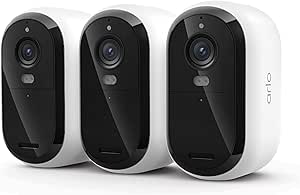
Arlo Essential Wireless Security Camera 2K (3rd Gen) – 3-Cam Kit with Yard Sign
As an affiliate, we earn on qualifying purchases.