
TL;DR

Get backup power and energy gear delivered free with Prime
- Fast, free delivery on millions of items
- Prime Video, Amazon Music and more included
- Member-only deals all year
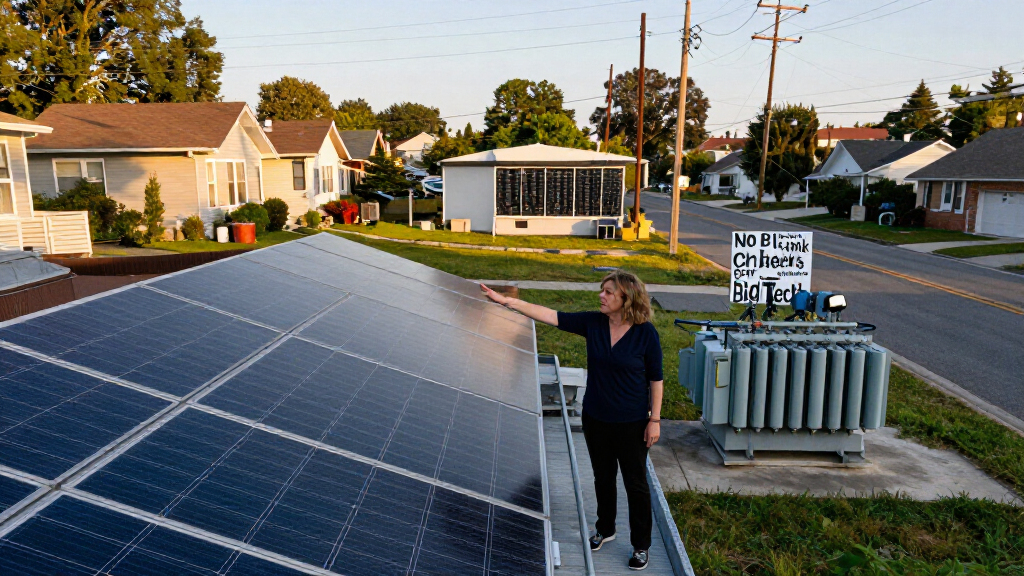
Protesters planned to gather outside Sen. Chuck Schumer’s Brooklyn home on Friday to urge him to oppose the Bipartisan American Affordability and Jobs Act. The Senate was preparing for a procedural vote Monday, while Schumer had not publicly stated his position, according to the source report.
Protesters planned to gather outside Sen. Chuck Schumer’s Brooklyn home on Friday, urging the New York Democrat to oppose a permitting bill that the Senate was expected to take up in a procedural vote on Monday. Schumer had not publicly stated his position on the Bipartisan American Affordability and Jobs Act, according to the report, leaving his stance consequential as the measure would require Democratic support to advance.
The bill, known as the Bipartisan American Affordability and Jobs Act, would speed permitting for energy infrastructure, including renewable energy projects, transmission lines, oil and gas pipelines, and other large industrial developments. Its supporters’ stated aim, as described in the source report, is to accelerate the approval process; opponents say the provisions could also hasten projects they consider harmful.
Environmental justice and Indigenous rights groups argue the legislation would weaken long-standing environmental safeguards, threaten tribal sovereignty and limit the public’s ability to challenge projects in court. They also warn that faster approvals could enable expansion of energy-intensive AI data centers and associated gas-fired power plants and pipelines. Those are opponents’ assessments of the bill’s likely effects, not established outcomes of a law already in force.
The proposal would expand the authority of the Federal Energy Regulatory Commission to approve permits for interstate transmission lines. The commission is chaired by an appointee of President Donald Trump, according to the source. The bill was introduced in the Senate in September by Sens. Shelley Moore Capito, Sheldon Whitehouse, Mike Lee and Martin Heinrich, then referred to the Senate Committee on Energy and Natural Resources.
Permitting Rules and Local Objections
The dispute concerns who can shape major infrastructure decisions and how quickly those projects may proceed. If Congress changes federal permitting authority and limits avenues for legal challenges, the effects could reach communities far from a proposed data center or power plant, through new transmission infrastructure, energy demand, and potential pollution. The bill’s actual effects would depend on its final language and how agencies apply it.
Opponents say communities could have less opportunity to contest projects that affect local land, water, health or cultural resources. Their concern is especially acute for Indigenous nations, whose sovereignty and participation in decisions are among the issues raised by advocacy groups. The bill’s backers and opponents have different priorities: faster infrastructure approvals on one side, and protections for public participation and environmental review on the other.
Schumer’s position matters because the procedural vote was expected to require Democratic support. His decision could influence whether the measure advances, though a procedural vote would not itself make the bill law. The protest is an effort to press him publicly before that Senate step.
Products Worth Considering

Bose Lifestyle Ultra Wireless Home Speaker

Shark IQ Robot Self-Empty XL Robot Vacuum with Home Mapping, Self-Cleaning Brushroll, and Wi-Fi, Black

Levoit Core 400S-P Smart Air Purifier for Large Rooms
As an affiliate, we earn on qualifying purchases.
A Senate Vote Approaches
The Senate bill was introduced in September by a bipartisan group: Republican Sens. Shelley Moore Capito and Mike Lee, and Democratic Sens. Sheldon Whitehouse and Martin Heinrich. It was referred to the Energy and Natural Resources Committee. The source report said senators were preparing for a Monday procedural vote to advance it; it did not describe a final passage vote.
Before the planned protest, Food & Water Watch and more than 160 environmental, health, consumer and religious organizations sent Congress a letter urging lawmakers to reject the proposal. The organizations connected data center growth to rising electricity demand and new grid infrastructure, arguing those could add costs for the public and contribute to air and water pollution.
The source report also noted Whitehouse’s financial holdings in data center- and AI-related investments, citing Forbes and Sludge. Those outlets reported ranges for holdings disclosed by Whitehouse and his wife. The information is separate from the bill’s text and does not by itself establish that his investments influenced his sponsorship.
“Under the BAAJA, the commission could hypothetically issue permits to Elon Musk to build a coal-powered data center in the Grand Canyon and “no one can do anything.””
— Jeremy Symons of the Environmental Protection Network
Schumer’s Position and Bill Effects
Schumer had not publicly taken a position, according to the report, and the source material does not establish whether he later commented or how he planned to vote. It also does not confirm whether the planned protest took place or provide an outcome from the scheduled Monday procedural vote.
The precise effect of the bill would depend on its enacted text, if it advances, and subsequent agency decisions. Claims that it would gut protections, prevent meaningful challenges, or directly cause a particular scale of data center or fossil-fuel construction are opponents’ warnings. The source material does not provide a detailed legal analysis of those claims or a response from the bill’s sponsors defending its provisions.
Monday’s Procedural Test
The immediate milestone identified in the report was the Senate’s planned Monday procedural vote on whether to advance the bill. The result would indicate whether the measure could continue through the chamber, but it would not settle the legislation’s final wording or enact it.
Schumer’s public position, the vote count and any amendments or further Senate action remained to be seen in the source material. Advocacy groups were pressing lawmakers to reject the bill, while the legislative process would determine whether it advances and what provisions, if any, ultimately become law.
Key Questions
Why were protesters targeting Chuck Schumer?
Organizers planned a protest outside Schumer’s Brooklyn home to urge him to oppose the Bipartisan American Affordability and Jobs Act. The source report said he had not publicly stated his position and that the bill’s procedural vote would require Democratic support.
What would the bill do?
The bill would speed permitting for energy infrastructure, including renewable energy projects, transmission lines, pipelines and other large developments. It would also expand FERC’s authority over permits for interstate transmission lines, according to the source material.
Why are environmental groups opposing it?
Opponents say the bill could weaken environmental protections, undermine tribal sovereignty and restrict public challenges to projects. They also warn it could accelerate data center growth and related gas-fired power and pipeline development. These are the groups’ concerns, not confirmed outcomes.
Did the Senate pass the bill?
The source report described a planned procedural vote on Monday to advance the bill, not a final passage vote. It does not provide the result of that vote.
What remains unknown?
The source material does not state Schumer’s eventual position, whether the protest took place, the result of the procedural vote or what final language might emerge if the bill advances.
Source: commondreams.org