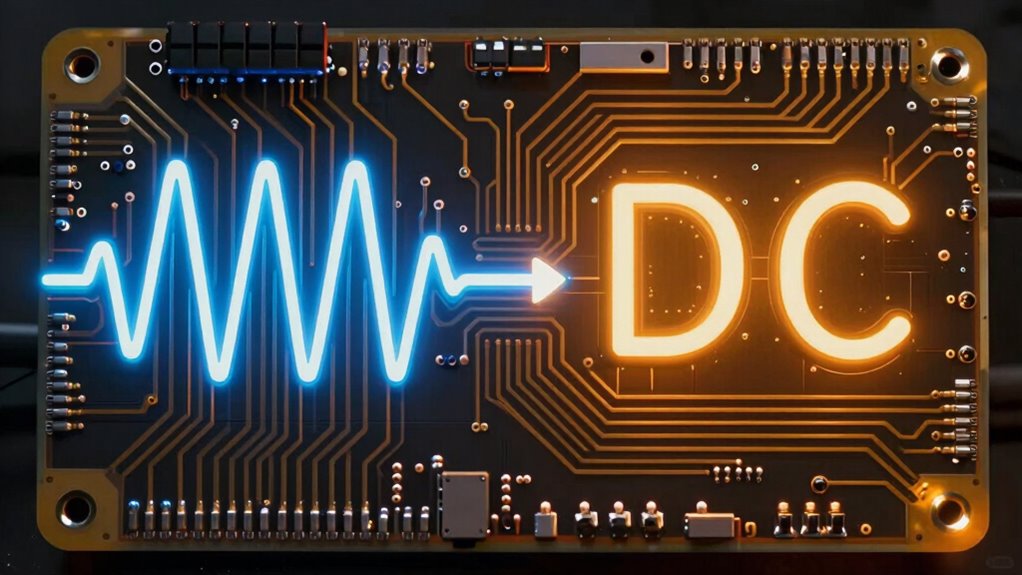

The key difference between AC and DC power is how they deliver voltage and current. AC power changes direction and oscillates in a sine wave, causing natural voltage fluctuations, while DC provides a steady, unchanging voltage. This difference affects their efficiency, stability, and applications, from household electricity to batteries. Understanding this fundamental distinction helps you see why each type is used in specific systems. If you want to explore more, you’ll find even deeper insights into their roles and technology.

Get backup power and energy gear delivered free — and shop member deals
- Fast, free delivery on millions of items
- Access to Prime Big Deal Days deals on October 6–7
- Prime Video, Amazon Music and more included
Key Takeaways
- AC power oscillates in a sine wave, causing voltage fluctuations, while DC power provides a steady voltage output.
- AC is easily transmitted over long distances with high efficiency, whereas DC is typically used for local or electronic applications.
- Conversion between AC and DC involves rectifiers and inverters, impacting energy efficiency and system complexity.
- DC power is ideal for devices requiring constant voltage, whereas AC power suits general household and industrial use.
- Voltage stability and fluctuation management differ significantly, influencing system design, safety, and performance.

When it comes to electrical power, you might think that AC and DC are just two different ways to deliver electricity, but there’s a hidden difference that can impact how devices perform and how systems are designed. One key aspect is voltage stability. AC power, with its sine wave oscillations, naturally fluctuates in voltage, which can pose challenges for sensitive electronics. To maintain consistent performance, systems often rely on voltage regulation methods, ensuring the voltage remains within safe limits despite these fluctuations. In contrast, DC power offers a more steady voltage output, which makes it ideal for applications requiring a constant voltage supply, like batteries or electronic circuits. This inherent voltage stability reduces the need for complex regulation, simplifying design considerations for certain devices. Additionally, the generation methods for each type of power influence their availability and efficiency in different systems. Understanding the conversion methods between AC and DC is essential because it highlights how adaptable each power type is for various uses. Converting AC to DC typically involves rectification, where devices like diodes or more advanced rectifiers transform the alternating current into a direct, unidirectional flow. This process is vital in powering electronic gadgets that operate on DC, such as smartphones and computers. Conversely, converting DC to AC involves an inverter, which synthesizes an alternating waveform from a direct current source. This process is common in renewable energy systems, like solar panels, where DC generated needs to be converted into AC to feed into the grid or power household outlets. The efficiency of conversion also plays a crucial role in reducing energy losses during these processes. Advances in conversion methods, such as high-frequency inverters and solid-state rectifiers, continue to improve how seamlessly these power types can be integrated into various systems, blurring the lines between their traditional roles. Recognizing the differences in voltage stability helps you appreciate the complexities behind the electricity powering your devices. Whether it’s the stable voltage of DC or the versatile conversion methods of AC, each type has unique benefits and challenges that influence how electrical systems are designed and operated. Improving our understanding of power transmission technologies can lead to more efficient and sustainable energy solutions. Additionally, innovations in energy storage technologies are crucial for optimizing the use of both AC and DC power in future grids. Recognizing these distinctions allows you to better grasp how power flows from generation to your gadgets, ensuring ideal performance and safety at every step.
As an affiliate, we earn on qualifying purchases.
Frequently Asked Questions
How Does AC Power Affect Electrical Safety Standards?
You need to understand that AC power influences electrical safety standards through voltage regulation, which guarantees consistent and safe voltage levels. This impacts safety protocols by requiring proper grounding, circuit breakers, and insulation to prevent shocks or fires. Because AC power fluctuates, adhering to safety standards becomes essential to protect both people and equipment, minimizing risks associated with electrical faults and ensuring a safe environment.
What Are the Environmental Impacts of AC vs. DC Power?
You might be surprised to learn that 60% of renewable energy systems use DC power, which impacts environmental sustainability. AC power’s widespread transmission causes more energy loss, increasing emissions. Using DC for renewable integration helps cut emissions, reducing environmental impact. By switching to DC systems, you support cleaner energy production, lower greenhouse gases, and promote a sustainable future, making your choices more eco-friendly and efficient.
Can Batteries Store AC Power Directly?
You can’t store AC power directly in batteries due to compatibility issues. Batteries are designed to store DC power, so you need a converter to change AC to DC before storage. This conversion presents challenges, such as energy loss and added complexity. To effectively store and use power, you must guarantee your batteries and systems are compatible with the required conversion processes, making the overall setup more efficient and reliable.
How Do AC and DC Power Influence Electrical Grid Stability?
Think of the electrical grid as a delicate dance, where AC and DC power influence its rhythm. AC power, with its frequency stability, keeps the grid balanced, while power conversion guarantees smooth shifts between types. DC power can introduce stability challenges if not properly managed, but advancements in technologies help integrate it seamlessly. Your understanding of this dance helps keep the lights on and the system resilient.
Are There Any Applications Where AC and DC Power Are Interchangeable?
You can find applications where AC and DC power are interchangeable, especially with power conversion technology. Devices like power supplies and inverters convert between the two, allowing you to use AC circuits for DC-powered electronics and vice versa. This is possible because of voltage compatibility achieved through transformers and converters, making it easier to integrate different power systems seamlessly. So, in many cases, AC and DC power can work together effectively.
As an affiliate, we earn on qualifying purchases.
Conclusion
So, now you see how AC and DC power each play their roles, much like a knight and a squire working together. While AC power flows like a swift river, DC power stays steady as a lighthouse beam, guiding your devices safely. Remember, understanding their hidden differences helps you make smarter choices, like a wizard wielding a powerful staff. Don’t let this knowledge become a forgotten relic—embrace it like a trusty shield in today’s electrified world.
As an affiliate, we earn on qualifying purchases.
voltage regulator for sensitive devices
As an affiliate, we earn on qualifying purchases.
As an affiliate, we earn on qualifying purchases.
Fall Picks
fall essentials
As an affiliate, we earn on qualifying purchases.