
A load center is a compact electrical panel designed mainly for residential use, containing circuit breakers that protect individual circuits in your home. A panelboard, on the other hand, is a larger, more adaptable system used in commercial or industrial settings to handle higher loads and complex wiring setups. Understanding these differences helps you choose the right component for your project. Keep exploring to learn more about how they function and their safety features.
Key Takeaways
- Load centers are compact, residential-specific panelboards containing circuit breakers for individual circuits.
- Panelboards are larger, versatile electrical distribution units used in commercial or industrial settings.
- Load centers typically include a main breaker for system-wide shutdown, while panelboards can accommodate multiple breaker types.
- Load centers are designed for simpler, smaller-scale wiring; panelboards handle complex, high-capacity electrical systems.
- Proper selection and installation ensure safety, compliance, and system reliability for both components.
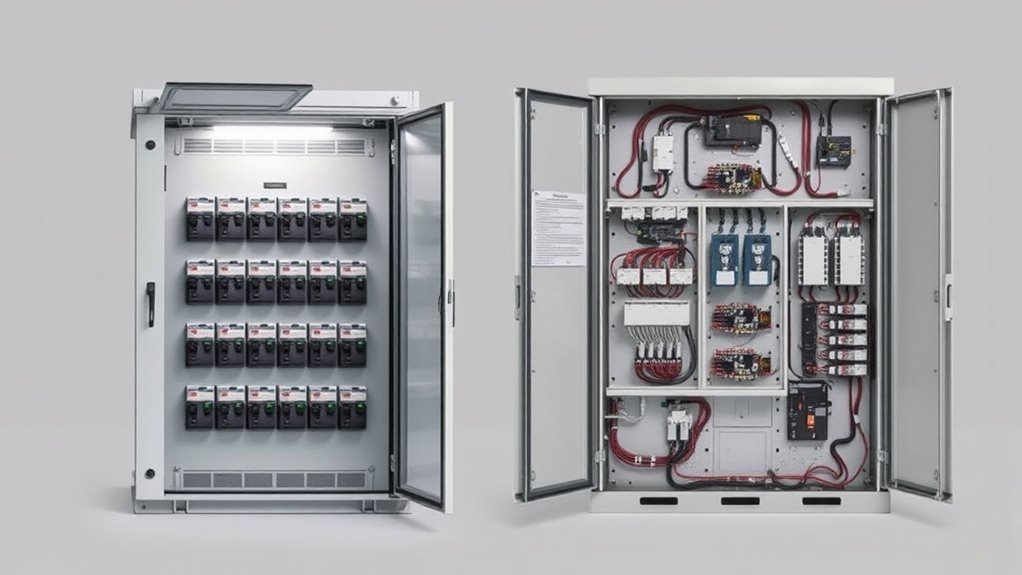
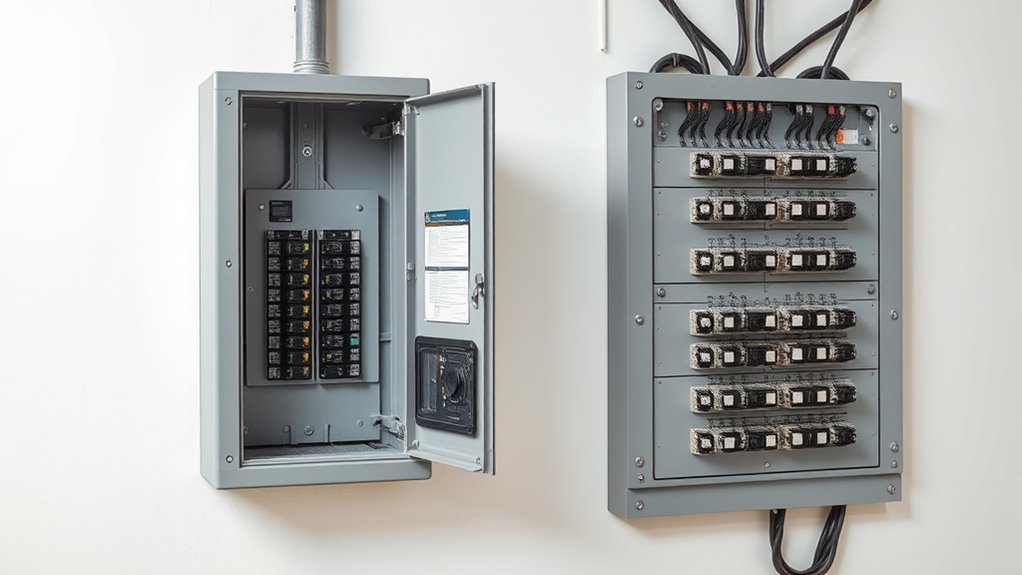
Are load centers and panelboards the same, or do they serve different purposes in your electrical system? While they’re often used interchangeably, understanding their distinctions helps guarantee your system stays safe and efficient. Both are crucial components that distribute electricity throughout your home or building, but they have different designs and functions. A load center typically refers to a specific type of panelboard, mainly used in residential settings, that contains circuit breakers to protect individual circuits. Panelboards, on the other hand, are more versatile and common in commercial or industrial environments, where they handle larger loads and more complex wiring arrangements.
Load centers are residential panelboards with circuit breakers; panelboards serve larger, complex commercial electrical systems.
When examining load centers, you’re mostly dealing with a compact, enclosed unit that houses circuit breaker types designed for residential use. These circuit breakers serve as safety devices, automatically shutting off power when they detect overloads or short circuits, preventing electrical fires or damage. The circuit breaker types used in load centers vary, including single-pole breakers for lighting and outlets, and double-pole breakers for heavy appliances. It’s essential to select the right circuit breaker types that meet electrical safety standards to guarantee your system operates safely. Electrical safety standards, like those set by the National Electrical Code (NEC), dictate the proper installation, wiring, and breaker ratings, making sure your load center functions correctly and safely. Additionally, load centers often feature a main breaker that provides overall system protection and disconnection capabilities.
Panelboards are more expansive and flexible, often found in commercial buildings where they manage multiple circuits across large spaces. They can accommodate various circuit breaker types, including those with special functions or higher capacities, to meet the demands of complex electrical loads. Because panelboards serve larger and more varied systems, they often require more stringent adherence to electrical safety standards. This guarantees that the entire system remains protected and compliant with regulations. The choice of panelboards and circuit breaker types should always prioritize safety, reliability, and the specific requirements of your electrical load.
In essence, while load centers are a type of panelboard primarily used in residential settings, the broader term ‘panelboard’ covers a wide range of configurations suited for commercial or industrial applications. Knowing the differences helps you choose the right component for your needs, guaranteeing your electrical system is both safe and compliant. Remember, selecting the appropriate circuit breaker types and following electrical safety standards isn’t just about code; it’s about protecting your home, your loved ones, and your property from potential electrical hazards. Proper installation and maintenance of load centers and panelboards keep your system running smoothly and safely for years to come.
Frequently Asked Questions
Can a Load Center Be Used as a Main Electrical Panel?
Yes, a load center can be used as a main electrical panel if it meets local main electrical codes. It functions as the primary point for circuit protection, containing the main breaker that controls power flow to your home. Verify it’s properly rated for your total load and installed correctly. Always follow electrical regulations to guarantee safety and compliance, and consider consulting a professional for proper setup and inspection.
What Is the Typical Lifespan of a Load Center?
A load center typically lasts around 30 to 40 years, but keep in mind, nothing lasts forever. You should regularly check circuit protection and wiring compatibility to guarantee safety and efficiency. As technology advances, replacing your load center before it becomes a problem is wise. Proper maintenance and timely upgrades can extend its lifespan, helping you avoid unexpected issues and keep your electrical system running smoothly for years to come.
Are Load Centers Suitable for Outdoor Installations?
Yes, load centers are suitable for outdoor installations if they’re designed for outdoor safety and weather resistance. Look for a NEMA 3R or higher rating, which guarantees protection against rain, snow, and other elements. You should also verify proper installation, including secure mounting and grounding, to maintain safety and functionality. Always follow manufacturer instructions and local codes to keep your outdoor load center safe and reliable.
How Do I Choose Between a Load Center and a Panelboard?
When choosing between a load center and a panelboard, consider electrical code compliance and your budget. Load centers are typically used for residential applications and are more affordable, while panelboards suit larger, commercial setups requiring more circuits and flexibility. You should evaluate your current and future electrical needs, ensuring the product adheres to local codes. Comparing costs and features helps you select the best option for your project.
Can Load Centers Be Upgraded or Expanded Easily?
Sure, upgrading a load center is a breeze—if you’re into surprises. Most load centers are designed for easy expansion, with straightforward expansion methods and upgrade options. You can typically add circuits or replace panels without major rewiring. Just remember, check the capacity first, so you don’t outgrow your setup too soon. With a little planning, expanding your load center becomes a simple, satisfying project.
Conclusion
In the end, understanding the difference between a load center and a panelboard is like knowing the cast and the stage—each plays a crucial role in your electrical system’s performance. Think of it this way: without the right components, your home’s power flow is like a story without a plot. So, whether you’re upgrading or troubleshooting, remember that choosing the right panel keeps your home’s energy running smoothly—because, after all, your comfort depends on it.