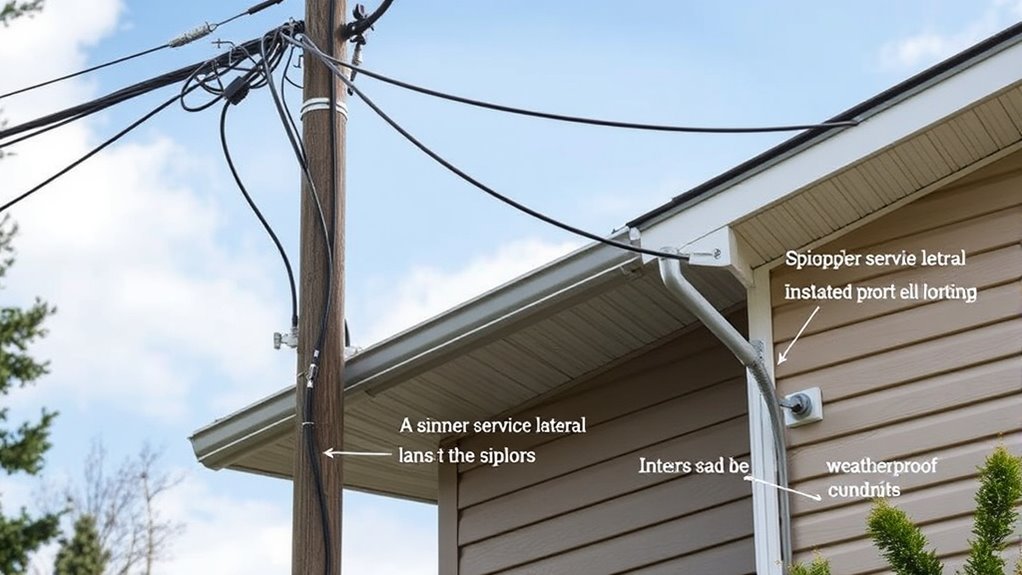

A service drop is the overhead power line coming from a utility pole directly to your home, while a service lateral is an underground cable connecting your property to the main line or transformer. The service drop is visible outside and more exposed to weather, whereas the service lateral is buried and protected from storms. Knowing how these work helps you understand how electricity reaches you. Keep exploring to learn more about their differences and impact on service reliability.
Key Takeaways
- Service drop is an overhead cable from utility pole to the building, while a service lateral is an underground cable.
- Power reaches your property through either the overhead service drop or underground service lateral, depending on the setup.
- Meters are installed near the connection point, typically outside, for both overhead and underground systems.
- Overhead service drops are more vulnerable to weather, whereas underground laterals are protected but more costly to repair.
- The choice of system affects maintenance, resilience, and overall cost of bringing power to your home.

When it comes to delivering electricity to your home or business, understanding the difference between a service drop and a service lateral is essential. These two components are critical in how power reaches you, but they serve different roles and have distinct characteristics. A service drop is the overhead line that runs from the utility’s pole to your building’s service point. It’s what you see stretching across streets, connecting utility poles to rooftops or meters. A service lateral, on the other hand, is an underground cable that carries electricity from the main electrical line—often a transformer or a secondary distribution line—directly to your property. Knowing this distinction helps you understand how your electrical system is set up and how it might respond during storms or adverse weather conditions.
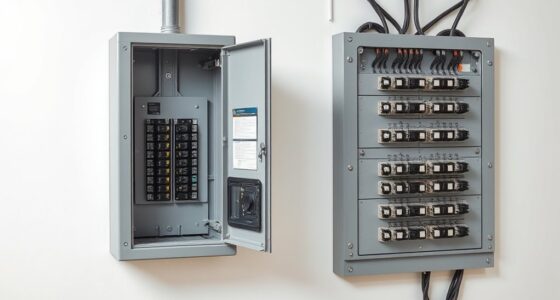
Meter placement plays a significant role in both overhead and underground systems. Usually, your meter is installed outside, near where the service drop or lateral connects to your building. Proper meter placement is essential for safety, ease of access, and accurate readings. In overhead setups, the meter is often mounted on an exterior wall below the point where the service drop attaches. For underground service lateral systems, the meter is typically installed in a weatherproof enclosure, often on an exterior wall or in a dedicated utility box. Proper placement ensures the meter remains accessible even during extreme weather, preventing disruptions in power monitoring or billing.
Weather resilience is another key factor distinguishing these two supply methods. Overhead service drops are more vulnerable to weather-related damage. High winds, ice storms, or falling branches can snap or dislodge the cables, leading to outages and costly repairs. To mitigate this, utility companies sometimes upgrade to weather-resistant materials or reinforce the poles and lines. Underground service laterals are generally more resilient to weather because they are buried below ground. However, they aren’t immune to issues like flooding, soil shifting, or excavation damage. Proper installation and regular inspections are essential to maintain their reliability, especially in areas prone to severe weather. Additionally, the choice between overhead and underground systems can influence the overall cost and maintenance of electrical service.
Understanding these differences equips you to better prepare for potential outages and maintenance needs. Overhead service drops are more exposed but easier to repair and upgrade, whereas underground service laterals offer increased weather resilience but can be more complex to repair if issues arise. Both systems require thoughtful meter placement to ensure safety, accessibility, and accurate billing. Ultimately, knowing how power reaches you—from the utility pole or underground conduit—helps you appreciate the infrastructure working silently behind the scenes to keep your lights on, regardless of the weather outside.
Top picks for "service drop lateral"
Open Amazon search results for this keyword.
As an affiliate, we earn on qualifying purchases.
Frequently Asked Questions
What Are the Cost Differences Between Service Drop and Lateral?
The cost comparison shows that service drops are generally more expensive than service laterals because they require overhead installation, which involves poles and extensive wiring. Service laterals are usually less costly since they are installed underground, reducing long-term maintenance expenses. If budget considerations are key, a lateral might be a better choice, but keep in mind the initial installation costs and potential future repairs when making your decision.
How Do Weather Conditions Affect Each Type of Service Line?
Weather conditions can really throw a wrench in things, making maintenance more challenging. For service drops, heavy snow or ice adds weight, risking damage or outages, while high winds can cause sagging or breakage. Service laterals, especially underground ones, are less affected by weather but can face issues like flooding or soil shifting. Overall, weather impact varies, but both lines need proactive maintenance to stay reliable.
What Safety Precautions Are Necessary During Installation or Repair?
During installation or repair, you need to wear safety gear like insulated gloves, hard hats, and safety glasses to protect yourself. Always stay alert and maintain hazard awareness, especially around live wires or unstable equipment. Before starting, make certain the power is shut off and follow proper procedures. Keep a safe distance from electrical hazards, and work with a partner when possible to enhance safety and respond quickly in emergencies.
Are There Specific Regulations Governing Service Drops and Laterals?
Think of your electrical service like a highway—regulatory standards and installation codes act as traffic rules ensuring a smooth, safe journey. Yes, there are specific regulations governing service drops and laterals, set by local and national authorities. These codes dictate proper installation, materials, and safety measures, so always check with your local utility or electrical inspector. Following these rules guarantees safe, reliable power delivery to your home.
How Long Does Installation Typically Take for Each Type?
Installation typically takes about one to three days for each type, depending on factors like location and complexity. The length estimate for service drops usually involves shorter installation processes, often completed within a day, since they run from utility poles to your home. Service laterals might take longer due to underground work or more complex routing. You’ll want to coordinate with your utility for a precise timeline based on your specific setup.
Conclusion
While you might think the difference between a service drop and a service lateral doesn’t matter, understanding their roles helps guarantee safety and proper maintenance. Even if it seems minor, knowing how power reaches your home can prevent accidents and improve reliability. Don’t overlook these details—clarity in your electrical system keeps your family safe and your power steady. Trust that paying attention now saves headaches later, especially during storms or repairs.