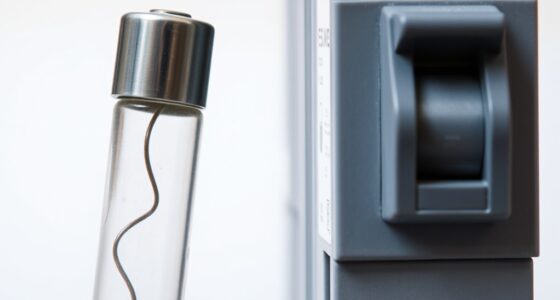
When your circuit breaker trips, it’s alerting you to a problem in your electrical system, such as overloads, short circuits, or faulty appliances. These trips protect wiring and appliances from damage or fire. Recognizing why it trips—whether due to excessive load, a short, or device issues—helps you prevent hazards and costly repairs. If you want to understand what your breaker is really telling you, explore the key signs and solutions further.

Get backup power and energy gear delivered free — and shop member deals
- Fast, free delivery on millions of items
- Access to Prime Big Deal Days deals on October 6–7
- Prime Video, Amazon Music and more included
Key Takeaways
- Circuit breakers trip to protect wiring and appliances during overloads or faults, signaling a system vulnerability or hazard.
- Frequent trips often indicate overloaded circuits, faulty appliances, or wiring issues that need inspection.
- Sudden trips accompanied by sparks or burning smells suggest serious problems requiring immediate professional attention.
- Resetting a breaker repeatedly without addressing the cause can risk damage or fire; persistent trips need expert diagnosis.
- Regular maintenance, load management, and safety checks help prevent unnecessary trips and ensure electrical system safety.
As an affiliate, we earn on qualifying purchases.
Understanding How Circuit Breakers Work
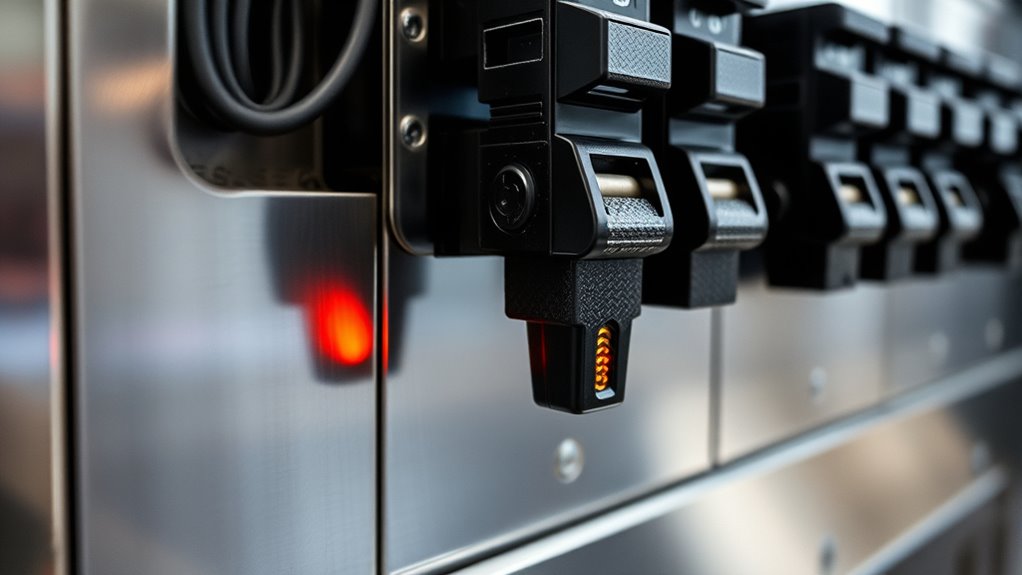
Understanding how circuit breakers work is essential to grasp why they trip and how they protect your electrical system. Circuit breakers act as gatekeepers, automatically shutting off power when they detect overloads or faults. Proper breaker maintenance guarantees these safety devices function correctly, preventing potential hazards. Electrical codes set the standards for installing and maintaining breakers, ensuring they provide reliable protection. When a breaker trips, it’s responding to an electrical issue that could damage your wiring or appliances. Recognizing how breakers operate helps you understand why regular inspections are necessary. Proper maintenance practices help ensure your home’s electrical health remains reliable, and following electrical codes and maintaining your breaker panel keeps your system safe and compliant, reducing the risk of unexpected trips and electrical failures. Additionally, understanding breaker trip causes can help you troubleshoot issues more effectively and prevent future problems. Being aware of electrical safety standards emphasizes the importance of adhering to regulations to prevent hazards and ensure system longevity. Regular testing and inspection routines are critical components of maintaining a safe and efficient electrical system. Implementing load management strategies can also minimize the likelihood of trips caused by overloads.
As an affiliate, we earn on qualifying purchases.
Common Causes of Tripped Breakers

Your circuit breaker trips most often because of electrical overloads or short circuits. When too many devices draw power at once, it can cause the breaker to trip to prevent damage. Recognizing the signs of these issues helps you identify potential risks early. Additionally, anti-aging effects from certain solutions can temporarily improve skin appearance but are not a long-term fix. Understanding digital literacy programs can help seniors communicate safely and effectively, reducing the risk of misunderstandings that might lead to electrical issues caused by improper usage. Properly managing your workspace and avoiding clutter can also prevent accidental overloads and electrical hazards. Regularly inspecting and maintaining your electrical system using simple tools like a multimeter can also help detect potential problems before they cause a trip. Incorporating mindfulness and meditation techniques may also help reduce stress-related behaviors that lead to overloading circuits during busy or anxious times.
Electrical Overload Risks
Electrical overloads are one of the most common reasons circuit breakers trip, often occurring when too many devices draw power from a single circuit. Overloading can cause wires to heat up, risking damage or fire. To prevent this, verify your breaker has proper ground fault detection, which can quickly identify overloaded circuits and trip to protect you. Regular breaker maintenance tips include inspecting for signs of wear, avoiding daisy-chaining multiple extension cords, and not exceeding the circuit’s capacity. Be mindful of high-wattage appliances, especially when used simultaneously. If your breaker trips frequently, it might be a sign of an overload or other issues. Addressing these risks promptly helps maintain a safe electrical system and prevents costly damage. Additionally, understanding the power capacity of your circuits can help you better manage your electrical load and prevent overloads. Being aware of the current load on each circuit ensures you stay within safe operating limits and avoid unnecessary trips. Regularly monitoring your electrical usage can also help prevent overloads before they happen.
Short Circuit Indicators
Ever wondered why a circuit breaker trips suddenly without warning? Short circuits are a common cause, often caused by damaged wiring or faulty appliances. They create an overload of current that trips the breaker to prevent damage or fire. If you notice frequent trips, it might signal compromised wiring or a need for better surge protection. Inspections of your wiring can reveal hidden issues like frayed wires or loose connections that cause short circuits. Using surge protectors can also help prevent sudden surges that lead to shorts. Regular wiring inspections guarantee your system remains safe and reliable. Recognizing these short circuit indicators allows you to address problems early, avoiding potential hazards and costly repairs. Keeping an eye on your system’s health and understanding home security systems can help you stay safe and prevent unexpected breaker trips. Additionally, understanding GMC tuning concepts can help identify electrical issues related to vehicle modifications that might affect your home electrical system.
As an affiliate, we earn on qualifying purchases.
Overloaded Circuits and Their Impact
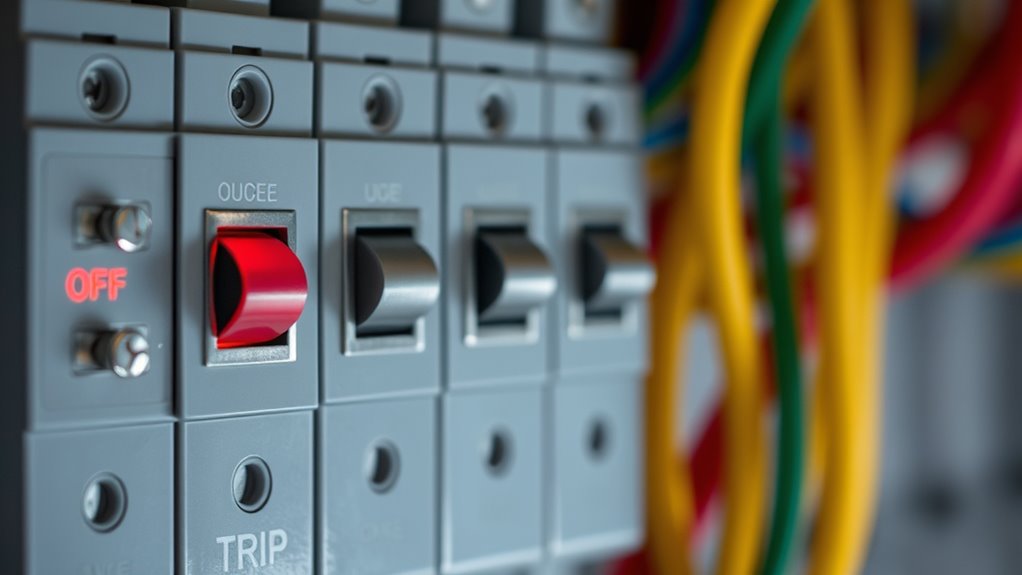
When multiple appliances or devices draw power through the same circuit, it can quickly become overloaded. This overload causes your circuit breaker to trip, protecting your wiring and preventing potential fires. Overloaded circuits often happen when you plug in too many lighting fixtures or high-wattage devices simultaneously. If this occurs frequently, it’s a sign you might need wiring upgrades to handle higher loads safely.
| Issue | Solution |
|---|---|
| Too many devices on one circuit | Distribute appliances or add circuits |
| Frequent breaker trips | Consider wiring upgrades |
| Overloaded lighting fixtures | Reduce fixture load or upgrade wiring |
| Ignoring overload signs | Get a professional electrical assessment |
As an affiliate, we earn on qualifying purchases.
Short Circuits and Ground Faults
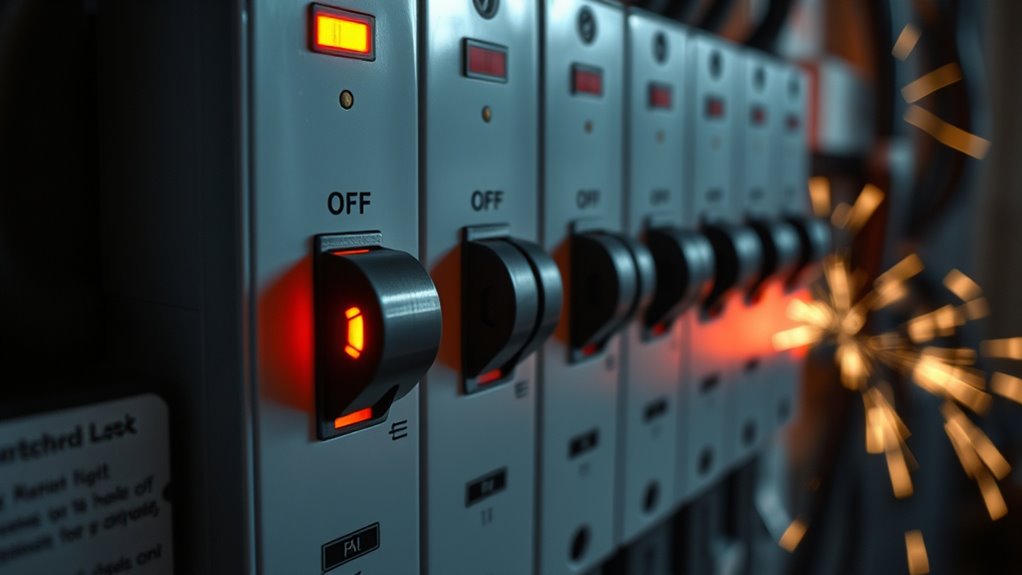
While overloaded circuits are a common cause of breaker trips, short circuits and ground faults pose serious risks that often go unnoticed until damage occurs. A short circuit happens when a hot wire touches a neutral or ground wire, creating a low-resistance path that causes a sudden surge of current. This rapid flow can generate heat, sparks, or even fires if unchecked. A ground fault occurs when a live wire contacts a grounded surface, causing current to leak unintentionally. Ground faults are especially dangerous because they can lead to electric shocks or fires without obvious signs. When your circuit breaker trips due to a short circuit or ground fault, it’s a clear warning that there’s a potentially hazardous issue that needs immediate attention to prevent injury or damage. Recognizing electrical hazards is crucial for safety and proper troubleshooting, and understanding circuit protection mechanisms can help prevent future incidents. Additionally, advancements in AI cybersecurity are helping to identify and mitigate electrical system vulnerabilities more effectively, emphasizing the importance of fault detection in modern electrical safety systems.
The Role of Faulty Appliances and Devices
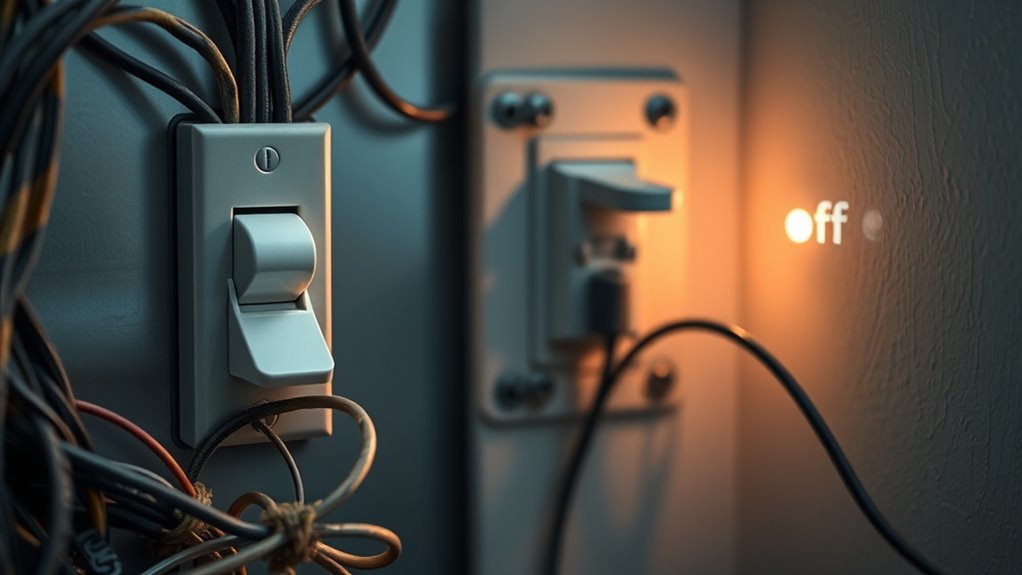
Faulty appliances and devices can directly cause circuit breaker trips by creating unintended electrical paths or drawing excessive current. Appliance malfunctions, such as damaged wiring or worn-out components, can lead to short circuits or overloads, prompting the breaker to trip as a safety measure. Device failures, like malfunctioning motors or faulty switches, may also cause sudden spikes in current. If an appliance is damaged or improperly maintained, it can put stress on your electrical system, increasing the likelihood of trips. Regularly inspecting your appliances for signs of wear or damage helps prevent these issues. Additionally, understanding electrical safety principles can help you identify and mitigate potential hazards. Recognizing system vulnerabilities in your electrical setup can further aid in preventing unexpected trips. Proper maintenance and timely repairs of appliances, especially through the guidance of an expert appliances technician, can significantly reduce the risk of circuit breaker trips caused by faulty devices. Remember, a tripped breaker caused by a faulty device isn’t just an inconvenience—it signals a potential hazard that needs addressing before it causes further damage or safety risks. Being aware of electrical load management can also help prevent overloads that lead to trips. Implementing preventive maintenance routines for appliances is essential to keep your electrical system safe and reliable.
When to Reset and When to Call a Professional
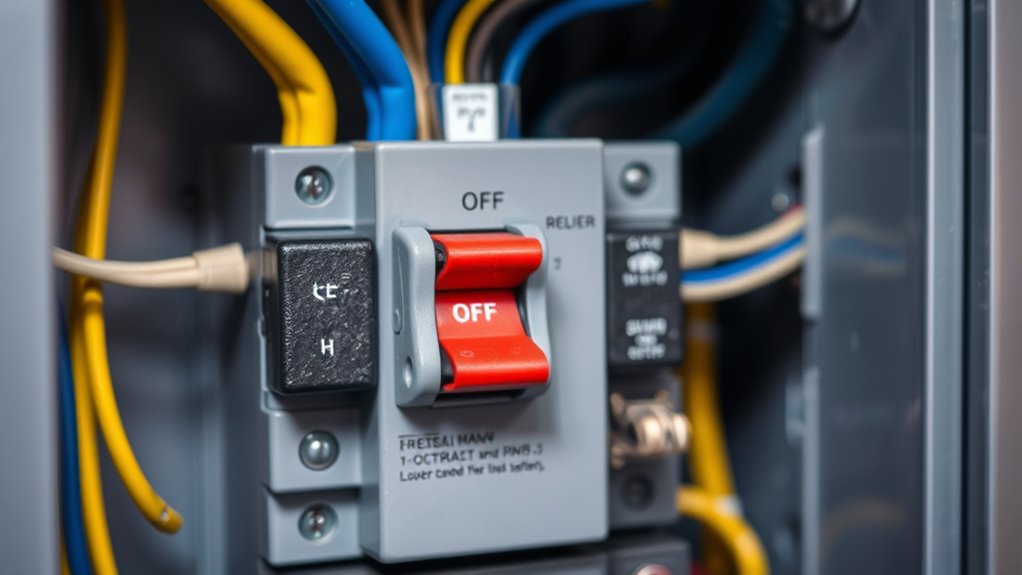
Knowing whether to reset a tripped breaker or call a professional can prevent further damage and guarantee safety. If the breaker trips repeatedly, it could indicate grounding issues or an overload, which require expert assessment. Resetting a breaker that’s tripped due to a temporary overload is usually safe, but if it trips again quickly, don’t keep resetting—it might be a sign of a deeper problem. Also, consider the circuit breaker’s lifespan; older breakers may become less reliable, increasing trip frequency. If you notice frequent trips, sparks, or burning smells, it’s time to call a pro. They can diagnose underlying issues, including grounding problems, and replace worn-out breakers, ensuring your system remains safe and functional. Never ignore persistent trips—they’re a warning sign to seek professional help. Regular maintenance and understanding the Textile Line can help you identify potential electrical hazards early.
Preventive Measures to Avoid Future Trips
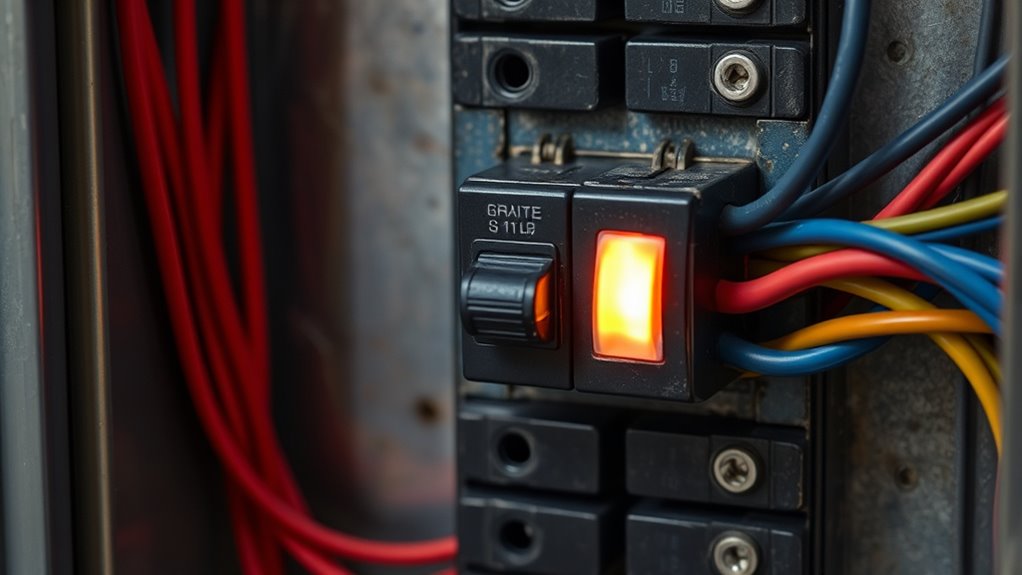
Taking proactive steps can substantially reduce the chances of your circuit breaker tripping unexpectedly. Installing surge protection devices helps safeguard your electrical system from power spikes that can cause trips. Regular wiring maintenance is essential; inspect for frayed or loose connections, which can overload circuits or create short circuits. Keep your wiring organized and up-to-date to prevent overloads that trip the breaker. Avoid plugging in too many high-power appliances at once, as this can overload circuits. Additionally, consider upgrading outdated wiring that can’t handle modern electrical loads. These measures not only prevent unwanted trips but also enhance your home’s overall electrical safety. By staying vigilant and maintaining your wiring and surge protection, you reduce the risk of future circuit breaker trips and protect your appliances and home.
Frequently Asked Questions
Can a Tripped Breaker Indicate Electrical System Age or Wear?
Yes, a tripped breaker can indicate electrical system age or wear. Over time, components may weaken, causing frequent trips. If your breaker trips often, consider electrical panel upgrades or breaker calibration to guarantee safety and proper function. Aging wiring and outdated panels increase the risk of trips, so addressing these issues early helps prevent potential hazards and keeps your system running smoothly.
How Does Humidity Affect Circuit Breaker Trips?
Humidity effects can cause your circuit breaker to trip because moisture intrusion can lead to corrosion and electrical faults. When high humidity levels persist, moisture can seep into the breaker or wiring connections, increasing the risk of short circuits or ground faults. This makes the breaker trip as a safety measure. To prevent this, keep your environment dry, guarantee proper ventilation, and inspect for signs of moisture intrusion regularly.
Are There Specific Signs That Suggest an Imminent Breaker Failure?
You might notice flickering lights, a burning smell, or frequent breaker trips, all signs of imminent failure. Don’t ignore these; they indicate your system needs surge protection or breaker replacement. Addressing these signs early can prevent sudden outages or electrical fires. If you see persistent issues, consult a professional to assess your breaker’s condition, ensuring safety and avoiding costly repairs down the line.
What Is the Typical Lifespan of a Circuit Breaker?
The typical lifespan of a circuit breaker is about 15 to 20 years, but regular breaker maintenance can extend this. You should monitor for signs like frequent trips or signs of wear, which can compromise electrical safety. Performing routine inspections and testing helps guarantee your breaker functions properly, preventing potential hazards. Staying proactive with breaker maintenance not only prolongs its life but also keeps your electrical system safe.
Can Frequent Trips Damage the Electrical Wiring Over Time?
Did you know that frequent trips can increase the risk of wiring corrosion and damage? When your electrical load surpasses the breaker’s capacity, it causes repeated stress on the wiring, which over time can weaken insulation and lead to corrosion. This ongoing strain may result in degraded wiring, increasing the risk of electrical fires or shorts. To protect your system, avoid overloading circuits and have a professional inspect your wiring regularly.
Conclusion
Remember, your circuit breaker’s trip is like a gentle nudge from your home’s safety guardian. It’s telling you something needs attention, whether it’s a small overload or a hidden fault. By listening carefully and taking prompt, thoughtful steps, you keep your home cozy and secure. So, trust that pause—sometimes, a little care now prevents bigger trouble later. Stay alert, stay safe, and let your circuit breaker guide you with quiet wisdom.
Evergreen bestsellers Picks
bestsellers
As an affiliate, we earn on qualifying purchases.