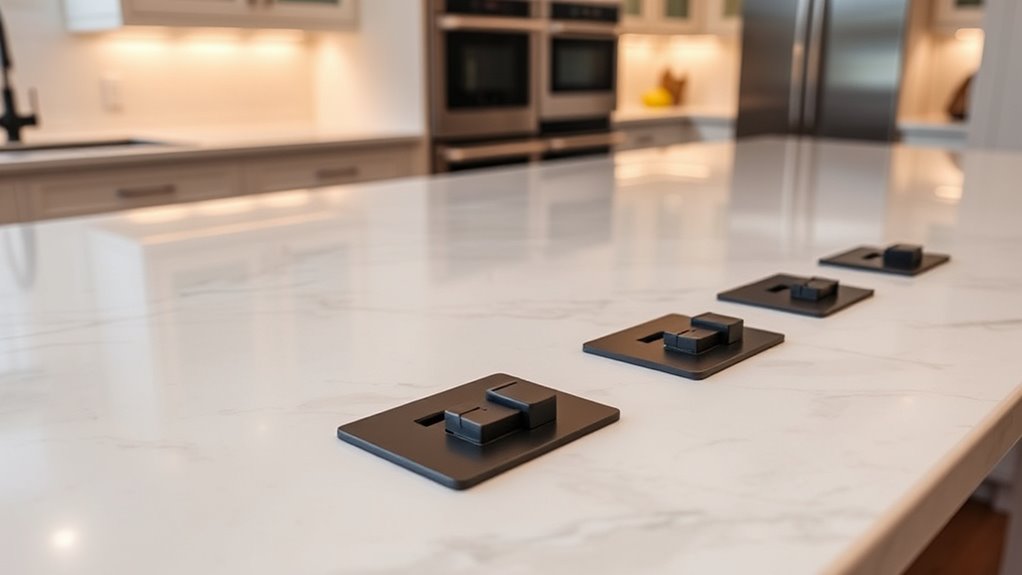

To guarantee your kitchen island outlets are both safe and functional, space them appropriately—about every 4 to 6 feet—to support multiple appliances without overloading circuits. Place outlets near the edges for easy access and keep them away from sinks or water sources to prevent hazards. Use GFCI protection in moisture-prone areas and avoid cords crossing walkways. Properly installed outlets not only improve safety but also make your workspace more efficient—learn more to optimize your setup.
Key Takeaways
- Ensure outlets are strategically placed near the island edges for easy access to small appliances while maintaining safe distances from water sources.
- Maintain proper spacing between outlets to prevent overloads and facilitate the use of multiple appliances simultaneously.
- Install GFCI outlets in moisture-prone areas and near sinks to enhance electrical safety.
- Position outlets at a comfortable height for all users, avoiding placement across walkways or hot surfaces.
- Incorporate task lighting with built-in outlets or USB ports to reduce clutter and improve workspace safety and functionality.
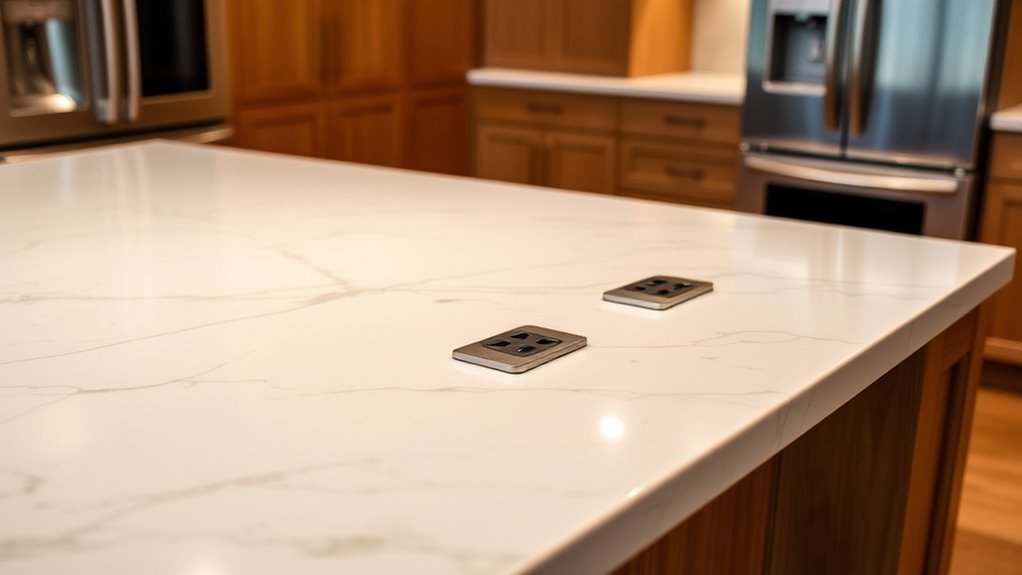
A well-designed kitchen island with outlets can transform your space into a functional hub for cooking, entertaining, and everyday tasks. When planning your island, considering appliance placement is vital. You want outlets positioned where you can easily plug in small appliances like blenders, mixers, or coffee machines without cluttering the countertop. Proper spacing ensures you won’t have to stretch cords across the surface or crowd outlets together, which can lead to safety hazards. Think about how you use your kitchen—if you often prepare meals on the island, place outlets near the edges where appliances are most likely to sit. This setup keeps your workspace organized and minimizes the risk of accidents caused by overloaded outlets or tangled cords. Additionally, understanding the importance of electrical safety can help you design a safer and more efficient kitchen space. Lighting design plays a significant role in maximizing the functionality of your island. Well-placed lighting not only enhances the overall look but also guarantees safety and convenience when using outlets. Task lighting directly over the work area helps you see clearly while chopping, mixing, or assembling dishes. When you incorporate outlets into your lighting plan, consider installing under-cabinet or pendant lights that incorporate power sources. These fixtures can be designed with built-in outlets or USB ports, giving you easy access to power without creating clutter or unsightly cords. Proper lighting also helps you identify any potential safety issues, such as exposed cords or overloaded outlets, before they become problematic. Safety is a key concern with kitchen island outlets. You should avoid placing outlets too close to sinks or water sources to prevent electrical hazards. The National Electrical Code (NEC) recommends grounding outlets and installing Ground Fault Circuit Interrupters (GFCIs) in areas prone to moisture. Ensuring outlets are spaced correctly prevents overloading circuits and reduces the chance of tripped breakers or electrical fires. Also, consider the height of outlets; installing them at a comfortable level makes plugging in appliances easier and safer, especially for those with mobility challenges. Keep cords away from hot surfaces, such as stovetops or oven vents, and avoid running cords across walkways to prevent tripping hazards.
Frequently Asked Questions
Can I Install Multiple Outlets on a Single Kitchen Island?
Yes, you can install multiple outlets on a single kitchen island, but you need to prioritize electrical safety and proper outlet placement. Make sure the outlets are evenly spaced and easily accessible, avoiding overcrowding. Consult a licensed electrician to ensure the wiring complies with safety codes and prevents overloads. Proper planning of outlet placement helps you keep your kitchen safe and functional, making it easier to power multiple devices without risking electrical hazards.
What Are the Code Requirements for Outdoor Kitchen Island Outlets?
An ounce of prevention is worth a pound of cure. For outdoor kitchen island outlets, code requires GFCI protection to prevent electrical shocks, and proper electrical grounding is vital for safety. You must install outlets at specific heights and ensure weatherproof covers are used. Local electrical codes may vary, so always check with your authority having jurisdiction to ensure your outdoor setup meets all safety standards.
How Do I Prevent Electrical Fires With Island Outlets?
To prevent electrical fires with island outlets, ensure proper grounding safety by using grounded outlets and GFCI protection. Place outlets at appropriate distances to avoid overloading and ensure easy access for safe usage. Regularly inspect wiring and outlets for damage or corrosion, and avoid daisy-chaining multiple cords. Keeping safety in mind, correct outlet placement and grounding help reduce fire risks and promote a safer outdoor kitchen environment.
Are There Specific Outlets Designed for High-Power Appliances?
Yes, there are specific outlets designed for high-power appliances. You should look for outlet types with higher power ratings, like dedicated circuits or heavy-duty outlets, to handle appliances such as blenders or portable ovens. These outlets are built to safely supply more electricity without tripping or overheating. Don’t worry—consult a professional to guarantee you select the right outlet types and power ratings for your needs, keeping your kitchen both functional and safe.
What Is the Recommended Height for Kitchen Island Outlets?
You should install kitchen island outlets at a height of about 12 to 20 inches above the countertop. This guarantees easy access and safe GFCI outlet placement, especially near water sources. Proper outlet placement minimizes clutter and hazards while complying with electrical codes. Keep in mind that GFCI outlets should be used for safety, particularly in wet areas, and outlets should be spaced evenly to meet accessibility standards.
Conclusion
By carefully planning your kitchen island outlets, you’re wiring a safety net that keeps your space both functional and secure. Think of outlets as the steady heartbeat of your kitchen, pulsing with power and purpose. When spaced just right, they ensure your culinary symphony flows smoothly without a hitch. With the right setup, your kitchen becomes a well-orchestrated masterpiece—a place where safety and convenience dance hand in hand, lighting up your cooking adventures.