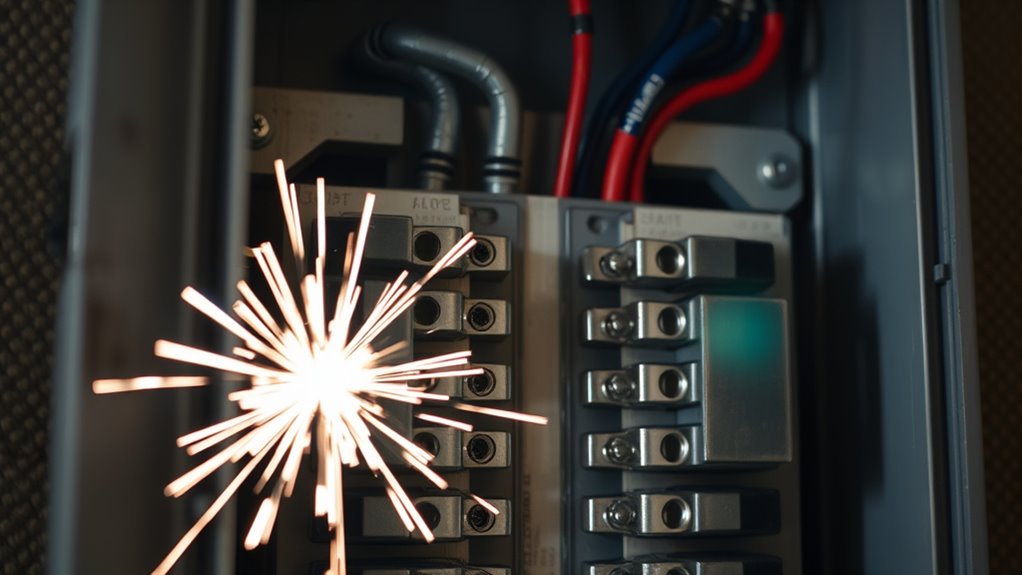

When working on your home electrical panel, it’s crucial to respect arc-flash risks since they can cause severe burns, injuries, or even death from the intense heat and light released. Always shut off power, use insulated tools, and wear protective gear like gloves and eye protection. Never work alone or skip safety steps—your safety depends on following proper procedures. To stay truly safe and understand these hazards better, continue exploring essential safety tips and practices.

Get backup power and energy gear delivered free — and shop member deals
- Fast, free delivery on millions of items
- Access to Prime Big Deal Days deals on October 6–7
- Prime Video, Amazon Music and more included
Key Takeaways
- Arc-flash hazards can occur in residential panels, releasing intense heat and pressure that cause severe injuries or fires.
- Always turn off main power and verify with a voltage tester before working on home electrical panels.
- Use proper protective gear, including insulated gloves and flame-resistant clothing, to reduce injury risk during maintenance.
- Never work alone or attempt repairs without professional training; untrained individuals risk serious arc-flash incidents.
- Follow established safety procedures and consult licensed electricians to ensure safety when handling home electrical systems.

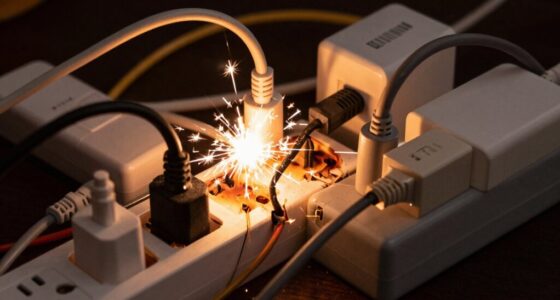
Understanding arc-flash hazards is essential for anyone working on or around home electrical panels. An arc flash occurs when an electrical current jumps across an air gap, releasing intense heat, light, and pressure that can cause severe injuries or even death. Even in residential settings, where the voltage may be lower than in industrial environments, the risks are real and should never be underestimated. Recognizing the dangers is the first step toward staying safe.
Arc-flash hazards exist in home electrical work; never underestimate the danger of electrical jumps and intense heat.
When working near or inside your home’s electrical panel, always prioritize safety procedures. Before doing any work, turn off the main power supply to eliminate the risk of electrical shock or arc flash. Use insulated tools and wear protective gear designed specifically for electrical work. Protective gear isn’t just a precaution; it’s a crucial barrier against burns, flying debris, and harmful arc flashes. Proper gloves, eye protection, and flame-resistant clothing can make a significant difference if an unexpected arc occurs. Keep in mind that even a small mistake, like accidentally touching a live wire, can trigger a dangerous arc flash. Electrical safety protocols are critical to prevent accidents and protect yourself.
Following established safety procedures helps you minimize risk. This includes confirming the power is off with a voltage tester before touching any wires, and never working alone when dealing with electrical systems. If you’re unsure about how to perform a task safely, consult a licensed electrician. They understand the specific risks involved and can advise on best practices, including the appropriate protective gear to use. Never bypass safety steps—skipping even one can result in serious injury. It’s also wise to keep your work area clear of clutter, use proper lighting, and stay focused at all times. Distractions or rushing can lead to mistakes that increase your risk of an arc flash.
Understanding the importance of protective gear and safety procedures extends beyond just wearing the right equipment. It involves an all-encompassing approach: planning your work, using the right tools, and knowing when to call in a professional. Remember, home electrical panels are not toys or DIY projects for untrained individuals. The potential for arc flash incidents is real, and the consequences can be devastating. Taking the time to learn and follow safety procedures, and always wearing the appropriate protective gear, keeps you safe while maintaining your home’s electrical system. Respecting the risks means respecting the power of electricity itself—never cut corners or underestimate its potential to cause harm.
insulated electrical gloves for home use
As an affiliate, we earn on qualifying purchases.
As an affiliate, we earn on qualifying purchases.
Frequently Asked Questions
Can Arc-Flash Occur in Outdoor Home Panels?
Yes, arc-flash can occur in outdoor home panels. You need to be cautious with outdoor panel safety because weather impact, like rain or moisture, heightens electrical risks. Water can cause short circuits or corrosion, raising the chances of an arc-flash. Always verify your outdoor panels are properly sealed, maintained, and inspected regularly to prevent accidents and protect yourself from potential electrical hazards.
What Are Signs of an Impending Arc-Flash Risk?
Imagine a ticking time bomb—certain arc flash indicators warn you of imminent danger. You might notice scorched marks, burning smells, or buzzing sounds near your panel. Loose connections or corrosion also signal increased risk. Recognizing these signs helps you prioritize risk prevention, reducing the chance of a dangerous arc flash. Always inspect regularly, and consult a professional if you spot any of these indicators. Stay alert to keep your home safe.
How Often Should Home Panels Be Inspected for Arc-Flash Hazards?
You should inspect your home panels for arc-flash hazards at least once a year. Regular inspection frequency is vital to identify potential risks early. Follow proper maintenance protocols by hiring a qualified electrician to check for signs of wear, corrosion, or loose connections. Consistent inspections help guarantee that your electrical system remains safe, reducing the chances of an arc-flash incident and protecting your home and loved ones.
Are Arc-Flash Risks Different in Newer Versus Older Panels?
Your arc-flash risks are drastically different depending on panel age and design. Older panels often have outdated wiring and less advanced safety features, making them a ticking time bomb. Newer panels are built with modern design standards, incorporating better insulation and safety measures. But don’t be fooled—any panel, regardless of age, needs regular inspection. Respect the risks and guarantee your panel’s safety to prevent catastrophic electrical accidents.
What Safety Gear Is Recommended During Panel Maintenance?
During panel maintenance, you should wear personal protective equipment like flame-resistant gloves, safety glasses, and a face shield to shield against electrical arcs. Always follow safety precautions such as turning off power, using insulated tools, and working with a partner if possible. These measures help protect you from potential arc-flash hazards, reducing the risk of serious injury. Prioritizing safety gear and precautions keeps your work safe and prevents accidents.
As an affiliate, we earn on qualifying purchases.
Conclusion
Understanding arc-flash risks in your home panel is like knowing the rules of a game—you stay safe by respecting them. Always turn off power before working on your panel, and don’t ignore warning signs. Think of safety gear as your armor, protecting you like a knight’s shield. By staying cautious and informed, you can prevent accidents and keep your home safe. Remember, a little caution now can save you from big surprises later.
voltage tester for residential electrical panels
As an affiliate, we earn on qualifying purchases.
As an affiliate, we earn on qualifying purchases.
flame-resistant clothing for electrical work
As an affiliate, we earn on qualifying purchases.
As an affiliate, we earn on qualifying purchases.
Evergreen bestsellers Picks
bestsellers
As an affiliate, we earn on qualifying purchases.