
Labeling your disconnect switches is essential for quick identification during emergencies, helping you shut off specific circuits swiftly and safely. Clear, weatherproof labels prevent confusion, saving precious seconds when every moment counts. Proper labeling minimizes hazards, protects your property, and ensures family members or responders can act with confidence. If you want to maximize safety and efficiency, understanding best labeling practices can make all the difference when time is critical.

Get backup power and energy gear delivered free — and shop member deals
- Fast, free delivery on millions of items
- Access to Prime Big Deal Days deals on October 6–7
- Prime Video, Amazon Music and more included
Key Takeaways
- Properly labeled disconnects enable quick identification and shutdown during emergencies, reducing response time.
- Clear labels help anyone, including renters and emergency responders, quickly locate and operate the correct switch.
- Using durable, visible labels ensures labels remain legible and effective in urgent situations.
- Precise labeling prevents confusion, minimizing hazards and potential damage during electrical emergencies.
- Regularly updating labels maintains clarity, ensuring quick and accurate disconnects when every second counts.
Have you ever struggled to identify which disconnect switch controls a specific appliance or circuit? If so, you’re not alone. Without proper labeling, finding the right disconnect can turn into a frustrating and time-consuming task, especially during an emergency. That’s why circuit identification is such a essential part of safety and emergency preparedness. When you clearly label your disconnect switches, you save precious seconds—and potentially lives—by allowing quick, accurate shutdowns of electrical devices or circuits. This simple step ensures you can respond swiftly in situations like electrical fires, power surges, or maintenance emergencies.
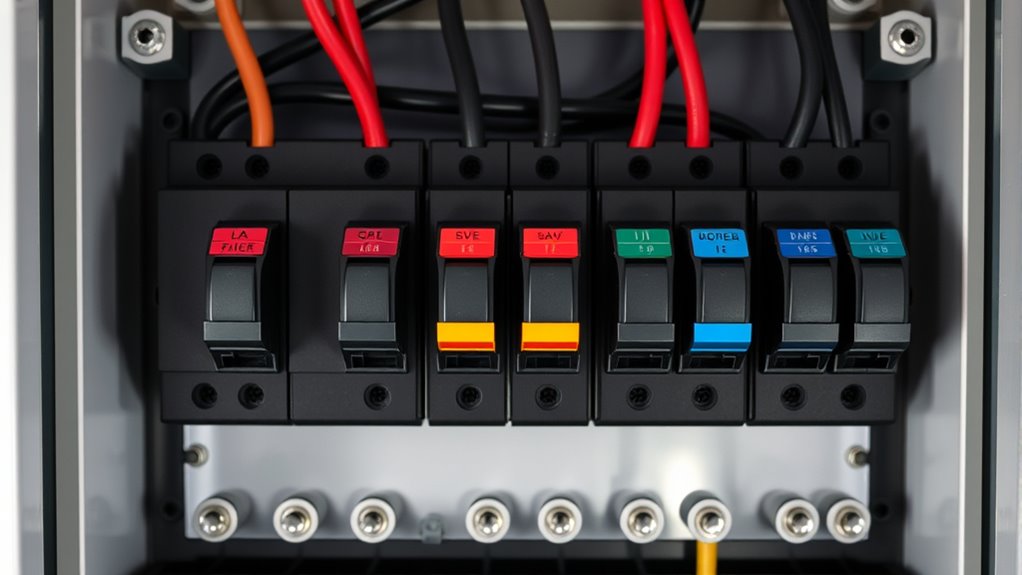
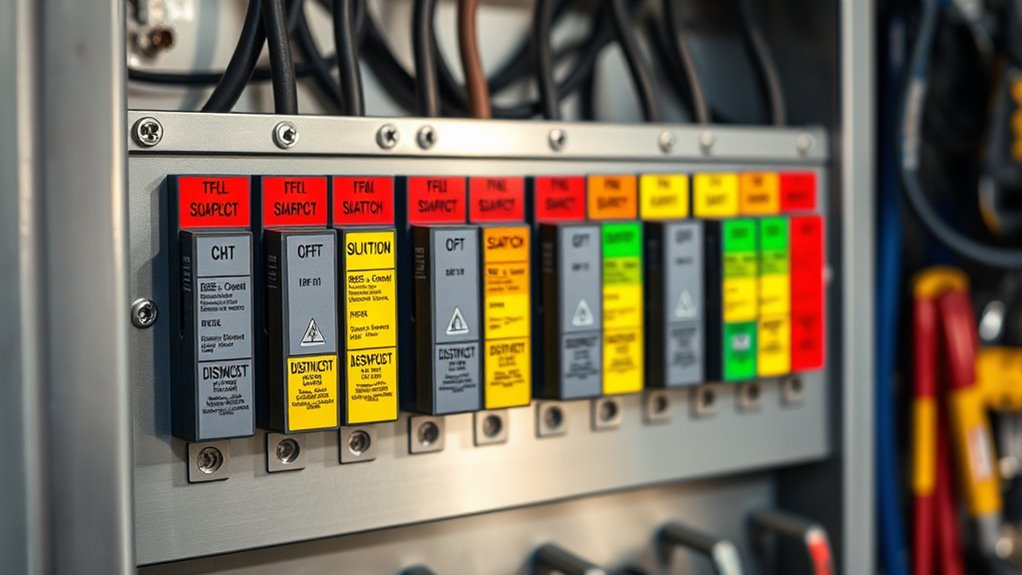
Properly labeling your disconnects is straightforward but often overlooked. Start by turning off the main power and inspecting each switch. Use durable, weatherproof labels or tags that resist fading, moisture, and wear over time. Write clear, specific descriptions of what each disconnect controls—such as “Garage Lighting,” “HVAC Unit,” or “Pool Pump.” When labels are visible and unambiguous, anyone can identify the correct switch without guesswork. This is especially important if you rent out your property or have multiple household members who might need to shut off power quickly. The goal is to eliminate confusion, so there’s no delay during a crisis.
In terms of emergency preparedness, well-labeled disconnects play a crucial role. Emergencies rarely give you the luxury of time. Whether you’re dealing with an electrical fire, a storm causing power outages, or a surge that damages appliances, knowing exactly which switch to flip can prevent further hazards. It also minimizes the risk of accidental electrical shocks or damage to sensitive equipment. Furthermore, in a situation where every second counts, having your disconnects properly identified ensures responders or family members can act confidently and efficiently. It’s a small investment that considerably boosts your safety protocols.
weatherproof circuit breaker labels
As an affiliate, we earn on qualifying purchases.
As an affiliate, we earn on qualifying purchases.
Frequently Asked Questions
What Types of Disconnects Should Be Labeled in a Residential Setting?
You should label all disconnects in a residential setting to guarantee clear circuit identification and safety compliance. This includes main disconnects, individual branch circuit disconnects, and any sub-panel disconnects. Proper labeling helps you quickly identify which circuit controls specific areas or appliances during emergencies or maintenance. By doing so, you minimize hazards, prevent accidental shocks, and make troubleshooting more efficient, maintaining a safe and compliant home electrical system.
How Often Should Disconnect Labels Be Inspected or Updated?
You should inspect and update disconnect labels during regular maintenance practices, ideally at least once a year. Use durable labeling materials that withstand environmental conditions to guarantee labels stay clear and legible. Regularly checking labels helps prevent confusion during emergencies and maintains safety. Keep your labeling current whenever you perform electrical work or notice signs of wear, ensuring quick identification and response during critical situations.
Are There Specific Color Codes Recommended for Disconnect Labels?
Your disconnect labels should follow clear color standards for maximum visibility—you don’t want them to blend into chaos! Bright red or yellow are common choices, ensuring quick recognition during emergencies. These colors stand out and communicate urgency effectively. Proper color coding enhances labeling visibility, helping everyone identify disconnects swiftly. Remember, consistent color standards aren’t just guidelines—they’re your lifeline in high-pressure situations, transforming chaos into controlled action.
What Legal Requirements Exist for Labeling Electrical Disconnects?
You must follow safety compliance standards that require clear, durable labeling of electrical disconnects. Legal requirements often specify that labels include the disconnect’s purpose and be easily visible. This guarantees quick identification during emergencies, boosting your emergency preparedness. Proper labeling not only helps meet regulations but also minimizes risks, making it easier for first responders and you to act swiftly when every second counts.
How Can I Ensure Labels Remain Readable Over Time?
Imagine a vital moment when a quick shutdown could save lives, but the label’s unreadable. To guarantee labels stay clear, choose durable labeling materials like weather-resistant plastics or laminated tags. Regularly inspect and clean them, replacing any that fade or peel. Using high-quality, UV-resistant inks also helps maintain readability over time. This proactive approach keeps your disconnect labels reliable, assuring safety when every second counts.
electrical disconnect switch labels
As an affiliate, we earn on qualifying purchases.
As an affiliate, we earn on qualifying purchases.
Conclusion
By clearly labeling your disconnects, you guarantee quicker responses during emergencies, potentially saving lives. Studies show that properly marked disconnects reduce response times by up to 60%, preventing costly delays. You’ll feel more confident knowing your team can act swiftly when every second counts. Don’t overlook this simple step—it’s a small change with a big impact, making your workplace safer and more prepared for any crisis.
emergency electrical panel labels
As an affiliate, we earn on qualifying purchases.
As an affiliate, we earn on qualifying purchases.
durable circuit identification tags
As an affiliate, we earn on qualifying purchases.
As an affiliate, we earn on qualifying purchases.
Fall Picks
fall essentials
As an affiliate, we earn on qualifying purchases.