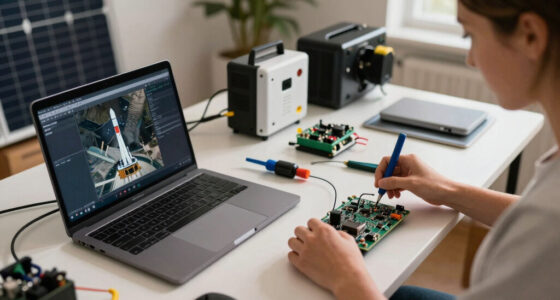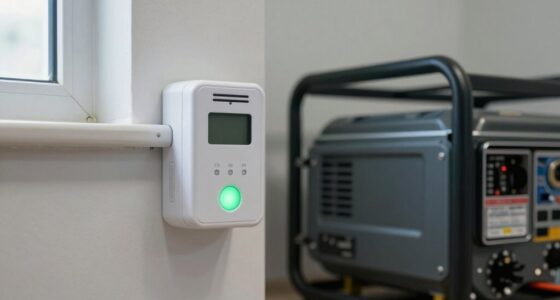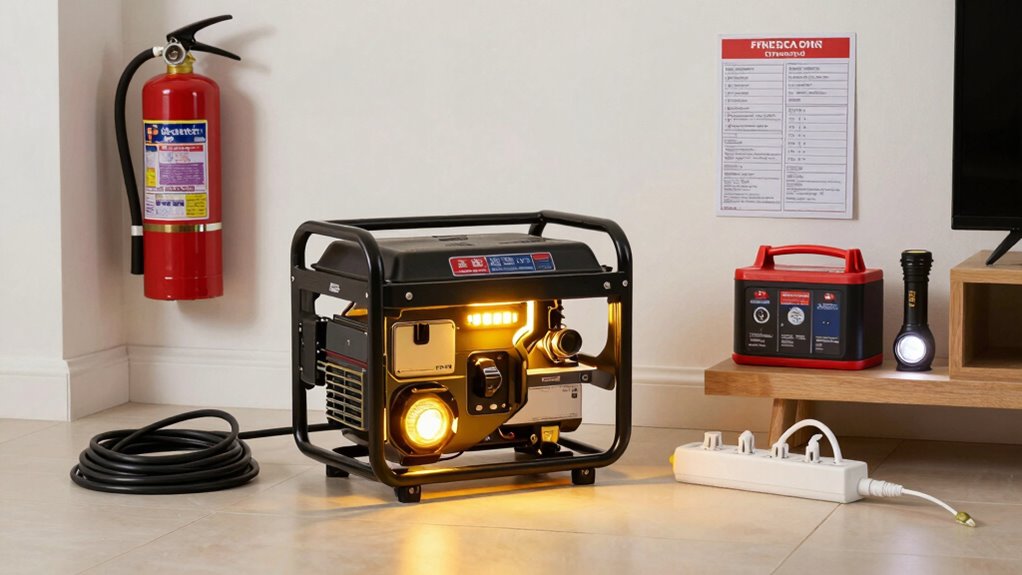

To build a safer emergency power mindset at home, start by understanding the risks of different backup options, like fuel generators and solar systems. Always follow manufacturer instructions for installation and upkeep, and position solar backups where they get maximum sunlight. Regular inspections of wiring, batteries, and debris reduce hazards. Stay informed about safety standards and proper handling practices. Keep safety top of mind to protect your household. If you’re ready, you’ll find more tips to enhance your safety approach.
Key Takeaways
- Educate yourself on the safety features and proper installation of solar backup systems and generators.
- Regularly inspect and maintain equipment to prevent malfunctions and ensure reliable operation.
- Follow manufacturer instructions and industry safety standards for all backup power devices.
- Position solar panels in optimal sunlight areas and keep batteries and wiring in good condition.
- Stay informed about emerging safety trends and best practices to adapt and enhance your emergency power plan.
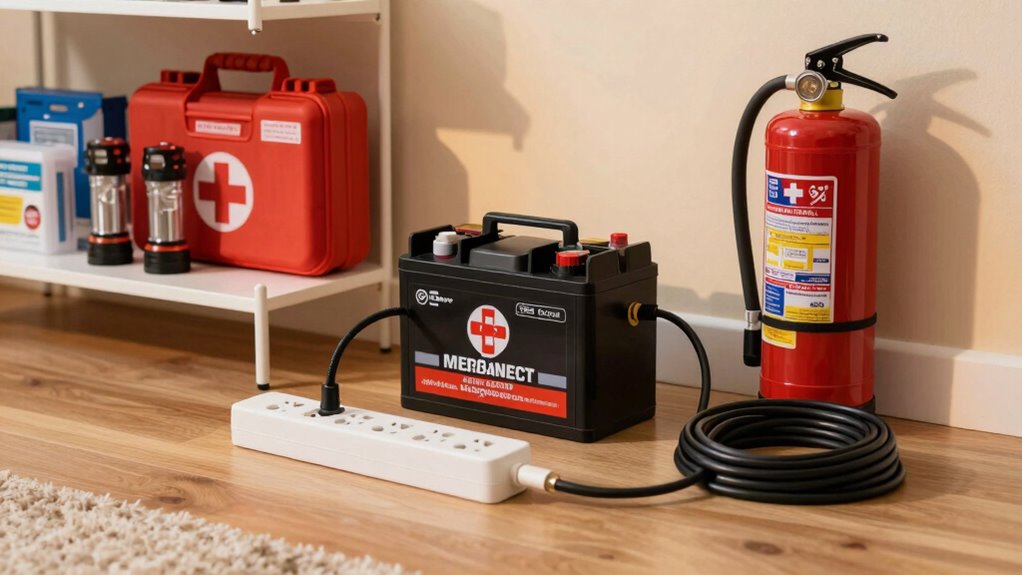
During emergencies, having a reliable source of power can be a lifesaver, but it’s vital to prioritize safety when managing backup systems at home. Whether you’re considering a solar backup or a generator, understanding how to operate these systems safely is essential. Solar backups are often seen as a safer, cleaner alternative, but they still require proper installation and maintenance to guarantee they function correctly when needed. You should install solar panels according to manufacturer instructions, making sure they’re placed in a location with maximum sunlight and away from obstructions. Regularly inspect your solar system for damage or debris, and keep the batteries and wiring in good condition to prevent malfunctions or fires. Remember, solar backup systems are generally safer than fuel-powered generators, but they still pose risks if mishandled. It’s also important to understand the safety considerations involved with backup power systems to prevent accidents and ensure proper operation. Being aware of emerging trends in the industry can help you stay informed about safer and more efficient options. Incorporating proper maintenance practices into your routine can further reduce the risk of system failures and enhance safety. Additionally, staying informed about industry safety standards can help you ensure your backup systems are compliant and safe to use. Maintaining awareness of system limitations is crucial for preventing overconfidence and potential hazards during emergencies.
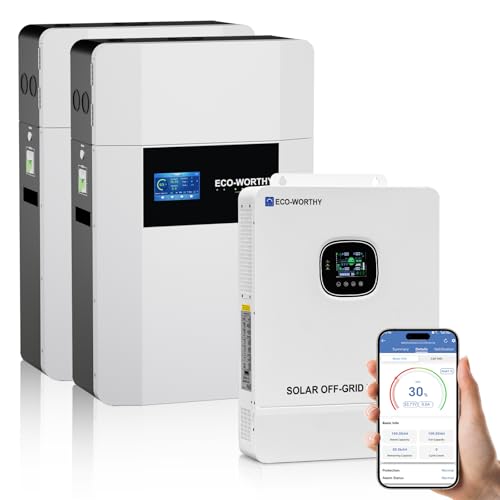
ECO-WORTHY Home Power Backup Station, 10240Wh Wall-Mount LiFePO4 Battery with Conduit Box, Bluetooth & WiFi + 10000W Solar Inverter Charger, Fast Charge, Home Backup & Solar System
Perfect Home Power Station: The setup includes an MPPT off-grid inverter and one battery. One inverter supports 120V/240V…
As an affiliate, we earn on qualifying purchases.
As an affiliate, we earn on qualifying purchases.
Frequently Asked Questions
What Are the Most Common Hazards Associated With Emergency Power Sources?
The most common hazards with emergency power sources include electrical shocks, fires, carbon monoxide poisoning, and electrical fires. You need to prioritize safety protocols, like keeping power sources away from water and ensuring proper ventilation. Always use the correct power source for your needs, avoid overloading circuits, and regularly inspect equipment. Following these safety protocols helps prevent accidents and keeps your home safe during power outages.
How Often Should Emergency Power Systems Be Tested or Maintained?
You should test and maintain your emergency power systems regularly—at least every three to six months—to guarantee battery safety and reliable generator operation. Perform routine inspections for corrosion, loose connections, and proper fuel levels. Regular generator maintenance, including oil changes and battery checks, helps prevent hazards like leaks or failures. Consistent testing and maintenance keep your system safe, ready, and effective during emergencies.
Can DIY Emergency Power Setups Be Safe for Home Use?
Ever wondered if DIY emergency power setups can be safe? They can, if you choose the right power source and follow strict safety precautions. You need to understand electrical systems, use quality components, and avoid shortcuts. Proper grounding, circuit protection, and regular testing are essential. If you’re unsure about any step, it’s best to consult a professional. Safety isn’t worth risking, so prioritize proper installation and maintenance.
What Are the Legal Regulations for Installing Emergency Power Systems?
You need to guarantee legal compliance and meet permitting requirements when installing emergency power systems. Check local codes and regulations, as they vary by area, and often require permits for safety and insurance purposes. You should contact your city or county building department to understand specific rules. Failing to follow these regulations can lead to fines or system disapproval, so always verify that your setup adheres to legal standards before installation.
How Do I Choose the Right Backup Power Solution for My Home?
Choosing the right backup power solution is like selecting the perfect compass in a storm. You’ll want a reliable power source, whether a generator or battery system, that aligns with your home’s energy needs. Battery technology has advanced, offering long-lasting, efficient options. Consider your power requirements, budget, and space. Opt for a system that’s simple to operate and maintain, ensuring peace of mind when the lights go out.

Oxseryn Power Equipment 4400 Watts Inverter Generator Gas Powered, Portable Open Frame Generator, Low Noise with ECO Mode, RV Ready, Emergency Home Backup
𝗣𝗼𝘄𝗲𝗿𝗳𝘂𝗹 𝗢𝘂𝘁𝗽𝘂𝘁 – 4400 peak watts and 3400 running watts, perfect for RV camping and home backup
As an affiliate, we earn on qualifying purchases.
As an affiliate, we earn on qualifying purchases.
Conclusion
Think of your home’s emergency power plan as a sturdy lighthouse guiding you through a storm. By understanding safety precautions, staying prepared, and having the right tools, you’ll navigate power outages with confidence and calm. Building a safer mindset isn’t just about avoiding hazards; it’s about illuminating your path in darkness. Keep your awareness sharp and your plans clear—because when the storm hits, you’ll want your lighthouse shining bright, leading you safely to dry ground.
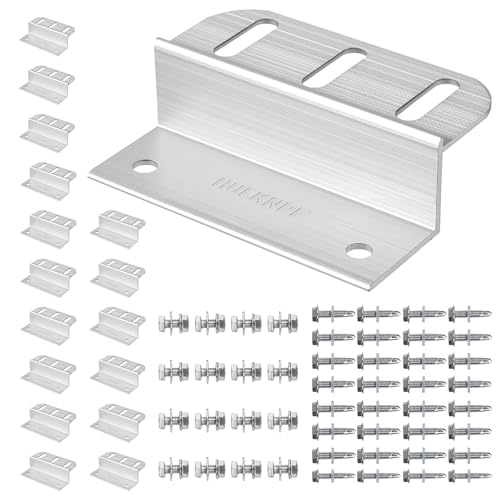
HULKNPE Z Brackets Solar Panel Mounting Kit (16 Pack) – Heavy Duty Corrosion-Resistant Aluminum for RV, Boat, Roof & Off-Grid Installations
Durable & Wind-Resistant Build: Crafted from corrosion-resistant aluminum alloy, these heavy-duty Z brackets provide long-lasting, stable performance and…
As an affiliate, we earn on qualifying purchases.
As an affiliate, we earn on qualifying purchases.

Champion Power Equipment 11,000-Watt Wireless Remote Start Home Backup Portable Inverter Generator with Quiet Technology and Free 3-Year Warranty
Start and stop with ease from up to 80 feet away with the included wireless remote key fob,…
As an affiliate, we earn on qualifying purchases.
As an affiliate, we earn on qualifying purchases.