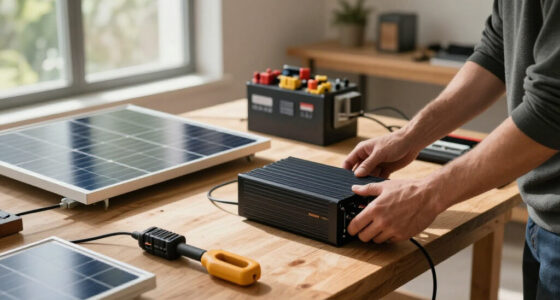
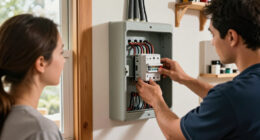
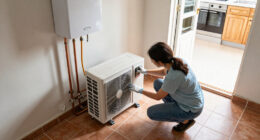
Heat pumps draw current based on their size, efficiency ratings, and startup surge needs. Higher SEER and HSPF units tend to use more power initially but run more efficiently over time. The breaker size must match the unit’s electrical requirements to prevent trips and ensure safety. Proper wiring and installation are key, and surge currents during startup can impact breaker size. Understanding these factors helps optimize your system’s safety and performance—keep exploring to learn more.

Get backup power and energy gear delivered free with Prime
- Fast, free delivery on millions of items
- Prime Video, Amazon Music and more included
- Member-only deals all year
Key Takeaways
- Heat pumps may draw higher current during startup, especially if they have high efficiency ratings, to overcome initial mechanical resistance.
- Proper breaker sizing is essential to handle both the steady-state and surge current loads of the heat pump.
- Increased efficiency can lead to higher initial current, requiring careful electrical system design for safe operation.
- Using an undersized breaker can cause frequent trips, while oversizing may compromise safety; professional load calculations are vital.
- The electrical wiring and circuit must match the heat pump’s specifications to prevent overloads and ensure reliable performance.
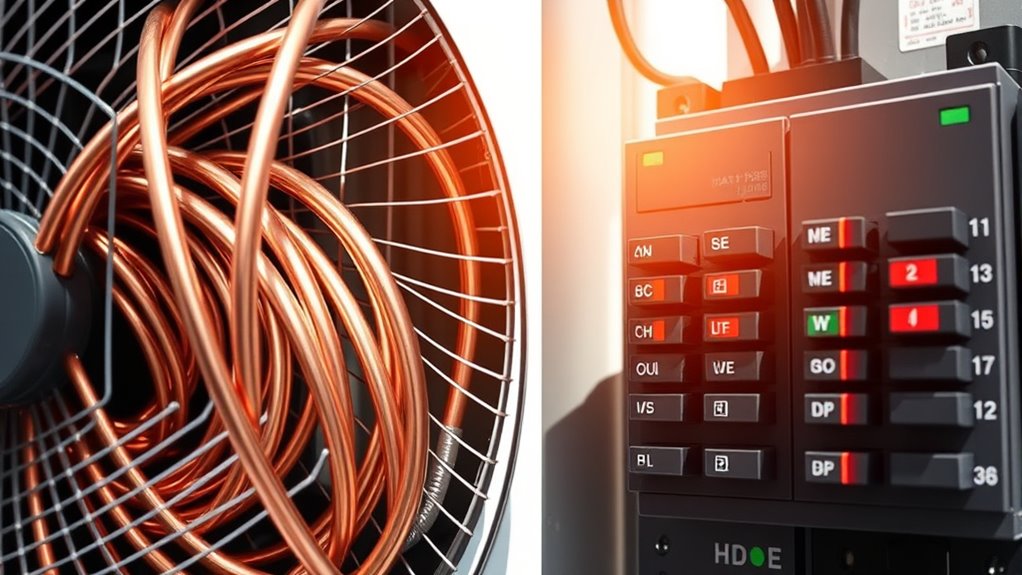
Heat pumps are efficient heating and cooling systems that rely on electrical power, making the integrity of your home’s electrical system vital. When evaluating how much power your heat pump uses, it’s crucial to understand its efficiency ratings. These ratings, such as SEER (Seasonal Energy Efficiency Ratio) for cooling and HSPF (Heating Seasonal Performance Factor) for heating, help you determine how effectively the unit converts electrical energy into thermal comfort. A higher efficiency rating means your heat pump consumes less electricity for the same amount of heating or cooling, which can influence how much current it draws and, consequently, the size of the breaker needed to support it safely.
Installation considerations are equally critical because they directly impact the electrical load your system will place on your home’s wiring. A standard heat pump typically requires a dedicated circuit with a breaker sized according to the unit’s electrical specifications, often indicated in the manufacturer’s installation manual. If the breaker is too small, it will trip frequently, disrupting your comfort and risking electrical hazards. Conversely, installing a breaker that’s too large may prevent nuisance tripping but can be dangerous if the wiring or the unit itself isn’t rated for that capacity. Proper installation also involves ensuring your electrical panel can handle the added load, especially if you’re upgrading from a less efficient system or adding auxiliary heat sources.
Your choice of a heat pump should consider both its efficiency ratings and installation considerations to optimize safety and performance. Modern units with higher efficiency ratings tend to draw more current during startup but stabilize quickly, which means your breaker needs to accommodate these surges without nuisance trips. Additionally, professional installation ensures your electrical system is correctly configured, reducing the risk of overloads or shorts. It’s vital to work with licensed electricians who understand the specific power requirements of your chosen heat pump model and can determine the appropriate breaker size. Understanding electrical load calculations can further help ensure your system is properly supported.
As an affiliate, we earn on qualifying purchases.
Frequently Asked Questions
Can a Breaker Trip Due to a Heat Pump’s Startup Surge?
Yes, your breaker can trip due to a heat pump’s startup surge. When the heat pump starts, it draws a large current, which can trigger overcurrent protection if the breaker isn’t properly sized. Make sure your breaker is correctly rated for your heat pump’s power requirements. Proper breaker sizing helps prevent nuisance trips while still protecting your system from overloads during startup.
How Do I Know if My Breaker Is Compatible With My Heat Pump?
You can tell if your breaker is compatible with your heat pump by checking its electrical ratings and breaker compatibility. Confirm the breaker’s amperage matches the heat pump’s required load, typically listed on the unit’s label. Also, verify that the breaker type suits your electrical system. If in doubt, consult your heat pump’s manual or an electrician to confirm the breaker’s suitability, ensuring safe and efficient operation.
What Are Signs That My Heat Pump Is Drawing Too Much Current?
Imagine your comfort hangs in the balance; if your heat pump’s current draw is unusually high, it’s a warning sign. You might notice the breaker trips frequently, the unit runs louder, or it struggles to heat or cool effectively. These electrical issues indicate your system is drawing too much current, risking damage. Keep an eye on these signs, and consult an electrician to prevent costly repairs and make certain your home stays cozy.
How Often Should I Have My Breaker and Heat Pump Inspected?
You should have your heat pump and breaker inspected at least once a year as part of your regular maintenance schedule. Regular inspections help catch potential issues early, ensuring your system runs efficiently and safely. If you notice unusual noises, frequent breaker trips, or decreased performance, consider scheduling an inspection sooner. Staying consistent with inspection frequency keeps your heat pump in top shape and prevents costly breakdowns.
Can a Faulty Breaker Damage My Heat Pump?
Yes, a faulty breaker can damage your heat pump. If your breaker isn’t maintained properly or isn’t electrically compatible with your system, it may trip frequently or fail to trip when needed, causing electrical surges or overheating. Regular breaker maintenance guarantees it functions correctly and matches your heat pump’s electrical requirements, preventing potential damage. Always have a professional check your electrical system to keep both your breaker and heat pump safe.
As an affiliate, we earn on qualifying purchases.
Conclusion
Understanding how heat pumps draw power is like tuning a musical instrument—you need to know the right notes to keep everything running smoothly. Breakers protect your system just like a safety net catches a falling trapeze artist. By paying attention to their demands, you ensure your heat pump operates efficiently and safely. Keep these principles in mind, and you’ll maintain a reliable, steady rhythm in your home’s comfort, just like a well-conducted orchestra.
As an affiliate, we earn on qualifying purchases.
professional heat pump installation tools
As an affiliate, we earn on qualifying purchases.
As an affiliate, we earn on qualifying purchases.
Columbus Day / Indigenous Peoples' Day Picks
long weekend sales
As an affiliate, we earn on qualifying purchases.