
Using timers, sensors, and schedules can ensure your energy bills are reduced by automating your home’s devices to operate only when needed. Motion sensors turn lights off when rooms are empty, while smart thermostats adjust temperatures for efficiency. Scheduling lights and appliances guarantees they run at ideal times, reducing waste. Implementing these smart automations also enhances convenience and saves money over time. Keep exploring, and you’ll discover how to maximize these tools for even greater savings.
Key Takeaways
- Automate lighting and devices with timers and sensors to turn off unused appliances, reducing energy waste.
- Use schedules to optimize thermostat settings, maintaining comfort while minimizing heating and cooling costs.
- Integrate motion and light sensors for real-time adjustments, ensuring energy is only used when needed.
- Regularly review automation settings to maximize efficiency and adapt to changing household routines.
- Combine sensors with smart appliances to enhance responsiveness, preventing unnecessary energy consumption.
Understanding the Role of Timers and Schedules in Home Automation
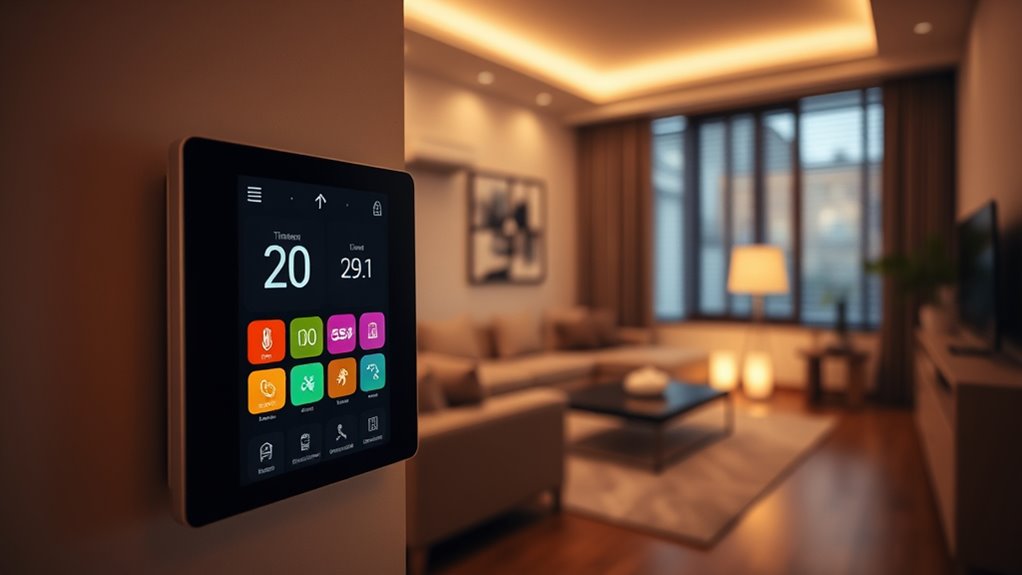
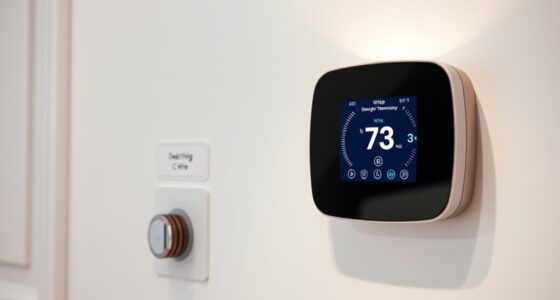
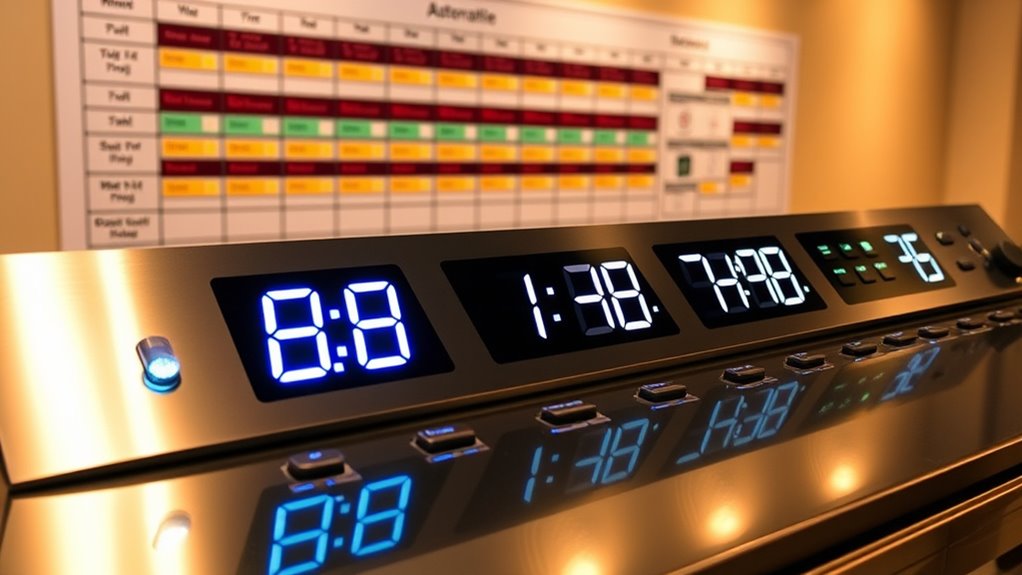
Timers and schedules are essential tools in home automation that help you manage your energy use effectively. With smart thermostats, you can set temperatures to adjust automatically during different times of the day, ensuring comfort without wasting energy. Lighting controls allow you to schedule lights to turn on or off based on your routines, preventing unnecessary illumination. These tools work together to optimize your home’s energy consumption seamlessly. By creating timers and schedules, you avoid the need to manually adjust devices, saving both time and money. Whether you’re away or asleep, these automation features maintain your desired environment efficiently. Implementing these systems means you’re always in control, reducing waste while enhancing convenience and comfort in your home. timers and schedules are also crucial for coordinating multiple devices, making your automation system more integrated and effective. Additionally, understanding how home automation integrates with energy management can further improve your household’s efficiency. Incorporating smart device integration allows for even more precise control and customization of your energy-saving routines, especially when paired with energy-efficient appliances.
How Sensors Enhance Energy Efficiency and Cost Savings

Sensors take automation a step further by providing real-time data that helps your home adapt dynamically to changing conditions. Motion detection sensors identify movement, turning lights or appliances on and off only when needed, reducing waste. Light sensors adjust indoor lighting based on natural sunlight, preventing unnecessary energy use. These sensors guarantee your home responds instantly to occupancy and ambient light levels, optimizing energy consumption. By automating lighting and device operation, you avoid leaving systems on when not in use, cutting your energy bills. Additionally, sensors can detect inactivity in rooms, prompting the system to turn off lights or appliances. This smart, responsive approach saves you money and promotes energy efficiency, with advanced sensor technology playing a crucial role in optimizing GMC tuning systems for better performance and fuel economy. Incorporating lifestyle strategies such as energy-conscious device use can further enhance your savings. Moreover, integrating automotive tuning systems with sensor data can further improve vehicle performance and efficiency.
Practical Tips for Implementing Automated Systems to Reduce Bills

To effectively reduce your energy bills with automation, start by evaluating your home’s specific needs and identifying areas where automation can make the biggest impact. Focus on integrating smart thermostats and voice activation to enhance convenience and efficiency. These tools help you control heating and cooling more precisely, avoiding waste. Additionally, stay informed about AI vulnerabilities and implement safety measures to protect your automated systems from potential security risks. Regularly assessing and rotating your automation settings can help prevent clutter buildup and ensure optimal performance. Incorporating energy-efficient appliances into your automation system can further optimize your energy savings. Being aware of personal debt forgiveness bills can also influence your financial planning, allowing you to allocate savings from automation towards debt reduction. Recognizing passive voice detection features in your automation tools can also help improve clarity and effectiveness in your system’s responses.
Frequently Asked Questions
How Do I Choose the Right Automation System for My Home?
To choose the right automation system, consider your home’s energy efficiency needs and how much user customization you want. Look for systems that allow you to easily set schedules or sensors tailored to your lifestyle. Prioritize options that integrate well with your existing devices, offer remote control, and help reduce energy waste. Doing so guarantees you maximize savings while enjoying a personalized and convenient home automation experience.
Are Automated Systems Compatible With Existing Smart Home Devices?
Yes, automated systems can be compatible with your existing smart home devices, but you should verify device compatibility first. Many systems support popular protocols like Zigbee or Z-Wave, making integration smoother. However, you might face integration challenges if your devices use different standards or proprietary technology. Before purchasing, verify compatibility and consider potential integration challenges to ensure your automation system works seamlessly with your current setup.
What Are the Initial Costs and Long-Term Savings of Automation?
Think of automation costs like planting a tree—you invest upfront, but reap the benefits later. Initial costs vary, but a thorough cost analysis shows automation might range from a few hundred to over a thousand dollars. Long-term savings come from enhanced energy efficiency, reducing your monthly bills markedly over time. While upfront expenses can seem high, improved energy management makes automation a smart investment for lower utility costs down the line.
How Secure Are Home Automation Systems Against Hacking?
Home automation systems are generally secure, but cybersecurity risks exist if you don’t take proper precautions. To prevent hacking, ensure your Wi-Fi network has a strong password, keep your software updated, and use two-factor authentication when available. Regularly change passwords and disable remote access features if you don’t need them. By staying vigilant and implementing hacking prevention measures, you greatly reduce the chances of cyberattacks on your smart home.
Can Automation Systems Be Customized for Specific Habits or Routines?
Yes, automation systems can be customized for your specific habits and routines. You can set up personalized routines that automatically adjust lighting, temperature, or appliances based on your daily schedule. Habit-specific automation makes your smart home more efficient and convenient, aligning with how you live. By tailoring these settings, you save energy and create a more comfortable environment, all while ensuring your automation system works seamlessly around your unique lifestyle.
Conclusion
By using timers to control your devices, sensors to monitor your environment, and schedules to automate routines, you create a smarter, more efficient home. These tools work together to save energy, cut costs, and simplify your life. Embrace automation to optimize your energy use, reduce your bills, and enhance comfort. When you harness timers, sensors, and schedules, you don’t just save money—you make your home smarter, more sustainable, and more responsive to your needs.