
As a homeowner, you should know that net metering lets you earn credits for excess solar energy you generate and send back to the grid. These credits help reduce your electricity bills, especially during cloudy days or at night. Your utility tracks the energy flow with a bi-directional meter, ensuring you get credited correctly. Understanding how your local policies and incentives work will help you maximize your savings. Keep exploring to discover how to make the most of net metering benefits.

Get backup power and energy gear delivered free with Prime
- Fast, free delivery on millions of items
- Prime Video, Amazon Music and more included
- Member-only deals all year
Key Takeaways
- Net metering allows homeowners to earn credits for excess solar energy fed back into the grid.
- Properly installed bi-directional meters track energy production and consumption accurately.
- Combining net metering with available incentives boosts solar investment savings and ROI.
- Understanding local policies and rate structures maximizes financial benefits from net metering.
- Excess credits can offset future bills or be paid out, reducing overall energy costs.
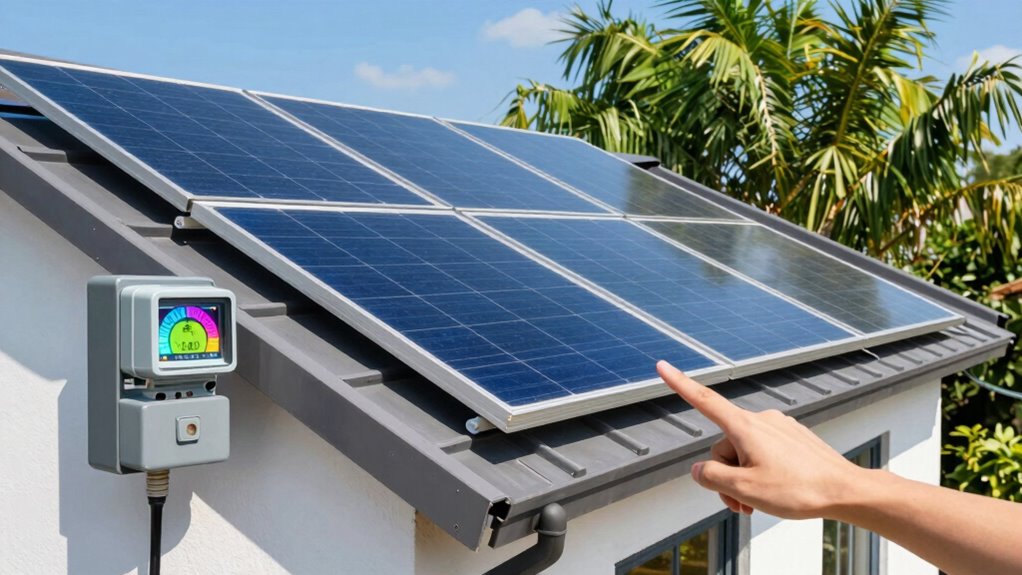
Have you ever wondered how solar panel owners can save money on their energy bills? One of the key ways is through understanding net metering, a system that allows you to earn credits for the excess energy your solar panels produce. When your solar system generates more power than you use during the day, that surplus isn’t wasted. Instead, it gets fed back into the grid connection, which effectively turns your home into a mini power plant. This process is made possible by your utility company’s net metering program, which tracks how much energy you supply to and draw from the grid. As a result, you can offset your electricity costs, sometimes even earning credits that reduce your monthly bill.
Getting started with net metering often involves exploring available solar incentives. These incentives can include tax credits, rebates, or other financial benefits designed to make solar installation more affordable. When combined with net metering, these incentives can markedly improve your return on investment. Many states and utility companies encourage solar adoption by offering attractive incentives, so it’s worth researching what’s available in your area. Once you’ve installed your solar panels and connected to the grid, your utility will typically set up a bi-directional meter. This meter tracks both the energy you consume from the grid and the excess energy you send back. During sunny days, your system might generate more electricity than your household needs, leading to credits that can be used during cloudy days or at night when your panels aren’t producing power.
Explore available solar incentives to boost your investment and maximize benefits with net metering and a bi-directional meter.
Understanding how the grid connection works is vital because it directly impacts your savings. When your system produces excess energy, the utility company credits your account, effectively reducing your overall energy costs. In some cases, if you produce more energy than you consume over the course of a billing cycle, you may even receive a payment or a rollover of credits to future bills. However, the specific rules and rates for net metering vary depending on your location and utility provider, so it’s essential to familiarize yourself with local policies. Additionally, some areas may have limits on how much energy you can feed back or restrictions on the size of your system, which could influence your solar plans.
Ultimately, understanding the basics of net metering, including how your solar incentives and grid connection work together, helps you maximize your savings and make informed decisions about your solar investment. It’s a smart way to reduce your reliance on traditional energy sources, lower your bills, and contribute to a cleaner environment.
bi-directional solar energy meter
As an affiliate, we earn on qualifying purchases.
As an affiliate, we earn on qualifying purchases.
Frequently Asked Questions
How Does Net Metering Affect My Property Taxes?
Net metering can impact your property taxes by increasing your property’s valuation, since solar systems add value to your home. However, some states offer tax incentives or exemptions that can offset this increase. You should check local regulations, as these incentives vary. While your property might be reassessed higher, tax credits or incentives could help reduce the overall tax burden, making solar investments more affordable.
Are There Any Restrictions on Installing Solar Panels for Net Metering?
Sure, if you enjoy jumping through hoops, installing solar panels for net metering might be your new favorite pastime. Restrictions often include specific installation requirements, such as panel placement and equipment standards, to qualify for solar panel incentives. Some areas might even limit panel size or demand official approvals. So, before you start dreaming of endless energy, double-check local regulations and verify your setup meets all necessary installation requirements.
What Happens if I Generate More Energy Than I Use?
If you generate more energy than you use, the excess gets sent back to the grid, earning you credits. To maximize benefits, consider energy storage options like batteries to store surplus power for later use. Keep in mind, regular system maintenance helps guarantee your solar setup operates efficiently, preventing issues that could reduce your energy production and savings. This way, you make the most of your solar investment.
Can Net Metering Be Used With Other Renewable Energy Systems?
Yes, net metering can work wonders with other renewable systems! Imagine harnessing solar, wind, or even small hydro power and feeding excess energy back into the grid—your home becomes a mini energy powerhouse. Battery storage plays a huge role, storing surplus for later use, while feed-in tariffs can boost your savings. Combining these systems maximizes your energy independence, slashes bills, and turns your home into a renewable energy champion!
How Do Net Metering Policies Differ Between States?
You’ll find that net metering policies vary widely between states due to different regulations and incentives. Some states have supportive policies with generous compensation rates, encouraging grid integration, while others have more restrictive policies. These policy variations influence how much you can offset your energy costs and how your solar system interacts with the grid. It’s essential to review your state’s specific regulations to maximize benefits and understand your rights.
As an affiliate, we earn on qualifying purchases.
Conclusion
Understanding net metering is your first step toward saving money and helping the environment. With the right knowledge, you can make smart decisions about installing solar panels and maximizing your energy savings. Remember, knowledge is power—don’t let the opportunity slip through your fingers. By grasping the basics, you’re better equipped to harness the sun’s energy and turn your home into a shining example of sustainability. The ball’s in your court now—seize the day!
solar panel inverter with net metering
As an affiliate, we earn on qualifying purchases.
As an affiliate, we earn on qualifying purchases.
solar energy incentives and rebates
As an affiliate, we earn on qualifying purchases.
As an affiliate, we earn on qualifying purchases.
Halloween Picks
halloween
As an affiliate, we earn on qualifying purchases.