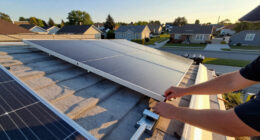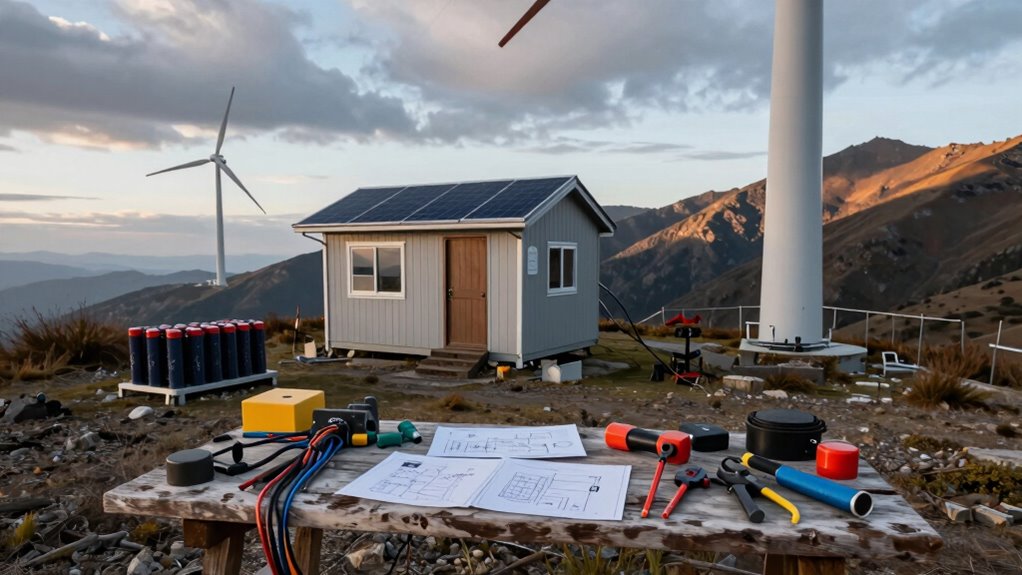

Off-grid power systems require more planning because you need to guarantee reliable energy without access to a centralized grid. You must account for resource variability, such as sunlight or wind fluctuations, and incorporate multiple backup options to prevent outages. Proper sizing and technology choices are essential to balance energy demands and resist seasonal or weather changes. If you want to understand how to design a resilient off-grid system, keep exploring the key factors involved.

Get backup power and energy gear delivered free — and shop member deals
- Fast, free delivery on millions of items
- Access to Prime Big Deal Days deals on October 6–7
- Prime Video, Amazon Music and more included
Key Takeaways
- Off-grid systems lack connection to a reliable external power supply, requiring precise sizing and backup strategies.
- Greater reliance on energy storage increases the complexity of ensuring continuous power.
- Resource variability (sunlight, wind) demands detailed planning for seasonal and weather fluctuations.
- Equipment selection must be optimized for local conditions to prevent inefficiency and high maintenance costs.
- Ensuring system resilience and redundancy is essential, as there’s no grid support during outages or failures.
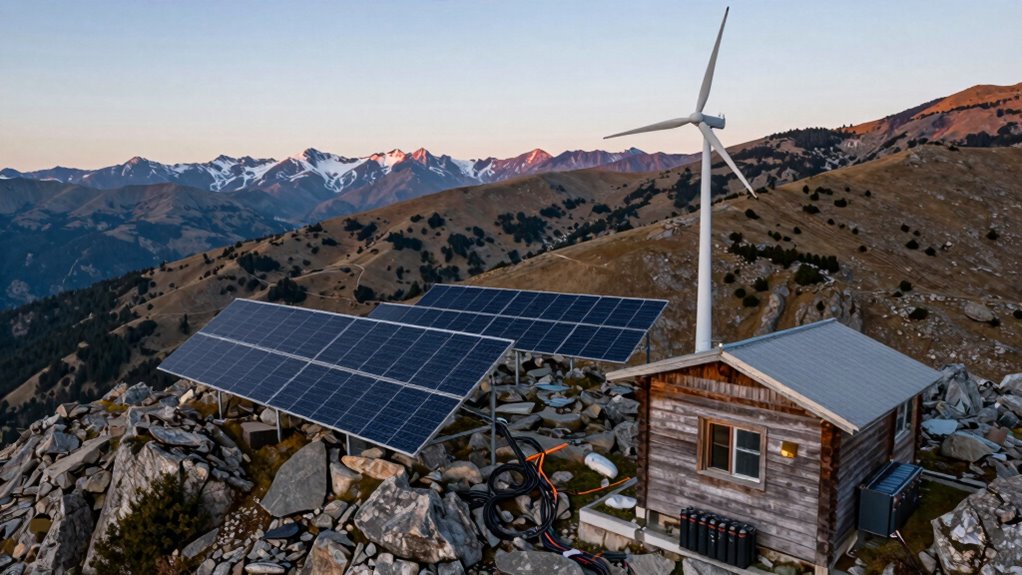
Have you ever considered how to guarantee a reliable power supply in remote or off-grid locations? If so, you already know that off-grid power systems require careful planning that goes beyond what’s needed for grid-connected areas. Unlike traditional power networks, where the infrastructure is maintained and supported by utility companies, off-grid setups depend entirely on your own resources. This means you need to think about every detail, from energy generation to storage, to ensure continuous power. One key element is energy storage, which acts as your backup, providing power when your primary sources aren’t producing enough. Without sufficient energy storage, even a small drop in sunlight or wind can cause outages, so you must size your batteries appropriately.
Ensuring continuous power off-grid requires careful energy storage sizing and reliable backup systems.
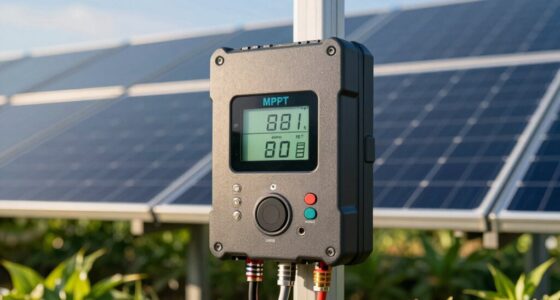
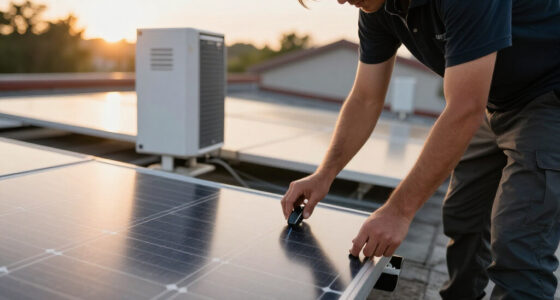
System redundancy is equally critical. Off-grid systems should incorporate multiple layers of backup, so if one component fails, another can take over without causing a blackout. For example, combining solar panels with wind turbines creates a more resilient setup. If the sun isn’t shining, wind can still generate electricity, ensuring a steady supply. This redundancy isn’t just about having extra equipment; it’s about designing a system that can adapt to unpredictable conditions. You want your power system to be flexible enough to handle fluctuations in resource availability without risking interruption. Incorporating reliable tracking gear can help optimize energy use and ensure your systems operate efficiently in variable conditions. Additionally, selecting appropriate system components can significantly impact the overall reliability and ease of maintenance.
Planning for off-grid power also involves understanding your energy needs precisely. You need to calculate your daily consumption, factoring in all appliances and devices you’ll use. Once you know this, you can select the right combination of energy generation sources and storage solutions. It’s tempting to over-oversize your system to cover future needs, but that can be inefficient and costly. Instead, focus on creating a balanced system, emphasizing reliability through energy storage and system redundancy. Incorporating technology choices for your system can greatly influence long-term reliability and maintenance requirements. Additionally, considering the local climate and weather patterns can help you design a system capable of handling seasonal variations and extreme conditions. Properly assessing and planning for energy fluctuations ensures your system remains resilient year-round, even during unexpected weather events.
As an affiliate, we earn on qualifying purchases.
Frequently Asked Questions
How Do I Estimate My Off-Grid Energy Needs Accurately?
To estimate your off-grid energy needs accurately, start with a detailed load analysis of all your appliances and devices. Track their energy consumption over a typical day, noting usage times and wattage. Add up the total energy required to determine your daily load. This helps you plan your energy system effectively, ensuring you have enough power storage and generation capacity to meet your actual needs without shortages.
What Are the Best Renewable Sources for Off-Grid Power?
Imagine the sun’s warm rays dancing on your panels and wind whispers through the trees—these are your best renewable sources. Opt for high solar efficiency panels to maximize sunlight, and consider wind turbines to harness variability in gusts. Solar provides steady power during clear days, while wind can fill in gaps when the sun sets or clouds roll in. Together, they create a resilient off-grid energy system you can rely on.
How Do I Ensure Battery Longevity and Maintenance?
To guarantee battery longevity and maintenance, you should regularly check and balance your batteries, keeping an eye on voltage and electrolyte levels. Follow best practices for battery maintenance, like keeping terminals clean and ensuring proper charging cycles. Implement longevity tips such as avoiding deep discharges and overcharging. Properly storing batteries during off-seasons also helps extend their lifespan, ensuring your off-grid power system remains reliable and efficient over time.
What Backup Options Are Reliable for Off-Grid Systems?
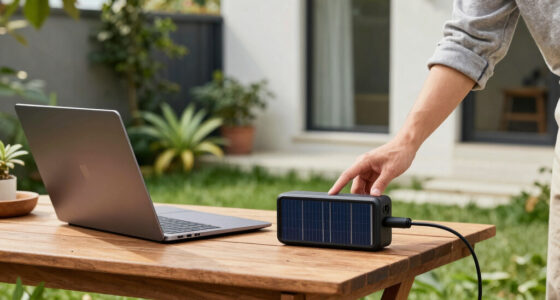
Think of backup options as your safety net in a high-wire act. For off-grid systems, reliable backups include gas generators, which provide emergency preparedness and steady power during outages, and portable solar panels for flexible power distribution. You might also consider wind turbines if your location suits. These options guarantee you stay connected and powered, even when your main system falters, making your off-grid setup resilient and dependable.
How Does Seasonal Weather Affect Off-Grid Power Planning?
Seasonal weather greatly impacts your off-grid power planning. You need to account for seasonal fluctuations in sunlight, wind, or rainfall, which can reduce energy production during certain times of the year. To guarantee weather resilience, you should size your system with extra capacity, store sufficient backup energy, and plan for alternative sources like generators. Proper planning helps maintain consistent power supply despite unpredictable seasonal changes.
off-grid wind turbine with battery storage
As an affiliate, we earn on qualifying purchases.
As an affiliate, we earn on qualifying purchases.
Conclusion
When you choose off-grid power, careful planning is essential to avoid surprises. For instance, imagine building a tiny cabin in the woods—without a reliable solar and battery system, you might face days without power. By evaluating your energy needs, understanding seasonal changes, and investing in quality equipment, you guarantee your off-grid setup works smoothly year-round. Thoughtful planning keeps your remote lifestyle comfortable and sustainable, making your off-grid dream a reliable reality.
off-grid energy backup generator
As an affiliate, we earn on qualifying purchases.
As an affiliate, we earn on qualifying purchases.
off-grid solar battery storage system
As an affiliate, we earn on qualifying purchases.
As an affiliate, we earn on qualifying purchases.
Fall Picks
fall essentials
As an affiliate, we earn on qualifying purchases.