TL;DR

Get backup power and energy gear delivered free with Prime
- Fast, free delivery on millions of items
- Prime Video, Amazon Music and more included
- Member-only deals all year
Portable solar power banks range from small phone chargers with tiny panels to large units that can run laptops. Their effectiveness depends on capacity, panel size, weather, and your needs. Good choices require understanding these factors and matching them to your activities.
Imagine you’re miles from civilization, surrounded by nature, with your phone blinking low on power. You pull out a sleek portable solar power bank, and suddenly, you’re not tethered to the grid anymore. But how do these devices really work, and which one suits your adventure?
Whether you’re hiking, camping, or just prepping for emergencies, understanding the ins and outs of portable solar power banks can save you time, money, and frustration. In this guide, you’ll learn the key differences, real-world performance insights, and how to pick the best model for your needs.
Built-in solar panels are mainly for emergency top-ups; don’t rely on them for rapid recharging.
Matching your panel wattage to your battery capacity ensures more efficient solar recharging.
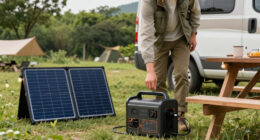
Larger power stations with foldable panels are better suited for camping and off-grid use than small, integrated units.
Weather, angle, and shading significantly impact actual solar output, so plan for less-than-ideal conditions.
Prioritize safety features and certifications to avoid faulty or unsafe models, especially for outdoor use.
What Are the Different Types of Portable Solar Power Banks?
Portable solar power banks fall into two broad categories. First, you have the tiny, pocket-sized units with a small built-in panel, mainly designed to juice up your phone slowly over days. Second, larger portable power stations paired with foldable solar panels can run laptops, cameras, or even small appliances.
Imagine a small power bank with a 5 W panel. It might take several days of good sunlight to fully recharge. Meanwhile, a 200 W foldable panel connected to a power station can bring a dead unit back to life in a few hours under ideal conditions.
Understanding these differences is crucial because it directly impacts your expectations and planning. Small units are excellent for emergency backups or occasional use, but if you need to recharge multiple devices quickly or power higher-wattage equipment, larger systems are more practical. The tradeoff often involves size, weight, and cost—larger systems tend to be bulkier and more expensive but offer greater reliability and faster recharging capabilities. Knowing what fits your activity level and power needs helps you avoid disappointment and ensures you invest in a system that truly supports your adventures or emergency preparedness.
portable solar power bank for camping
As an affiliate, we earn on qualifying purchases.
As an affiliate, we earn on qualifying purchases.
How Capacity, Wattage, and Real-World Solar Performance Actually Work Together
Understanding how capacity, wattage, and real-world solar performance interact is essential for selecting an effective portable solar power setup. Let’s start by defining these concepts and then see how they influence each other in practical use.
foldable solar panel power station
As an affiliate, we earn on qualifying purchases.
As an affiliate, we earn on qualifying purchases.
Defining Key Terms
Battery Capacity: Measured in milliamp-hours (mAh) for small units or watt-hours (Wh) for larger ones. For example, a 20,000 mAh power bank roughly stores 74 Wh. However, due to voltage conversion and internal losses, only about 50–60 Wh may actually reach your device. This determines how many charges you can get from a single unit before needing a recharge.
Solar Panel Wattage: Indicates the maximum power the panel can produce under ideal conditions. A 20 W panel, for instance, is the theoretical maximum. In real-world conditions—cloud cover, angle, shading—its output can be significantly lower, perhaps only 10–15 W, which affects how quickly your power bank recharges.
Real-World Performance: Actual output is often less than lab-rated specs due to environmental factors like cloudiness, shading, heat, and orientation. For example, a 50 W panel could only produce 20–30 W in overcast weather or when angled incorrectly. This variability can impact your recharge times and power availability.
solar phone charger with high capacity
As an affiliate, we earn on qualifying purchases.
As an affiliate, we earn on qualifying purchases.
Applying the Concepts
Matching capacity with solar input is like trying to fill a bucket with a tiny hose—slow and frustrating if mismatched. To optimize your setup, choose a panel wattage that aligns with your power needs and the capacity of your battery. For instance, if you want to recharge a 74 Wh power bank quickly, you’ll need a panel that can produce enough power within your available sunlight hours.
Consider environmental factors—if you often camp in cloudy areas, investing in a higher wattage panel or larger capacity system provides a buffer against reduced output. This ensures you stay connected and powered, even in less-than-ideal conditions.
As an affiliate, we earn on qualifying purchases.
Practical Tips for Optimization
- Position your panels to maximize sunlight exposure—avoid shading and angle panels toward the sun.
- Use high-quality, certified panels to ensure safety and performance.
- Combine larger capacity batteries with higher wattage panels for faster recharging times.
By understanding these key factors and their interactions, you can tailor a solar power system that meets your specific needs, providing reliable energy for your adventures or emergencies.
Conclusion
Choosing a portable solar power bank isn’t just about capacity or size. It’s about matching the device to your lifestyle, expectations, and environment. A reliable setup can keep your gear alive in the wild, while the wrong choice leaves you powerless when it matters most.
Think about where you’ll use it, what devices you need, and how much sunlight you can count on. With that clarity, you’ll find a solar bank that truly powers your adventures—without surprises or stress. After all, the best power bank is the one you trust to work when you need it most.
Fall Picks
fall essentials
As an affiliate, we earn on qualifying purchases.