
TL;DR

Get backup power and energy gear delivered free with Prime
- Fast, free delivery on millions of items
- Prime Video, Amazon Music and more included
- Member-only deals all year
Qcells plans to open a gigawatt-scale factory for perovskite-silicon tandem solar panels in 2029, according to its global chief technology officer. The company has tested full-size panels and says they passed industry-standard quality testing, but long-term field durability and commercial readiness remain unproven.
Qcells plans to open a gigawatt-scale factory in 2029 to make perovskite-silicon tandem solar panels, the company’s global chief technology officer, Danielle Merfeld, told Canary Media. The proposed factory would mark a move toward large-scale production of a technology that has reached high efficiency in laboratories but has yet to establish long-term commercial durability.
Qcells has worked on tandem cells since 2016. It opened a pilot research and development line in Germany in 2022, then launched a 40-megawatt pilot line in South Korea in 2024 that produces full-size panels. Merfeld told Canary Media that Qcells has also installed panels at company test sites over the past year. The company has not released field-degradation data.
In 2024, an independent body confirmed a 28.6% efficiency rate for a standard-size silicon cell layered with perovskites, according to the report. Qcells also said in July that its tandem panel passed testing against quality standards set by UL and the International Electrotechnical Commission. Those accelerated tests assess performance after physical stresses; they do not establish how a panel will perform across decades of outdoor use.
The planned factory would put Qcells in a field that includes startups Tandem PV, Oxford PV and Caelux. Tandem PV has told Canary Media it is targeting 2028 to build a gigawatt-scale factory. China’s GCL said it opened a 1-gigawatt factory in Kunshan last year, though the report notes that public support available to Chinese manufacturers differs from support in other countries.
More Power From Each Panel
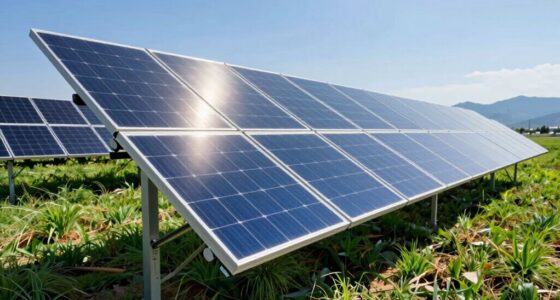
Tandem panels layer perovskites over conventional silicon cells to capture more sunlight and convert it into electricity. If manufacturers can make the technology durable and affordable at scale, it could produce more power from the same panel area. That could help installers generate more electricity from a fixed rooftop or parcel of land, or meet a target with fewer panels and less space.
Higher output per panel could also reduce some costs beyond the panels themselves, including land, wiring, labor and auxiliary equipment, the Canary Media report says. Those potential savings depend on the technology reaching reliable mass production; the efficiency figures alone do not show whether tandem systems will be cost-competitive in commercial projects.
The factory plan also puts focus on a manufacturing question: whether an established solar producer can translate lab performance into a product that lenders and project developers are willing to back. Financing typically depends on confidence in a panel’s useful life, making durability data as important as record efficiency.
perovskite silicon tandem solar panels
As an affiliate, we earn on qualifying purchases.
As an affiliate, we earn on qualifying purchases.
From Pilot Lines to Production
Conventional high-performance solar panels convert about 24% of sunlight into electricity, according to the source report. Merfeld said efficiency has risen by roughly half a percentage point each year over the past decade. She expects conventional panels to improve before 2029, while saying mass production could enable further process improvements for tandem products.
Perovskite-silicon tandems have posted much higher laboratory efficiency records, but the report says perovskite layers can degrade too quickly outdoors. Several companies are working to address that challenge. Qcells’ approach draws on its existing manufacturing operations and experience studying how light, heat and moisture affect solar cells.
The company’s milestones so far are not the same as a commercial warranty or proof of decades of operation. The source report says no tandem panel has operated for more than 20 years, so accelerated tests are being used as an early indicator for project financiers while field evidence accumulates.
high efficiency solar panels for home
As an affiliate, we earn on qualifying purchases.
As an affiliate, we earn on qualifying purchases.
Durability Still Needs Proof
Long-term outdoor performance remains unresolved. Qcells has not disclosed the perovskite ingredients it uses or shared degradation data from its field testing, according to the report. It is also not clear whether the company’s planned factory will proceed on schedule, what it will cost, or when it could begin selling panels under a commercial warranty.
Passing accelerated quality tests is a meaningful step, but it is not equivalent to decades of field operation. The source report says no tandem panel has yet operated for more than 20 years. Details on expected production volumes, panel pricing and factory location were not provided in the material.
solar panel durability testing equipment
As an affiliate, we earn on qualifying purchases.
As an affiliate, we earn on qualifying purchases.
Field Results and Factory Plans
Qcells’ next evidence will come from continued field testing and further information about panel degradation. The company has said it wants to open the gigawatt-scale factory in 2029; the report does not identify a construction timetable or a final investment decision.
Developers and lenders will be watching for longer-term performance results, a clear commercial warranty and evidence that tandem panels can be manufactured consistently at scale. Competing plans, including Tandem PV’s 2028 target, could add pressure to demonstrate both product reliability and financing readiness.
As an affiliate, we earn on qualifying purchases.
Key Questions
What is Qcells planning to build?
Qcells plans to open a gigawatt-scale factory in 2029 to produce perovskite-silicon tandem solar panels, according to its global chief technology officer.
What are tandem solar panels?
They pair conventional silicon cells with a perovskite layer to capture more sunlight and aim to produce more electricity from a panel of the same size.
Has Qcells proved the panels will last for decades?
No. Qcells says its panel passed accelerated quality testing and has been installed at company test sites, but it has not published field-degradation data. The report says no tandem panel has operated for more than 20 years.
How efficient is Qcells’ tandem technology?
The report says an independent body confirmed a 28.6% efficiency rate in 2024 for a standard-size silicon cell layered with perovskites. That figure is a reported record for the cell tested, not a guarantee of commercial panel performance.
Are other companies planning large tandem factories?
Yes. Tandem PV told Canary Media it is targeting a gigawatt-scale factory in 2028. China’s GCL said it opened a 1-gigawatt factory in Kunshan last year; the report cautions that public support there differs from that available in other countries.
Source: rss
Halloween Picks
halloween
As an affiliate, we earn on qualifying purchases.