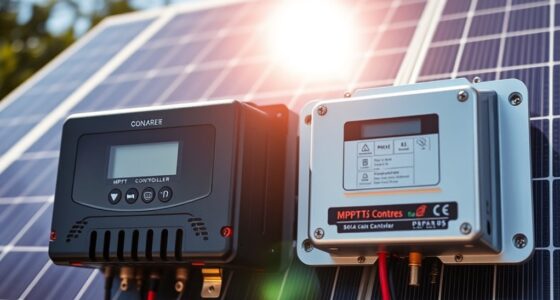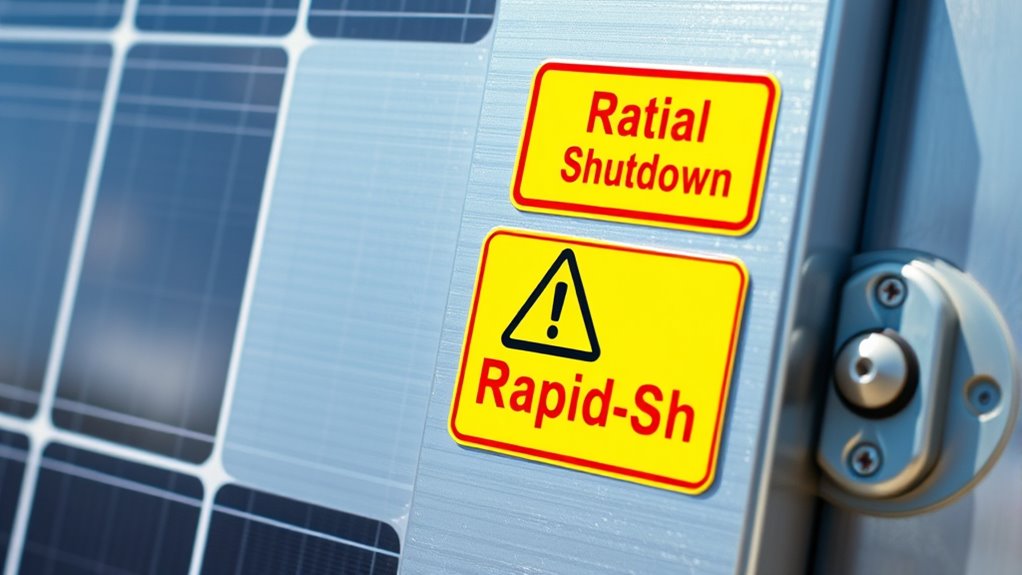

Rapid shutdown labels must clearly state “Rapid Shutdown” in large, bold letters for quick identification. They should include simple instructions on how to disconnect the system, such as “Turn off inverter” or “Press disconnect switch.” High-contrast colors and durable materials are essential to maintain the label visible and legible in various conditions. Proper placement near disconnects ensures responders locate them easily. To learn more about what these labels should contain, keep exploring the key safety standards.

Get backup power and energy gear delivered free — and shop member deals
- Fast, free delivery on millions of items
- Access to Prime Big Deal Days deals on October 6–7
- Prime Video, Amazon Music and more included
Key Takeaways
- Clearly display the words “Rapid Shutdown” for quick identification.
- Include simple instructions on how to disconnect the system safely.
- Provide contact information for troubleshooting or assistance.
- State system voltage levels and power status clearly.
- Use high-contrast colors and large fonts for maximum visibility.

Have you ever wondered how emergency responders quickly identify and shut down solar power systems? It’s all about rapid shutdown labels, which play a fundamental role in ensuring safety during emergencies. These labels are designed to communicate essential information clearly and quickly, helping responders understand how to de-energize a solar system safely. When it comes to installation safety, these labels must be straightforward, durable, and highly visible. They should withstand weather conditions, UV exposure, and physical wear, so they remain legible over time. Proper label placement is also essential; they need to be in accessible locations where responders can see them immediately, such as near the main electrical disconnect or on the inverter. This helps prevent delays during critical moments, ensuring a swift response that minimizes risks.
Label compliance is a key factor in the effectiveness of rapid shutdown labels. Regulations and standards, like those from the NEC (National Electrical Code), specify exactly what these labels must communicate. They often include instructions on how to disconnect the system, the voltage levels involved, and contact information for troubleshooting or further assistance. Complying with these standards isn’t just about legal adherence; it’s about making sure that anyone working on or near the system can understand the instructions without confusion. In many cases, non-compliance can lead to dangerous situations, delays in emergency response, or even legal penalties. That’s why manufacturers and installers need to pay close attention to the specific language and design requirements of the labels, ensuring they meet all relevant codes and safety guidelines. Additionally, understanding high-tech vaping innovations can influence the design of safety labels by integrating smarter, more visible features.
When installing these labels, keep in mind the importance of clarity and simplicity. Use large, bold fonts and high-contrast colors so that the information stands out and can be read quickly, even from a distance. The labels should include the words “Rapid Shutdown” prominently, along with concise instructions for system disconnection. Additional details, such as contact info or system voltage, should be included but not clutter the label. Ensuring label compliance also means verifying that the labels are installed in accordance with manufacturer instructions and local codes. Doing so guarantees that the labels will perform their safety function effectively and that emergency responders can rely on them during urgent situations. Ultimately, well-designed, compliant rapid shutdown labels are essential for protecting lives and property during emergencies involving solar power systems.
As an affiliate, we earn on qualifying purchases.
Frequently Asked Questions
Are Rapid Shutdown Labels Legally Required in All States?
You need to know that rapid shutdown labels aren’t legally required in all states. State regulations vary, so some places mandate specific label design and content, while others don’t. Check your local codes to guarantee compliance. In states with strict rules, installing proper labels helps you meet safety standards and avoid penalties. Always stay updated on your state’s requirements to keep your system compliant and ensure first responders can act safely.
What Materials Are Best for Durable Rapid Shutdown Labels?
Think of your rapid shutdown labels as the sturdy backbone of safety on your solar system. To guarantee durability considerations and adhesive effectiveness, opt for materials like polyester or vinyl that withstand weather, UV rays, and temperature shifts. These materials are like tough armor, sticking firmly and resisting fading or peeling over time. Choosing the right durable, weatherproof materials guarantees your labels stay clear and effective, even in the harshest conditions.
How Often Should Rapid Shutdown Labels Be Replaced or Inspected?
You should inspect your rapid shutdown labels annually to guarantee label durability and readability. Replace them immediately if they become faded, peeling, or damaged, as clear signage is critical for safety. Regular inspections help confirm the labels remain effective during emergencies. Maintaining proper inspection frequency and replacing damaged labels promptly ensures compliance with safety standards and keeps everyone informed of shutdown procedures.
Can Labels Be Customized for Different Solar System Setups?
Yes, you can customize rapid shutdown labels for different solar system setups. Just make certain your custom label designs follow the label placement guidelines to ensure visibility and compliance. You should consult your local electrical codes and manufacturer recommendations to make sure your custom labels meet safety standards. Proper placement and clear, legible wording help ensure that everyone easily understands the shutdown instructions, maintaining safety during emergencies.
Are There Specific Color Codes Mandated for Rapid Shutdown Labels?
Did you know that clear visibility of labels can reduce electrical accidents by up to 20%? For rapid shutdown labels, there are no mandated color codes, but adherence to color standards enhances label visibility. Bright colors like red, yellow, or orange are recommended because they stand out against various backgrounds. Using consistent color standards helps make certain that emergency responders quickly identify shutdown points, improving safety and response times.
emergency solar disconnect labels
As an affiliate, we earn on qualifying purchases.
As an affiliate, we earn on qualifying purchases.
Conclusion
Remember, clear and compliant rapid shutdown labels are like gentle guides, ensuring everyone stays safe without confusion. By choosing words wisely and keeping labels straightforward, you help create an environment where safety is naturally prioritized. Think of these labels as friendly reminders that encourage responsible actions without sounding stern. When everyone understands what’s needed, you foster a safer space for all. Ultimately, well-crafted labels gently steer us toward safer, more confident solar power use.
As an affiliate, we earn on qualifying purchases.
solar panel disconnect switch labels
As an affiliate, we earn on qualifying purchases.
As an affiliate, we earn on qualifying purchases.
Fall Picks
fall essentials
As an affiliate, we earn on qualifying purchases.