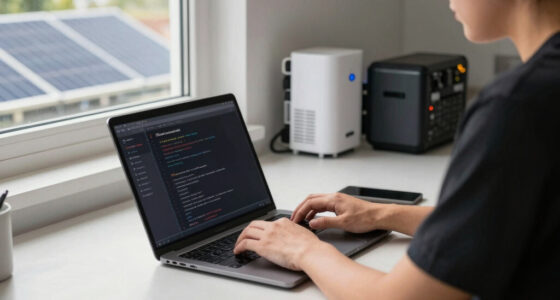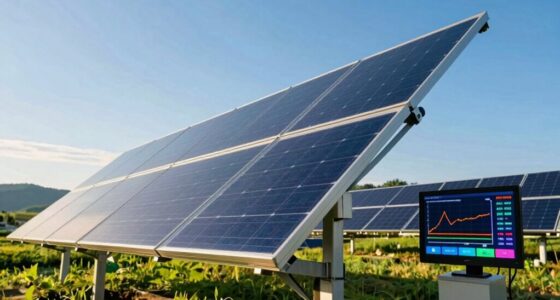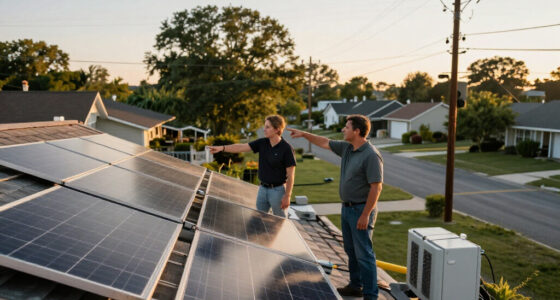
Each month, you should monitor your solar system’s key metrics like panel efficiency to spot performance drops, check inverter performance for faults, compare actual output with expectations, and review weather data and system health. Keep an eye on temperature effects and external factors like shading or debris. Regular checks help prevent costly issues and keep your system running smoothly. By staying attentive to these areas, you’ll gain a clearer picture of your system’s overall health and how well it’s performing.

Get backup power and energy gear delivered free with Prime
- Fast, free delivery on millions of items
- Prime Video, Amazon Music and more included
- Member-only deals all year
Key Takeaways
- Track solar panel efficiency trends to identify performance declines over time.
- Review inverter status for warning signs or error messages indicating potential faults.
- Compare actual system output with expected values to detect anomalies or shading issues.
- Monitor temperature and weather data to understand environmental impacts on energy production.
- Assess overall system health metrics to identify early signs of equipment issues or maintenance needs.
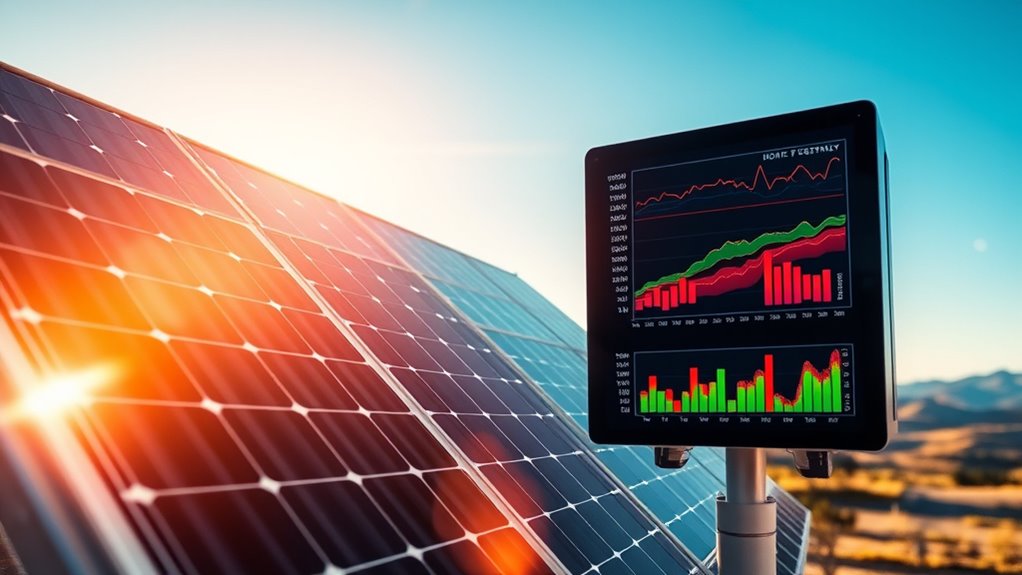
Solar monitoring data is essential for understanding and enhancing the performance of solar energy systems. When you review this data regularly, you’re better equipped to identify issues early, maximize energy output, and guarantee your system runs smoothly. One of the key aspects to keep an eye on is solar panel efficiency. This measures how effectively your panels convert sunlight into electricity. Over time, efficiency can decline due to dirt buildup, shading, or aging panels. By monitoring solar panel efficiency monthly, you can spot when performance drops below expected levels and take corrective actions, such as cleaning panels or trimming nearby trees. Tracking these changes helps you maintain ideal energy production and prevent costly repairs down the line.
Regularly monitoring solar panel efficiency helps maintain optimal energy output and prevent costly repairs.
In addition to solar panel efficiency, inverter performance is equally critical. The inverter is the heart of your solar system—converting DC electricity from the panels into usable AC power for your home or business. If the inverter isn’t functioning properly, your system’s output will suffer, even if your panels are performing well. Regularly reviewing inverter performance data allows you to catch faults early, such as warning lights, error messages, or drops in output that don’t align with sunlight conditions. Addressing inverter issues promptly ensures you avoid significant power losses and prolong the lifespan of your equipment.
Beyond efficiency and inverter health, it’s important to monitor the overall system output against expected values each month. Comparing actual energy production with projections helps you understand if your system is working as intended or if external factors, like shading or weather anomalies, are affecting performance. If you notice a sudden drop in output that doesn’t match seasonal patterns, it’s a sign to investigate further—perhaps there’s debris on your panels, shading from new obstructions, or equipment malfunction. Additionally, understanding system health metrics can help you pinpoint underlying issues before they escalate.
Temperature data is another useful metric to review monthly. High temperatures can reduce solar panel efficiency, so tracking ambient and panel surface temperatures can inform maintenance schedules or system adjustments. Also, keeping an eye on weather patterns and sunlight hours gives context to your energy data, helping you interpret fluctuations more precisely.
As an affiliate, we earn on qualifying purchases.
Frequently Asked Questions
How Often Should I Calibrate My Solar Monitoring System?
You should calibrate your solar monitoring system at least once a year to guarantee sensor calibration remains accurate. Regular calibration helps maintain data consistency, so your readings stay reliable over time. Keep an eye on any unusual fluctuations or discrepancies in your data, which might indicate the need for more frequent calibration. Consistent calibration prevents errors, ensuring you get accurate insights into your solar system’s performance and energy production.
What Are Common Signs of Equipment Failure in Solar Monitoring?
You’ll notice equipment alerts like sudden drops in energy production or inconsistent readings, which often signal failure. About 60% of system diagnostics reveal issues like sensor malfunctions or inverter faults early on. Keep an eye out for erratic data, warning lights, or unusual temperature spikes. Addressing these signs promptly helps prevent costly repairs and maximizes your solar system’s efficiency. Regular monitoring guarantees you catch problems before they escalate.
Can Weather Changes Affect Solar Data Accuracy?
Weather patterns and seasonal variations can definitely affect your solar data accuracy. Cloud cover, rain, snow, and fog reduce sunlight reaching your panels, leading to lower energy output readings. Sudden weather changes can cause fluctuations that might seem like equipment issues, but they’re actually weather-related. To maintain accurate monitoring, account for these variations and compare data over time, recognizing typical seasonal patterns. This helps you distinguish between weather effects and actual system performance problems.
How Do I Interpret Unexpected Drops in Energy Production?
A sudden drop in energy production can feel like the sky is falling, but don’t panic. You should first check for performance anomalies or data discrepancies that might be causing the issue. Weather changes, shading, or equipment issues can all impact output. Review recent data closely and compare it to historical trends. Identifying the root cause guarantees you can address problems quickly and keep your solar system running at peak efficiency.
What Maintenance Is Recommended for Long-Term Data Reliability?
To guarantee long-term data reliability, regularly inspect your system hardware for any signs of wear or damage, and clean sensors and connections to prevent data inaccuracies. Keep your software updated to the latest versions, as updates often include bug fixes and improvements. Scheduling routine maintenance checks and calibrations helps catch potential issues early, ensuring your solar monitoring system continues to provide accurate, reliable data over time.
As an affiliate, we earn on qualifying purchases.
Conclusion
By regularly reviewing your solar monitoring data, you gain control over your energy use, turning numbers into insights. Just as a compass guides a traveler through unknown terrain, these metrics steer you toward the best performance. Don’t let your system operate blindly—stay informed and proactive. In a world driven by data, the true power lies in your hands. Watch your numbers monthly, and watch your efficiency soar, transforming potential into real savings.
solar system performance monitor
As an affiliate, we earn on qualifying purchases.
As an affiliate, we earn on qualifying purchases.
As an affiliate, we earn on qualifying purchases.
Fall Picks
fall essentials
As an affiliate, we earn on qualifying purchases.