
Ceiling fan boxes aren’t the same as standard boxes because they are built to support the heaviness and movement of fans. They have reinforced brackets and stronger materials like metal, ensuring safety and durability. Standard boxes aren’t designed to handle that kind of weight or motion and could pull loose over time. Knowing the differences helps keep your installation safe and secure—stick around to learn more about what makes fan boxes unique.

Get backup power and energy gear delivered free — and shop member deals
- Fast, free delivery on millions of items
- Access to Prime Big Deal Days deals on October 6–7
- Prime Video, Amazon Music and more included
Key Takeaways
- Ceiling fan boxes are reinforced and made from stronger materials to support the weight and movement of fans.
- They have multiple mounting points for secure attachment to ceiling joists or support brackets.
- Standard boxes are not designed to handle the heavy load or dynamic forces of ceiling fans.
- Fan boxes ensure proper wiring support to prevent strain on electrical connections.
- Using the correct fan box ensures safety, code compliance, and long-term durability of the installation.
Have you ever wondered how to securely install a ceiling fan? It’s not just about attaching blades; it’s about making certain the entire fixture is safely supported and properly wired. That’s where the difference between ceiling fan boxes and standard electrical boxes becomes critical. Standard boxes are designed mainly for lighting fixtures and small electrical devices, but they don’t always provide the necessary support for a heavy ceiling fan. Ceiling fan boxes are built specifically for this purpose, offering added strength and stability to handle the weight and movement of a fan. If you try to use a regular box, you risk it pulling loose or causing damage, which can be dangerous.
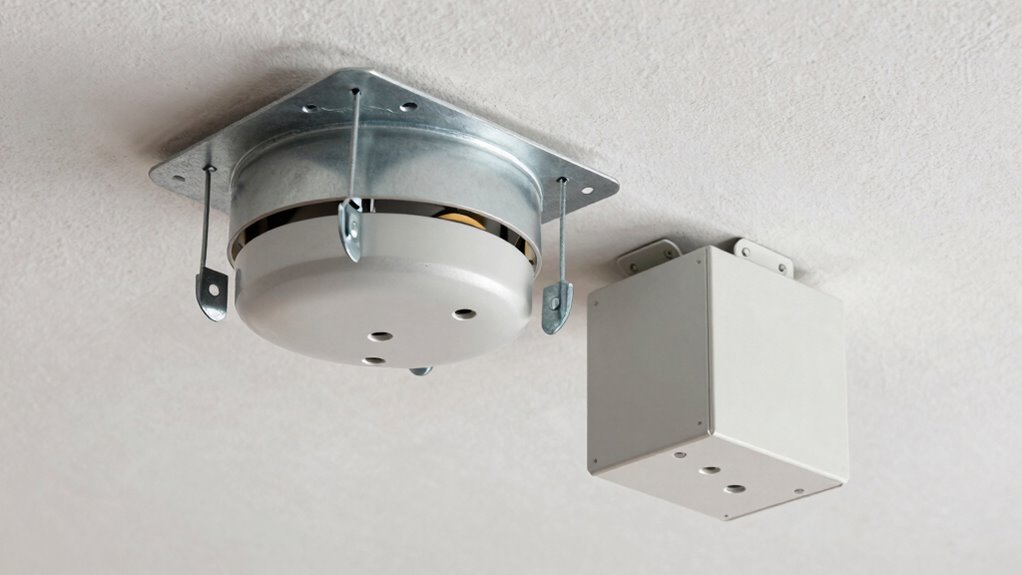
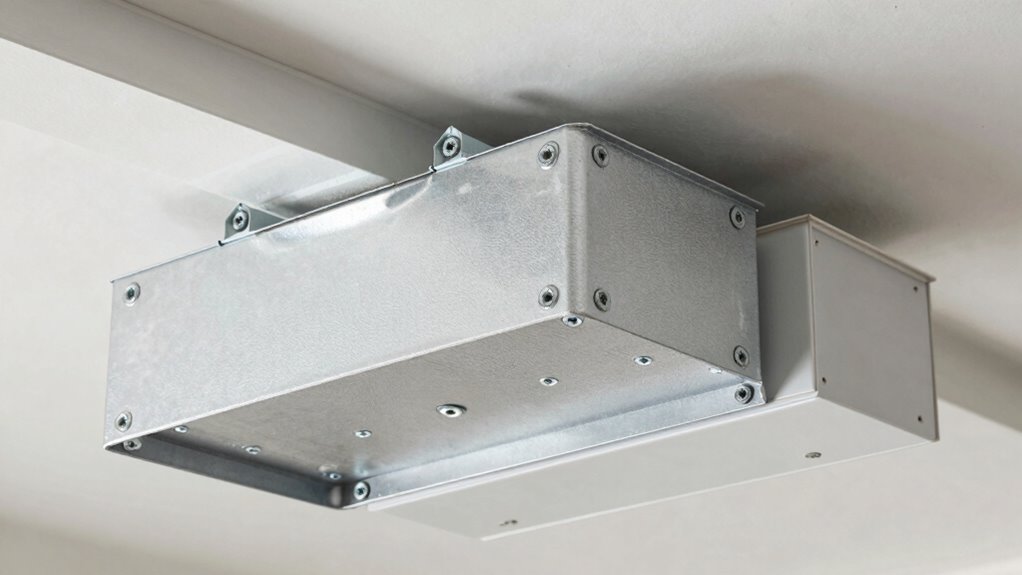
Ceiling fan boxes are constructed from stronger materials—often metal—and feature reinforced mounting brackets that distribute the weight evenly. Unlike standard boxes, which are typically mounted directly to a ceiling joist or drywall, fan boxes are designed to be securely fastened to the ceiling joist or a sturdy support bracket. This extra reinforcement guarantees that the box can withstand the constant motion and weight of the fan blades without sagging or pulling away over time. When installing a ceiling fan, you’ll also need to think about the electrical wiring. Fan-specific boxes usually have multiple mounting points or brackets that help manage the electrical wiring safely, preventing strain on the connections. Additionally, supporting heavy fixtures with the correct box ensures safety and long-term durability. Properly rated electrical boxes are essential for compliance with safety standards and to prevent potential hazards.
Lighting fixtures and ceiling fans may both require electrical wiring, but their support needs differ markedly. Lighting fixtures are generally lighter and don’t exert as much force on their mounting points, so standard boxes often suffice. However, ceiling fans are much heavier and have moving parts, which can generate additional stress on the box. Using a standard box for a ceiling fan can lead to unsafe situations like loose wiring connections or even the fixture falling. That’s why a dedicated ceiling fan box, designed to handle the weight and dynamic forces, is crucial for a safe and durable installation. Proper support and building codes play a significant role in ensuring the safety of ceiling fan installations. Additionally, understanding the material composition of the box can help select the most suitable option for different ceiling types and environments. Furthermore, selecting the right box can prevent installation issues and ensure the fixture remains securely mounted over time.
As an affiliate, we earn on qualifying purchases.
Frequently Asked Questions
Can Ceiling Fan Boxes Support Additional Weight Over Time?
Ceiling fan boxes can support additional weight over time if they have the right weight capacity and are made from durable materials. You should check the box’s specified weight limit, verifying it’s rated for ceiling fans. High-quality, sturdy materials like metal or reinforced plastic enhance durability. Proper installation also matters; securely fastening the box to the ceiling joist ensures it can handle the fan’s weight and any added load over time.
Are Ceiling Fan Boxes Compatible With All Ceiling Fan Models?
Coincidentally, most ceiling fan boxes are compatible with various models, including those designed for light fixtures, as long as they meet weight and size specifications. You should check the fan’s mounting requirements and confirm the electrical wiring matches the box’s capacity. While many boxes are versatile, some specialized fans might need specific mounting or wiring setups, so always verify compatibility before installation to ensure safety and proper function.
How Do I Choose the Right Size of Ceiling Fan Box?
You choose the right size of ceiling fan box by considering the weight of your fan and following electrical codes. Make certain the box supports at least 35 pounds for standard fans or 70 pounds for heavier models. Look for boxes with built-in mounting brackets that securely hold the fan and provide ample space for wiring. Proper sizing and sturdy mounting brackets are essential for safety and compliance.
Are Ceiling Fan Boxes Fire-Resistant?
Ceiling fan boxes are often made with fire-resistant materials to meet safety standards, reducing fire risk from electrical components. These boxes are designed to be more durable and comply with building codes, guaranteeing safety in your home. When installing or replacing a ceiling fan box, check that it’s fire-resistant and meets current safety standards. This helps protect your space and ensures your ceiling fan installation is both safe and compliant.
Can I Install a Ceiling Fan Box Myself Without a Professional?
Think of installing a ceiling fan box like assembling a puzzle—you need the right pieces and tools. You can do it yourself if you understand electrical safety and have the proper installation tools, but mistakes can be costly. If you’re confident and follow safety guidelines, you might succeed. Otherwise, hiring a professional guarantees the job’s done safely and correctly, preventing electrical hazards and ensuring your ceiling fan’s stability.
heavy duty ceiling fan support box
As an affiliate, we earn on qualifying purchases.
As an affiliate, we earn on qualifying purchases.
Conclusion
So, next time you’re installing a ceiling fan, remember: it’s not just about looking cool. Using the right box isn’t optional; it’s your ticket to avoiding a messy, possibly catastrophic, DIY disaster. Standard boxes might seem tempting, but they’re about as fit for a ceiling fan as a bicycle is for a race car. Play it safe, pick the right box, and avoid turning your home into a flying circus. Trust me, your ceiling will thank you.
As an affiliate, we earn on qualifying purchases.
As an affiliate, we earn on qualifying purchases.
Fall Picks
fall essentials
As an affiliate, we earn on qualifying purchases.