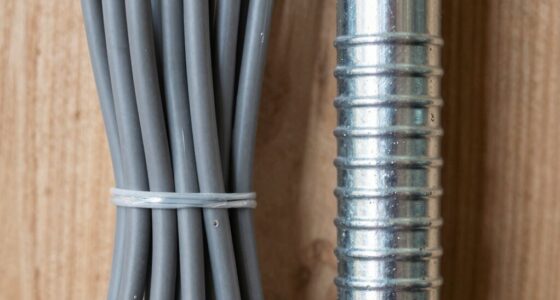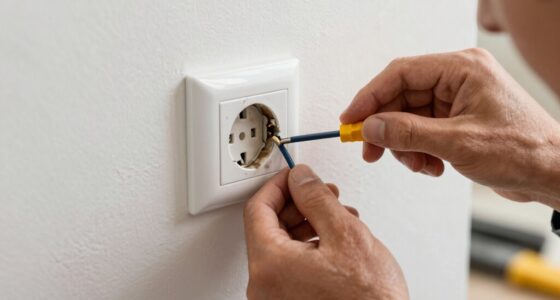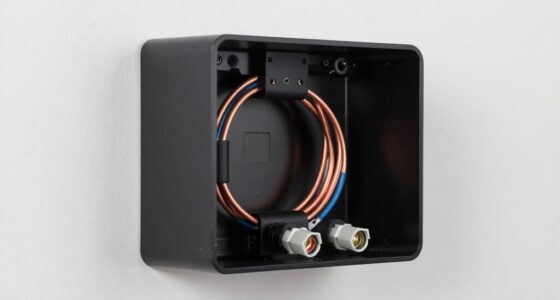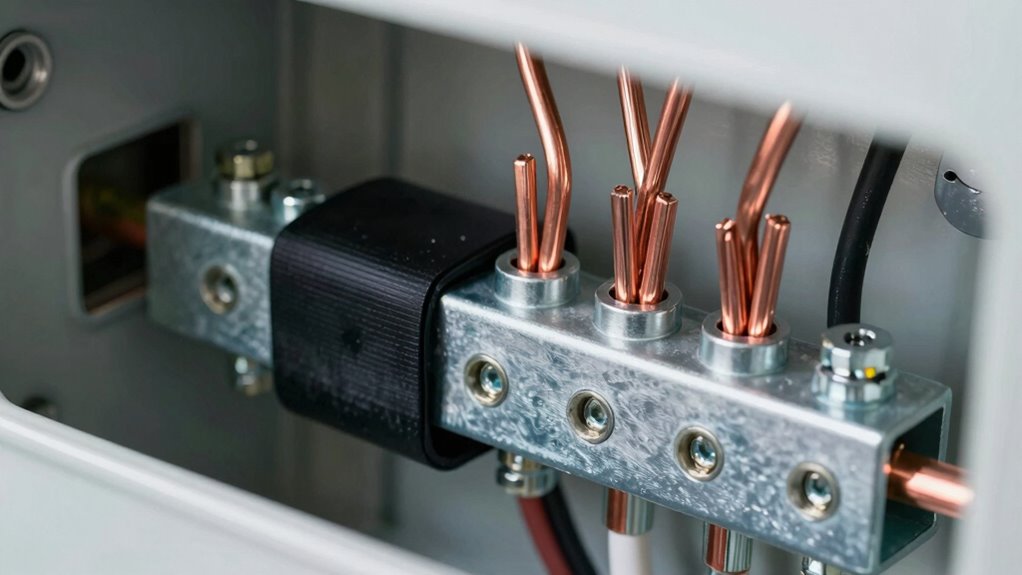
In a subpanel, bonding and grounding change to keep your system safe and compliant. You separate the neutral and ground connections to prevent stray currents that can cause shocks or interference. The neutral stays isolated from the subpanel’s metal case, while the ground is bonded to it. This setup creates a clear path for fault currents and reduces hazards. To understand how to do it correctly and avoid risks, keep exploring the key differences.

Get backup power and energy gear delivered free with Prime
- Fast, free delivery on millions of items
- Prime Video, Amazon Music and more included
- Member-only deals all year
Key Takeaways
- In a subpanel, neutral and ground must be separated to prevent stray current flow along grounding paths.
- Bonding the neutral to ground only at the main panel maintains a single reference point for safety.
- The subpanel’s ground is bonded to the metal case and grounding bus to provide an independent safety path.
- Incorrect bonding in a subpanel can create current loops, posing shock and fire hazards.
- Proper bonding and grounding practices ensure system safety, code compliance, and prevent electrical issues.
Have you ever wondered why proper bonding and grounding are essential when installing a subpanel? It’s a vital part of ensuring your electrical system works safely and efficiently. When you add a subpanel to your home, the way you handle the neutral conductor and grounding changes from your main panel. Understanding these differences helps prevent electrical hazards and keeps your panel safe.
At the main panel, the neutral conductor is bonded to the ground and the panel’s metal enclosure, creating a single grounding point. This setup ensures that any fault current has a clear path back to the source, reducing the risk of electric shock or fire. However, in a subpanel, you must separate the neutral and ground connections. The neutral conductor should be isolated from the subpanel’s metal case, while the grounding conductor is bonded to it. This separation prevents stray currents from flowing along grounding paths, which can cause shocks or interfere with sensitive electronics. Proper separation of neutral and ground is essential for safe electrical system operation.
Main panel neutral bonded to ground; subpanel neutral must be isolated to prevent stray currents and ensure safety.
The reason for this change is related to panel safety. If you bond the neutral to the subpanel’s metal frame in addition to grounding it, it can create unintended current paths. These unwanted currents may run through the grounding system, posing a shock risk and potentially damaging equipment. By keeping the neutral isolated and only bonding the ground at the subpanel’s grounding bus, you’re ensuring that fault currents return solely through the grounding conductor, not the neutral. This setup maintains an effective safety barrier and helps comply with electrical codes. Additionally, understanding electrical code requirements is crucial for proper installation and safety compliance.
It’s also important to understand that the neutral conductor in a subpanel must come from the main panel, and it should be properly sized and connected. Any loose or improper connections can compromise panel safety and lead to dangerous situations. Proper circuit wiring ensures the integrity of your system. Additionally, grounding rods or other grounding methods at the subpanel location provide an independent grounding path, further enhancing safety. Proper bonding and grounding practices reduce the risk of electrical shock, equipment damage, and fire hazards.
In addition, knowing the difference between bonding and grounding helps ensure your system adheres to electrical codes and standards. Proper bonding and grounding practices reduce the risk of electrical shock, equipment damage, and fire hazards. Regular inspection and maintenance of these connections are also vital to ensure ongoing safety and reliability. Proper grounding techniques are essential for maintaining a safe and compliant electrical system.
As an affiliate, we earn on qualifying purchases.
Frequently Asked Questions
Can I Bond a Subpanel to a Separate Grounding Rod?
Yes, you can bond a subpanel to a separate grounding rod, but you should do it correctly. Connect the grounding wire from the subpanel to the grounding rod using a grounding electrode conductor. Do not use a bonding jumper to connect the subpanel’s grounding bus directly to the grounding rod. The bonding jumper should only connect the neutral bus to the grounding bus inside the subpanel, not to external grounding electrodes.
Is It Necessary to Disconnect the Main Panel’s Ground When Adding a Subpanel?
You don’t need to disconnect the main panel’s ground when adding a subpanel; it’s a common misconception. Grounding safety and bonding practices are essential for proper electrical system operation. You should keep the main panel’s ground intact to maintain a continuous grounding path. Just make certain the subpanel has its own grounding conductor and bonding screw, which helps prevent shocks and keeps everything working smoothly—don’t put all your eggs in one basket.
How Does Grounding Differ Between Residential and Commercial Subpanels?
In residential and commercial subpanels, grounding differs based on specific grounding standards and bonding techniques. Residential setups typically connect the grounding conductor directly to the subpanel’s grounding bus, maintaining a separate ground and neutral system. In commercial settings, grounding often involves more strict bonding techniques, such as using grounding rods or metal conduit systems, guaranteeing enhanced safety and compliance. Always follow local electrical codes to ensure proper grounding practices.
What Are the Risks of Improper Bonding in a Subpanel?
Improper bonding in a subpanel risks electrical shock, fires, and equipment damage, compromising bonding safety. If the grounding is not correctly installed according to grounding codes, the entire system becomes unsafe. You could experience dangerous voltage surges or electrocution hazards. Always guarantee the bonding is solid and compliant with electrical standards, as inadequate bonding can lead to severe safety issues, putting you and your property at unnecessary risk.
Can Aluminum Wiring Affect Bonding and Grounding Procedures?
Did you know that aluminum wiring accounts for about 20% of residential wiring issues? Aluminum wiring can complicate bonding and grounding procedures because it’s more prone to oxidation and looseness, which can cause bonding issues. This oxidation can hinder proper electrical continuity, increasing the risk of electrical faults. Consequently, when working with aluminum wiring, you must guarantee secure connections and use approved connectors to maintain safe bonding and grounding.
As an affiliate, we earn on qualifying purchases.
Conclusion
Understanding why bonding and grounding change in a subpanel is essential for your safety. Properly configuring these systems prevents electrical shocks and fires. Did you know that faulty grounding is responsible for nearly 20% of electrical fires in residential buildings? By ensuring correct bonding and grounding practices, you reduce these risks considerably. Keep in mind, safety isn’t just about code compliance—it’s about protecting yourself and your loved ones every day.
main panel neutral bonding connector
As an affiliate, we earn on qualifying purchases.
As an affiliate, we earn on qualifying purchases.
As an affiliate, we earn on qualifying purchases.
Halloween Picks
halloween
As an affiliate, we earn on qualifying purchases.