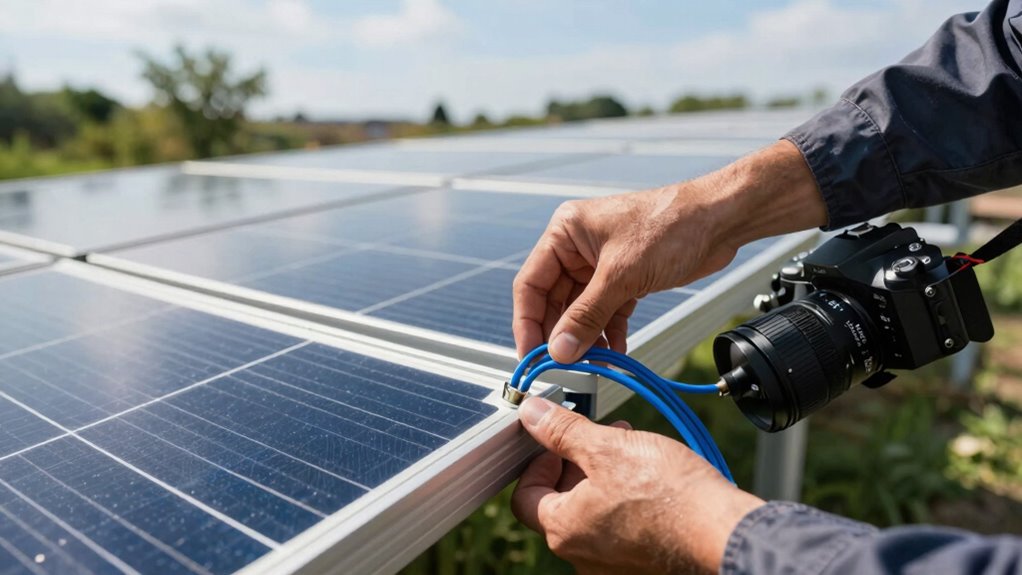

Proper solar string sizing is key to getting the most out of your system. It guarantees your energy production is balanced, keeps components safe, and prevents issues like underperformance or overloading. Matching your solar array to your batteries and inverter specs avoids damage and boosts efficiency. Safety standards and industry guidelines also come into play for a reliable setup. Want to access the full potential of your solar system? Keep going to discover essential tips for beginners.

Get backup power and energy gear delivered free with Prime
- Fast, free delivery on millions of items
- Prime Video, Amazon Music and more included
- Member-only deals all year
Key Takeaways
- Proper string sizing ensures optimal energy production, system safety, and avoids underperformance or damage.
- Match solar array size to battery capacity to prevent undercharging or overtaxing storage.
- Ensure inverter compatibility by sizing the string within its maximum input limits.
- Calculate and consider voltage and current levels to maintain system safety and component integrity.
- Follow industry standards and consider local factors for a balanced, efficient, and reliable solar system.
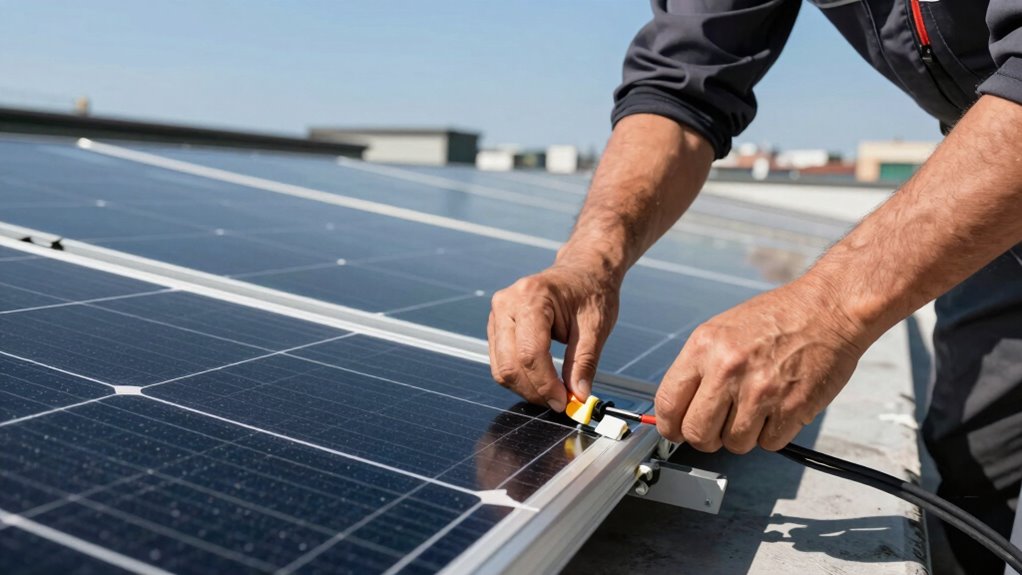
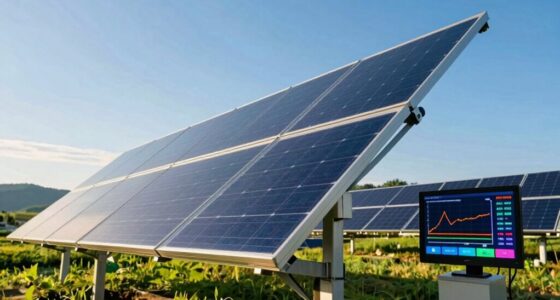
If you’re new to solar power, understanding how to size your solar string is a crucial first step. Your solar string, which includes the number of solar panels connected in series, directly impacts your system’s efficiency and overall performance. Getting this right means considering how much energy you want to generate and ensuring your components, especially the inverter, can handle the power output. A key factor in this process is battery capacity if you’re planning on using energy storage. You need to match the size of your solar array to your battery’s capacity so that you neither undercharge nor overtax your batteries. Oversizing your solar string can lead to excess energy that your batteries can’t store, while undersizing might leave your system underperforming, especially during cloudy days or periods of high energy use.
Properly sizing your solar string ensures balanced energy production and system safety.
Inverter compatibility is equally critical when sizing your solar string. Your inverter acts as the bridge between your solar panels and your home’s electrical system. It converts the direct current (DC) produced by your panels into alternating current (AC) that your appliances use. If your solar string produces more power than your inverter can handle, you risk damaging the inverter or causing it to shut down, disrupting your energy supply. Conversely, if your system is too small for your inverter, you’re not maximizing your potential energy production, which can lead to wasted sunlight and higher costs over time. Always check your inverter’s maximum input capacity and ensure your solar string size aligns with it.
Another aspect you should consider is the voltage and current ratings of your panels and how they combine in the string. When panels are connected, their voltages and currents add up, affecting the overall system performance. Proper calculations ensure you don’t exceed the inverter’s input limits and keep system safety intact. Additionally, balancing your system involves factoring in your typical energy consumption patterns, your geographic location, and the amount of sunlight you receive. This holistic approach helps you determine the ideal number of panels for your solar string, aligning with your battery capacity and inverter capabilities. Understanding solar string sizing factors is essential to designing an efficient system tailored to your specific needs. A comprehensive understanding of system components can further help optimize your setup.
Finally, staying informed about the latest industry standards can help ensure your system’s safety and compliance with local electrical codes, which is vital for long-term reliability and legal operation. Ultimately, the goal is to create a balanced system where your solar panels generate enough energy to meet your needs without risking overloading your components. Avoid the misconception that bigger is always better; instead, focus on matching your solar string size with your battery capacity and inverter compatibility. Properly sizing your system also involves considering system safety to prevent potential hazards and ensure compliance with local electrical codes. This ensures a reliable, efficient, and safe solar power system tailored to your specific energy goals.
As an affiliate, we earn on qualifying purchases.
Frequently Asked Questions
How Do Temperature Variations Affect String Sizing?
Temperature variations can substantially impact your solar panel efficiency and inverter compatibility. When temperatures rise, panels often produce less power, which can lead to mismatched string sizes if not properly accounted for. Cooler temperatures boost efficiency, so you need to size your strings considering these fluctuations. Properly factoring in temperature effects guarantees your system operates at its best, preventing inverter overloads and maximizing energy output throughout the year.
What Are the Costs Associated With Oversizing or Undersizing?
Oversizing or undersizing your solar system impacts cost implications and system efficiency. Oversizing increases upfront costs due to additional panels or equipment, and can reduce efficiency if the inverter can’t handle the extra power. Undersizing risks lower energy production, increasing long-term costs because you’ll need more energy from the grid. Proper string sizing balances initial investment and energy output, optimizing system efficiency and minimizing unnecessary expenses over your system’s lifespan.
How Does Shading Impact Optimal String Size?
Shade impact considerably influences ideal string size because shading challenges reduce the amount of sunlight hitting your panels, lowering their efficiency. You should size your strings carefully to minimize shading effects; for example, avoiding long strings with shaded panels prevents performance drops. By factoring in shading challenges early, you guarantee your system remains efficient, maximizing energy production even when parts of your array face shade. Proper planning helps avoid unnecessary losses and maintains system reliability.
Can String Size Be Adjusted After Installation?
Yes, you can adjust string size after installation, but it requires careful consideration of string compatibility and inverter matching. If you want to add or remove panels, consult a professional to guarantee the new configuration matches your inverter’s capacity and voltage limits. Improper adjustments can cause system inefficiencies or damage, so always prioritize compatibility and proper matching to optimize your solar setup’s performance.
What Tools Are Best for Calculating String Size?
Think of calculating string size like fitting puzzle pieces together. To do this accurately, use tools like PVWatts or SolarDesignTool, which factor in battery storage and inverter compatibility. These tools help you determine the right number of panels, ensuring your system runs smoothly without overloading. Just like assembling a puzzle, precise calculations prevent gaps and overlaps, optimizing your solar setup for efficiency and longevity.
solar panel inverter compatibility
As an affiliate, we earn on qualifying purchases.
As an affiliate, we earn on qualifying purchases.
Conclusion
Remember, a well-sized solar string isn’t just about numbers—it’s about getting the right balance for efficiency and safety. Take your time, do your research, and don’t rush the process. As the saying goes, “Measure twice, cut once.” By understanding the basics and carefully planning your system, you’ll guarantee your solar setup performs effectively and saves you money in the long run. Patience and attention to detail truly pay off with solar energy.
As an affiliate, we earn on qualifying purchases.
solar panel voltage current meter
As an affiliate, we earn on qualifying purchases.
As an affiliate, we earn on qualifying purchases.
Halloween Picks
halloween
As an affiliate, we earn on qualifying purchases.