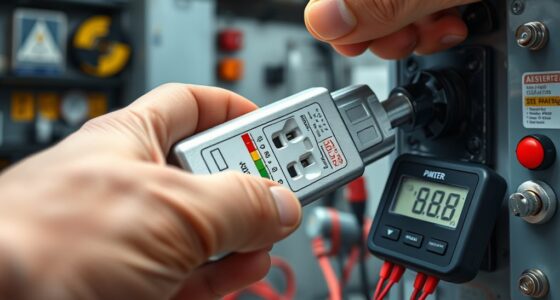
To test a neutral for load properly, turn off the power and double-check you have the right circuit. Use an insulated multimeter or clamp meter to measure current and voltage between the neutral and ground. Apply a known load gradually while monitoring the readings; a static neutral should show minimal voltage difference and expected current flow. If you want to guarantee safety and accuracy, understanding the detailed steps can help you do it right every time.
Key Takeaways
- Ensure the circuit is de-energized before connecting testing equipment to avoid hazards.
- Use a clamp meter or multimeter to measure current and voltage between neutral and ground.
- Gradually apply a load and monitor the neutral’s current to detect overloads or wiring issues.
- Check for minimal voltage difference between neutral and ground to identify potential faults.
- Confirm all connections are secure and consult a qualified electrician if abnormal readings occur.
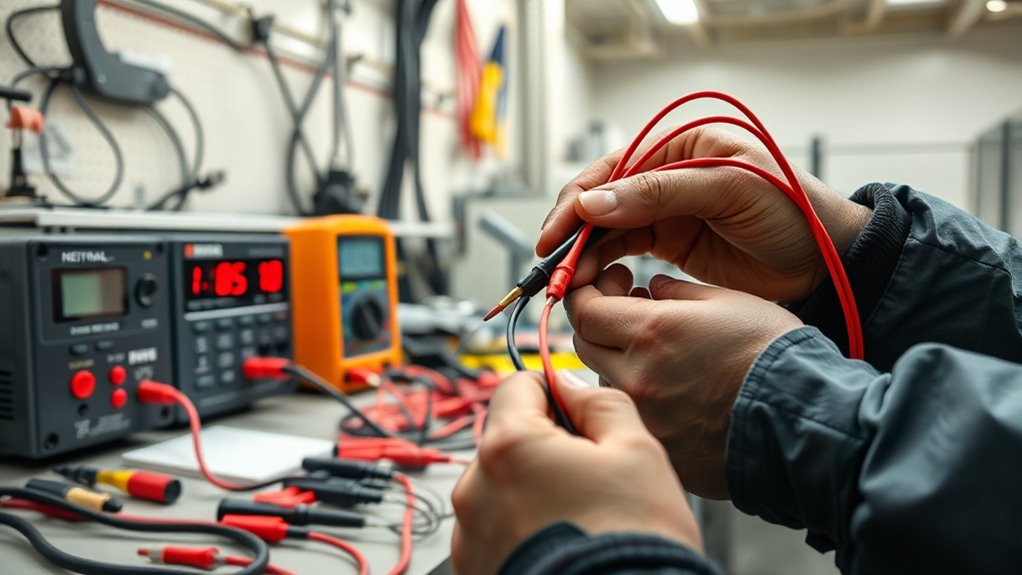
When testing a neutral for load, it’s vital to verify the circuit’s safety and proper functionality. A neutral wire carries current back to the source, and any imbalance or fault can lead to dangerous conditions. Ensuring that the neutral isn’t overloaded or compromised helps prevent electrical hazards and equipment damage. Load testing becomes an essential part of this process, as it allows you to confirm whether the neutral can handle the expected current without issues. Proper neutral testing techniques not only safeguard your electrical system but also give you peace of mind that everything operates as it should.
To start, you need to understand the basics of load testing. It involves measuring the current flow through the neutral when devices or appliances are in use. This helps identify if the neutral is carrying more current than it’s rated for, indicating a potential overload or wiring problem. For accurate results, you’ll want to use a multimeter or clamp meter designed for load testing. These tools enable you to measure the current without disconnecting the circuit, making your testing faster and safer. When performing neutral testing techniques, always confirm the circuit is de-energized before attaching your testing devices, then turn on the load gradually to observe how the neutral responds.
One effective neutral testing technique involves checking the voltage difference between the neutral and ground. Under normal conditions, this voltage should be minimal—close to zero volts—indicating that the neutral is properly grounded and functioning correctly. If you detect a significant voltage difference, it could signal a wiring fault, a loose connection, or an overload condition. Additionally, you can perform a load test by applying a known load to the circuit and measuring the current flow through the neutral. If the current exceeds the expected load, it might mean the neutral is carrying current from other circuits or is compromised.
Always remember that safety comes first. Use insulated tools, wear protective gear, and double-check connections before energizing the circuit. If you notice irregular readings, such as high neutral current or voltage discrepancies, it’s best to consult a qualified electrician. Proper neutral testing techniques help you diagnose issues early, preventing potential fires, shocks, or equipment failure. Conducting comprehensive load analysis ensures your electrical system remains safe, reliable, and compliant with electrical standards. Accurate load testing ensures your electrical system remains safe, reliable, and compliant with electrical standards. When you follow these steps diligently, you can confidently verify whether the neutral can handle the load and operate safely under normal conditions.
Frequently Asked Questions
What Tools Are Best for Testing Neutral Connections?
You should use a multimeter or a socket tester to test neutral connections effectively. These tools help confirm grounding safety and circuit integrity by detecting proper voltage levels and identifying loose or faulty neutral wires. Always turn off power before testing, then carefully check the neutral for continuity and proper connection. Regular testing with these tools helps prevent electrical hazards and maintains safe, reliable circuit operation.
How Often Should Neutral Testing Be Performed?
Like a detective checking clues, you should test neutral connections at least once a year. Regular testing helps catch grounding issues before they escalate. Use wiring diagrams to guide your process, ensuring all connections are secure and safe. If you notice any irregularities or suspect grounding problems, increase testing frequency. Staying vigilant keeps your electrical system safe, reliable, and prevents potential hazards caused by faulty neutral wiring.
Can Neutral Faults Cause Electrical Fires?
Yes, neutral faults can cause electrical fires. They compromise neutral safety and can lead to overheating, arcing, or sparks, especially if fault detection isn’t in place. When the neutral connection is faulty, it disrupts proper current flow, increasing the risk of fire hazards. Regular testing helps identify neutral issues early, ensuring the safety of your electrical system and preventing potential fire incidents.
Is Neutral Testing Safe for Non-Professionals?
Neutral testing isn’t safe for non-professionals because it requires a solid understanding of electrical fundamentals and proper DIY safety practices. If you’re not trained, you risk electric shock or causing a short circuit. Always remember, working with electrical systems can be dangerous. It’s best to hire a licensed electrician to perform neutral tests, ensuring safety for you and your property. Never compromise safety when dealing with electrical components.
What Are Signs of a Faulty Neutral Connection?
If you notice flickering lights, frequent circuit breaker trips, or outlets that are warm to touch, these are signs of a faulty neutral connection. Grounding issues can cause electrical shocks or damage to appliances, so don’t overlook these symptoms. You should have a professional inspect your wiring promptly to prevent further problems and ensure your system’s safety. Never attempt to fix electrical issues yourself if you’re unsure.
Conclusion
Think of testing a neutral for load like tending a garden. Just as you check each plant’s root to make sure it’s healthy and ready to flourish, you verify your neutral wire to keep your electrical system safe and balanced. Neglecting this step is like ignoring the soil’s needs—risks could sprout unexpectedly. By doing it right, you’re nurturing a safe, reliable environment, ensuring everything runs smoothly, just like a well-tended garden that blooms beautifully.