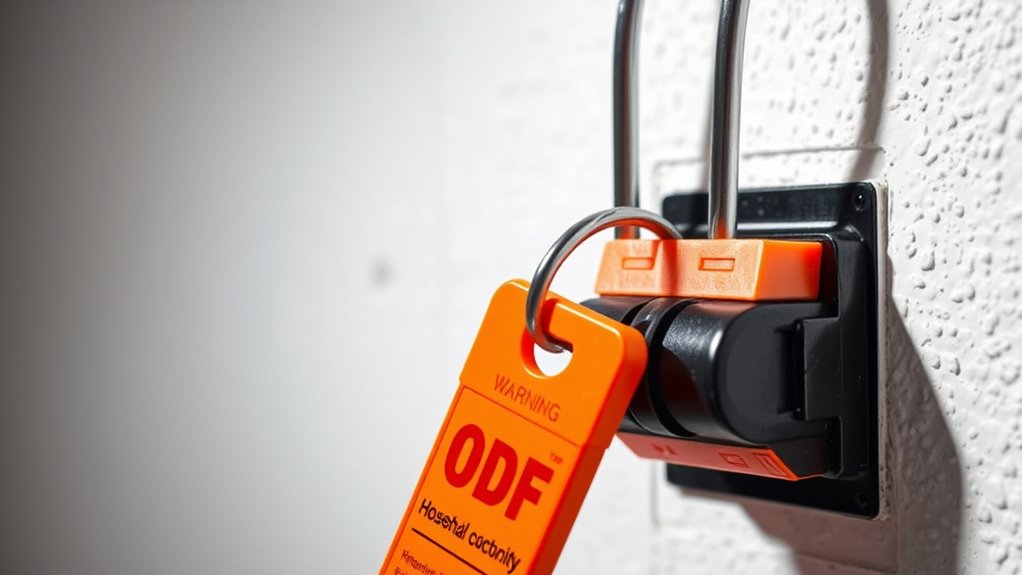

Before starting work at home, turn off the power at the main breaker and use a reliable voltage tester or multimeter to verify the circuit is dead. Don’t rely solely on the breaker switch; always test for voltage. Apply a lockout device and tag to prevent accidental re-energizing, then double-check that no voltage remains. Following these safety steps is essential—keep going to discover all the best practices for safe electrical work.
Key Takeaways
- Turn off the circuit breaker or main power source before working on the circuit.
- Use a reliable voltage tester or multimeter to verify no voltage is present after turning off power.
- Confirm the circuit is de-energized by testing at multiple points if possible.
- Apply a lockout device to the circuit breaker or disconnect switch to prevent accidental re-energizing.
- Attach a safety tag indicating work is in progress and re-verify the circuit is dead before resuming work.

Ever wondered how to be sure a circuit is completely dead before working on it? Ensuring safety when dealing with electrical circuits is essential, and the first step is verifying that no current is flowing through the wires. This process hinges on proper testing tools and strict safety precautions. Before you even begin, make certain to wear appropriate personal protective equipment, such as insulated gloves and eye protection, to minimize risk in case something goes wrong. Remember, even if a circuit looks inactive, voltage can still be present, so never assume it’s safe without testing.
Start by turning off the power at the main breaker or circuit breaker panel. Once you’ve cut the power, don’t rely solely on this switch to confirm the circuit is dead. Instead, you need to test it. Use a reliable testing tool, such as a voltage tester or multimeter, designed for electrical work. A non-contact voltage tester is quick and easy; you simply hold it near the wires or device terminals, and if it lights up or beeps, there’s still voltage present. For more precise confirmation, a multimeter set to measure AC voltage provides a clear reading. Touch the probes to the conductors—hot and neutral or hot and ground—and check the display. If it reads zero or shows no voltage, the circuit is likely dead.
Always test circuits with a voltage tester or multimeter after turning off power to ensure they are truly de-energized.
However, don’t stop there. Always double-check your testing tools before use to make certain they’re functioning properly. Test them on a known live circuit to verify they respond correctly. When testing, keep your fingers away from the conductive parts and hold the probes steadily. If you’re using a multimeter, ensure it’s set correctly to avoid false readings. Remember, safety precautions are essential; never work on a circuit without confirming it’s de-energized. Even a small oversight can lead to electric shock or worse. Recognizing the importance of accurate testing and proper procedures helps prevent accidents and injuries.
Once you’ve confirmed the absence of voltage, it’s wise to lock out the circuit. Use a lockout device if available, and attach a tag indicating work is in progress. This prevents anyone else from accidentally restoring power while you’re working. Confirm once more with your testing tools that the circuit remains dead before proceeding. This layered approach—power off, test, lockout, and verify—maximizes safety and reduces the risk of accidents.
Frequently Asked Questions
How Often Should I Test a Circuit Before Working on It?
You should test a circuit each time before working on it to guarantee safety. Follow safety protocols by verifying the circuit’s status with a proper tester, even if you’ve tested it recently. Testing frequency depends on the work environment, but always test every time you approach the circuit. Never assume it’s dead; consistent testing is essential to prevent electrical shocks and ensure a safe working environment.
What Tools Are Best for Verifying a Circuit Is Dead?
You should use a voltage tester or a multimeter with probes designed for safety. These tools help you accurately verify if a circuit is dead before working on it. Before testing, make sure your multimeter probes are in good condition and correctly connected. Always turn off power, lockout, and tag out the circuit, then carefully test at multiple points to confirm no voltage is present, keeping safety your top priority.
Can I Rely Solely on a Circuit Breaker to Confirm Power Is Off?
Did you know that relying solely on a circuit breaker is risky? Circuit breaker limitations mean they might not trip during certain faults, leaving residual voltage risks. So, you can’t depend only on a breaker to confirm power is off. Always test with a properly rated tester after turning off the breaker. This extra step guarantees safety, preventing electric shocks or accidents caused by lingering voltage.
Are There Hazards if a Circuit Isn’t Completely De-Energized?
If a circuit isn’t completely de-energized, you risk electrical shock and equipment damage. Even a small residual current can be dangerous, especially when you’re working on or near electrical components. Relying solely on a circuit breaker isn’t enough; always test the circuit with a proper tester after switching it off. This extra step helps make certain no live voltage remains, keeping you safe and preventing costly damage.
How Do I Handle a Circuit That Still Shows Voltage After Testing?
If a circuit still shows voltage after testing, you should treat it as energized due to voltage persistence or testing inaccuracies. First, double-check your tester on a known live source to verify it’s working properly. Use a different tester if needed. If voltage persists, do not attempt to work on the circuit. Instead, turn off the main power supply, re-test, and consider consulting a qualified electrician to ensure safety.
Conclusion
Always treat every circuit like a sleeping lion—don’t assume it’s harmless just because it looks still. Confirm it’s dead with a tester before you start work; otherwise, you’re playing a risky game with lightning inside the walls. Think of lockout-tagout as your safety shield, guarding you from unseen dangers. Remember, a moment of caution now keeps a lifetime of regret at bay. Stay vigilant, stay safe—your home’s electrical heartbeat should never catch you off guard.