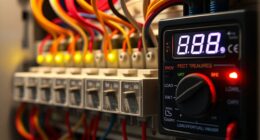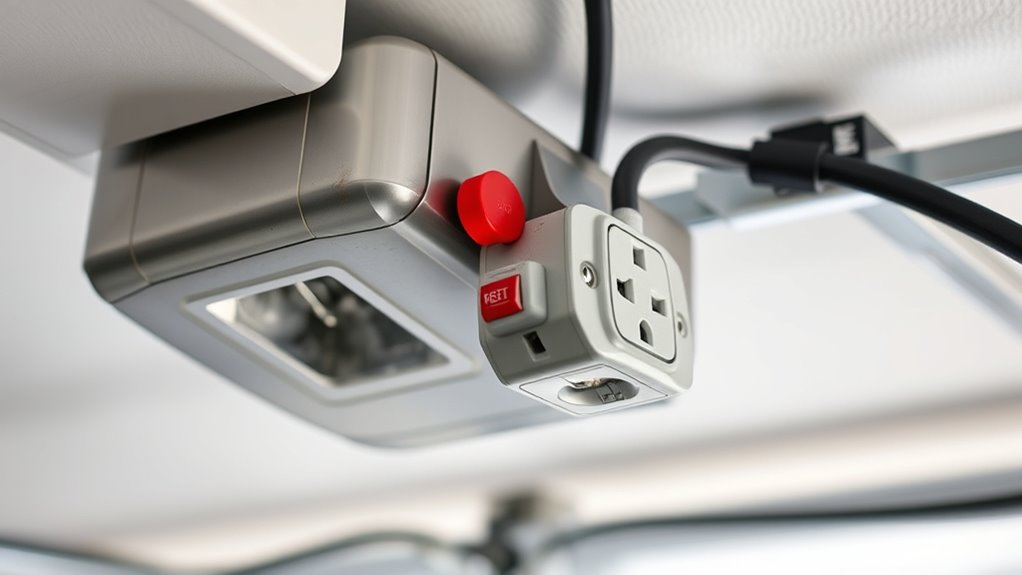

If your garage door opener trips the GFCI, it’s often caused by wiring issues, moisture exposure, or faulty internal parts. Damaged or frayed wires can leak current, especially in damp environments, leading to trips. Internal components like capacitors or motors might also cause tiny leaks or electrical noise. Sometimes, the GFCI itself is overly sensitive or worn out. To find out more about solving these problems, keep exploring these common root causes.
Key Takeaways
- Damaged or frayed wiring and loose connections can cause leakage currents that trip the GFCI.
- Moisture, corrosion, or damp environments increase leakage, triggering false GFCI trips.
- Internal components of the garage door opener, like capacitors or switches, may produce electrical leaks.
- Highly sensitive or aging GFCI devices may trip due to minor, harmless leakage currents.
- Improper wiring or installation practices can create unintended current paths leading to GFCI trips.
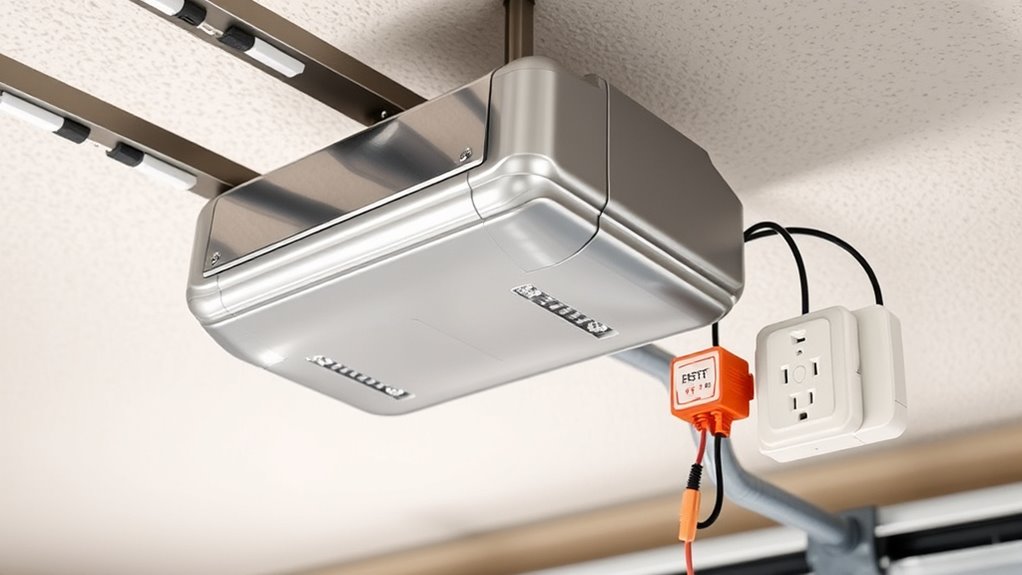
If your garage door opener keeps tripping the GFCI outlet, it can be both frustrating and concerning. GFCI outlets are designed to protect you from electrical shocks by shutting off power when they detect imbalance or leakage. When this happens repeatedly, you need to understand what’s causing the issue. One common culprit often lies in the garage opener wiring. Over time, wires can become frayed, loose, or damaged, especially if they’re exposed to moisture or physical wear. Damaged wiring creates unintended paths for current to leak to the ground, which the GFCI detects and responds to by shutting off power. This isn’t just a nuisance; it’s a safety feature working as intended.
Another factor is GFCI sensitivity. These outlets are designed to trip at very low leakage currents, often as small as 4-6 milliamps. While this high sensitivity is vital for safety, it can also cause false trips if there’s minor, harmless leakage in the circuit. Sometimes, the garage opener’s internal components or the wiring itself may produce tiny leaks that aren’t dangerous but still trigger the GFCI. In such cases, the GFCI might trip even if everything appears to be functioning normally.
GFCI sensitivity can cause false trips from minor, harmless leaks in garage opener wiring or components.
A common issue arises from the way the garage opener is wired into the GFCI circuit. If the wiring is improperly installed—say, if the neutral and ground aren’t correctly separated or if there are loose connections—this can lead to leakage currents that trip the GFCI. Additionally, the presence of moisture or corrosion can increase leakage, especially if the wiring runs through damp areas or isn’t properly sealed.
Sometimes, the problem isn’t with the wiring itself but with the garage opener’s internal components. Faulty capacitors, switches, or motors can produce small leaks or electrical noise that trips the GFCI. If the wiring looks fine, but the problem persists, inspecting or replacing the garage opener might be necessary. Also, remember that GFCI outlets can be overly sensitive due to manufacturing differences or age, making them trip more frequently than necessary. If you suspect sensitivity issues, replacing the GFCI with a newer, more reliable model could help.
Finally, understanding electrical safety features and proper wiring practices can help prevent false trips and ensure your garage setup remains safe and reliable.
Frequently Asked Questions
Can a Faulty Garage Door Opener Cause GFCI Tripping?
Yes, a faulty garage door opener can cause GFCI tripping. If your garage opener has faults like damaged wiring or internal shorts, it may create a ground fault that triggers the GFCI. This can also lead to circuit breaker triggers, as the system detects the abnormal current flow. Regularly inspecting your garage opener for signs of wear and addressing any faults promptly helps prevent GFCI trips and keeps your system safe.
How Can I Test if My GFCI Outlet Is Functioning Properly?
Think of your GFCI outlet as a vigilant guardian, always on the lookout for ground faults. To test if it’s functioning properly, plug in a circuit tester designed for GFCI outlets. Press the test button; if the power cuts out, then the GFCI is working correctly. Press reset; if power restores, it confirms your outlet’s safety net is intact. If it doesn’t trip, consider replacing the outlet to guarantee protection.
Are There Specific Garage Door Openers More Prone to Tripping GFCI?
Some garage opener models are more prone to tripping GFCIs, especially those with older or less reliable brand reputations. Cheaper or less well-known brands may lack proper insulation or grounding, increasing the risk. You should verify the brand reliability and compatibility with GFCI outlets before purchasing. Investing in a high-quality, reputable garage door opener model reduces the likelihood of trips and ensures safer, more consistent operation.
What Safety Precautions Should I Take Before Troubleshooting?
Ever wonder how to stay safe while troubleshooting your garage door opener? Before you start, turn off the power to prevent electrical shocks and guarantee personal protection. Use insulated tools and wear rubber gloves and safety goggles to minimize risk. Make sure the GFCI outlet is properly tested and functioning. Are you prepared to handle potential electrical issues safely? Taking these precautions keeps you protected and prevents accidents.
When Should I Call a Professional Electrician for GFCI Issues?
You should call a professional electrician if you notice persistent GFCI trips despite resetting, especially when electrical wiring seems damaged or frayed, or if circuit overload continues to trip the GFCI. Don’t attempt to repair complex electrical wiring or troubleshoot circuit overloads yourself, as these issues pose safety risks. An electrician can safely diagnose and fix underlying problems, ensuring your garage door opener operates reliably without risking electrical hazards.
Conclusion
So, next time your garage door opener decides to throw a GFCI tantrum, remember—it’s just trying to remind you to get that wiring checked. Maybe it’s bored, maybe it’s faulty, or maybe it just hates your music playlist. Whatever the cause, don’t ignore it. Because nothing says “I love my gadgets” like resetting your GFCI for the third time today—except maybe, you know, actually fixing the problem. Stay safe, and keep those circuits happy!