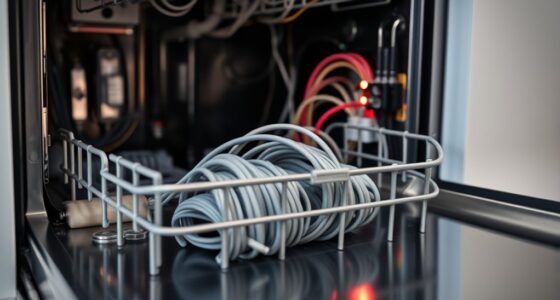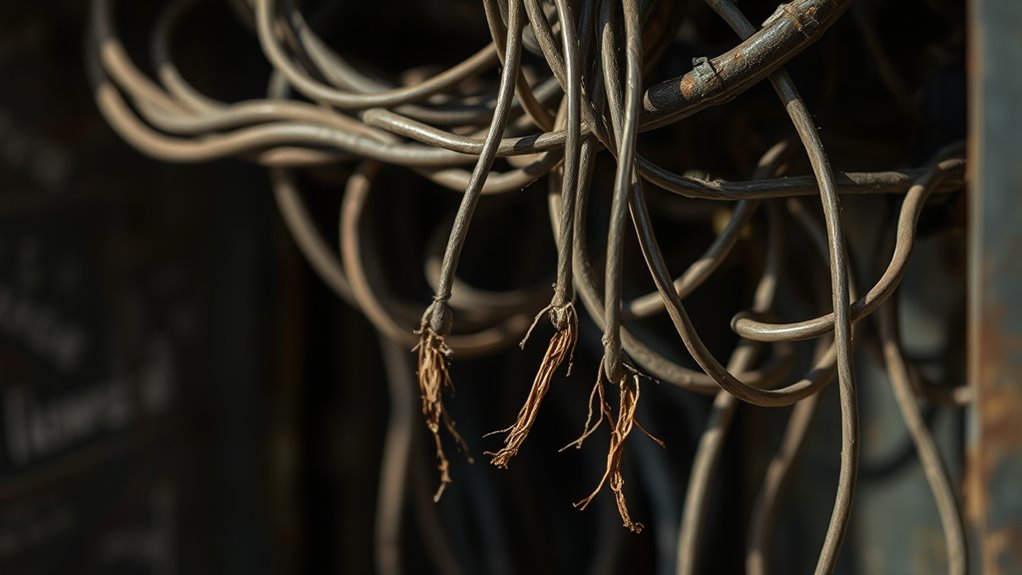

If you’re experiencing intermittent power loss and suspect a loose neutral, start by inspecting your outlets and switch connections for looseness or corrosion. A loose neutral can cause voltage fluctuations, flickering lights, and equipment shutoffs. make certain the neutral wire is tightly connected in all outlets and the main panel. Grounding issues may also contribute, so check connections there as well. To prevent future problems, understanding how to identify and fix these issues is key—there’s more to uncover here.
Key Takeaways
- Inspect all neutral connections for looseness or corrosion, especially at the main panel and outlets.
- Check grounding system integrity to ensure proper voltage stabilization and safety.
- Test circuit breakers for proper operation and look for signs of wear or faults.
- Observe for flickering lights or equipment that frequently turn off, indicating neutral issues.
- Hire a licensed electrician to perform comprehensive diagnosis and secure all wiring connections safely.
Have you ever experienced a sudden power loss that disrupts your day? If so, you’re not alone. Intermittent power issues can be frustrating and confusing, especially when they come and go without warning. One common culprit behind these disruptions is a loose neutral connection. When the neutral wire isn’t tightly secured, it can cause voltage fluctuations that lead to flickering lights, equipment shutting off unexpectedly, or other irregularities. Identifying and fixing this problem requires a bit of detective work, but understanding the role of grounding issues and circuit breaker faults can help you get to the root of the problem.
A loose neutral connection is often behind intermittent power loss because it interrupts the return path for electricity. Without a solid connection, the voltage supplied to your appliances can become unstable, causing them to turn off or flicker. This isn’t just an annoyance; it can also pose safety risks. Sometimes, a loose neutral can cause arcing or overheating, which increases the risk of fire or damage to your electrical system. You might notice that certain outlets or appliances are more affected than others, especially those on the same circuit. If you suspect a loose neutral, it’s vital to have a qualified electrician inspect your wiring to ensure everything is secure.
Grounding issues can also play a significant role in intermittent power problems. Proper grounding provides a safe path for stray electrical currents, helping to prevent electrical shocks and equipment damage. When grounding is faulty or compromised, it can lead to unpredictable power fluctuations. These fluctuations may cause your circuit breaker to trip unexpectedly or fail to trip when it should, known as circuit breaker faults. Such faults can mask underlying issues like loose connections or faulty wiring, making troubleshooting more complicated. Addressing grounding problems often involves checking the main grounding wire, ensuring all grounding connections are tight, and verifying that grounding rods or plates are properly installed and functional.
Circuit breaker faults add another layer of complexity. Sometimes, the breaker itself may be faulty or worn out, causing it to trip prematurely or fail to trip when necessary. This can imitate the symptoms of other electrical issues, like loose neutrals or grounding faults. An intermittent power loss caused by a faulty breaker might seem like a wiring problem, but it’s actually an issue with the breaker’s internal components. Replacing a malfunctioning breaker can restore stability, but it’s vital to have a professional evaluate whether other issues like grounding problems or wiring faults are also involved. Additionally, understanding the importance of proper circuit design can help prevent such issues from recurring.
In many cases, resolving intermittent power loss involves a combination of checking grounding, inspecting circuit breakers, and ensuring all connections—particularly the neutral—are secure. Don’t try to fix these issues yourself unless you’re qualified; electrical systems can be dangerous. Instead, call a licensed electrician who can accurately diagnose the problem, fix grounding issues, replace faulty breakers, and tighten loose connections, ensuring your power stays steady and safe.
Frequently Asked Questions
Can Loose Neutral Connections Cause Damage to Appliances?
Loose neutral connections can indeed damage your appliances. When grounding issues occur due to a loose neutral, voltage fluctuations happen, which can overload or harm sensitive devices. These wiring safety problems compromise the stability of your electrical system, risking appliance damage or even electrical fires. It’s vital to make certain of proper wiring and secure neutral connections to protect your appliances and maintain safe, reliable power throughout your home.
How Can I Safely Identify a Loose Neutral?
To safely identify a loose neutral, start by turning off the power at the main breaker. Use a multimeter to check for grounding issues and look for irregular voltage patterns across outlets. Conduct thorough wiring inspections, especially at the neutral connections in your panel and outlets. If you’re unsure or uncomfortable, hire a licensed electrician. Always prioritize safety, avoid touching live wires, and use insulated tools to prevent shocks.
What Tools Are Best for Testing Neutral Connections?
Imagine your tools as detectives on a mission. You’ll want reliable voltage testers and continuity testers to track down the loose neutral. Voltage testers quickly show if power is present, while continuity testers confirm a proper connection. Use them carefully—test across connections and fixtures. These tools give you clear, immediate insights, helping you safely identify and address the problem before it causes further issues.
Is a Loose Neutral More Common in Older Homes?
Yes, a loose neutral is more common in older homes due to outdated wiring and grounding issues. Over time, wiring can degrade or loosen, causing intermittent power problems. If you’re experiencing power fluctuations, consider wiring upgrades and checking grounding connections. These steps help guarantee safety and improve electrical stability. Regular inspections and maintenance can prevent issues caused by aging wiring and loose neutrals, keeping your home safe and functioning properly.
When Should I Call an Electrician for Power Issues?
You should call an electrician when you notice persistent power issues, frequent tripping circuit breakers, or grounding issues. If outlets or appliances flicker or lose power intermittently, it could indicate loose neutral connections or circuit breaker problems. Don’t ignore these signs, as they could lead to electrical hazards. An electrician can diagnose the root cause safely, ensuring your home’s electrical system is secure and functioning properly.
Conclusion
When you suspect a loose neutral is causing intermittent power loss, don’t ignore the signs. Imagine working on your laptop, and suddenly the screen flickers out—turns out, a loose neutral connection in your main panel was the culprit. By carefully inspecting and tightening connections, you can restore reliable power and avoid future outages. Stay vigilant, and if you’re unsure, call a professional to guarantee everything’s secure and safe.