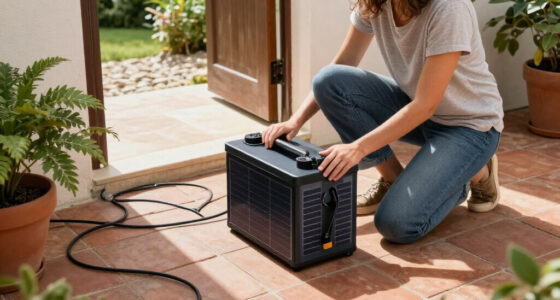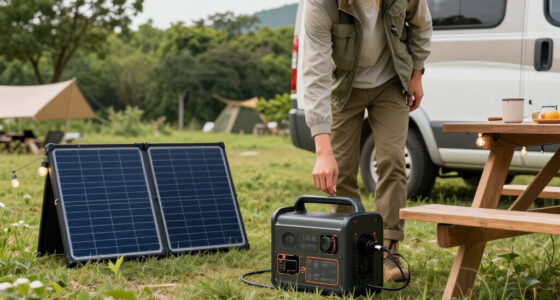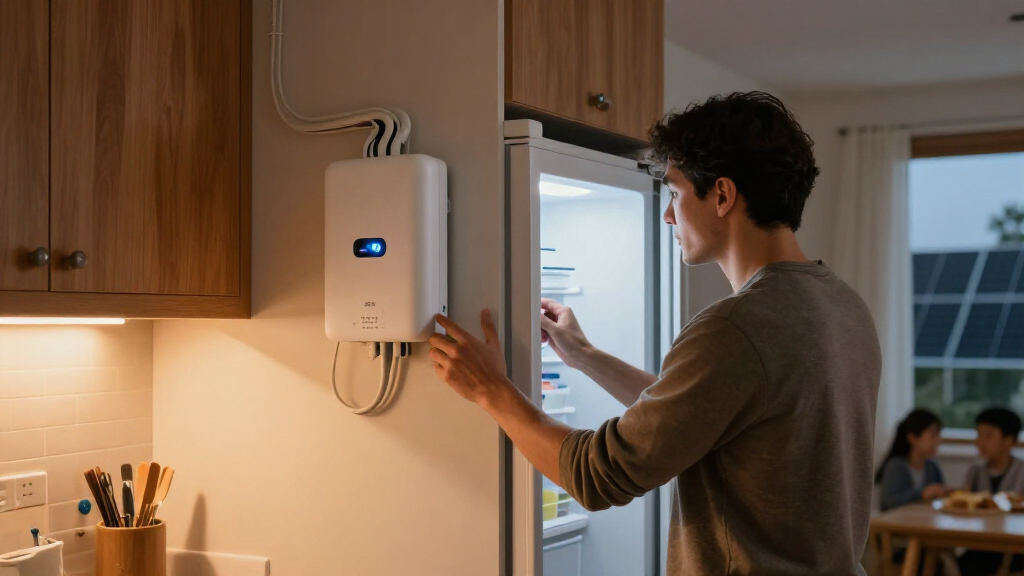
Among these home battery backup systems, I’d choose the Jackery Explorer 5000 Plus as the strongest overall option for larger household loads, while the EcoFlow DELTA 3 Max stands out for a more compact 2,048Wh setup and the Jackery Solar Generator 1000 V2 for lighter, simpler backup. The lineup spans portable power stations, solar bundles, and a 48V battery bank, so the right choice depends on whether you need to run a few essentials or support several circuits. Higher capacity and output can cover more devices, but add size, setup demands, and system-planning needs. Smaller units are easier to place and use, though they run out sooner under sustained loads. Read on for how each option fits a different backup plan and what to check before choosing.

Get backup power and energy gear delivered free with Prime
- Fast, free delivery on millions of items
- Prime Video, Amazon Music and more included
- Member-only deals all year
Complete the kit


Key Takeaways
- The Explorer 5000 Plus leads for larger backup needs: its 5,040Wh capacity and 7,200W output give it more headroom than the portable 1,024Wh and 2,048Wh choices.
- Capacity alone does not define a home backup system: the ECO-WORTHY 48V battery pair suits a compatible battery-based setup, while the portable stations are self-contained options with different installation expectations.
- Solar bundles trade flexibility for convenience: the included panels on the Growatt, Jackery HomePower 3000, Solar Generator 1000 V2, and HomePower 3600 Plus bundles can simplify starting with solar, but panel output and placement still shape recharge time.
- Several products share capacity or output classes: the DELTA 3 and DELTA 3 Classic are both 1,024Wh, 1,800W options, while the two HomePower 3600 Plus listings share 3,584Wh capacity; bundle contents help distinguish them.
- The best fit depends on the outage plan: a small station can serve communications and a few essentials, while longer outages or heavier appliances call for more storage, higher output, and careful load planning.
| Growatt Helios 3600 Portable Power Station with 400W Solar Panel |  | Best for Expandable Home Backup | Battery capacity: 3,600Wh; expandable up to 36kWh | Continuous output: 3,600W | Peak output: 4,500W | VIEW LATEST PRICE | See Our Full Breakdown |
| ECO-WORTHY Powermega 48V 314Ah LiFePO4 Battery, 2-Pack |  | Best for a Permanent Off-Grid Battery Bank | Configuration: 2-pack | Battery chemistry: LiFePO4 | Nominal voltage: 48V (51.2V) | VIEW LATEST PRICE | See Our Full Breakdown |
| Anker SOLIX S2000 Portable Power Station, 2,010Wh, 1,500W |  | Best Compact Mid-Capacity Pick | Battery capacity: 2,010Wh | Battery type: LiFePO4 | Continuous output: 1,500W | VIEW LATEST PRICE | See Our Full Breakdown |
| Jackery HomePower 3000 Portable Power Station with Two 200W Solar Panels |  | Best All-in-One Solar Backup Kit | Battery capacity: 3,072Wh | Battery type: LiFePO4 | AC output: 3,600W | VIEW LATEST PRICE | See Our Full Breakdown |
| Jackery Solar Generator 1000 V2 with 200W Solar Panel |  | Best Lightweight Entry-Level Backup | Battery capacity: 1,070Wh | Battery type: LFP | AC output: 1,500W | VIEW LATEST PRICE | See Our Full Breakdown |
| EcoFlow DELTA 3 Max Portable Power Station, 2048Wh LFP Battery |  | Best for Fast-Recharging Mid-Size Backup | Battery capacity: 2,048Wh | Battery type: LiFePO4 (LFP) | X-Boost output: Up to 3,400W | VIEW LATEST PRICE | See Our Full Breakdown |
| Jackery Explorer 5000 Plus Portable Power Station, 5040Wh, 7200W |  | Best for High-Output, Expandable Home Backup | Battery capacity: 5,040Wh | Surge output: 14,400W | Voltage: 120V/240V | VIEW LATEST PRICE | See Our Full Breakdown |
| Jackery HomePower 3600 Plus Portable Power Station, 3584Wh |  | Best for Flexible Recharging and Easier Relocation | Battery capacity: 3,584Wh | Output wattage: 3,600W | Parallel output: 7,200W | VIEW LATEST PRICE | See Our Full Breakdown |
| EF ECOFLOW DELTA 3 Portable Power Station, 1024Wh, 1800W |  | Best Compact Backup with Expansion | Battery capacity: 1,024Wh | AC output: 1,800W | Surge output: 3,600W | VIEW LATEST PRICE | See Our Full Breakdown |
| Jackery HomePower 3600 Plus Portable Power Station with Two 200W Solar Panels |  | Best Solar-Ready Bundle | Battery capacity: 3,584Wh | Output wattage: 3,600W | Parallel output: 7,200W | VIEW LATEST PRICE | See Our Full Breakdown |
| EcoFlow DELTA 3 Classic Portable Power Station, 1024Wh, 1800W AC Output |  | Best for Fast, Compact Home Backup | Capacity: 1,024Wh | AC output: 1,800W | Surge output: 3,600W | VIEW LATEST PRICE | See Our Full Breakdown |
| Jackery Explorer 2000 v2 Portable Power Station, 2042Wh, 2200W AC Output |  | Best for Longer Runtime in a Portable Unit | Battery capacity: 2,042Wh | Continuous output: 2,200W | AC outlets: 3 | VIEW LATEST PRICE | See Our Full Breakdown |
| home battery backup system | Battery capacity | Weight | Warranty |
|---|---|---|---|
| Growatt Helios 3600 Portable P | 3,600Wh; expandable up to 36kWh | 149lb | — |
| ECO-WORTHY Powermega 48V 314Ah | — | — | — |
| Anker SOLIX S2000 Portable Pow | 2,010Wh | 35.7lb | 5 years |
| Jackery HomePower 3000 Portabl | 3,072Wh | 59.5lb | — |
| Jackery Solar Generator 1000 V | 1,070Wh | 23.8lb | — |
| EcoFlow DELTA 3 Max Portable P | 2,048Wh | — | 5 years |
| Jackery Explorer 5000 Plus Por | 5,040Wh | 134.5 lbs | 5 years |
| Jackery HomePower 3600 Plus Po | 3,584Wh | 77.2 lbs | 5 years |
| EF ECOFLOW DELTA 3 Portable Po | 1,024Wh | — | — |
| Jackery HomePower 3600 Plus Po | 3,584Wh | 77.2 lbs | 5 years |
| EcoFlow DELTA 3 Classic Portab | — | 26.7 lb | 5 years |
| Jackery Explorer 2000 v2 Porta | 2,042Wh | 39.5 lb | — |
More Details on Our Top Picks
Growatt Helios 3600 Portable Power Station with 400W Solar Panel
For buyers who want a path from portable backup toward a larger home system, the Growatt Helios 3600 is the most expandable pick here. Its 3,600Wh battery can grow to 36kWh, and parallel operation can provide 240V output—more flexibility for larger loads than the Jackery HomePower 3000 offers. The included two 200W panels are useful for starting with solar, while the station can accept up to 2,000W of solar input for faster replenishment with a larger array.
The tradeoff is its 149-pound weight: this is better treated as a parked backup system than something to move often. Its 15ms switching and cold-start rating suit emergency use, but buyers should confirm their loads and installation plans before relying on a portable unit for whole-home backup.
Pros:- Expandable battery capacity up to 36kWh supports longer backup periods as needs grow.
- Parallel capability provides up to 7,200W at 240V for loads beyond typical 120V portable stations.
- Up to 2,000W solar input can replenish the battery faster than the included 400W panel capacity alone.
- 15ms switching and cold-start operation down to -22°F suit emergency and cold-weather use.
Cons:- At 149 pounds, moving or repositioning the unit is difficult.
- Whole-house-scale use depends on expansion and suitable system setup; the base battery is 3,600Wh.
- The included panels provide 400W total, far below the station’s maximum solar input.
Best for: Homeowners who want a portable starting point that can expand for larger backup loads and have space to keep a heavy unit set up.
Not ideal for: Buyers who need a lightweight station for frequent transport or want a simple, self-contained setup without expansion planning.
- Battery capacity:3,600Wh; expandable up to 36kWh
- Continuous output:3,600W
- Peak output:4,500W
- Parallel output:Up to 7,200W at 240V
- Included solar panels:2 × 200W
- Maximum solar charging:2,000W
- AC voltage and outlets:120V / 240V; 16 outlets
- Weight:149lb
Our verdict“Choose the Growatt if you want a heavy-duty backup base that can expand well beyond the capacity of the Jackery HomePower 3000.”
ECO-WORTHY Powermega 48V 314Ah LiFePO4 Battery, 2-Pack
The ECO-WORTHY Powermega two-pack is the most installation-oriented option in this group. Each battery stores 16.07kWh, making the pair a much larger energy reserve than portable stations such as the Growatt Helios 3600. It is designed for a 48V system and supports parallel expansion, so it makes more sense for an established off-grid or home solar setup than for someone seeking an all-in-one backup box.
Its UL 1973 certification, active cell balancing, aerosol fire suppression, and Wi-Fi/Bluetooth monitoring give buyers useful safety and system information. The tradeoffs are practical: these are large batteries, not a ready-to-use AC power station, and delivery requires a truck-accessible address. I would skip this pair if you need simple plug-in backup or have not planned compatible inverter and installation components.
Pros:- Two 16.07kWh batteries provide substantial stored energy for extended home or off-grid use.
- UL 1973 certification and built-in aerosol fire suppression add safety provisions.
- Active balancing and touchscreen, Wi-Fi, and Bluetooth monitoring help track battery condition.
- Parallel expansion and RS485, CAN, and RS232 communications support system integration.
Cons:- Requires compatible inverter and system components; it is not a standalone AC power station.
- Large, heavy units arrive by truck on a pallet, requiring a suitable delivery address and handling plan.
- A 48V battery bank is a more involved setup than portable options such as the Anker SOLIX S2000.
Best for: Homeowners and off-grid system builders who already have, or are planning, a compatible 48V inverter-based battery system with substantial storage needs.
Not ideal for: Buyers seeking a portable, ready-to-run station, or households without space, compatible system equipment, and access for pallet truck delivery.
- Configuration:2-pack
- Battery chemistry:LiFePO4
- Nominal voltage:48V (51.2V)
- Capacity:314Ah per battery
- Energy:16.07kWh per battery
- Battery management system:200A with active cell balancing
- Certification:UL 1973
- Monitoring:7-inch HD touchscreen, Wi-Fi, and Bluetooth
- Communications:RS485, CAN, and RS232
Our verdict“Choose the ECO-WORTHY pair for a planned 48V home or off-grid installation, not for plug-and-play emergency power.”
Anker SOLIX S2000 Portable Power Station, 2,010Wh, 1,500W
The Anker SOLIX S2000 takes a portability-first approach to home backup: its 2,010Wh battery and 1,500W continuous output can cover selected essentials, while its 35.7-pound weight is far easier to manage than the Growatt Helios 3600 or Jackery HomePower 3000. Eight outlets and charging options that include AC, solar, generator, and car power make it useful beyond a fixed backup spot.
That smaller footprint comes with clear limits. Its 400W maximum solar input and 1,500W output make it less suited to sustained, high-demand household loads than the larger Jackery HomePower 3000. The advertised fridge runtime of up to 35 hours depends on the appliance and conditions, so I would treat it as a flexible essentials station rather than a guaranteed all-day solution. It also lacks a 12V DC port.
Pros:- 2,010Wh LiFePO4 battery provides useful reserve for selected home essentials.
- At 35.7 pounds, it is easier to move than the larger Growatt and Jackery backup units.
- Eight outlets and multiple AC, solar, generator, and vehicle charging methods add flexibility.
- UPS switchover under 10ms can help keep compatible connected devices powered during an outage.
Cons:- 1,500W continuous output limits the number and type of high-demand appliances it can run.
- Solar input is capped at 400W, making solar replenishment slower than on the Growatt Helios 3600.
- No 12V DC port, and real refrigerator runtime varies with appliance use and conditions.
Best for: Renters, apartment residents, and households that want a manageable station for a refrigerator, communications gear, and other selected essentials.
Not ideal for: Buyers who need 240V output, extended high-wattage backup, or a dedicated 12V DC connection for vehicle-style equipment.
- Battery capacity:2,010Wh
- Battery type:LiFePO4
- Continuous output:1,500W
- Peak output:3,000W
- Maximum solar input:400W
- Total outlets:8
- UPS switchover:Under 10ms
- Weight:35.7lb
- Warranty:5 years
Our verdict“Choose the Anker SOLIX S2000 if manageable weight matters more than the larger capacity and output of the Jackery HomePower 3000.”
Jackery HomePower 3000 Portable Power Station with Two 200W Solar Panels
The Jackery HomePower 3000 is the strongest ready-to-start balance here for households that want a substantial portable battery and panels in one package. Its 3,072Wh capacity and 3,600W AC output give it more headroom than the Anker SOLIX S2000 for running multiple essentials, while the two included 200W panels offer a straightforward solar starting point. A TT-30 outlet also makes it more useful for RV owners than a basic household-outlet-only station.
It does not match the Growatt Helios 3600’s expansion to 36kWh or 240V parallel capability, so it is not the pick for buyers planning a larger whole-home system. At 59.5 pounds, it is portable in principle but not light to carry, and the panels ship separately. Its 20ms UPS switching is useful for connected equipment, though buyers should check whether that timing suits sensitive devices.
Pros:- 3,072Wh capacity and 3,600W AC output provide more headroom than the Anker SOLIX S2000.
- Two included 200W solar panels provide an entry point for solar recharging.
- TT-30 RV outlet, AC, USB, and DC ports serve a mix of household and travel equipment.
- LiFePO4 battery is rated for 4,000 cycles to 70% capacity.
Cons:- At 59.5 pounds, carrying and repositioning the station takes more effort than with compact models.
- Station and solar panels ship separately, complicating delivery and setup timing.
- 120V output and lack of stated expansion leave less room for larger home systems than the Growatt Helios 3600.
Best for: Households that want a high-output portable station with included solar panels for essential circuits, outages, and RV use.
Not ideal for: Buyers who need expandable 240V home-scale backup, frequent one-person carrying, or a single shipment containing the station and panels.
- Battery capacity:3,072Wh
- Battery type:LiFePO4
- AC output:3,600W
- Surge output:7,200W
- Included solar panels:2 × 200W
- UPS switching:20ms or less
- AC recharge time:2.2 hours
- Weight:59.5lb
Our verdict“Choose the HomePower 3000 for a capable portable backup kit with panels included, but pick the Growatt if you need a path to expandable 240V power.”
Jackery Solar Generator 1000 V2 with 200W Solar Panel
For buyers who want modest backup without committing to a heavy station, the Jackery Solar Generator 1000 V2 is the easiest unit here to move and store. Its 23.8-pound weight, 1,070Wh battery, and 1,500W output suit phones, networking gear, lighting, and selected smaller appliances. The included 200W panel gives it a basic solar option, while app controls let owners select charging modes.
Its capacity is less than the Anker SOLIX S2000’s 2,010Wh, so longer refrigerator or multi-appliance use will call for more careful load planning. The one-hour charge claim also requires emergency charging to be enabled in the app; the default charge time is 1.7 hours. With only three AC outlets and a smaller battery, this is a compact essentials backup, not a substitute for the Jackery HomePower 3000 or an expandable home system.
Pros:- At 23.8 pounds, it is the easiest station in this group to carry and store.
- 1,500W AC output and 3,000W surge capacity cover a useful range of smaller appliances.
- Included 200W solar panel and app-controlled charging modes add off-grid flexibility.
- LFP battery is rated to retain over 70% capacity after 4,000 charge cycles.
Cons:- The 1,070Wh battery offers much less runtime than the Anker SOLIX S2000 or Jackery HomePower 3000.
- One-hour AC charging requires emergency mode in the app; default charging takes 1.7 hours.
- Three AC outlets and 200W solar input limit simultaneous use and replenishment speed.
Best for: Apartment dwellers and occasional campers who need a light station for electronics, lights, and short-duration backup of selected small appliances.
Not ideal for: Households seeking long refrigerator runtime, backup for several large appliances, or the capacity of the Anker SOLIX S2000 and Jackery HomePower 3000.
- Battery capacity:1,070Wh
- Battery type:LFP
- AC output:1,500W
- Surge output:3,000W
- Included solar panel:200W
- AC outlets:3 pure sine wave outlets
- USB ports:2 USB-C and 1 USB-A; USB-C up to 100W
- Weight:23.8lb
Our verdict“Choose the Jackery 1000 V2 for lightweight, short-duration essentials backup, but step up to the Anker SOLIX S2000 for longer runtime.”
EcoFlow DELTA 3 Max Portable Power Station, 2048Wh LFP Battery
The DELTA 3 Max is a strong fit for households that want more appliance headroom than a compact 1kWh unit without moving to a heavy, expandable system. Its 2,048Wh capacity and 2,400W output can cover a useful mix of essentials, while the claimed 0–80% charge time of about 1.13 hours helps shorten the gap between outages. A 10ms transfer time also makes it a better candidate for keeping sensitive electronics powered than systems without a stated fast transfer response.
Compared with the smaller EcoFlow DELTA 3, this model offers double the listed capacity and higher output, but it is not in the same whole-home class as the Jackery Explorer 5000 Plus, which adds 120V/240V support and substantial expansion. The tradeoff here is a more limited starting reserve, plus solar panels are sold separately. I would choose it for quick, portable backup, not long outages affecting many large loads.
Pros:- 2,400W output and up to 3,400W X-Boost output support a range of household appliances and tools.
- Claimed 0–80% charging in about 1.13 hours can reduce downtime between uses.
- 10ms transfer time is suited to backup for sensitive electronics.
- App monitoring and scheduling add remote visibility.
Cons:- Solar panels are optional, so solar recharging requires a separate purchase.
- The 2,048Wh capacity limits how long multiple high-draw loads can run.
- The listed 10-hour runtime depends on power consumption and should not be treated as a fixed expectation.
Best for: Households seeking fast-recharging backup for essential appliances, electronics, and intermittent outages without a large expandable system.
Not ideal for: Buyers planning extended outages or backup for several high-draw appliances; its 2,048Wh capacity is much smaller than the Jackery Explorer 5000 Plus, and solar panels are not included.
- Battery capacity:2,048Wh
- Battery type:LiFePO4 (LFP)
- X-Boost output:Up to 3,400W
- Charging time:0–80% in about 1.13 hours
- Transfer time:10ms
- Outlets:3
- Warranty:5 years
Our verdict“Choose the DELTA 3 Max if fast charging and mid-size portable backup matter more than long-duration or whole-home capacity.”
Jackery Explorer 5000 Plus Portable Power Station, 5040Wh, 7200W
For buyers whose backup plan includes substantial household loads, the Explorer 5000 Plus stands apart from the smaller portable stations here. It starts with 5,040Wh of capacity, delivers 7,200W of rated output, and supports both 120V and 240V; that combination gives it a wider role than the EcoFlow DELTA 3 Max, which is easier to justify for essential circuits but offers less stored energy and lower output. Expansion up to 60kWh makes this the most scalable option in this group for longer outages.
That capability comes with practical costs: the unit weighs 134.5 pounds, and its two listed outlets may require careful planning around how loads connect. Solar input reaches 4,000W, but panels are not included. I would rank it for capacity and output, not portability; the wheeled Jackery HomePower 3600 Plus is easier to move, though it starts with less capacity and output.
Pros:- 5,040Wh starting capacity provides more stored energy than the 3,584Wh Jackery HomePower 3600 Plus.
- 7,200W rated output and 120V/240V support suit demanding backup needs.
- Expandable capacity up to 60kWh offers room to scale for longer outages.
- Up to 4,000W solar input supports substantial solar recharging when compatible panels are available.
Cons:- At 134.5 pounds, it is difficult to reposition without help.
- Solar panels are optional, adding a separate equipment requirement for solar charging.
- Only two outlets are listed, which may complicate connecting multiple devices directly.
Best for: Homeowners preparing for extended outages who need 120V/240V support, high output, and a path to much larger battery storage.
Not ideal for: Apartment dwellers or anyone who must carry the unit up stairs; at 134.5 pounds, it is far less manageable than the Jackery HomePower 3600 Plus.
- Battery capacity:5,040Wh
- Surge output:14,400W
- Voltage:120V/240V
- Expandable capacity:Up to 60kWh
- Maximum solar input:4,000W
- Weight:134.5 lbs
- Warranty:5 years
Our verdict“Pick the Explorer 5000 Plus for high-output backup with major expansion potential, provided its weight and separate solar-panel requirement fit your setup.”
Jackery HomePower 3600 Plus Portable Power Station, 3584Wh
The HomePower 3600 Plus balances a useful amount of stored energy with charging flexibility. Its 3,584Wh capacity and 3,600W output put it above the EcoFlow DELTA 3 Max for both capacity and output, while wheels and a telescopic handle make it more practical to reposition than the heavier Explorer 5000 Plus. That mobility matters if backup equipment needs to move between storage, a living area, or a sheltered charging spot.
Its four charging routes—AC, solar, gas generator, and hybrid AC+DC—give owners more ways to replenish power when grid service is unavailable. It can expand to 21kWh per unit, or 43kWh with multiple units, but the larger capacity still requires additional equipment. The 77.2-pound weight means the wheels help with rolling, not lifting, and the listed two outlets may limit direct connections. I see it as a flexible middle ground, rather than a compact grab-and-go station.
Pros:- 3,584Wh capacity and 3,600W output provide more backup headroom than the EcoFlow DELTA 3 Max.
- AC, solar, gas generator, and hybrid charging give owners several ways to replenish the battery.
- Expandable to 21kWh per unit and 43kWh with multiple units.
- Wheels and a telescopic handle make rolling the 77.2-pound unit easier.
Cons:- At 77.2 pounds, it remains difficult to lift and carry.
- Solar panels are optional and add to the equipment needed for solar charging.
- Its listed two outlets may call for extra power distribution planning.
Best for: Homeowners who want substantial portable backup, multiple recharging options, and wheels for moving the unit across a level home or garage.
Not ideal for: People who need a lightweight station for stairs or frequent lifting, or buyers wanting more than two listed outlets for direct device connections.
- Battery capacity:3,584Wh
- Output wattage:3,600W
- Parallel output:7,200W
- Expandable capacity:21kWh per unit; 43kWh with multiple units
- Battery cycle life:6,000 cycles
- Charging options:Hybrid AC+DC, AC, solar, and gas generator
- Weight:77.2 lbs
- Warranty:5 years
Our verdict“Choose the HomePower 3600 Plus if you want a sizable battery with flexible charging and wheels, but do not need a light carry or extensive built-in outlets.”
EF ECOFLOW DELTA 3 Portable Power Station, 1024Wh, 1800W
The EcoFlow DELTA 3 is the compact choice for buyers who want a useful set of outlets and quick replenishment without starting with a large, heavy battery. Its 1,024Wh capacity and 1,800W AC output suit electronics and selected household essentials, while the stated 56-minute full-charge time can be convenient when grid power is available between interruptions. The 13 listed outlets also give it more direct connection options than the two-outlet Jackery HomePower 3600 Plus.
Its main advantage over the DELTA 3 Max is portability and a lower starting capacity commitment; the Max doubles the energy reserve and raises output, making it a better fit for larger loads. The DELTA 3 can expand to 5kWh with compatible extra batteries, but that storage is not included, so buyers should plan around the base 1,024Wh. Its 12.5kg weight is manageable for some users, though not especially light for a frequent carry.
Pros:- 13 outlets provide many direct connection options for a compact backup station.
- Claimed full recharge time of 56 minutes can shorten downtime when AC power is available.
- LiFePO4 battery is rated for 4,000 cycles to 80% capacity.
- Compatible extra batteries can raise capacity to 5kWh.
Cons:- The 1,024Wh base capacity limits runtime for high-draw appliances.
- Expansion to 5kWh requires compatible extra batteries that are not included.
- At 12.5kg, it may feel heavy for frequent carrying.
Best for: Households needing a smaller station for electronics and selected essentials, with the option to add compatible batteries later.
Not ideal for: Buyers who need long runtimes for major appliances from day one; its base capacity is half that of the EcoFlow DELTA 3 Max.
- Battery capacity:1,024Wh
- AC output:1,800W
- Surge output:3,600W
- X-Boost output:2,200W
- Maximum expansion:5kWh
- Battery cycle life:4,000 cycles to 80% capacity
- Full charge time:56 minutes
- Outlets:13
Our verdict“Choose the DELTA 3 for compact, fast-recharging backup with many outlets and optional expansion, not for long runtimes on its base battery.”
Jackery HomePower 3600 Plus Portable Power Station with Two 200W Solar Panels
This HomePower 3600 Plus bundle is the clearest choice in this group for buyers who want solar panels included rather than sourcing them separately. The 3,584Wh battery and 3,600W output match the standalone HomePower 3600 Plus, and the two 200W panels provide a starting point for solar recharging. That inclusion gives it a practical edge over the standalone model and the EcoFlow DELTA 3 Max, both of which list solar panels as optional.
The station also supports AC, solar, gas generator, and hybrid charging, so solar is one part of a broader backup plan rather than the only recharge route. Capacity can expand to 21kWh per unit, with 43kWh possible across multiple units. The drawbacks are substantial weight at 77.2 pounds and the chance that panels and station ship separately, which can delay having the complete setup on hand. I would choose this bundle for solar-curious households, not buyers who need a light or immediately portable unit.
Pros:- Includes two 200W solar panels, unlike the standalone HomePower 3600 Plus.
- 3,584Wh capacity and 3,600W output provide substantial portable backup.
- Supports hybrid AC+DC, AC, solar, and gas generator charging.
- Expandable to 21kWh per unit or 43kWh with multiple units.
Cons:- The 77.2-pound station is difficult to lift, despite its wheels and handle.
- The station and solar panels may arrive separately.
- Expansion requires additional compatible equipment.
Best for: Homeowners who want a high-capacity backup station bundled with solar panels and plan to use several charging methods.
Not ideal for: Buyers who need a lightweight carry or expect the station and panels to arrive together; the unit weighs 77.2 pounds and components may ship separately.
- Battery capacity:3,584Wh
- Output wattage:3,600W
- Parallel output:7,200W
- Included solar panels:Two 200W panels
- Expandable capacity:21kWh per unit; 43kWh with multiple units
- Charging options:Hybrid AC+DC, AC, solar, and gas generator
- Weight:77.2 lbs
- Warranty:5 years
Our verdict“Pick this bundle over the standalone HomePower 3600 Plus if included solar panels matter more than shipment timing or easy lifting.”
EcoFlow DELTA 3 Classic Portable Power Station, 1024Wh, 1800W AC Output
I’d pick the EcoFlow DELTA 3 Classic for a short outage kit where quick response and a manageable carry weight matter more than running appliances for a long stretch. Its 1,024Wh capacity and 1,800W AC output can support selected essentials, while the under-10ms UPS transfer helps keep compatible electronics powered through an interruption. AC charging reaches 80% in 45 minutes, so it can be replenished quickly between outages; solar charging is available with a separately purchased panel.
Compared with the larger Jackery Explorer 2000 v2, this EcoFlow stores about half as much energy, so it’s less suited to extended backup. In return, it weighs 26.7 pounds and offers six AC outlets, plus app-based charging schedules and backup modes. The tradeoffs are limited runtime for bigger household loads and no compatibility with DELTA 2 or DELTA 3 extra batteries. I’d skip it if expandable capacity is a priority.
Pros:- Under-10ms UPS transfer helps maintain power to compatible electronics during an outage.
- AC charging reaches 80% in 45 minutes, supporting quick replenishment.
- 1,800W output, 3,600W surge capacity, and X-Boost support a range of compatible loads.
- Six AC outlets and app controls offer flexible device connections and backup settings.
Cons:- The 1,024Wh capacity provides much less outage runtime than the 2,042Wh Jackery Explorer 2000 v2.
- Extra batteries from the DELTA 2 and DELTA 3 series are not compatible.
- Solar panel is sold separately, adding a separate purchase for solar recharging.
Best for: Households seeking a lighter, fast-charging backup for a router, lights, and selected electronics, with UPS support for compatible devices.
Not ideal for: Buyers who need multi-day runtime, plan to power several high-draw appliances for long periods, or want to add DELTA 2 or DELTA 3 extra batteries.
- Capacity:1,024Wh
- AC output:1,800W
- Surge output:3,600W
- AC charging:0–80% in 45 minutes
- UPS transfer time:Under 10ms
- Battery chemistry:LiFePO4
- AC outlets:6
- Weight:26.7 lb
- Warranty:5 years
Our verdict“Choose the DELTA 3 Classic for quick-charging, lighter backup for essential electronics, but choose a higher-capacity system for longer outages.”
Jackery Explorer 2000 v2 Portable Power Station, 2042Wh, 2200W AC Output
The Jackery Explorer 2000 v2 earns its place for buyers who want more stored energy before moving up to a much larger home backup system. Its 2,042Wh battery and 2,200W continuous output give it more room to run household essentials than the 1,024Wh EcoFlow DELTA 3 Classic, making it the better fit here for longer outages or a broader set of devices. It also reaches 80% charge in 66 minutes on AC fast charging, and its under-30dB operation is suited to indoor use where fan noise matters.
The capacity comes with a portability tradeoff: at 39.5 pounds, it’s heavier than the EcoFlow, even though its listed dimensions are compact. Three AC outlets also offer fewer connection points than the DELTA 3 Classic’s six. Solar charging requires separately purchased panels, and the listed solar full-charge time is six hours with 400W panels. I’d skip this model if frequent carrying or more AC outlets matter more than added runtime.
Pros:- 2,042Wh capacity offers about twice the stored energy of the EcoFlow DELTA 3 Classic.
- 2,200W continuous output supports a wide range of compatible household devices.
- AC fast charging reaches 80% in 66 minutes.
- Quiet operation under 30dB is better suited to shared indoor spaces.
Cons:- At 39.5 pounds, it may be cumbersome to move frequently or carry outdoors.
- Three AC outlets provide fewer connection points than the EcoFlow DELTA 3 Classic.
- Solar panels are not included; a full solar charge takes six hours with 400W panels.
Best for: Households wanting a portable battery with more capacity for outage essentials, and buyers who value quiet operation and fast AC recharging.
Not ideal for: People who need a lightweight unit for frequent carrying, want more than three AC outlets, or expect solar panels to be included.
- Battery capacity:2,042Wh
- Continuous output:2,200W
- AC outlets:3
- AC fast charging:0–80% in 66 minutes
- Solar charging:Full charge in 6 hours with 400W panels
- Battery type:LiFePO4
- Noise level:Under 30dB
- Weight:39.5 lb
- Voltage:120V AC
Our verdict“Choose the Explorer 2000 v2 for greater portable backup capacity and quiet operation, but pick a lighter unit if you’ll move it often.”
How We Picked
I compared these options as home outage solutions, not as interchangeable battery boxes. The ranking weighs usable capacity and AC output against the loads a household may want to keep running, then considers setup style, solar inclusion, portability, and how clearly each product fits a particular buyer. I also separated self-contained portable power stations from the 48V battery-bank option, since that product depends on a compatible system rather than offering the same plug-in experience.
Products rank higher when their stated capacity and output support a broader range of household backup needs without asking buyers to take on a more involved system design than necessary. That puts the Explorer 5000 Plus ahead for larger loads, while mid-capacity models earn their place through a more manageable footprint or included panels. Smaller units rank lower for whole-home ambitions, but can be better choices for limited essentials, portability, or a first backup purchase. I treat similarly specified products as close alternatives and give bundle contents and intended use real weight.
Factors to Consider When Choosing Home Battery Backup Systems
Before choosing among home battery backup systems, start with the outage you want to manage rather than the biggest capacity figure. These decisions affect how long a battery lasts, which appliances it can support, and how much setup the system demands. My guide focuses on planning questions that product specs alone cannot answer.
Map Your Essential Loads Before Comparing Capacity
List the devices you actually need during an outage, such as a refrigerator, modem, lights, medical equipment, or a sump pump. Check each device’s running wattage and, where relevant, its startup surge; motor-driven appliances can briefly draw much more power than their normal operating figure. Add the loads you expect to run at the same time, then compare that total with a station’s AC output. Capacity, measured in watt-hours, helps estimate runtime, but real runtime varies with load and conversion losses. A common mistake is buying for a refrigerator alone and later finding that the combined load of kitchen appliances, lights, and communications exceeds the inverter limit. Keep high-draw appliances on a separate plan unless the system’s output and your usage schedule can support them.
Separate Portable Backup From Circuit-Level Backup
A portable power station usually supplies devices plugged directly into its outlets; it does not automatically power a home’s wall circuits. Circuit-level backup may call for transfer equipment, compatible electrical components, and a qualified installer, depending on the product and local rules. Before buying, confirm whether your intended setup is plug-in backup for selected appliances or backup through household wiring. Do not assume a large capacity number means the unit can safely or legally feed a panel. The 48V battery option in this roundup especially calls for system compatibility checks, since a battery bank is not the same purchase as an all-in-one portable station. Paying for a professional assessment can prevent a mismatch between your battery, inverter, wiring, and intended loads.
Estimate Runtime Around Your Outage Pattern
Capacity matters most when paired with a realistic estimate of how long an outage may last and how often the system can recharge. A short interruption may call for enough stored energy to cover communications, refrigeration, and lighting until utility power returns. Multi-day outages make energy conservation, solar access, and recharge opportunities more important than simply choosing a larger battery. Manufacturers’ capacity figures are not identical to the energy available at every outlet, because inverter losses and operating conditions affect delivered power. Avoid using a single appliance’s wattage to predict a full day of household backup. Build a simple schedule of which devices run continuously, which run briefly, and which can stay off.
Treat Solar Panels as a Recharge Plan, Not a Guarantee
Bundled panels can reduce the friction of getting started, but the bundle alone does not promise a particular recharge time. Actual solar production varies with weather, season, roof or yard orientation, shade, and panel placement. Check the station’s solar input limits and connector compatibility before adding panels beyond those supplied. A larger battery without enough solar input may take longer to refill than expected during a prolonged outage. Buyers in cloudy regions or with limited outdoor space may value grid charging and conservation more than a larger panel bundle. Think of solar as one part of a recharge plan that may also include access to utility power or another permitted charging source.
Match Portability to Where the Backup Will Live
A battery that must move between a garage, living area, and vehicle needs different handling than one that stays beside a selected appliance. Larger-capacity units can reduce the need to ration power, but their weight and footprint may make frequent relocation impractical. Check dimensions, lifting arrangements, cable reach, and the distance to the devices you want to power. Leave appropriate ventilation and follow the manufacturer’s placement guidance rather than squeezing a unit into an enclosed cabinet. A compact station may be a more usable choice if the backup must be carried or stored out of the way. Buyers planning a fixed setup should give access, cable routing, and safe operating conditions more attention than convenience features meant for travel.
Check Expandability, Compatibility, and Long-Term Ownership
Consider whether this purchase is meant to solve one defined outage problem or serve as the start of a larger backup system. Expansion can be useful, but only when the manufacturer supports the added batteries, solar input, or electrical integration you expect to use. Confirm compatibility across battery chemistry, voltage, connectors, inverter equipment, and charging limits before combining components. Review warranty terms, operating guidance, storage recommendations, and service options, since home backup equipment may sit unused for long stretches. A lower-capacity station can be a sensible first step when its limits match your needs; paying more for expansion that you never use may not improve your backup plan. For a battery-bank setup, budget time for compatibility checks and system design as well as the battery itself.
Frequently Asked Questions
Can a portable power station run my home’s wall outlets during an outage?
Usually, a portable power station powers devices connected directly to its own outlets rather than household circuits. Feeding a home circuit requires compatible transfer equipment and a safe, code-compliant connection; never connect a generator or power station to a wall outlet to backfeed a home. Check the exact model’s support for home integration and consult a qualified electrician about your wiring and local requirements. If you only need a few essentials, plugging those devices directly into the station may be simpler. If you want selected circuits powered, plan that setup before buying rather than assuming a large battery can do it by itself.
How do I know whether 1,024Wh, 2,048Wh, or 5,040Wh is enough?
Estimate energy use by multiplying each device’s watts by the number of hours you expect to run it, then add the devices you plan to use during the same outage. Treat that total as a planning estimate, not a guaranteed runtime, because conversion losses and changing appliance demand reduce delivered energy. A 1,024Wh class station is better suited to limited essentials or shorter use; 2,048Wh offers more stored energy, while 5,040Wh provides more headroom for extended or broader backup. Output capacity is a separate check: a battery may hold enough energy but still be unable to start a high-surge appliance. Verify both watt-hours and AC output against your load list.
Should I buy a solar bundle or purchase panels separately?
A bundle can simplify compatibility and give you panels to start recharging with, but it may limit your choice of panel size or quantity. Buying panels separately can offer more flexibility if you already own compatible equipment or need a particular array size. In either case, compare the station’s maximum solar input, connector requirements, and supported voltage range with the panel specifications. Estimate how much sunlight your location and available placement can realistically provide, since shade and weather change production. Choose based on a workable recharge plan, not the assumption that included panels will refill the battery quickly in every condition.
Is a 48V battery bank a substitute for an all-in-one power station?
No. A 48V battery bank stores energy, but it generally needs compatible inverter and charging equipment to supply the AC power a household expects from an all-in-one station. Check that the battery voltage, chemistry, communication features, and discharge limits match the rest of the system. You may also need to plan installation, protection, and wiring rather than simply unpacking the battery and plugging in appliances. That approach can suit buyers building a stationary system who understand the compatibility work. For buyers who want a portable unit with built-in outlets and charging controls, an all-in-one station is the more direct fit.
What should I prioritize if I need backup for a refrigerator and medical equipment?
Start by checking the medical equipment’s power requirements, battery or alternate-power guidance, and the length of backup recommended by its provider. Then confirm that the station can support the combined running load and any startup surge from the refrigerator. Runtime should be based on actual use patterns, including whether the refrigerator cycles on and off and whether other devices will share the battery. Keep a separate contingency plan for extended outages, because solar charging can vary and equipment needs may not pause. If the medical device is life-sustaining, ask its manufacturer or care team about approved backup options rather than relying on a general power-station specification alone.
Conclusion
For most buyers seeking the broadest portable backup capability in this lineup, I’d start with the Jackery Explorer 5000 Plus, the best overall pick for larger household loads. My best value for limited essentials is the Jackery Solar Generator 1000 V2 bundle: it pairs a smaller station with a panel, though it is not a whole-home solution. For a premium step up in stored energy without choosing the largest model, the Jackery HomePower 3600 Plus is the stronger fit; choose the bundle version if the included panels match your recharge plan. Beginners who want an all-in-one package for modest backup should look at the Solar Generator 1000 V2, while buyers needing greater output should compare the Explorer 5000 Plus with the HomePower 3000 and confirm their load requirements. For a stationary system build, the ECO-WORTHY 48V battery pair serves a specific role, but only for buyers prepared to source and verify compatible system components.